

The act classifies bison as big game unless the bison are livestock. Classifying bison as wildlife means that hunting or taking one is illegal unless authorized by rule of the parks and wildlife commission. The act also clarifies that "wildlife" does not include privately owned cattle, including bison legally reduced to captivity or bison that have escaped lawful captivity, or bison owned by or lawfully reduced to captivity by an Indian tribe. The fee for issuing a bison hunting license is set at $374.22 for a resident and $2,756.74 for a nonresident. The penalty for illegal possession of wild bison is a fine of not less than $1,000 and not more than $100,000, or imprisonment for not more than one year in the county jail, and an assessment of 20 license suspension points. The penalty for illegally killing or capturing a bison is a fine of $10,000. The value of a bison is set at $1,000 for the purposes of recovering the value of a bison that is illegally killed or captured. (Note: This summary applies to this bill as enacted.)
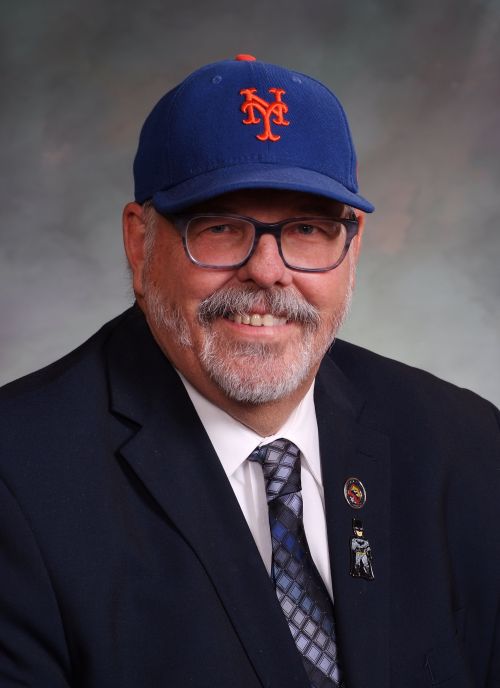
Sen. Tom Sullivan
Sponsored bills
The environmental justice advisory board in the department of public health and environment (advisory board) advises the environmental justice ombudsperson, develops recommendations related to adverse environmental effects on disproportionately impacted communities, and supports the implementation of a grant program to finance environmental mitigation projects. The act adds to the advisory board a voting youth member and a nonvoting youth member, which members are between 14 and 21 years of age. The act also requires the Colorado energy office (office), on or before December 31, 2025, to develop and post on its website best practices for the adoption and financing of clean energy resources in schools. The office is required to periodically update the best practices and post the updates on its website. (Note: This summary applies to this bill as enacted.)
The act creates the legislation inside advisory council (council) to identify, examine, and discuss the issues, interests, and needs affecting people who are incarcerated and to formally advise and make recommendations to the general assembly regarding those issues, interests, and needs. The act: Requires the director of the legislative council to use a request for proposal process to contract with and designate a nonprofit organization to assist the council; Establishes membership requirements of the council; Outlines the duties of the council, including reporting requirements; Requires the council to report during the department of corrections' annual "SMART Act" presentation to the judiciary committees of the senate and house of representatives, or their successor committees, beginning in January of 2027; and Creates an advisory review committee, consisting of 5 voting legislative members and 5 nonvoting council members to meet no more than 3 times during the interim and recommend no more than 3 bills during each interim.(Note: This summary applies to this bill as enacted.)
Current law requires a party petitioning the court for dissolution of marriage or legal separation (petition) to disclose to the court the existence of any prior temporary or permanent restraining orders and civil protection orders, any mandatory restraining orders and protection orders, and any emergency protection orders entered against either party within 2 years prior to the filing of the petition. The act extends the time frame for the disclosure of any orders entered to within 5 years prior to the filing of the petition. In a proceeding for spousal maintenance, current law requires the court to consider a list of relevant factors. The act adds to the list of factors whether a spouse has engaged in domestic violence, coercive control, economic abuse, litigation abuse, emotional abuse, physical abuse, or unlawful sexual behavior against the other spouse. (Note: This summary applies to this bill as enacted.)
Beginning on July 1, 2027, the act adjusts aspects of the necessary document program (program) administered by the office of health equity (office) in the department of public health and environment, which program assists certain populations of Colorado residents with paying the fees to acquire necessary documents related to an individual's identity, citizenship, or other vital statistics. The act clarifies that an individual who is eligible under the program may obtain necessary documents without charge at participating division of motor vehicles locations, participating vital statistics offices, or participating mobile units or from authorized representatives that offer driver's licenses, identification card services, or vital statistics certificates and reports. The act establishes that an individual may self-attest to the individual's eligibility under the program. The act does not change the identity verification requirements that may be required to obtain a necessary document. The act also specifies that, subject to available appropriations, an individual who is eligible for the program is not subject to the fees charged by the department of revenue for driver's licenses or identification cards. The act authorizes the office to seek, accept, and expend gifts, grants, and donations to support the program. (Note: This summary applies to this bill as enacted.)
The act eliminates the requirement for a second election to negotiate a union security agreement clause in the collective bargaining process. VETOED by Governor 5/16/2025(Note: This summary applies to this bill as enacted.)
The act caps the maximum incarceration sentence for a municipal violation that has a comparable state law crime at the same length as the state-level offense. If a comparable state-level offense does not exist, the maximum period of incarceration is capped at the maximum for a state-level petty offense. Mandatory minimums and increased penalties based on prior convictions are prohibited unless the person is convicted of a municipal offense for which there is a comparable state offense or of an infraction that allows imposition of the same mandatory minimum or increased penalties based on prior convictions. The act also caps a consecutive municipal sentence at 2 times the highest charge in the case. The act clarifies that municipal court defendants have a right to counsel and that municipal defense counsel have the same notice, case information, and opportunity to meet with their clients as do state-level defense counsel. Current law prohibits paying indigent municipal defense counsel on a fixed or flat-fee payment structure if the municipality prosecutes domestic violence cases. The act applies the prohibition to all municipalities. All municipal court proceedings are required to be open to public observation. Virtual observation is required for all in-custody proceedings, and prompt resolution of municipal cases is required. VETOED by Governor 5/16/2025(Note: This summary applies to this bill as enacted.)
The act requires hospitals, freestanding emergency departments, and licensed health-care facilities that hold themselves out to the public as providing emergency care (facility) to provide emergency medical services to a person who presents to the facility when the person requests or a request is made on the person's behalf for emergency medical services. For each person who presents to a facility and requests emergency medical services or for each request made on the person's behalf for emergency medical services, the act requires the facility to input into a central log whether the person refused treatment or was denied treatment; whether no treatment was required; or whether the person was transferred, admitted and treated, stabilized and transferred, or discharged. The act prohibits a facility from: Denying or discriminating in providing emergency medical services to a patient for a discriminatory or unlawful reason; Penalizing or taking adverse action against a health-care provider for refusing to transfer a patient with an emergency medical condition that has not been stabilized; Delaying providing emergency medical services to a person in order to inquire about the person's ability to pay for the services; and Transferring or discharging a patient with an emergency medical condition unless certain conditions are met. A facility or health-care provider does not violate the act's requirements if certain conditions are met. The act authorizes the department of public health and environment to investigate a facility that negligently violates the requirements of the act. A physician who negligently violates the act engages in unprofessional conduct and is subject to professional discipline. If a civil monetary penalty is imposed, the act requires the maximum civil monetary penalty to be reduced by any civil monetary penalty imposed pursuant to the federal "Emergency Medical Treatment and Active Labor Act" for the same violation. The act appropriates $82,768 from the health facilities general licensure cash fund to the department of public health and environment for use by the health facilities and emergency medical services division. (Note: This summary applies to this bill as enacted.)
The act makes the following changes for the purpose of improving the performance of the regional transportation district (RTD): Authorizes RTD to enter into a service partnership agreement with a local government, institution of higher education, business or housing entity, or special district to expand services within RTD's service territory or beyond the boundaries of RTD as authorized by law; Requires RTD, in discharging its responsibilities, to: Align with statewide greenhouse gas reduction targets, "Transportation Vision 2035" goals, and mode choice targets; Create worker retention goals; Adhere to the requirements of "General Directive 24-1: Required Actions Regarding Assaults on Transit Workers", issued on September 25, 2024, by the federal transit administration of the United States department of transportation; and Develop performance measures to evaluate its progress in aligning with state climate goals and achieving its worker retention goals; Requires RTD to report to the transportation legislation review committee (TLRC) on or before December 15, 2025, on RTD's 5-year financial forecast, debt capacity, and use of agency reserve accounts; Requires RTD, in coordination with the department of transportation, the Denver regional council of governments, and local governments within RTD's service territory, to create a 10-year strategic plan no later than September 30, 2026, and a comprehensive operational analysis no less frequently than every 5 years beginning on April 10, 2026, and to report quarterly to the RTD board of directors regarding the plan and analysis. RTD is also required to annually report to the TLRC on its progress in delivering the projects identified in the 10-year strategic plan and the comprehensive operational analysis. Requires RTD, in conjunction with the creation of its 10-year strategic plan, to study or contract with a third party to study and identify opportunities to increase funding to achieve the goals, measures, and targets identified in the 10-year strategic plan; Requires RTD to create, maintain, and publish on its website information and dashboards related to capital projects, ridership and service information, planned service changes, workforce statistics, and transit safety; Requires RTD to update its service policies and standards, its equitable transit-oriented development policy, and its service buy-up policy, to create specific communication protocols, and to implement parking and transportation demand management strategies and policies; Requires RTD to report to the governor, general assembly, the TLRC, and the RTD board by December 2025 on its work to achieve the transportation expansion routes identified in the transportation expansion plan, including the north lines. If RTD has not completed and begun service by January 1, 2029, on the fixed guideway mass transit system proposed in the transportation expansion plan, RTD is required to report to the governor and the transportation committees of the general assembly every 6 months until service begins. Requires RTD to periodically notify the Denver regional council of governments and the department of local affairs of any known infrastructure gaps that exist within a transit center of a transit-oriented community within RTD's service territory; Requires RTD to modernize, advertise, and conduct outreach about its EcoPass programs and to report to the transportation committees of the general assembly about its efforts; Clarifies the powers and duties of the RTD board of directors; and Prohibits write-in candidates for the RTD board of directors. The act also requires other entities to analyze opportunities for the improvement of transit services by: Requiring certain residential and mixed-use developments to survey their residents about their interest in having the development provide annual pre-paid RTD transit passes via the EcoPass program, if the development does not already provide bulk-purchased EcoPasses. If a majority of residents express interest in bulk-purchased EcoPasses, the development is required to enroll in the EcoPass program for its residents. Requiring the transportation commission, on or before March 31, 2026, to develop and publish best practices and technical assistance materials concerning the creation of regional transportation authorities to increase funding for transit and to provide additional transit services within the state; and Creating an RTD accountability committee within the Colorado energy office that consists of 15 appointed members, including 14 voting members and one ex officio nonvoting member, whose work is intended to build upon the work of the previous RTD accountability committee created in 2020. On or before January 30, 2026, the committee is required to provide recommendations to the transportation committees of the general assembly concerning: The governance structure and compensation of the RTD board and executive leadership; Paratransit services within RTD; The representation of local governments and state agencies within RTD; and RTD's labor and workforce standards and workforce retention. The act also makes changes to the information that an eligible entity is required to provide to the clean transit enterprise after being awarded money from the local transit operations cash fund. For the 2025-26 state fiscal year, $146,720 is appropriated from the general fund to the office of the governor for use by the Colorado energy office for program administration. (Note: This summary applies to this bill as enacted.)
The act requires the department of transportation (department), no later than July 1, 2026, and in coordination with local governments and transit agencies, to create a transit and active transportation project inventory that identifies gaps in transit, bicycle, and pedestrian infrastructure and access on state highways and rights-of-way that are controlled and maintained by the department. No later than July 1, 2026, metropolitan planning organizations must create a transit and active transportation project inventory that identifies gaps in transit, bicycle, and pedestrian infrastructure and access within the network of regionally significant roadways and rights-of-way that are typically subject to planning and programming by the metropolitan planning organization. No later than October 31, 2026, the department and the metropolitan planning organizations must present a report to the transportation legislation review committee on the transit and active transportation project inventories (inventories) created, including an assessment of existing and potential funding sources for the projects listed in the inventories. The department and metropolitan planning organizations must update the inventories as part of the planning processes for the regional and statewide transportation plans and must use the inventories to inform those plans, other transit service plans, and transportation improvement programs. No later than July 1, 2026, the department must develop clear definitions for roadway capacity investments and state-of-good-repair investments. No later than December 31, 2025, a local government with a population of 5,000 or more that is within a metropolitan planning organization must submit to its metropolitan planning organization all planned transit, bicycle, and pedestrian projects included in any transportation, capital, or other plan. The act also allows a local government to: Adopt goals for the share of total trips within a specified geographic area completed using certain transportation methods; Submit local transportation demand management strategies to its metropolitan planning organization; and Collaborate with the department, its metropolitan planning organization, and transit agencies to identify unfinished transit, bicycle, and pedestrian projects in certain transit areas and to prioritize such projects based on each project's potential to increase transportation mode choice, project vulnerable road users, reduce vehicle miles traveled and greenhouse gas emissions, and improve access to nondriving transportation options in disproportionately impacted communities. The act also clarifies that the Moffat tunnel improvement district is controlled and managed by the department of transportation rather than the department of local affairs. (Note: This summary applies to this bill as enacted.)