

The act creates the Colorado Voting Rights Act (state voting rights act) and modifies certain election-related statutes in the following areas: Tribal voting; Ensuring voter access to methods of selecting candidates for the general election; Restrictions on electioneering and election-related activity near voting locations; Election and voting notices in facilities serving individuals with disabilities; Recounts; Election-related language access; and Election-related data collection. Creation of the state voting rights act. The act creates the state voting rights act, which prohibits political subdivisions from: Engaging in voter suppression by taking any action that results in, will result in, or is intended to result in a material disparity between electors who are members of a protected race, color, or language minority group or other minority reporting group (protected class members) and other eligible electors in regard to voter participation, access to voting opportunities, or the opportunity or ability to participate in the political process; Engaging in voter dilution by enacting or employing any method of election that has the effect of, or is motivated in part by the intention of, disparately impairing the opportunity or ability of protected class members to elect the candidates of their choice or otherwise influence the outcome of elections as a result of diluting the vote of protected class members ; Implementing, imposing, or enforcing a voting qualification or another prerequisite to voting based on an individual's actual or perceived gender identity, gender expression, or sexual orientation; or Implementing, imposing, or enforcing an additional voting qualification or another prerequisite to voting based on an individual's confinement to a local jail, other than those eligibility qualifications that already exist. An aggrieved individual or organization (aggrieved person) may file a civil suit alleging voter suppression; voter dilution; an unlawful voting prerequisite based on gender identity, gender expression, or sexual orientation; or an unlawful voting prerequisite based on confinement to a local jail. The attorney general may investigate potential violations of the act and may file suit to enforce the act or may intervene in an aggrieved individual's or organization's civil suit. Except under specific circumstances, before filing suit, an aggrieved person or the attorney general must send a notification letter describing the alleged violation of the act to the political subdivision. The political subdivision is given 60 or 180 days to adopt a resolution providing for a solution to the alleged violation. Tribal voting. The act clarifies that an identification card, which need not contain a photograph, that is issued by the federal bureau of Indian affairs, Indian health service, or any other federal agency that issues identification certifying tribal membership and that includes an address in Colorado constitutes a valid identification for registration purposes and, upon request of a tribal council, requires a county to establish a drop box, rather than a drop-off location as was previously the case, within the boundaries of a federal reservation. Ensuring voter access to methods of selecting candidates for a general election. The act requires each major political party to ensure that any future alternative process by which a party may select candidates for a general election allows voters not able to attend in person to participate to the same extent as those voting in person, including requiring a process for individuals to vote that does not require in-person voting. Restrictions on electioneering and election-related activity near voting locations. The act clarifies that the restrictions on electioneering and election-related activity conducted within 100 feet of a polling location or drop-off location also apply to drop boxes. Election and voting notices in facilities serving individuals with disabilities. The act imposes a requirement on specified care facilities that provide services primarily to individuals with disabilities to publicly display, in each building in which they serve clients, notices related to voting during the 30 days preceding a general or coordinated election. Recounts. Before a recount, a canvass board has been required to test at least one ballot scanner with a group of 10 test ballots marked by at least 2 canvass board members of different party affiliations. The act changes this process so that each canvass board member, other than the clerk, must separately mark their own group of 10 test ballots. The act also clarifies the duties of a canvass board and a county clerk and recorder in conducting a recount. Election-related language access. The act expands existing requirements for the creation of multilingual ballots from only applying to qualifying counties to also applying to qualifying municipalities. The county clerk and recorder for a county that meets certain requirements for the population or percentage of the voting-age population within the relevant jurisdiction who are minority language speakers and who speak English less than very well has been required to provide multilingual ballots. The act requires a municipal clerk to provide multilingual ballot access if the municipality has a population of at least 3,000 and the municipality exists partially or wholly within a county covered by the existing multilingual ballot requirements. Election-related data collection. The act requires the secretary of state to collect, maintain, and make publicly available data related to elections, including demographics, election results, and voting information. After each election, political subdivisions are required to submit election-related information to the secretary of state. The department of local affairs is also required to annually provide certain demographic information to the secretary of state. The act also changes current law from allowing a custodian of records to deny the right of inspection of certain records and information maintained by the department of revenue to requiring the denial of such inspection. For the 2025-26 fiscal year, $75,432 is appropriated from the department of state cash fund to the department of state for use by the elections division for implementation of the act. The act applies to elections and election-related activities occurring on or after January 1, 2026. (Note: This summary applies to this bill as enacted.)
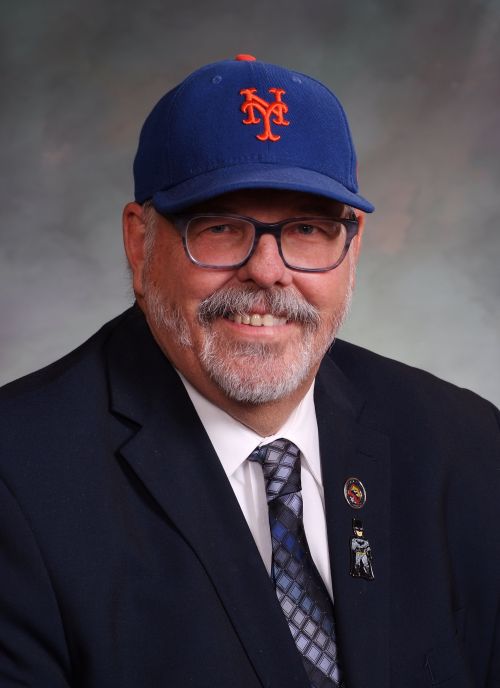
Sen. Tom Sullivan
Sponsored bills
The act requires a form issued by the state or a local government that requests that the individual completing the form disclose the individual's race or ethnicity to include, in addition to spaces for any other racial or ethnic categories required by the federal office of management and budget, a space to indicate if the individual's race or ethnicity is Middle Eastern, North African, or South Asian. The state and local governments are exempt from the act's requirements if: The demographic data collected in the form is reported by the state or a local government to the federal government; and The federal government rejects or will reject the demographic data reported by the state or a local government because it includes Middle Eastern, North African, or South Asian as a primary demographic category. When exercising the exemption, the state and local governments shall include Middle Eastern, North African, or South Asian as a demographic subcategory of the nonspecific racial category on the form. (Note: This summary applies to this bill as enacted.)
Maddy summarySJR 25-023 is a procedural resolution that establishes a joint committee of five members from the Senate and House of Representatives. This committee is tasked with formally notifying the Governor that the legislative session is about to conclude and to ask if he has any final communications for the General Assembly.
Maddy summarySenate Joint Resolution 25-021 reaffirms the critical importance of fully funding public schools in Colorado. It declares the Colorado Senate's intent to develop a multi-year implementation plan, including revenue triggers, to phase in recommendations from recently commissioned adequacy studies on school funding.
Maddy summarySJR 25-024 is a procedural resolution that establishes the final adjournment date for the First Regular Session of the Seventy-fifth General Assembly. It declares that when the session concludes on May 7, 2025, it will stand adjourned "sine die," meaning it will be the final adjournment without a set date to reconvene. This directly affects the members of the General Assembly by formalizing the end of their legislative session.
Maddy summarySJR 25-020 is a commemorative resolution that recognizes Colorado Mesa University's 100-year anniversary. The bill celebrates the university's history, achievements, and impact on students and the western Colorado community. It directs that copies of the resolution be sent to the university's Board of Trustees and Century Project Steering Committee.
Maddy summarySJR 25-019 is a joint resolution that recognizes April 10, 2025, as "Home Education Day" in Colorado. It aims to honor, thank, and celebrate home educators and their home-educated children in the state.
The act allows a currently licensed Colorado teacher seeking to add an early childhood education endorsement, early childhood special education endorsement, elementary education endorsement, or special education generalist endorsement to demonstrate professional competencies by submitting evidence of achieving sufficiently high education coursework grades on coursework aligned with relevant standards as approved by the department of education. If the applicant spots for the multiple measures pathway are not filled, the act allows currently licensed Colorado teachers who are seeking additional licensure endorsements to demonstrate professional competencies using the multiple measures pathway. The act clarifies that 4-year institutions of higher education that offer programs of off-campus instruction and that have courses included in the guaranteed transfer pathway matrix or that are part of a statewide degree transfer agreement may participate in the teacher recruitment education and preparation program. (Note: This summary applies to this bill as enacted.)
Under current law, a person engages in an unfair and unconscionable act or practice in violation of consumer protection laws if the person engages in price gouging during a declared disaster emergency. The act provides that a person engages in price gouging in the sale or offer for sale of certain goods or services if, after the governor declares a disaster emergency, which declaration may be based on a market disruption, the price of the good or service is increased by 10% or more above the price at which a similar good or service was sold or offered for sale before the disaster began. The act also establishes that seasonal pricing is not considered unreasonably excessive pricing and therefore is not price gouging. (Note: This summary applies to this bill as enacted.)
Maddy summaryHJR 25-1028 designates Friday, April 25, 2025, as "Sportsmen's Day" in Colorado. This resolution aims to recognize the contributions of Colorado's sportsmen and women to conservation efforts and the state's economy. It also encourages members of the General Assembly to join the Colorado Legislative Sportsmen's Caucus and urges public and private institutions to work with the caucus.