

The act implements recommendations of the department of regulatory agencies in its sunset review and report on the division of racing events (division) and the Colorado racing commission (commission) in the department of revenue. Specifically: The division and the commission are continued 9 years from the current repeal date of September 1, 2023, until September 1, 2032; Certain language from the definition of the term "in-state simulcast facility" is relocated, with amendments; and Certain greyhound kennel inspection requirements that have become redundant with inspection requirements imposed upon the department of agriculture are repealed. APPROVED by Governor June 2, 2023 EFFECTIVE August 7, 2023 NOTE: This act was passed without a safety clause and takes effect 90 days after sine die. (Note: This summary applies to this bill as enacted.)
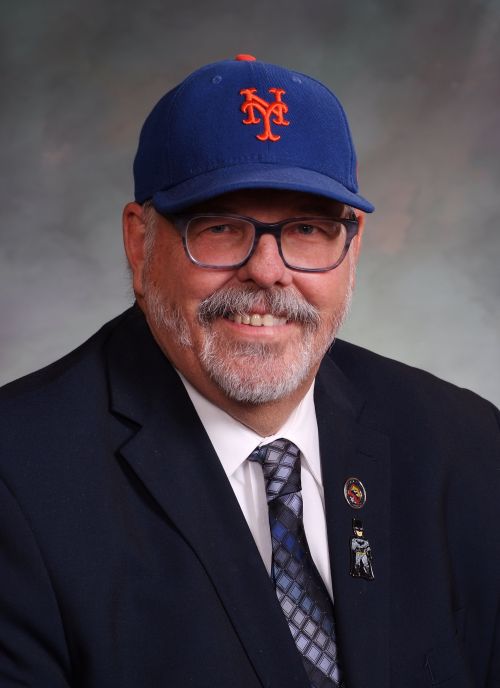
Sen. Tom Sullivan
Sponsored bills
The act establishes a waiting period before a firearms seller may deliver a firearm to a purchaser. The waiting period is the later in time of 3 days after the initiation of a required background check of the purchaser or when the purchase is approved following any background check. Delivering a firearm prior to the expiration of the waiting period is a civil infraction, punishable by a $500 fine for a first offense and a $500 to $5,000 fine for a second or subsequent offense. The waiting period does not apply to the sale of an antique firearm or a curio or relic; the sale of a firearm by a person serving in the armed forces who will be deployed outside of the United States within the next 30 days to any family member; or a firearm transfer for which a background check is not required pursuant to state or federal law. APPROVED by Governor April 28, 2023 EFFECTIVE October 1, 2023 NOTE: This act was passed without a safety clause. (Note: This summary applies to this bill as enacted.)
The act repeals and reenacts the statutory article related to extreme risk protection orders. Under current law a family or household member and a law enforcement officer or agency can petition for an extreme risk protection order. The act expands the list of who can petition for an extreme risk protection order to include licensed medical care providers, licensed mental health-care providers, licensed educators, and district attorneys. The act requires the office of gun violence prevention to expend funds annually on a public education campaign regarding the availability of, and the process for requesting, an extreme risk protection order. The act appropriates: $140,462 from the general fund to judicial department to implement the act; and $238,846 from the general fund to the department of public safety. APPROVED by Governor April 28, 2023 EFFECTIVE April 28, 2023 (Note: This summary applies to this bill as enacted.)
The act implements the recommendations of the department of regulatory agencies' sunset review and report on the veterans one-stop center in Grand Junction (center) by: Continuing the center for 7 years, until September 1, 2030; Codifying that the name of the center is the "western region one source"; and Setting a December 31, 2023, deadline for the division of veterans affairs, in consultation with the center's advisory board, to develop procedures for evaluating the effectiveness of the center. APPROVED by Governor April 28, 2023 EFFECTIVE August 7, 2023 NOTE: This act was passed without a safety clause and takes effect 90 days after sine die. (Note: This summary applies to this bill as enacted.)
The office of future of work (OFW) was created in the department of labor and employment (department) by executive order of the governor in 2019 to respond to the changing nature of work in the state. The act creates the OFW in statute and expands the duties of the OFW. The purpose of the OFW is to: Identify opportunities for Colorado's communities to transition effectively to emerging industries; Ensure the inclusion of key stakeholders and engage partnerships across public and private sectors; Host, organize, and convene task forces, summits, and other appropriate meetings with diverse stakeholders, designed to improve the state's understanding of the social and economic impacts of the changing nature of work; Explore ways that the state can prepare for current and future impacts, including through the modernization of worker benefits and protections, the development of a skilled and resilient workforce through coordination of registered apprenticeship programs, and the identification of new policy and program solutions; and Undertake studies, research, and factual reports related to issues of concern and importance to Colorado's future workforce. The executive director of the department is required to submit a report to the governor, at least once per calendar year, that includes recommendations for potential policy initiatives. In 2021, House Bill 21-1007 created the state apprenticeship agency (SAA) in the department. The act amends provisions governing the SAA to enable the United States department of labor's office of apprenticeship to recognize Colorado's state apprenticeship agency and authorize the SAA to register and oversee apprenticeship programs. To conform with regulations promulgated by the United States secretary of labor under the federal "National Apprenticeship Act", the act: Modifies references to apprenticeships in Colorado statutes; Directs the SAA to establish the state apprenticeship council (SAC) to provide advice and guidance to the SAA; Creates the committee for apprenticeship in the building and construction trades (CABCT) as a subcommittee of the SAC to advise the SAA on registered apprenticeship programs for the building and construction trades in the state; and Changes the name of the interagency advisory committee on apprenticeship to the committee for apprenticeship in new and emerging industries (CANEI), designated as a subcommittee of the SAC and tasked with advising the SAA on apprenticeship programs that are not within the jurisdiction of the CABCT. The bill allows the general assembly to appropriate money from the general fund or any other available source to the department to pay for the OFW to carry out the duties specified in the act. The OFW is also authorized to seek, accept, and expend gifts, grants, or donations to fund its duties. APPROVED by Governor March 23, 2023 EFFECTIVE March 23, 2023 (Note: This summary applies to this bill as enacted.)
Effective July 1, 2024, the bill: Establishes the minimum standards and labeling requirements for kratom products; Requires that, prior to selling or offering for sale any kratom product, the processor of the kratom product (processor) register the kratom product with the department of revenue (department) and provide a certificate of analysis for the kratom product to the department; Requires a processor to notify the department if an adverse event report is submitted to the federal food and drug administration for any of the processor's kratom products; and Allows the department, if there is a reasonable basis, to require a test for compliance of a processor's kratom product by a third-party laboratory, to coordinate with a third-party laboratory to conduct the test, and to require the processor to pay the department's cost for the test. The executive director of the department is required to promulgate rules to administer and enforce the bill and is authorized to impose fines on processors that violate the bill. (Note: This summary applies to the reengrossed version of this bill as introduced in the second house.)