Maddy summarySJR 25-004 designates January 22 of each year as "Reproductive Rights and Justice Day" in Colorado. This symbolic resolution does not create new laws or policies but commemorates the anniversary of the Roe v. Wade decision (January 22, 1973) and acknowledges Colorado's legislative actions to protect reproductive rights, including the Reproductive Health Equity Act and the Safe Access to Protected Health Care Package. The designation serves as a formal observance without imposing legal obligations or altering existing rights.
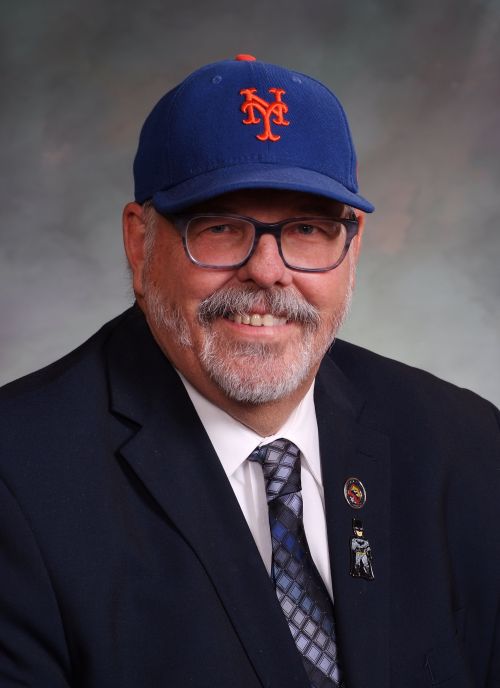
Sen. Tom Sullivan
Sponsored bills
Maddy summaryHJR 25-1005 is a ceremonial resolution encouraging Colorado communities to observe Martin Luther King Jr. Day on January 20, 2025 - the 41st anniversary of the state holiday. It does not create new laws or alter existing policies but urges cities, schools, counties, and local governments to hold commemorative events. The resolution honors Dr. King’s legacy, noting Colorado’s early adoption of the holiday in 1985 and its ongoing observance through events like the annual Marade. This is a non-binding call for community engagement, not a substantive legislative change.
The act clarifies existing definitions in the "Protections for Public Workers Act", including the definitions of "employee organization" and "public employee", and applies the clarified definitions in describing public employees' right to engage in"protected, concerted activity for the purpose of mutual aid or protection". The act also modifies the scope and applicability of a public employer's authority to limit the protected rights of its employees to the extent necessary to avoid material disruption of a public employee's duties, the employer's operations, or the delivery of public services. The act specifies that disagreement with the content of an employee's expressive activity or a strike by employees is not material disruption. APPROVED by Governor June 7, 2024 EFFECTIVE August 7, 2024(Note: This summary applies to this bill as enacted.)
The act amends consumer protection laws regarding ticket sales and resales for events. The act requires operators and resellers to guarantee refunds to purchasers of tickets under certain circumstances; prohibits an operator from denying an individual access or revoking an individual's valid ticket to an event because the individual's ticket was bought through a reseller; and clarifies that an operator may revoke or restrict tickets for reasons relating to a violation of venue policies that are available in writing, for safety of patrons, or to address fraud or misconduct. The act establishes that it is a deceptive trade practice when, in the course of a person's business, vocation, or occupation, the person: Uses an internet domain name or subdomain name in an operator or reseller's URL if the domain name or subdomain name used contains the name of the place of entertainment, name of the event, name of individual or entity scheduled to perform at the event, or a name that is substantially similar to those names without prior written authorization; Uses, without prior written authorization, an internet website to display a text, image, graphic, design, or internet address that is substantially similar to an operator's internet website that could mislead a potential purchaser; Sells a ticket to an event without disclosing the total cost of the ticket, including the cost of any service charge or other fees that must be paid, or displays service charges and fees less prominently than the total price of the ticket; Makes a false or misleading disclosure of subtotals, fees, charges, or any other component of the total ticket price; or Increases the price of a ticket after the first time the price is displayed to the purchaser, with certain exceptions. APPROVED by Governor June 5, 2024 EFFECTIVE August 7, 2024(Note: This summary applies to this bill as enacted.)

Beginning January 1, 2025, the act increases penalties for violations of the "Colorado Youth Employment Opportunity Act of 1971" (CYEOA) and requires that the monetary penalties collected be deposited into the wage theft enforcement fund. Entities that violate CYEOA must also pay specified damages to the individual who is aggrieved. The act eliminates a provision in current law penalizing a person, having legal responsibility for a minor, who knowingly permits the minor to be employed in violation of CYEOA. The director of the division of labor standards and statistics (director) is required to include a description of the penalties and damages owed in the written notice issued to an employer if CYEOA is violated. The division of labor standards and statistics (division) may reduce or decline to impose penalties or damages for violations of CYEOA if: The minor worker intentionally misled the employer with regard to the minor's age; and The employer engaged in outreach to a reliable third party to verify the minor worker's age if any reasonable employer could have believed that the minor worker might be under 18 years of age at the time of hiring. The act specifies that the receipt of an age certificate issued by the school superintendent of the district or county in which the worker resides constitutes outreach to a reliable third party. The division is required to treat all final orders issued for violations of CYEOA as public records and to release information related to a violation to the public upon request pursuant to the "Colorado Open Records Act", unless the director makes a determination that the information is a trade secret. The director may, or, at the request of the individual aggrieved, must, file a certified copy of a final order for a violation of CYEOA with the clerk of any court having jurisdiction over the parties at any time after the entry of the order. The act applies the state's discrimination and retaliation prohibitions to individuals attempting to exercise rights protected by CYEOA and creates a rebuttable presumption of retaliatory action if an entity engages in disciplinary or adverse action against an individual aggrieved within 90 calendar days after the individual exercises a right protected by CYEOA. For the 2024-25 state fiscal year, $125,255 is appropriated to the department of labor and employment for use by the division to implement the act. APPROVED by Governor June 4, 2024 EFFECTIVE January 1, 2025(Note: This summary applies to this bill as enacted.)

The act authorizes the Colorado bureau of investigation (bureau) to investigate particular illegal activity involving firearms statewide. The bureau shall communicate with the appropriate local law enforcement agency in such an investigation to deconflict investigative operations and determine investigative responsibilities prior to taking investigative or enforcement action and shall collaborate with the local district attorney in the beginning stages of the investigation. An agent or other employee of the bureau who is a peace officer shall wear and activate a body-worn camera when conducting any public-facing part of an investigation authorized in the act. The act appropriates $1,477,127 from the general fund to the department of public safety for the bureau to conduct the investigations. APPROVED by Governor May 15, 2024 EFFECTIVE August 7, 2024(Note: This summary applies to this bill as enacted.)
The act requires certain networks that facilitate payment transactions to make the merchant category code for firearms and ammunition available to merchant acquirers (processor) who process transactions for firearms merchants. A processor must assign the code to each firearms merchant to which the processor provides services. The attorney general's office has exclusive authority to enforce the act. Before bringing an enforcement action, the attorney general's office must notify in writing the person alleged to have violated the act. Standards are set for the notice. A violator has 30 days to cure the violation in accordance with the standards in the act. If a person violates the act and does not cure the violation, the attorney general's office may bring a civil action to seek: A civil penalty of up to $10,000 for each violation; or An injunction or equitable relief that prevents a further violation. If the attorney general's office prevails in the action, a court may issue an order requiring the violator to pay reasonable attorney fees and costs incurred in bringing the action. APPROVED by Governor May 1, 2024 EFFECTIVE August 7, 2024(Note: This summary applies to this bill as enacted.)
Effective July 1, 2024, the bill defines "premium cigars" and reduces the statutory rate of taxation of this particular tobacco product from the current rates for all non-cigarette tobacco products other than moist snuff of 36% of the manufacturer's list price (MLP) from July 1, 2024, through June 30, 2027, and 42% of the MLP on and after July 1, 2027, to 20% of the MLP, effectively rolling back the increases in the statutory taxation rate for such tobacco products since 2005. The bill does not affect taxation of premium cigars under section 21 of article X of the state constitution, which imposes an additional 20% tax.(Note: This summary applies to this bill as introduced.)
The bill creates the agricultural workforce mental health and suicide prevention program (program) in the department of agriculture (department). The purpose of the program is to address the challenges facing agricultural workers and to provide agricultural workers mental health support, suicide prevention services, and crisis management services. As part of the program, the department shall: Create a public awareness campaign to promote suicide prevention among agricultural workers; Contract with a nationally recognized nonprofit organization to offer a free and confidential crisis support hotline for agricultural workers; Develop a mental wellness plan for agricultural workers who are affected by a natural disaster and its financial and industry-related repercussions; Coordinate suicide prevention and crisis management services with state agencies, including the department of human services and the behavioral health administration; Collaborate with the behavioral health administration to ensure callers to the 988 crisis hotline and callers to the crisis support hotline are served; and Collect data on the program and recommend legislative changes as necessary. The bill requires the department to submit a report summarizing the data collected on the program and recommendations on or before September 1, 2025, and September 1 every other year thereafter, to the house of representatives agriculture, water, and natural resources committee and the senate agriculture and natural resources committee, or their successor committees. (Note: This summary applies to this bill as introduced.)
The act amends the "Colorado Youth Employment Opportunity Act of 1971" (CYEOA) to allow aggrieved parties, including parents of children protected by the CYEOA, to pursue remedies at law and in equity for violations of the act, in addition to workers' compensation remedies, if: An injury occurs to a minor during a week when the employer intentionally required the minor to work hours in violation of those allowed by the CYEOA; or An injury occurs to a minor while the minor was engaging in work prohibited by the CYEOA. The act clarifies that economic damages for claims in tort recovered by a party aggrieved by a violation of the CYEOA against the employer of a minor pursuant to the act must be reduced by the amount of compensation and benefits that the minor or the minor's dependents received for the same harm through the employer's workers' compensation insurance. APPROVED by Governor June 7, 2023 EFFECTIVE July 1, 2023 (Note: This summary applies to this bill as enacted.)