

Existing law defines murder as the unlawful killing of a human being, or a fetus, with malice aforethought. Existing law also defines manslaughter as the unlawful killing of a human being without malice, and establishes 3 kinds of manslaughter: voluntary, involuntary, and vehicular. This bill would require a law enforcement agency to review the casefile regarding an open unsolved homicide upon written application by certain persons to determine if a reinvestigation would result in probative investigative leads, as specified. The bill would define a homicide to include murder and manslaughter and an open unsolved homicide as a homicide committed after January 1, 1990, but no less than 3 years prior to the date of the application for case review, that was investigated by a law enforcement agency, for which all probative investigative leads have been exhausted and for which no suspect has been identified. If the review determines that a reinvestigation would result in probative investigative leads, this bill would require a reinvestigation, as specified. The bill would allow only one reinvestigation from being undertaken at any one time with respect to the same victim. By imposing new duties on local law enforcement agencies, this bill would impose a state-mandated local program. The California Constitution requires the state to reimburse local agencies and school districts for certain costs mandated by the state. Statutory provisions establish procedures for making that reimbursement. This bill would provide that, if the Commission on State Mandates determines that the bill contains costs mandated by the state, reimbursement for those costs shall be made pursuant to the statutory provisions noted above.
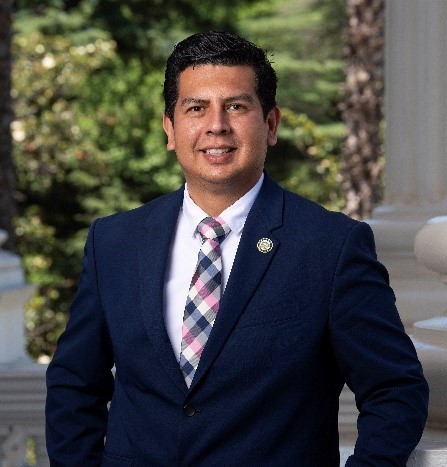
Asm. David Alvarez
Sponsored bills
Existing law prescribes requirements for the disposal of surplus land by a local agency. Existing law defines terms for these purposes, including, among others, "surplus land" to mean land owned in fee simple by any local agency for which the local agency's governing body takes formal action in a regular public meeting declaring that the land is surplus and is not necessary for the agency's use. Existing law defines "exempt surplus land" to mean, among other things, land that is subject to a sectional planning area document, as described, and meets specified requirements, including that the land identified in the adopted sectional planning area document was dedicated prior to January 1, 2019, at least 25% of the units are dedicated to lower income households, as specified, and that the land is developed at an average density of at least 10 units per acre calculated with respect to the entire sectional planning area. This bill would change those requirements so that at a minimum, 25% of units that are proposed by the sectional planning area document as adopted prior to January 1, 2019, and are not designated for students, faculty, or staff of an academic institution, or 500 units, whichever is greater, must be dedicated to lower income households, as specified, and that the land must be developed at an average density of at least 10 units per acre, in accordance with certain requirements and calculated with respect to the entire sectional planning area and inclusive of housing designated for students, faculty, and staff of an academic institution.
Maddy summaryThis bill establishes January as National Human Trafficking Awareness Month in California to raise public awareness about human trafficking. The resolution recognizes the severity of human trafficking as a felony crime and highlights statistics showing its prevalence across the country and specific challenges with identifying male victims and labor trafficking cases. It aims to educate the public and encourage reporting and support for victims during this designated month.
Existing law requires the State Department of Education to incorporate age-appropriate materials relating to, among other things, genocide and the Holocaust into publications that provide examples of curriculum resources for teacher use, consistent with the subject frameworks on history and social science. Under existing law, the Legislature encourages the incorporation of survivor, rescuer, liberator, and witness oral testimony into the teaching of genocide and the Holocaust. Existing law, upon appropriation by the Legislature, establishes the California Teachers Collaborative for Holocaust and Genocide Education to establish a statewide teacher professional development program on genocide, including the Holocaust, for school district, county office of education, and charter school teachers, and provides that the collaborative's mission is to ensure that genocide, including Holocaust, education is taught consistent with, among other things, content standards, curriculum frameworks, and instructional materials adopted by the State Board of Education, in ways that are interdisciplinary and age-appropriate to pupils of different grade levels. This bill would require the Superintendent of Public Instruction to establish the Holocaust and Genocide Education Grant Program to provide direct allocations to school districts, county offices of education, and charter schools for the purposes of providing Holocaust and genocide education and professional development on Holocaust and genocide education, as provided. The bill would establish the Holocaust and Genocide Education Grant Program Fund in the State Treasury, and would require moneys in the fund to be available, upon appropriation by the Legislature, to the Superintendent for purposes of the grant program. The bill would require the department to issue a notice to school districts, county offices of education, and charter schools serving pupils in grades 7 to 12, inclusive, regarding genocide and Holocaust instruction, and would authorize the department to issue a survey to these local educational agencies on the status of Holocaust and genocide instruction at their schools, as provided.
(1) The Water Recycling Law generally provides for the use of recycled water. Existing law requires any person who, without regard to intent or negligence, causes or permits an unauthorized discharge of 50,000 gallons or more of recycled water in or on any waters of the state to immediately notify the appropriate regional water board. This bill would, for the purposes of the above provision, redefine "recycled water" and provide that water discharged from a decorative body of water during storm events is not to be considered an unauthorized discharge if recycled water was used to restore levels due to evaporation. (2) Existing law regulating the use of recycled water prohibits the use of prescribed potable water by state and local agencies for any nonpotable uses, including cemeteries, golf courses, parks, and highway landscaped areas if prescribed recycled water is available, and deems use of the recycled water in lieu of the potable water to constitute a reasonable beneficial use of that water. The bill would provide that incidental amounts of spray, mist, or runoff are to be permitted to enter outdoor eating areas of parks and open spaces when irrigated with disinfected tertiary treated recycled water that complies with a specified regulation regarding irrigation. (3) Existing law authorizes any public agency, including a state agency, city, county, city and county, district, or any other political subdivision of the state, to require the use of recycled water for irrigation of residential landscaping, as specified. The bill would provide that outdoor landscape irrigation of common areas that does not enter the boundaries of a residence is not to be considered a part of the same premises as an individual residence and is not to be considered a dual-plumbed system. The bill would require recycled water used for this purpose to comply with specified water quality and cost conditions. (4) Existing law authorizes any public agency, including a state agency, city, county, city and county, district, or any other political subdivision of the state, to require the use of recycled water for toilet and urinal flushing in structures, as specified. Existing law defines "structures" for the purposes of these provisions. This bill would include food handling and processing facilities as part of the definition of "structures." The bill would authorize the use of recycled water for toilet or urinal flushing or outdoor irrigation in and around food handling or processing facilities, commercial, institutional, and industrial buildings, and cafeterias, provided the recycled water does not enter the room where food handling or processing occurs, as specified.
Existing law establishes the University of California, under the administration of the Regents of the University of California, the California State University, under the administration of the Trustees of the California State University, and the California Community Colleges, under the administration of the Board of Governors of the California Community Colleges, as the public segments of postsecondary education in the state. This bill would establish the South County Higher Education Planning Task Force for purposes of evaluating the feasibility of establishing a mixed-used intersegmental educational facility in the City of Chula Vista, with its membership appointed by specified entities, including, among other representatives, at least one representative from the Sweetwater Union High School District, at least one representative from the City of Chula Vista, and at least one public member appointed by the City of Chula Vista. To the extent the bill would impose additional duties on the Sweetwater Union High School District and the City of Chula Vista, the bill would impose a state-mandated local program. The bill would require the task force to conduct specified activities, convene its first meeting on or before July 1, 2026, and submit a report of its findings and recommendations to the appropriate policy and fiscal committees of the Legislature on or before July 1, 2027, as specified. The bill would repeal these provisions as of January 1, 2031. This bill would make legislative findings and declarations as to the necessity of a special statute for the City of Chula Vista. The California Constitution requires the state to reimburse local agencies and school districts for certain costs mandated by the state. Statutory provisions establish procedures for making that reimbursement. This bill would provide that, if the Commission on State Mandates determines that the bill contains costs mandated by the state, reimbursement for those costs shall be made pursuant to the statutory provisions noted above.
(1) Existing law prescribes the duties of the State Registrar of Vital Statistics (State Registrar) and local registrars of births and deaths with respect to the registration of certificates of live birth, fetal death, or death, and marriage licenses. Existing law requires the State Registrar to prescribe and furnish all record forms for use in carrying out the provisions governing vital records and prohibits the use of any record form or format other than those prescribed by the State Registrar. Existing law requires every live birth, fetal death, death, and marriage that occurs in the state to be registered with the local registrar. Existing law requires certificates of live birth, fetal death, or death, and a marriage license to include specified information, such as the full name of the child on a certificate of live birth and the full names of the parties to be married on a marriage license. Existing law also requires the county clerk to issue a confidential marriage license, as specified, on a form prescribed by the State Registrar. This bill would require, commencing no earlier than 2 years after an appropriation of funds by the Legislature, the State Registrar to require the use of a diacritical mark on an English letter within a name field to be properly recorded, when applicable, on a certificate of live birth, fetal death, death, marriage license and certificate, or confidential marriage license and certificate, and would require the use of a diacritical mark to be deemed an acceptable entry by the State Registrar. The bill would provide that the absence or presence of a diacritical mark on a certificate of live birth, fetal death, or death, or a marriage license and certificate or confidential marriage license and certificate does not render the document invalid nor affect any constructive notice imparted by proper recordation of the document. The bill would authorize the State Registrar to develop a list of acceptable diacritical marks for use on a certificate of live birth, fetal death, or death, or a marriage license and certificate or confidential marriage license and certificate through all-county letters or similar instructions from the State Registrar without taking further regulatory actions. The bill would authorize the State Registrar to remove any diacritical marks on the birth, fetal death, death, and marriage license and certificate data before furnishing the vital statistics to a federal, state, or local government agency. The bill would authorize, beginning July 1, 2026, if a name is not accurately recorded because of the absence of a diacritical mark on an English letter in any certificate of live birth, fetal death, death, or marriage already registered, the person asserting the omission, or the person's conservator, or if a minor, the person's parent or guardian, to make an affidavit under oath, as specified, stating the changes necessary to make the record correct. The bill would require the affidavit to be supported by the affidavit of one other person having knowledge of the facts and be filed with the State Registrar. The bill would require the State Registrar to, review the request and, if the request is accompanied with the payment of a specified fee, to issue an amendment to any certificate of live birth, fetal death, death, or marriage with the accurate name identified in the request. The bill would also authorize, if a name field of either of the parties married or their parents is not accurately recorded because of the absence of a diacritical mark on an English letter on any confidential license and certificate of marriage already registered, the party asserting the omission to make an affidavit, under oath, stating the changes necessary to make the record correct and file it with the county clerk. The bill would authorize the county clerk to charge a fee, not to exceed the amount of the fee for any other amended confidential marriage license and certificate issued by the county clerk and not to exceed the reasonable cost to provide the amended marriage license and certificate. The bill would require the county clerk to review the amendment for acceptance for filing, and if accepted, file the amendment and note the fact of the amendment, with its date, on the otherwise unaltered original confidential license and certificate of marriage. By requiring the affidavit to be under oath, the bill would expand the crime of perjury, thereby imposing a state-mandated local program. By increasing duties on county clerks, the bill would impose a state-mandated local program. (2) Existing law requires the collection of specified fees for certified copies of a fetal death record, death record, a birth certificate, marriage record, or marriage dissolution record. Existing law requires all applicants for certified copies of the above-described records to pay an additional fee of $3 to be collected by the State Registrar, the local registrar, county recorder, or county clerk, as appropriate. This bill would increase the additional fee charged for certified copies of the above-described records to $5. (3) The California Constitution requires the state to reimburse local agencies and school districts for certain costs mandated by the state. Statutory provisions establish procedures for making that reimbursement. This bill would provide that with regard to certain mandates no reimbursement is required by this act for a specified reason. With regard to any other mandates, this bill would provide that, if the Commission on State Mandates determines that the bill contains costs so mandated by the state, reimbursement for those costs shall be made pursuant to the statutory provisions noted above.
The Planning and Zoning Law requires a city or county to adopt a general plan for land use development that includes, among other things, a housing element. Existing law, commonly referred to as the Housing Element Law, prescribes requirements for a city's or county's preparation of, and compliance with, its housing element, and requires the Department of Housing and Community Development to review and determine whether the housing element substantially complies with the Housing Element Law, as specified. Existing law requires the housing element to include an analysis of potential and actual governmental constraints upon the maintenance, improvement, or development of housing for all income levels, including, among others, locally adopted ordinances that directly impact the cost and supply of residential development. Existing law also requires the analysis to demonstrate local efforts to remove governmental constraints that hinder the locality from meeting its share of the regional housing need. For adoption of the 7th and all subsequent revisions of the housing element, this bill would require the housing element to include, in addition to the above-described analysis, a potential and actual governmental constraints disclosure statement that contains, among other things, an identification of each new or amended potential or actual governmental constraint, or revision increasing the stringency of a governmental constraint, that was adopted after the due date of the previous housing element and before submittal of the current draft housing element to the department. By imposing new requirements upon local governments submitting a housing element, the bill would impose a state-mandated local program. This bill would make related findings and declarations. The bill would include findings that changes proposed by this bill address a matter of statewide concern rather than a municipal affair and, therefore, apply to all cities, including charter cities. This bill would incorporate additional changes to Section 65583 of the Government Code proposed by SB 340 and AB 650, to be operative only if this bill and either or both of those bills are enacted and this bill is enacted last. The California Constitution requires the state to reimburse local agencies and school districts for certain costs mandated by the state. Statutory provisions establish procedures for making that reimbursement. This bill would provide that no reimbursement is required by this act for a specified reason.
The California FAIR Plan Association is a joint reinsurance association in which all insurers licensed to write basic property insurance participate in administering a program for the equitable apportionment of basic property insurance for persons who are unable to obtain that coverage through normal channels. Existing law requires the association's plan of operation and any amendment to the plan to be approved by the Insurance Commissioner. Existing law establishes the California Infrastructure and Economic Development Bank and authorizes it to issue bonds to provide funds for the payment of costs of a project for a participating party or upon request by a state entity. This bill would authorize the association, if granted prior approval from the commissioner, to request the California Infrastructure and Economic Development Bank to issue bonds, and would authorize the bank to issue those bonds to finance the costs of claims, to increase liquidity and claims-paying capacity of the association, and to refund bonds previously issued for that purpose. The bill would specify that the association is a participating party and that financing all or any portion of the costs of claims or to increase liquidity and the claims-paying capacity of the association is a project for bond purposes. The bill would authorize the bank to loan the proceeds of issued bonds to the association, and would authorize the association to enter into a loan agreement with the bank and to enter into a line of credit agreement or other agreement This bill would require the association, if the above-described bonds, loan agreements, or lines of credit received the prior approval of the commissioner, and if the association is unable to timely and fully meet its repayment obligation, to assess members in the amounts and at the times necessary to timely pay in full all obligations of the association with respect to those bonds, loan agreements, lines of credit, and other agreements, as specified. The bill would authorize the association to secure those bonds, loan agreements, lines of credit, and other agreements by a statutory lien, as specified. Existing law establishes the California Infrastructure and Economic Development Bank Fund, a continuously appropriated fund, for the purpose of implementing the objectives of the bank. To the extent that the bill would result in additional revenues being deposited into the California Infrastructure and Economic Development Bank Fund, the bill would make an appropriation. This bill would declare that it is to take effect immediately as an urgency statute.
Existing law generally regulates classes of insurance, including property and fire insurance. Existing law creates the Department of Insurance, headed by the Insurance Commissioner, and prescribes the department's powers and duties. Existing department regulations prohibit an insurer from using a rating plan that does not take into account and reflect specified wildfire risk mitigation, including property-level building hardening measures. This bill would require the department, on or before January 1, 2030, and every 5 years thereafter, to consider whether or not to update its regulations to include additional building hardening measures for property-level mitigation efforts and communitywide wildfire mitigation programs. As part of this consideration, the bill would require the department to consult with specified agencies to identify additional building hardening measures to consider, as well as to develop and implement a public participation process during the evaluation.