Maddy summarySCR 103 designates the week of July 20-26, 2025, as "Probation Services Week" in California. This concurrent resolution recognizes the work of probation services professionals across the state. It is a symbolic observance with no new laws, regulations, or direct impact on individuals or policies. The bill does not alter existing statutes or create obligations for any entity.
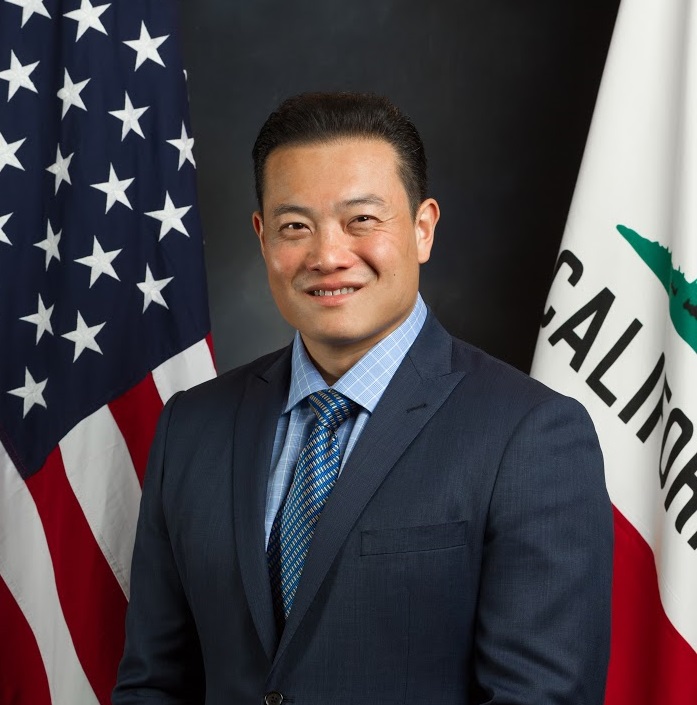
Asm. Phillip Chen
Sponsored bills
Existing law establishes the Department of Veterans Affairs. The department, among other services, provides veterans and their dependents and survivors with assistance in processing service-related disability claims, assistance in obtaining affordable housing, and information about health ailments associated with military service. This bill would require the department to establish a program to fund, upon appropriation by the Legislature, an academic study of mental health among women veterans in California, as specified. The bill would require the department to submit a report that summarizes the findings and recommendations of the study to the Legislature no later than June 30, 2029. The bill would repeal these provisions on January 1, 2030.
Maddy summaryThis bill establishes January as National Human Trafficking Awareness Month in California to raise public awareness about human trafficking. The resolution recognizes the severity of human trafficking as a felony crime and highlights statistics showing its prevalence across the country and specific challenges with identifying male victims and labor trafficking cases. It aims to educate the public and encourage reporting and support for victims during this designated month.
Existing law, commencing January 1, 2019, made various changes to the law governing ignition interlock devices (IID) , including, among other things, requiring a person who has been convicted of driving a motor vehicle under the influence of an alcoholic beverage, as specified, to install for a specified period of time as ordered by the court, an IID on the vehicle they operate, provided however that installation of an IID is discretionary for a first offender, as specified; authorizing a person convicted of driving a motor vehicle under the influence, if all other requirements are satisfied, including the installation of an IID, to apply for a restricted driver's license without completing a period of license suspension or revocation; and requiring ignition interlock device manufacturers to be in compliance with specified provisions relating to payment for the costs of an ignition interlock device. Existing law makes these changes operative until January 1, 2026. On January 1, 2026, existing law, as it relates to these provisions, is generally reinstated to read as it read prior to January 1, 2019. Existing law makes it a crime to violate certain provisions relating to IIDs and motor vehicles equipped with IIDs. This bill would extend the operation of these provisions until January 1, 2033, and would instead reinstate the law to how it read prior to January 1, 2019, on January 1, 2033. By extending the application of a crime, the bill would impose a state-mandated local program. The California Constitution requires the state to reimburse local agencies and school districts for certain costs mandated by the state. Statutory provisions establish procedures for making that reimbursement. This bill would provide that no reimbursement is required by this act for a specified reason.

Existing law establishes a workers' compensation system, administered by the Administrative Director of the Division of Workers' Compensation, to compensate an employee for injuries sustained in the course of employment. Existing law requires an employer to provide all medical services reasonably required to cure or relieve the injured worker from the effects of the injury. Existing law establishes a Workers' Compensation Appeals Board and sets forth various proceedings that are required to be brought forth before the board. Existing law authorizes an employer who pays or becomes obligated to pay compensation, salary in lieu of compensation, or an amount to the Department of Industrial Relations to make a claim or bring an action against a third person who caused the injury or death of an employee that gave rise to the employer's obligations. Existing law relieves the employer from an obligation to pay further compensation to or on behalf of the employee if the employer has paid litigation expenses, attorney's fees, and the employer's lien. Existing law requires any release or settlement of a claim to include notice to both the employer and employee, as specified, and the written consent of both the employer and employee, in order for the release or settlement to be valid. Existing law authorizes the appeals board to credit the employer with an amount equal to the recovery by the employee that has not been applied to certain expenses, to be applied against the employer's liability for compensation, as specified. Existing law authorizes an employer to enforce payment of a lien against a third party, or against the employee, if damages have been paid to the employee, in the manner provided for enforcement of money judgments. This bill would state that when the injured employee is a peace officer, as defined, or a firefighter, the employer will be entitled to receive no more than 13 of the third-party defendant's liability insurance policy limit, if the employee establishes that their total damages exceed the net recovery after satisfaction of the employer's claim and that the total liability insurance limits available are insufficient to fully compensate the employer and employee's proven damages. The bill would limit an employer's right to reimbursement, subrogation, or lien to the maximum recovery threshold, as specified. The bill would prohibit an employer from asserting any recovery by one of these injured employees as a credit or offset against future workers' compensation benefits and would require a settlement or release to limit an employer's claim for reimbursement to the portion of the settlement not allocated to the employee pursuant to these provisions. The bill would limit these provisions to those peace officers and firefighters who are employed by certain local entities, such as a city or county, among others.
The California Environmental Quality Act (CEQA) requires a lead agency, as defined, to prepare, or cause to be prepared, and certify the completion of an environmental impact report on a project that it proposes to carry out or approve that may have a significant effect on the environment or to adopt a negative declaration if it finds that the project will not have that effect. CEQA also requires a lead agency to prepare a mitigated negative declaration for a project that may have a significant effect on the environment if revisions in the project would avoid or mitigate that effect and there is no substantial evidence that the project, as revised, would have a significant effect on the environment. CEQA, until January 1, 2030, exempts from its requirements active transportation plans, pedestrian plans, or bicycle transportation plans for the restriping of streets and highways, bicycle parking and storage, signal timing to improve street and highway intersection operations, and the related signage for bicycles, pedestrians, and vehicles. This bill would extend the operation of the above-mentioned exemption indefinitely. The bill would also exempt a transit comprehensive operational analysis, as defined, a transit route readjustment, or other transit agency route addition, elimination, or modification, from the requirements of CEQA. Because a lead agency would be required to determine whether a plan qualifies for this exemption, the bill would impose a state-mandated local program. CEQA, until January 1, 2030, exempts from its requirements certain transportation-related projects, such as pedestrian and bicycle facilities, transit prioritization projects, public projects located on a site that is wholly within the boundaries of an urbanized area or urban cluster, as provided, for the institution or increase of bus rapid transit, bus, or light rail service, including the construction or rehabilitation of stations, terminals, or existing operations facilities, and public projects for the construction or maintenance of infrastructure of facilities to charge, refuel, or maintain zero-emission public transit buses, trains, or ferries, as provided. CEQA requires, except as provided, those exempted projects to be carried out by a local agency and meet certain requirements, including certain labor requirements. This bill would extend the operation of the above-mentioned exemption until January 1, 2040. The bill would exempt from the requirements of CEQA a public project for the protection and improvement of bus rapid transit, bus, or light rail service, including the protection, operation, and maintenance, public projects for the protection, improvement, institution, or increase of microtransit, paratransit, shuttle, and ferry, and for the protection, maintenance, construction, operation, or rehabilitation of stops that will be exclusively used by zero-emission, near-zero-emission, low oxide of nitrogen engine, compressed natural gas fuel, fuel cell, or hybrid powertrain vehicles, rail or cable cars, rolling stock, or vessels. The bill would, until January 1, 2032, exempt from the requirements of CEQA a public project for the protection, improvement, institution, or increase of microtransit, paratransit, shuttle, bus, ferry, bus rapid transit, or light rail service, including the protection, maintenance, construction, operation, or rehabilitation of stops, stations, terminals, or existing operations facilities, if used primarily by near-zero-emission, low oxide of nitrogen engine, compressed natural gas fuel, or hybrid powertrain vehicles, except as provided. The bill would exclude from this exemption certain public projects for the construction or rehabilitation of a ferry terminal, as provided, and, except as provided, public projects for transit services operated by a transportation network company, as defined. Because a lead agency would be required to determine whether a project qualifies for this exemption, the bill would impose a state-mandated local program. CEQA exempts from its requirements a project that consists exclusively of a combination of any of the components of specified transportation-related projects. This bill would extend the operation of the above-mentioned exemption until January 1, 2040. The bill would, until January 1, 2040, exempt from the requirements of CEQA a project that combines any of those specified transportation-related projects and a housing development project that is either subject to a nondiscretionary approval or is exempt from CEQA, as provided. Because a lead agency would be required to determine whether a project qualifies for this exemption, the bill would impose a state-mandated local program. Existing law exempts from the requirements of CEQA public projects for the institution or increase of passenger rail service, other than light rail service that is eligible for a specified exemption, including the construction or rehabilitation of stations, terminals, or existing operations facilities, which will be exclusively used by zero-emission trains. This bill would extend the operation of the above-mentioned exemption until January 1, 2040. The bill would exempt from the requirements of CEQA public projects for the improvement of passenger rail service, other than light rail service eligible for a specified exemption, including the maintenance of stations, terminals, or existing operations facilities, which will be exclusively used by zero-emission trains, public projects for the maintenance, construction, or rehabilitation of stations, terminals, or existing operations facilities which will be exclusively used by zero-emission certified Tier 4 or cleaner rolling stock or locomotives, as provided. The bill would exclude from this exemption public projects located in certain air basins for the maintenance, construction, or rehabilitation of stations, terminals, or existing operations facilities that will be used by certified Tier 4 or cleaner rolling stock or locomotives that are not zero-emission rolling stock or locomotives. Because a lead agency would be required to determine whether a project qualifies for this exemption, the bill would impose a state-mandated local program. Existing law requires certain CEQA-exempt projects exceeding specified dollar amounts to meet certain criteria, as provided. This bill would instead require certain CEQA-exempt projects that are, based on the project engineer's cost estimate, anticipated to exceed a specified dollar amount, to meet certain criteria, as provided. The bill would require the Office of Land Use and Climate Innovation, beginning January 1, 2026, and every two years thereafter, to adjust these amounts to reflect changes in the Consumer Price Index, as provided, and publish the updated amounts on its internet website. The bill would authorize the Office of Land Use and Climate Innovation to implement, interpret, or make specific that provision without taking any regulatory action. This bill would declare that its provisions are severable. The California Constitution requires the state to reimburse local agencies and school districts for certain costs mandated by the state. Statutory provisions establish procedures for making that reimbursement. This bill would provide that no reimbursement is required by this act for a specified reason.

Existing law governs the business of buying, selling, and dealing in secondhand and used machinery and all ferrous and nonferrous scrap metals and alloys, also known as "junk." Existing law requires junk dealers and recyclers to keep a written record of all sales and purchases made in the course of their business, including the place and date of each sale or purchase of junk and a description of the item or items, as specified. Existing law requires the written record to include a statement indicating either that the seller of the junk is the owner of it, or the name of the person they obtained the junk from, as shown on a signed transfer document. Existing law prohibits a junk dealer or recycler from providing payment for nonferrous materials until the junk dealer or recycler obtains a copy of a valid driver's license of the seller or other specified identification. Existing law requires a junk dealer or recycler to preserve the written record for at least 2 years. Existing law makes a violation of the recordkeeping requirements a misdemeanor. This bill would require junk dealers and recyclers to include additional information in the written record, including the time and amount paid for each sale or purchase of junk made, and the name of the employee handling the transaction. The bill would revise the type of information required to be included in the description of the item or items of junk purchased or sold, as specified. The bill would require the statement referenced above indicating ownership or the name of the person from whom the seller obtained the junk from to be signed. Existing law prohibits a junk dealer or recycler from possessing certain materials, including a fire hydrant or manhole cover or lid, without written certification from the agency owning or previously owning the material specifying that the agency has either sold the material or is offering the material for sale, salvage, or recycling and that the person is authorized to negotiate the sale of the material. Existing law makes it a crime for any person who is engaged in the salvage, recycling, purchase, or sale of scrap metal to possess specified items, including a fire hydrant or a manhole cover or lid, that were owned or previously owned by specified public entities and that have been stolen or obtained in a manner constituting theft or extortion, knowing the property to be stolen or obtained in that manner, or to fail to report possession of those items, as specified. A person who violates those provisions is subject to a criminal fine of not more than $3,000. This bill would expand the list of materials and items subject to those provisions to include, among other things, items reasonably recognizable as street lights and related equipment, and would increase the maximum amount of the criminal fine to $5,000. Existing law makes a person who is a dealer in or collector of junk, metals, or secondhand materials, or their agent, employee, or representative, who buys or receives any wire, cable, copper, lead, solder, mercury, iron, or brass that the person knows or reasonably should know is used by or belongs to specified entities, including a railroad, certain utility companies, or a public entity engaged in furnishing public utility service, without using due diligence to ascertain that the person selling or delivering that material has a legal right to do so, guilty of criminally receiving that property and, in addition to imprisonment, makes that act punishable by a fine of not more than $1,000. This bill would instead make the act punishable by a fine of not more than $5,000. By expanding the scope of existing crimes, the bill would impose a state-mandated local program. The California Constitution requires the state to reimburse local agencies and school districts for certain costs mandated by the state. Statutory provisions establish procedures for making that reimbursement. This bill would provide that no reimbursement is required by this act for a specified reason.
Existing law requires workers employed on public works to be paid not less than the general prevailing rate of per diem wages for work of a similar character in the locality that the public work is performed, as prescribed, unless an exception applies. Existing law requires the Director of the Department of Industrial Relations to determine the general prevailing rate of per diem wages for work of a similar character in the locality in which the public work is to be performed. Under existing law, per diem wages include certain employer payments made pursuant to a collective bargaining agreement or for a program or committee established under the federal Labor Management Cooperation Act of 1978, as specified. Existing law provides that these payments are a credit against the obligation to pay the general prevailing rate of per diem wages. Existing law requires the credit for employer payments to be computed on an annualized basis where the employer seeks credit for employer payments that are higher for public works projects than for private construction performed by the same employer, except under certain circumstances, including a determination by the director that annualization would not serve the purposes of the provisions relating to public works projects. This bill would remove that exception and revoke annualization exemptions authorized by the director prior to January 1, 2026. The bill would authorize an employer to take full credit for the hourly amounts contributed to defined contribution pension plans that provide for both immediate participation and essentially immediate vesting even if the employer contributes at a lower rate or does not make contributions to private construction. The bill would require the employer to prove that the credit for employer payments was calculated properly. The bill would authorize the Labor Commissioner to deny the employer credit for employment payments if the employer does not produce payment records. The bill would make related findings and declarations.
Existing law makes a person who willfully, maliciously, and repeatedly follows or willfully and maliciously harasses another person and who makes a credible threat with the intent to place that person in reasonable fear for the person's safety, or the safety of the person's immediate family, guilty of the crime of stalking, punishable as a misdemeanor or a felony. This bill would expand the meaning of "credible threat" to include threats to a person's pet, service animal, emotional support animal, or horse. By changing the definition of a crime, this bill would impose a state-mandated local program. The California Constitution requires the state to reimburse local agencies and school districts for certain costs mandated by the state. Statutory provisions establish procedures for making that reimbursement. This bill would provide that no reimbursement is required by this act for a specified reason.
(1) Existing law, the California Nutrition Monitoring Development Act of 1986, requires the State Department of Public Health to assess the availability and adequacy of existing state and local food and nutrition data systems. The act requires different state departments, including the State Department of Education, to provide to the State Department of Public Health, upon request, nutrition-related data collection forms, documentation, and reports of various programs. This bill would define "ultraprocessed food" for certain school-related purposes and would require the State Department of Public Health to adopt regulations, on or before June 1, 2028, to define "ultraprocessed foods of concern" and "restricted school foods," as specified. The bill would require the department, when defining ultraprocessed foods of concern and restricted school foods, to consider specified factors, including, among others, whether, based on reputable peer-reviewed scientific evidence, a substance or group of substances are linked to health harms or adverse health consequences, as specified. The bill would require schools, as defined, to begin to phase out restricted school foods and ultraprocessed foods of concern by no later than July 1, 2029. Beginning July 1, 2032, the bill would prohibit a vendor from offering restricted school foods and ultraprocessed foods of concern to a school. This bill, on or before February 1, 2028, and on or before February 1 of each year thereafter through February 1, 2032, would require a vendor to report specified information to the State Department of Public Health for each food product sold to a school in the past calendar year, including, among others, the total quantity of food product sold to schools and whether that food product is an ultraprocessed food, a restricted school food, or an ultraprocessed food of concern. The bill, on or before July 1, 2028, and on or before July 1 of each year thereafter through July 1, 2032, would require the State Department of Public Health, in consultation with the State Department of Education, to submit to the Legislature and the Governor a report that contains, among other things, a summary and analysis of the information reported to the State Department of Public Health by vendors and recommendations for state and local legislative actions that could reduce the consumption of ultraprocessed foods, restricted school foods, and ultraprocessed foods of concern in schools. The bill would require the State Department of Public Health to consult with the State Department of Education regarding compliance training and technical assistance for school food service and procurement staff for these purposes and would require the State Department of Public Health to establish a structure to deliver training and technical assistance to local educational agencies. (2) Existing law requires the State Department of Education to develop and maintain nutrition guidelines for school lunches and breakfasts, and for all food and beverages sold on public school campuses, consistent with the requirements for a nutritionally adequate breakfast and a nutritionally adequate lunch. Existing law defines a nutritionally adequate breakfast and a nutritionally adequate lunch for these purposes to mean those that qualify for reimbursement under the most current meal pattern for the federal School Breakfast Program and the federal National School Lunch Program, respectively. Existing law requires a school district, county superintendent of schools, or charter school maintaining kindergarten or any of grades 1 to 12, inclusive, to make available a nutritionally adequate breakfast and a nutritionally adequate lunch, free of charge, during each schoolday to any pupil who requests a meal without consideration of the pupil's eligibility for a federally funded free or reduced-price meal. Existing law authorizes a school operated and maintained by a school district or county office of education, from the midnight before to 30 minutes after the end of the official schoolday, to sell food and beverages other than meals reimbursed by specified federal nutrition programs, only if the food or beverages meet dietary guidelines, as specified, depending on grade level. This bill, beginning July 1, 2035, would prohibit a school district, county superintendent of schools, or charter school maintaining kindergarten or any of grades 1 to 12, inclusive, from offering a nutritionally adequate breakfast or lunch that includes restricted school foods or ultraprocessed foods of concern, as provided, and would prohibit a school operated and maintained by a school district or county office of education from selling food or beverages, except for food items sold as part of a school fundraising event, containing those restricted school foods or ultraprocessed foods of concern, as provided. (3) To the extent this bill would impose additional requirements on public schools, the bill would impose a state-mandated local program. (4) The California Constitution requires the state to reimburse local agencies and school districts for certain costs mandated by the state. Statutory provisions establish procedures for making that reimbursement. This bill would provide that, if the Commission on State Mandates determines that the bill contains costs mandated by the state, reimbursement for those costs shall be made pursuant to the statutory provisions noted above.