

Existing law authorizes a party about to be injured to lawfully resist the commission of a public offense and to use sufficient resistance to prevent the offense. Existing case law provides that, in order to justify an act of self-defense, an individual must have a reasonable belief that the threat is imminent, and limits the right of self-defense to the use of that force that is reasonable under the circumstances. This bill, the Preemptive Self Defense Act of 2025, would clarify that a party who reasonably perceives an imminent threat of bodily harm may make lawful resistance to the commission of a public offense and that the resistance authorized is required to be proportional to the reasonably perceived threat and to cease when the threat is no longer present. The bill would prohibit a party's background, training, and professional fighting skills from being taken into account when determining whether a party has taken reasonable defensive action. Existing law authorizes necessary force to be used to protect from wrongful injury the person or property of oneself, or of a spouse, child, parent, or other relative, or member of one's family, or of a ward, servant, master, or guest. This bill would also specify that there shall not be any civil liability on the part of, and no cause of action shall accrue against, a person who lawfully resists a public offense, as described above.
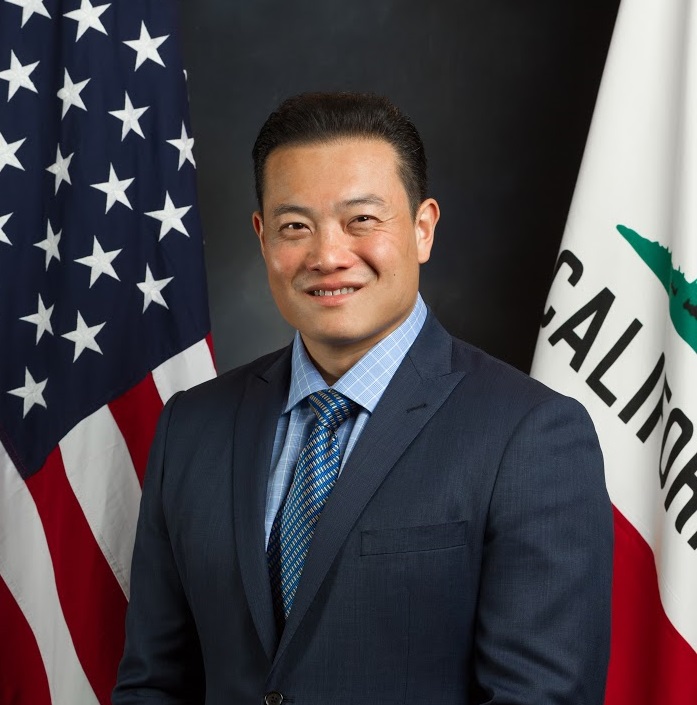
Asm. Phillip Chen
Sponsored bills
Existing law, the County Employees Retirement Law of 1937, authorizes counties to establish retirement systems pursuant to its provisions in order to provide pension benefits to county, city, and district employees and their beneficiaries. Existing law sets forth the membership composition for boards of retirement and boards of investment, as specified. Existing law authorizes the board of supervisors for counties for which these provisions apply to provide that certain members of these boards shall receive compensation at a rate of not more than $100 for a meeting or for a meeting of a committee authorized by the entire board. This bill would authorize the board of supervisors to adopt a provision that would authorize the board of retirement to increase the above-described compensation limit by an amount not to exceed 5% of the rate for each calendar year following the operative date of the last adjustment.
The Personal Income Tax Law allows various credits against the taxes imposed by that law. This bill would allow a credit against those taxes for each taxable year beginning on or after January 1, 2025, and before January 1, 2030, to a qualified taxpayer, as defined, in an amount equal to 40% of the taxpayer's qualified expenses, as defined, not to exceed $400 per taxable year, or $2,000 cumulatively. Existing law requires any bill authorizing a new tax credit to contain, among other things, specific goals, purposes, and objectives that the tax credit will achieve, detailed performance indicators, and data collection requirements. The bill would also include additional information required for any bill authorizing a new tax expenditure. This bill would take effect immediately as a tax levy.
Existing law, the Cigarette and Tobacco Products Licensing Act of 2003, requires the California Department of Tax and Fee Administration to issue a license to a retailer to engage in the sale of cigarettes or tobacco products upon receipt of a completed application and payment of certain fees unless any of certain exceptions apply. Existing law subjects licenses issued by the act to suspension or revocation for specified violations. Existing law prohibits a person from dispensing or distributing nitrous oxide to a person if the distributor knows or should know that the person is going to use the nitrous oxide for certain unlawful purposes and that person proximately causes great bodily injury or death to that person or another person. Existing law also requires a person who dispenses or distributes nitrous oxide to record each transaction involving the dispensing or distribution of nitrous oxide in a written or electronic document, as specified. Existing law makes a violation of either of these provisions a misdemeanor. This bill would require a court to order the suspension, for up to one year, of the business license of a person who knowingly violates either of those provisions after having been previously convicted of a violation of the respective provision, except as specified. This bill would specify violations subjecting licenses to suspension or revocation include, among others, the crimes above, as specified. The bill would exempt from the license issuance requirement the issuance of a license to a retailer who has been convicted of specified crimes relating to the distribution of nitrous oxide, including the misdemeanors described above.
The California Environmental Quality Act (CEQA) requires a lead agency, as defined, to prepare, or cause to be prepared, and certify the completion of an environmental impact report on a project that it proposes to carry out or approve that may have a significant effect on the environment or to adopt a negative declaration if it finds that the project will not have that effect. CEQA also requires a lead agency to prepare a mitigated negative declaration for a project that may have a significant effect on the environment if revisions in the project would avoid or mitigate that effect and there is no substantial evidence that the project, as revised, would have a significant effect on the environment. Under existing law, the recommendation, continuous evaluation, and execution of statewide environmental goals, policies, and plans are included within the scope of the executive functions of the Governor. Existing law establishes the Office of Land Use and Climate Innovation in the Governor's office for the purpose of serving the Governor and the Governor's cabinet as staff for long-range planning and research and constituting the comprehensive state planning agency. This bill would require, on or before July 1, 2027, the Office of Land Use and Climate Innovation to consult with regional, local, state, and federal agencies to develop a technical advisory on thresholds of significance for greenhouse gas and noise pollution effects on the environment to assist local agencies. The bill would require the technical advisory to provide suggested thresholds of significance for all areas of the state, as specified, and would provide that lead agencies may elect to adopt these suggested thresholds of significance. The bill would also require the Office of Land Use and Climate Innovation to post the technical advisory on its internet website.
Existing law provides that a trustee's sale of property under a power of sale contained in a deed of trust or mortgage on real property containing one to 4 residential units is not final until the earliest of various time periods. Existing law provides specified eligible bidders, defined to include prospective owner-occupants and eligible nonprofit corporations with certain attributes, various rights in connection with those sales, and sets forth procedures for eligible bidders to submit bids after those sales. Existing law authorizes the Attorney General, a county counsel, a city attorney, or a district attorney to bring an action to enforce these provisions as specified. This bill would remove prospective owner-occupants and eligible nonprofit corporations from the definition of "eligible bidder." The bill would apply the provisions described above only to trustee's sales of eligible property, as defined. The bill would require eligible bidders who submit bids pursuant to the procedures described above to include in the bid an amount equal to 1.2% of the last and highest bid at the trustee's sale. The bill would authorize the last and highest bidder at a trustee's sale to bring an action against an eligible bidder, as specified. The bill would make conforming changes.
Existing law establishes the State Department of Public Health within the California Health and Human Services Agency. Existing law requires the department to license and regulate clinical laboratories and various clinical laboratory personnel, including medical laboratory technicians. Existing law prohibits a person from operating a training program or course for the purpose of training clinical laboratory scientists or medical laboratory technicians without the prior approval of the department. Existing law imposes on the department specified duties related to the approval and regulation of training programs for instruction in clinical laboratory techniques. Existing law establishes a Department of Health Care Access and Information within the California Health and Human Services Agency. Existing law authorizes the department to make grants to develop training for new types of health professions personnel, as specified. This bill would require the Department of Health Care Access and Information, upon appropriation by the Legislature, to establish a grant program to provide funding for qualified training programs, as defined, that are approved by the State Department of Public Health, as specified. The bill would also require a grantee to expend funds within 3 years of receiving the grant. The bill would make related findings and declarations.
Existing law, the Digital Financial Assets Law, prohibits a person, on or after July 1, 2026, from engaging in digital financial asset business activity, or holding itself out as being able to engage in digital financial asset business activity, with, or on behalf of, a resident, unless certain conditions are met. These conditions include that the person is licensed with the Department of Financial Protection and Innovation, as prescribed, or the person submits an application on or before July 1, 2026, and is awaiting approval or denial of that application. Existing law defines "digital financial asset" for these purposes to mean a digital representation of value that is used as a medium of exchange, unit of account, or store of value, and that is not legal tender, whether or not denominated in legal tender, except as specified. Existing law requires an applicant for a license under these provisions to submit the application with a nonrefundable fee in an amount determined by the department to cover the reasonable costs of application review. This bill would prohibit that fee from exceeding $5,000.
Existing law, the Radiologic Technology Act, prohibits a person from administering or using diagnostic or therapeutic X-rays on human beings in this state, unless that person either qualifies for a specified exemption or has been certified or granted a permit by the State Department of Public Health, as specified, is acting within the scope of that certification or permit, and is acting under the supervision of a healing arts licensee. A person who violates a provision of the Radiologic Technology Act or regulation of the department adopted pursuant to that act is guilty of a misdemeanor. This bill would prohibit a person from holding themselves out as a radiologist assistant unless the person meets certain requirements, including that they have passed the radiologist assistant examination, as specified, and that they maintain current registration with prescribed entities. The bill would require a radiologist assistant to work only under the supervision of a radiologist and would prohibit a radiologist assistant from functioning in that capacity independent of a supervising radiologist. The bill, among other things, would authorize a radiologist assistant to communicate and document initial clinical and imaging observations or procedures only to a radiologist for the radiologist's use. The bill would authorize a supervising radiologist to delegate to a radiologist assistant, as the radiologist determines appropriate to the assistant's competence, those tasks or services that a radiologist usually performs and is qualified to perform. The bill would provide that a violation of its provisions does not constitute a misdemeanor.
The Personal Income Tax Law, in conformity with federal income tax law, generally defines "gross income" as income from whatever source derived, except as specifically excluded, and provides various exclusions from gross income. Existing law, known as the Golden State Scholarshare Trust Act, establishes the Golden State Scholarshare College Savings Trust (Scholarshare trust) , under the administration of the Scholarshare Investment Board, to provide financial aid for postsecondary education costs of participating students. Existing state and federal law generally includes in gross income distributions from a qualified tuition program, as defined to include the Scholarshare trust, except as provided. Existing federal law, the Consolidated Appropriations Act, 2023, excludes from gross income, for federal income tax purposes, distributions from a qualified tuition program that are made after December 31, 2023, and are paid in a direct trustee-to-trustee transfer to a Roth IRA, as described. This bill would exempt from gross income distribution made from a long-term qualified tuition program during the taxable years beginning on or after January 1, 2025, and before January 1, 2030, that are paid in a direct trustee-to-trustee transfer to a Roth IRA, and would conform state tax law to those changes relating to federal law, as described above. Existing law requires a bill authorizing a new tax expenditure to contain, among other things, specific goals, purposes, and objectives the tax expenditure will achieve, detailed performance indicators, and data collection requirements. This bill would include additional information required for any bill authorizing a new tax expenditure. This bill would take effect immediately as a tax levy.