

Existing law establishes the California Conservation Camps for the purpose of having incarcerated persons work on projects supervised by the Department of Forestry and Fire Protection. Existing law requires the department to utilize incarcerated persons assigned to conservation camps in performing fire prevention, fire control, and other work of the department. Existing law allows an incarcerated individual, as specified, who has successfully participated in either a California Conservation Camp program or a county program as an incarcerated individual hand crew member, as determined by specified authorities, and has been released from custody, to file a petition for relief with a court. This bill would require the Department of Corrections and Rehabilitation to pay a death benefit, as specified, for the death of any incarcerated individual hand crew members in the California Conservation Camp program, as specified.
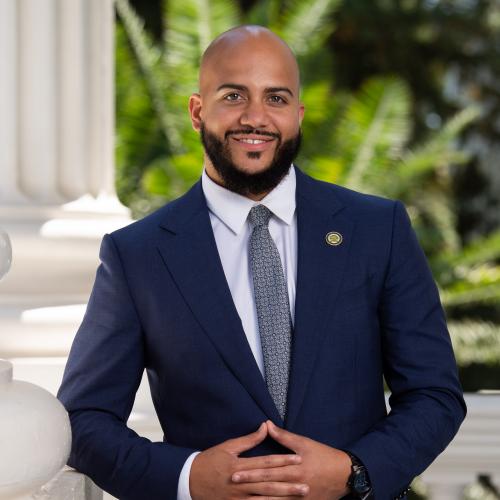
Asm. Isaac Bryan
Sponsored bills
Existing law establishes the Commission on Peace Officer Standards and Training, and requires the commission to, among other things, establish a certification program for peace officers, as defined. Existing law requires the commission to establish procedures for accepting complaints from members of the public regarding peace officers or law enforcement agencies that may be investigated. Existing law establishes, within the commission, the Peace Officer Standards Accountability Division and requires the division, among other things, to bring proceedings seeking the suspension or revocation of certification of a peace officer. Existing law, the California Public Records Act, generally requires public records to be open for inspection by the public. Existing law provides numerous exceptions to this requirement. Under existing law, the personnel records of peace officers and custodial officers are confidential and not subject to public inspection. Existing law provides certain exemptions to this confidentiality, including the reports, investigations, and findings of certain incidents involving the use of force by a peace officer. This bill would additionally exempt agreements between an employing agency and a peace officer that, among other things, require the agency to destroy, remove, or conceal a record of a misconduct investigation. The bill would declare that its provisions are severable. This bill would incorporate additional changes to Section 832.7 of the Penal Code proposed by AB 847 and AB 1178, to be operative only if this bill and AB 847 or AB 1178 are enacted and this bill is enacted last. The California Constitution requires local agencies, for the purpose of ensuring public access to the meetings of public bodies and the writings of public officials and agencies, to comply with a statutory enactment that amends or enacts laws relating to public records or open meetings and contains findings demonstrating that the enactment furthers the constitutional requirements relating to this purpose. This bill would make legislative findings to that effect.
(1) Existing law requires the Superintendent of Public Instruction to establish and implement a system of complaint processing, known as the Uniform Complaint Procedures, for specified educational programs, and requires the State Department of Education to review those regulations pertaining to uniform complaint procedures for specified types of complaints, including those that allege unlawful discrimination, harassment, intimidation, or bullying against any protected group, as provided. Existing law requires the department to, on or before March 31, 2019, commence rulemaking proceedings to revise those regulations, as necessary, to conform to specified provisions. Beginning July 1, 2026, this bill would require, upon receipt by the department of a complaint subject to the Uniform Complaint Procedures that alleges unlawful discrimination, harassment, intimidation, or bullying, the Superintendent to collect specified information, including, among other things, a description of the complaint received. The bill would require the Superintendent to create and post on the department's internet website a summary report of the data described above. (2) Existing law, the California Fair Employment and Housing Act, among other things, establishes the Civil Rights Department and authorizes it to receive, investigate, conciliate, mediate, and prosecute complaints alleging various civil rights violations, including violations of provisions regarding individuals with disabilities. Existing law, the Lesbian, Gay, Bisexual, Transgender, and Intersex Disparities Reduction Act, requires the Civil Rights Department, among other specified state entities, in the course of collecting demographic data directly or by contract as to the ancestry or ethnic origin of Californians, to collect voluntary self-identification information pertaining to sexual orientation, gender identity, and variations in sex characteristics/intersex status, as specified. Existing law, the California Public Records Act, generally requires public records to be open for inspection by the public. Existing law provides numerous exceptions to this requirement. This bill would require the Civil Rights Department to collect, for a complaint received, certain demographic information, including the ethnicity, race, and gender of the individual submitting the complaint, and certain information related to the complaint. The bill would require the department, commencing July 1, 2027, to publish a summary report no later than October 1 of each year of the compiled information for the preceding calendar year on its internet website. This bill would require, for any information or data acquired pursuant to the bill's provisions, that information or data to be confidential and protected from public disclosure, including disclosure pursuant to the California Public Records Act, except that the information may be disclosable pursuant to that act to the same extent as the underlying complaint. The bill would also prohibit the above-described summary reports, dashboards, and transmitted data from containing any personally identifying information about any individual. The bill would require information in the summary reports, dashboards, and transmitted data to be sufficiently deidentified to prevent the identification of the individuals involved in a complaint. (3) Existing constitutional provisions require that a statute that limits the right of access to the meetings of public bodies or the writings of public officials and agencies be adopted with findings demonstrating the interest protected by the limitation and the need for protecting that interest. This bill would make legislative findings to that effect.
Existing law requires the State Fire Marshal to identify areas in the state as moderate, high, and very high fire hazard severity zones based on consistent statewide criteria and the severity of the fire hazard. Existing law requires a person who owns, leases, controls, operates, or maintains (1) a building or structure in the state responsibility area, or (2) an occupied dwelling or structure within a very high fire hazard severity zone as designated by a local agency, to, among other defensible space requirements, maintain a defensible space of 100 feet from each side and from the front and rear of the structure, as specified. Under existing law, one of these defensible space requirements is the requirement to create an ember-resistant zone within 5 feet of the structure, based on regulations promulgated by the State Board of Forestry and Fire Protection, to consider the elimination of materials in the ember-resistant zone that would likely be ignited by embers, as provided. A violation of these defensible space requirements is a crime. This bill would revise and recast the defensible space requirements applicable to a very high fire hazard severity zone as designated by a local agency by explicitly requiring the state board to adopt regulations to implement all of the above-described defensible space requirements. The bill would authorize local agencies responsible for fire protection to designate, by ordinance, defensible space requirements based on the defensible space regulations promulgated by the state board, as provided, and would authorize the local agency to consider local variations in local fire hazards, geography, development, and other conditions and authorize alternative practices to those in the state board regulations, if the alternative practices provide for substantially similar practical effects as those stated in the state board regulations. The bill would provide that a property owner, as defined, in compliance with the applicable alternative practices adopted by the local agency shall not be deemed to have violated the defensible space requirements adopted by the state board, as provided. To the extent that this expands the duties of a local agency, the bill would impose a state-mandated local program. Existing law, known as the Administrative Procedure Act, governs the procedures for the adoption, amendment, or repeal of regulations by state agencies and for the review of those regulatory actions by the Office of Administrative Law. Existing law establishes procedures for the adoption of emergency regulations, including requiring that the state agency make a finding that the adoption of a regulation or order of repeal is necessary to address an emergency, as defined. Under existing law, a regulation, amendment, or order of repeal adopted as an emergency regulatory action may only remain in effect for up to 180 days, unless the adopting agency complies with specified requirements relating to notice of regulatory action and public comment. By Executive Order No. N-18-25, Governor Gavin Newsom directed the state board to complete the formal rulemaking process applicable to these ember-resistant zone requirements no later than December 31, 2025. Existing law requires the state board, on or before January 1, 2023, and in consultation with the Office of the State Fire Marshal, to update a guidance document on fuels management to include suggestions for creating an ember-resistant zone within 5 feet of a structure based on regulations promulgated by the state board, to consider the elimination of materials in the ember-resistant zone that would likely be ignited by embers. The California Environmental Quality Act (CEQA) requires a lead agency, as defined, to prepare, or cause to be prepared, and certify the completion of, an environmental impact report on a project that it proposes to carry out or approve that may have a significant effect on the environment or to adopt a negative declaration if it finds that the project will not have that effect. This bill would require the state board to adopt regulations to implement the above-described defensible space requirements for an ember-resistant zone required within 5 feet of a structure in the state responsibility area and a very high fire hazard severity zone as designated by a local agency, as specified. If adopting the regulations through the regular rulemaking process of the Administrative Procedure Act would inhibit compliance with the deadline in Executive Order No. N-18-25, the bill would require the regulations to be adopted as emergency regulations and would require the Office of Administrative Law to consider the adoption of initial regulations as necessary for the immediate preservation of the public peace, health, safety, and general welfare. The bill would authorize the state board to readopt any of these emergency regulations, as provided, and would make any of these adopted or readopted emergency regulations effective until revised by the state board. The bill would provide that the adoption or readoption of these regulations does not constitute a project for purposes of CEQA. The bill would revise and recast the provisions applicable to the guidance document by requiring the state board, no later than one year after adopting regulations in compliance with the deadline in Executive Order No. N-18-25, to update the guidance document to reflect the new regulations. This bill would incorporate additional changes to Section 4291 of the Public Resources Code proposed by SB 326 to be operative only if this bill and SB 326 are enacted and this bill is enacted last. The California Constitution requires the state to reimburse local agencies and school districts for certain costs mandated by the state. Statutory provisions establish procedures for making that reimbursement. This bill would provide that, if the Commission on State Mandates determines that the bill contains costs mandated by the state, reimbursement for those costs shall be made pursuant to the statutory provisions noted above. This bill would declare that it is to take effect immediately as an urgency statute.
(1) The Outdoor Advertising Act, a violation of which is a crime, provides for the regulation by the Department of Transportation of advertising displays, as defined, within view of public highways. Existing law exempts from certain provisions of the act advertising displays located in specific geographic areas in the City of Los Angeles if those displays meet prescribed conditions and requirements, including the condition that the advertising display is authorized by, or in accordance with, an ordinance adopted by the City of Los Angeles that regulates advertising displays by identifying the specific displays or establishing regulations that include, at a minimum, specified restrictions, as provided. This bill would authorize the ordinance adopted by the City of Los Angeles to authorize a framework of allowable signage that preserves flexibility in the ultimate placement, sizing, and scope of advertising displays, and define a range or maximum signage capacity, as specified. The bill would also authorize the City of Los Angeles to adopt implementing ordinances that sequence or phase the authorization of advertising displays over time. (2) This bill would declare that it is to take effect immediately as an urgency statute.
Existing law requires the State Department of Social Services to establish a statewide hotline as the entry point for the Family Urgent Response System, as defined, to respond to calls from caregivers or current or former foster children or youth during moments of instability, as specified. Existing law requires the hotline to include, among other things, referrals to a county-based mobile response system, as specified, for further support and in-person response. Existing law requires the department to collect deidentified, aggregated data, including the number of current and former foster children or youth served through the statewide hotline and the disposition of each call, and requires the department to publish a report on its internet website, as specified. This bill would instead specify that the statewide hotline shall be the primary entry point for the Family Urgent Response System. The bill would also require the department to collect data on the number of calls received by a county mobile response system, which includes calls received through the statewide hotline and portal. Existing law also requires county child welfare, probation, and behavioral health agencies, in each county or region of counties, as specified, to establish a joint county-based mobile response system that includes a mobile response and stabilization team for the purpose of providing supportive services to, among other things, address situations of instability, preserve the relationship of the caregiver and the child or youth, and stabilize the situation. Existing law requires county child welfare, probation, and behavioral health agencies, in consultation with other relevant specified entities, to submit a single coordinated plan to the department describing how the county-based mobile response system meets the requirements described above. This bill would require the plan to also describe and include the date of plan submission and a point of contact for the plan. The bill would require the plan to be updated and submitted on a biennial basis. The bill would also authorize a county-based mobile response system that is not otherwise responding to calls placed through the statewide hotline to utilize mobile response team staff based on local needs, including, among other things, by providing ongoing support to a child, youth, or caregiver who has received mobile response services. The bill would also require a county-based mobile response system that is not otherwise responding to calls placed through the statewide hotline but that chooses to utilize mobile response team staff to prioritize calls placed through the statewide hotline for urgent responses and continue to maintain sufficient staffing to ensure county-based mobile response teams maintain compliance. By increasing the duties of county agencies, this bill would impose a state-mandated local program. The California Constitution requires the state to reimburse local agencies and school districts for certain costs mandated by the state. Statutory provisions establish procedures for making that reimbursement. This bill would provide that, if the Commission on State Mandates determines that the bill contains costs mandated by the state, reimbursement for those costs shall be made pursuant to the statutory provisions noted above.
(1) Existing law prescribes the duties of the State Registrar of Vital Statistics (State Registrar) and local registrars of births and deaths with respect to the registration of certificates of live birth, fetal death, or death, and marriage licenses. Existing law requires the State Registrar to prescribe and furnish all record forms for use in carrying out the provisions governing vital records and prohibits the use of any record form or format other than those prescribed by the State Registrar. Existing law requires every live birth, fetal death, death, and marriage that occurs in the state to be registered with the local registrar. Existing law requires certificates of live birth, fetal death, or death, and a marriage license to include specified information, such as the full name of the child on a certificate of live birth and the full names of the parties to be married on a marriage license. Existing law also requires the county clerk to issue a confidential marriage license, as specified, on a form prescribed by the State Registrar. This bill would require, commencing no earlier than 2 years after an appropriation of funds by the Legislature, the State Registrar to require the use of a diacritical mark on an English letter within a name field to be properly recorded, when applicable, on a certificate of live birth, fetal death, death, marriage license and certificate, or confidential marriage license and certificate, and would require the use of a diacritical mark to be deemed an acceptable entry by the State Registrar. The bill would provide that the absence or presence of a diacritical mark on a certificate of live birth, fetal death, or death, or a marriage license and certificate or confidential marriage license and certificate does not render the document invalid nor affect any constructive notice imparted by proper recordation of the document. The bill would authorize the State Registrar to develop a list of acceptable diacritical marks for use on a certificate of live birth, fetal death, or death, or a marriage license and certificate or confidential marriage license and certificate through all-county letters or similar instructions from the State Registrar without taking further regulatory actions. The bill would authorize the State Registrar to remove any diacritical marks on the birth, fetal death, death, and marriage license and certificate data before furnishing the vital statistics to a federal, state, or local government agency. The bill would authorize, beginning July 1, 2026, if a name is not accurately recorded because of the absence of a diacritical mark on an English letter in any certificate of live birth, fetal death, death, or marriage already registered, the person asserting the omission, or the person's conservator, or if a minor, the person's parent or guardian, to make an affidavit under oath, as specified, stating the changes necessary to make the record correct. The bill would require the affidavit to be supported by the affidavit of one other person having knowledge of the facts and be filed with the State Registrar. The bill would require the State Registrar to, review the request and, if the request is accompanied with the payment of a specified fee, to issue an amendment to any certificate of live birth, fetal death, death, or marriage with the accurate name identified in the request. The bill would also authorize, if a name field of either of the parties married or their parents is not accurately recorded because of the absence of a diacritical mark on an English letter on any confidential license and certificate of marriage already registered, the party asserting the omission to make an affidavit, under oath, stating the changes necessary to make the record correct and file it with the county clerk. The bill would authorize the county clerk to charge a fee, not to exceed the amount of the fee for any other amended confidential marriage license and certificate issued by the county clerk and not to exceed the reasonable cost to provide the amended marriage license and certificate. The bill would require the county clerk to review the amendment for acceptance for filing, and if accepted, file the amendment and note the fact of the amendment, with its date, on the otherwise unaltered original confidential license and certificate of marriage. By requiring the affidavit to be under oath, the bill would expand the crime of perjury, thereby imposing a state-mandated local program. By increasing duties on county clerks, the bill would impose a state-mandated local program. (2) Existing law requires the collection of specified fees for certified copies of a fetal death record, death record, a birth certificate, marriage record, or marriage dissolution record. Existing law requires all applicants for certified copies of the above-described records to pay an additional fee of $3 to be collected by the State Registrar, the local registrar, county recorder, or county clerk, as appropriate. This bill would increase the additional fee charged for certified copies of the above-described records to $5. (3) The California Constitution requires the state to reimburse local agencies and school districts for certain costs mandated by the state. Statutory provisions establish procedures for making that reimbursement. This bill would provide that with regard to certain mandates no reimbursement is required by this act for a specified reason. With regard to any other mandates, this bill would provide that, if the Commission on State Mandates determines that the bill contains costs so mandated by the state, reimbursement for those costs shall be made pursuant to the statutory provisions noted above.
Existing law requires the Superintendent of Public Instruction to post, and annually update, on the State Department of Education's internet website and notify local educational agencies of the availability of a list of statewide resources, including community-based organizations, that provide support to youth, and their families, who have been subjected to school-based discrimination, harassment, intimidation, or bullying, as provided. Existing law requires a local educational agency to adopt, on or before December 31, 2019, procedures for preventing acts of bullying, including cyberbullying. This bill would require the department, on or before June 30, 2026, in consultation with relevant stakeholders, to develop, post on its internet website, and distribute to each local educational agency, as defined, a model policy on how to address certain reported acts of cyberbullying occurring outside of school hours and outside of the campus, as specified. The bill would require the model policy to clarify that local educational agencies are authorized, but not required, to address those acts. The bill would require each local educational agency, on or before July 1, 2027, to adopt a policy, or modify its existing procedures for preventing acts of bullying, on how to address certain reported acts of cyberbullying occurring outside of school hours and outside of the campus, as specified. The bill would authorize the adopted policy to be the model policy developed by the department or a locally adopted policy with input from stakeholders. The bill would require each local educational agency to post a copy of the adopted policy on its internet website and the internet website of each of its schoolsites. By imposing additional duties on local educational agencies, the bill would impose a state-mandated local program. The California Constitution requires the state to reimburse local agencies and school districts for certain costs mandated by the state. Statutory provisions establish procedures for making that reimbursement. This bill would provide that, if the Commission on State Mandates determines that the bill contains costs mandated by the state, reimbursement for those costs shall be made pursuant to the statutory provisions noted above.
Existing law, the Contractors State License Law, establishes the Contractors State License Board to license and regulate contractors and establishes the registrar of contractors as the executive officer and secretary of the board. Existing law requires the registrar, upon receipt of the Labor Commissioner's finding of a willful or deliberate violation of the Labor Code by a licensee or transmission to the board of citations or other actions taken by the Division of Occupational Safety and Health, to initiate disciplinary action against the licensee within 18 months. This bill would authorize the Attorney General to bring a civil action to impose discipline upon, to deny an application for, or to deny continued maintenance of, a contractor's license for failing to pay its workers the full amount of wages the workers are entitled to under state law or because the contractor has not fulfilled a wage judgment or is in violation of an injunction or court order regarding the payment of wages to its workers. The bill would require the Attorney General to notify the registrar before bringing a civil action and would authorize the board to intervene in a proceeding brought pursuant to the bill's provisions. The bill would require a court to issue an order directing the registrar to suspend or revoke, to deny an application for, or to deny the continued maintenance of, a contractor's license under terms specified by the court.
The California Environmental Quality Act (CEQA) requires a lead agency, as defined, to prepare, or cause to be prepared, and certify the completion of an environmental impact report on a project that it proposes to carry out or approve that may have a significant effect on the environment or to adopt a negative declaration if it finds that the project will not have that effect. CEQA also requires a lead agency to prepare a mitigated negative declaration for a project that may have a significant effect on the environment if revisions in the project would avoid or mitigate that effect and there is no substantial evidence that the project, as revised, would have a significant effect on the environment. This bill would require, on and after January 1, 2027, for a project, located in a geographic area for which the Governor declared a state of emergency on or after January 1, 2023, that is to maintain, repair, restore, demolish, or replace property or facilities damaged or destroyed by wildfire, and the project is not otherwise exempt from CEQA, as specified, the lead agency to prepare the record of proceeding concurrently with the administrative process. The bill would also require an action or proceeding brought to attack, review, set aside, void, or annul the certification of an environmental impact report, or the adoption of a negative declaration or mitigated negative declaration, for the project to be resolved, to the extent feasible, within 270 calendar days of the filing of the certified record of proceedings. The bill would require an applicant to agree to pay the costs of the trial court and court of appeal in hearing and deciding any action or proceeding brought under these provisions, as provided. The bill would require the Judicial Council to adopt rules of court to implement these requirements. The bill would require the project to be consistent with the applicable zoning and land use ordinances. By requiring a lead agency to prepare the record of proceedings concurrently with the administrative process, this bill would impose a state-mandated local program. The California Constitution requires the state to reimburse local agencies and school districts for certain costs mandated by the state. Statutory provisions establish procedures for making that reimbursement. This bill would provide that no reimbursement is required by this act for a specified reason.