

The Planning and Zoning Law requires each county and city to adopt a comprehensive, long-term general plan for the physical development of the county or city, and of certain land outside its boundaries, and requires the general plan to contain specified mandatory elements. Existing law specifies that these provisions generally do not apply to a charter city, but requires a charter city to adopt a general plan that contains the mandatory elements, among other things. Existing law prescribes a process to challenge the validity of a general plan. Among other things, existing law requires a petitioner to request a hearing or trial, as specified. Existing law requires a court to set a date for the hearing or trial to be heard no later than 120 days after the filing of the request, as specified. Existing law authorizes a court to continue for a reasonable time the date of the hearing or trial upon written motion and finding of good cause. Existing law requires a court to grant the petitioner temporary relief if the court grants a continuance to a respondent, as specified. This bill would apply to the above-described process to challenge the validity of a general plan to a charter city and state that this is declaratory of existing law. The bill would limit the period for which a court may continue a trial or hearing, as described above, to no more than 60 days and would additionally authorize a court to grant a continuance on the court's own motion. The bill would extend the requirement that a court grant temporary relief, as described above, in any instance in which the court orders a continuance, rather than only if the court grants a continuance to a respondent. The bill would require the court to consider ordering additional temporary relief if the court has already granted temporary relief. Existing law requires the general plan to contain specified mandatory elements, including a housing element. Existing law requires the housing element to consist of an identification and analysis of existing and projected housing needs and a statement of goals, policies, quantified objectives, financial resources, and scheduled programs for the preservation, improvement, and development of housing. Existing law also requires the housing element to, among other things, identify adequate sites for housing, as provided, and to make adequate provision for the existing and projected needs of all economic segments of the community. In preparation of the housing element, existing law requires the city and county to consider certain guidelines adopted by the department. Existing law requires the department to review, according to a specified procedure, any action or failure to act by the city, county, or city and county that it determines is inconsistent with an adopted housing element or certain other requirements, including any failure to implement any program actions included in the housing element. This bill would require, to the extent that a quantified development standard, as defined, in a general plan element is inconsistent with a quantified development standard in another element, the provisions of the most recently adopted element to supersede the previously adopted element. If a local agency has established a specific deadline to amend a local ordinance, development standard, condition, or policy applicable to quantified development standards, or timelines or processes relating to entitlement and permitting decisions, and the local agency has failed to make that amendment by the specified deadline, the bill would require the department to undertake the above-described review procedure. Existing law requires each city, county, or city and county to bring its housing element into conformity with certain requirements by a specified deadline. Existing law also requires a city, county, or city and county, upon a finding by a court that an action of a city, county, or city and county, which is required to be consistent with its general plan, does not comply with its housing element, to bring its action into compliance within 60 days. Existing law requires the court to retain jurisdiction throughout the period for compliance to enforce its decision and authorizes the court to extend the time period for compliance by an additional 60 days upon a determination that the 60-day period for compliance would place an undue hardship on the city, county, or city and county. This bill would extend the amount of time a city, county, or city and county has to bring its action into compliance to 120 days and would remove the above-described extension provision. The bill would also require the court to retain jurisdiction throughout the period for compliance with its order and to conform to certain requirements. The bill would authorize the court to grant a reasonable extension of time for the city, county, or city and county to comply if review by the Department of Housing and Community Development is required as part of the court order and that review is not timely completed, as specified. Existing law requires a court, if that court finds that a city, county, or city and county failed to complete a specified rezoning by a certain deadline, to issue an order or judgment, after considering the equities of the circumstances presented by all parties, compelling the local government to complete the rezoning within 60 days or the earliest time consistent with public hearing notice requirements in existence at the time the action was filed. Existing law also requires the court, if that court determines that its order or judgment is not carried out, to issue further orders to ensure that certain purposes and policies are fulfilled, including ordering, after considering the equities of the circumstances presented by all parties, that any required rezoning be completed within 60 days or the earliest time consistent with public hearing notice requirements in existence at the time the action was filed. Existing law also authorizes the court to impose sanctions on the city, county, or city and county if the court determines that its order or judgment is not carried out. This bill would extend the amount of time a local government has to complete the above-described rezoning under a court order or judgment to 120 days. The bill would also remove the requirement that a court issue further orders that any required rezoning be completed within 60 days or the earliest time consistent with public hearing notice requirements in existence at the time the action was filed. The bill would instead require that the court impose sanctions on the city, county, or city and county if the court determines that its order or judgment is not carried out. Existing law requires a county or city to bring the general plan or relevant mandatory element into compliance with state law within 120 days of a court issuing a final order or judgment in favor of a petitioner in any action brought to challenge the validity of that plan or element. Existing law also requires a county or city to bring its zoning ordinance into consistency with its general plan or relevant mandatory element within 120 days of bringing the general plan or relevant mandatory element into compliance with state law. Existing law authorizes a court to grant a county or city 2 extensions of time, as specified, to bring the general plan, relevant mandatory element, or zoning ordinance into compliance or consistency. Existing law requires a court, in the order or judgment, to include one or more specified remedies. Existing law also authorizes a court to grant these remedies as temporary relief, during a pendency of a challenge to the validity of a general plan, upon a showing of probable success on the merits, as specified. This bill would instead require, in any order or judgment issued in an action brought to challenge the validity of the general plan of any city, county, or city and county, or any mandatory element thereof that resolves whether those plans or elements substantially comply with certain requirements, that order or judgment to be immediately appealable, regardless of whether any final judgment has been issued. The bill would instead require a county or city to comply with the above-described requirements if the court finds that the general plan or mandatory element does not substantially comply with certain requirements. The bill would remove a court's above-described authority to grant a city or county 2 extensions of time. The bill would specify that the above-described remedies are not stayed during the pendency of an appeal of the order or judgment, but would authorize a court to stay remedies if there is a showing by a county or city that it would suffer irreparable harm. The bill would require, rather than authorize, a court to grant these remedies as temporary relief during a pendency of a challenge to the validity of the general plan. The bill would require that request for temporary relief to be made by noticed motion or application, as specified. The bill would include findings that changes proposed by this bill address a matter of statewide concern rather than a municipal affair and, therefore, apply to all cities, including charter cities.
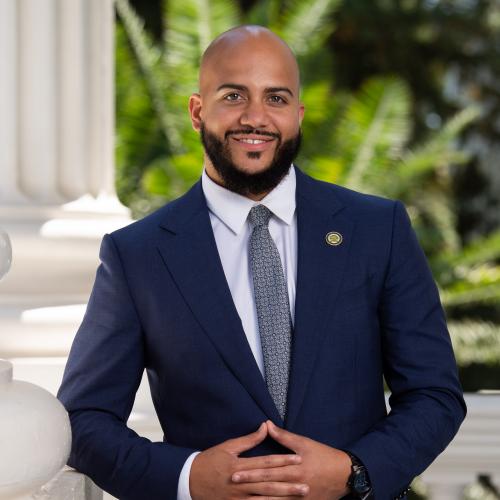
Asm. Isaac Bryan
Sponsored bills
Former law, Chapter 319 of the Statutes of 2020, until July 1, 2023, established a task force to, among other things, identify, compile, and synthesize the relevant corpus of evidentiary documentation of the institution of slavery that existed within the United States and the colonies, as specified, and to recommend the form of compensation that should be awarded, the instrumentalities through which it should be awarded, and who should be eligible for this compensation. Existing law, the California Fair Employment and Housing Act, establishes the Civil Rights Department and sets forth its powers and duties, including, among others, receiving, investigating, and prosecuting complaints alleging violations of civil rights, as specified. This bill would establish the Bureau for Descendants of American Slavery within the department, under the control of the deputy director, who would be appointed by the Governor and confirmed by the Senate. The bill would require the bureau to create a Genealogy Division, as specified, and to verify an individual's status as a descendant and would require proof of an individual's descendant status to be a qualifying criterion for benefits authorized by the state for descendants. The bill would also require the bureau to create an Education and Outreach Division and a Legal Affairs Division. The bill would impose various requirements on the bureau relating to the collection, storage, and disclosure of personal and genetic information, as specified. The bill would authorize the bureau to receive moneys from any federal, state, or local grant and from any nongovernmental entity, as specified. This bill would make implementation of its provisions contingent upon appropriation by the Legislature, as specified. This bill would include findings and declarations relating to a gift of public funds. Existing constitutional provisions require that a statute that limits the right of access to the meetings of public bodies or the writings of public officials and agencies be adopted with findings demonstrating the interest protected by the limitation and the need for protecting that interest. This bill would make legislative findings to that effect.
Existing law establishes in state government, within the office of the Governor, the Office of Emergency Services. Existing law requires the office to be responsible for the state's emergency and disaster response services for natural, technological, or manmade disasters and emergencies, including responsibility for activities necessary to prevent, respond to, recover from, and mitigate the effects of emergencies and disasters to people and property. Existing law, the FIRESCOPE Act of 1989, requires the office to establish and administer a program, known as the FIRESCOPE program, to maintain and enhance the efficiency and effectiveness of managing multiagency firefighting resources in responding to an incident. Existing law requires the office, in collaboration with the Department of Forestry and Fire Protection and the board of directors of the FIRESCOPE program, to develop standards and regulations for any privately contracted private fire prevention resources operating during an active fire incident in the state, as provided, and to develop regulations to govern the use of equipment used by privately contracted private fire prevention resources during an active fire incident, as provided. This bill would additionally require the office to develop regulations prohibiting privately contracted private fire prevention resources from hooking up their equipment to public water sources, unless approved by incident command or the authority having jurisdiction over the active fire incident and unless the equipment includes a backflow prevention device. The California Safe Drinking Water Act provides for the operation of public water systems and imposes certain responsibilities on community water systems related to the operation of water distribution systems, as defined. This bill would explicitly state that none of the above-described regulations governing the use of equipment used by privately contracted fire prevention resources during an active fire incident shall alter, impair, or interfere with the authority of a community water system to operate a water distribution system.
Existing law prohibits any person from selling, leasing, or transferring any firearm unless the person is licensed as a firearms dealer, as specified. Existing law prescribes certain requirements and prohibitions for licensed firearms dealers. A violation of any of these requirements or prohibitions is grounds for forfeiture of a firearms dealer's license. For purposes of these provisions, existing law defines "machinegun" to mean, among other definitions, any weapon that shoots or is designed to shoot automatically more than one shot, without manual reloading, by a single function of the trigger. This bill would, on and after July 1, 2026, prohibit a licensed firearms dealer to sell, offer for sale, exchange, give, transfer, or deliver any semiautomatic machinegun-convertible pistol, except as specified. For these purposes, the bill would define "machinegun-convertible pistol" as any semiautomatic pistol with a cruciform trigger bar that can be readily converted by hand or with common household tools into a machinegun by the installation or attachment of a pistol converter, as specified, and "pistol converter" as any device or instrument that, when installed in or attached to the rear of the slide of a semiautomatic pistol, replaces the backplate and interferes with the trigger mechanism and thereby enables the pistol to shoot automatically more than one shot by a single function of the trigger. The bill would make a violation of these provisions punishable by a fine, a 2nd violation punishable by a fine that may result in a suspension or revocation of the dealer's license and removal from certain centralized lists maintained by the Department of Justice, and a 3rd violation punishable as a misdemeanor that shall result in the revocation of the dealer's license and removal from certain centralized lists. Existing law prohibits the manufacture, sale, possession, or transportation of a machinegun, except as authorized. A violation of these prohibitions is punishable as a felony. This bill would expand the above definition of "machinegun" to include any machinegun-convertible pistol equipped with a pistol converter and, thus, prohibit the manufacture, sale, possession, or transportation of a machinegun-convertible pistol equipped with a pistol converter. Existing law, subject to certain exceptions, generally makes it an offense to manufacture or sell an unsafe handgun, as defined, and requires the Department of Justice to compile a roster listing all of the handguns that have been tested and determined not to be unsafe handguns. Existing law establishes criteria for determining if a handgun is an unsafe handgun, including, for firearms manufactured after a certain date and not already listed on the roster, the lack of a chamber load indicator and a magazine disconnect mechanism. For any pistol listed on the roster on January 1, 2026, that was not subject to the above-described requirements to be on the list because it was submitted for testing before specified dates, that is thereafter only modified to change the design features that brought the pistol within the definition of a machinegun-convertible pistol, and that is submitted to an independent certified laboratory for testing pursuant to the above-described testing provisions before January 1, 2027, this bill would authorize that pistol to be submitted for testing and added to the roster without meeting those requirements. This bill would make these provisions severable. This bill would incorporate additional changes to Section 3273.50 of the Civil Code proposed by AB 1263 to be operative only if this bill and AB 1263 are enacted and this bill is enacted last. By creating a new crime and expanding the application of an existing crime, this bill would create a state-mandated local program. The California Constitution requires the state to reimburse local agencies and school districts for certain costs mandated by the state. Statutory provisions establish procedures for making that reimbursement. This bill would provide that no reimbursement is required by this act for a specified reason.
The California FAIR Plan Association is a joint reinsurance association in which all insurers licensed to write basic property insurance participate in administering a program for the equitable apportionment of basic property insurance for persons who are unable to obtain that coverage through normal channels. Existing law requires the association's plan of operation and any amendment to the plan to be approved by the Insurance Commissioner. Existing law establishes the California Infrastructure and Economic Development Bank and authorizes it to issue bonds to provide funds for the payment of costs of a project for a participating party or upon request by a state entity. This bill would authorize the association, if granted prior approval from the commissioner, to request the California Infrastructure and Economic Development Bank to issue bonds, and would authorize the bank to issue those bonds to finance the costs of claims, to increase liquidity and claims-paying capacity of the association, and to refund bonds previously issued for that purpose. The bill would specify that the association is a participating party and that financing all or any portion of the costs of claims or to increase liquidity and the claims-paying capacity of the association is a project for bond purposes. The bill would authorize the bank to loan the proceeds of issued bonds to the association, and would authorize the association to enter into a loan agreement with the bank and to enter into a line of credit agreement or other agreement This bill would require the association, if the above-described bonds, loan agreements, or lines of credit received the prior approval of the commissioner, and if the association is unable to timely and fully meet its repayment obligation, to assess members in the amounts and at the times necessary to timely pay in full all obligations of the association with respect to those bonds, loan agreements, lines of credit, and other agreements, as specified. The bill would authorize the association to secure those bonds, loan agreements, lines of credit, and other agreements by a statutory lien, as specified. Existing law establishes the California Infrastructure and Economic Development Bank Fund, a continuously appropriated fund, for the purpose of implementing the objectives of the bank. To the extent that the bill would result in additional revenues being deposited into the California Infrastructure and Economic Development Bank Fund, the bill would make an appropriation. This bill would declare that it is to take effect immediately as an urgency statute.
(1) Existing law, the Alcoholic Beverage Control Act, is administered by the Department of Alcoholic Beverage Control and regulates the granting of licenses for the manufacture, distribution, and sale of alcoholic beverages within the state. The act requires the department to make and prescribe rules to carry out the purposes and intent of existing state constitutional provisions on the regulation of alcoholic beverages, and to enable the department to exercise the powers and perform the duties conferred upon it by the state constitution and the act, not inconsistent with any statute of this state. The act makes it unlawful for any person other than a licensee of the department to sell, manufacture, or import alcoholic beverages in this state, with exceptions. The department, pursuant to its powers and in furtherance of emergency declarations and orders of the Governor under the California Emergency Services Act regarding the spread of the COVID-19 virus, established prescribed temporary relief measures to suspend certain legal restrictions relating to, among other things, the expansion of a licensed footprint, sales of alcoholic beverages to-go, and delivery privileges. Existing law authorizes the department, for a period of 365 days following the end of the state of emergency proclaimed by the Governor on March 4, 2020, in response to the COVID-19 pandemic, to permit licensees to exercise license privileges in an expanded license area authorized pursuant to a COVID-19 Temporary Catering Authorization approved in accordance with the Fourth Notice of Regulatory Relief issued by the department, as specified. Existing law makes these provisions effective only until July 1, 2026, and repeals them as of that date. This bill, instead, would make those provisions operative until January 1, 2029, repeal those provisions on that date, and make conforming changes. The bill would also prohibit the department from issuing any new COVID-19 Temporary Catering Authorizations on or after January 1, 2027. (2) The Planning and Zoning Law authorizes the legislative body of any city or county to adopt ordinances that regulate zoning within its jurisdiction, as specified. Under that law, variances and conditional use permits may be granted if provided for by the zoning ordinance. Existing law, to the extent that an outdoor expansion of a business to mitigate COVID-19 pandemic restrictions on indoor dining interferes with, reduces, eliminates, or impacts required parking for existing uses, requires a local jurisdiction that has not adopted an ordinance that provides relief from parking restrictions for expanded outdoor dining areas to reduce the number of required parking spaces for existing uses by the number of spaces that the local jurisdiction determines are needed to accommodate an expanded outdoor dining area. Existing law makes these provisions operative only until July 1, 2026, and repeals them on that date. This bill, instead, would make those provisions operative indefinitely. Because the bill would require local officials to perform additional duties for an extended period, the bill would impose a state-mandated local program. (3) Existing law, the California Retail Food Code, establishes uniform health and sanitation standards for, and provides for regulation by the State Department of Public Health of, retail food facilities. Existing law provides that these standards are primarily enforced by local enforcement agencies. Existing law restricts satellite food service to limited food preparation in a fully enclosed permanent food facility that meets specified requirements. Existing law requires a permanent food facility, before conducting satellite food service, to submit to the enforcement agency written operating standards. Existing law, until July 1, 2026, authorizes a permitted food facility within any local jurisdiction that is subject to retail food operation restrictions related to a COVID-19 public health response to prepare and serve food as a temporary satellite food service without obtaining a separate satellite food service permit or submitting written operating procedures. With regard to those provisions that authorize a permitted food facility to prepare and serve food as a temporary satellite food service, this bill, instead, would make those provisions operative indefinitely. (4) Existing law requires permanent food facilities to be fully enclosed in a building consisting of permanent floors, walls, and an overhead structure that meet prescribed minimum standards. This bill would, notwithstanding the requirements described above, authorize a restaurant to operate using open windows, folding doors, or nonfixed store fronts during hours of operation if the restaurant develops, and submits to the enforcement agency for approval, an integrated pest management and food safety risk mitigation plan and meets certain requirements, as specified. The bill would require the plan to be documented in writing, made available upon request to local environmental health enforcement officers, and updated annually or whenever there is a change to the facility or operation. The bill would require the restaurant to self-close upon observation of vermin activity inside the facility and remain closed until all vermin are eliminated. The bill would prohibit a local enforcement agency from unreasonably withholding approval of a proposed pest management and food safety risk mitigation plan and would require approval to be granted unless unique circumstances exist such that no reasonable conditions or measures can sufficiently mitigate a significant risk to public health or safety. (5) The California Constitution requires the state to reimburse local agencies and school districts for certain costs mandated by the state. Statutory provisions establish procedures for making that reimbursement. This bill would provide that no reimbursement is required by this act for a specified reason.
Existing federal law provides for allocation of federal funds to eligible states through the federal Temporary Assistance for Needy Families (TANF) block grant program. Existing state law provides for the California Work Opportunity and Responsibility to Kids (CalWORKs) program under which, through a combination of state and county funds and federal funds received through the TANF program, each county provides cash assistance and other benefits to qualified low-income families. Under existing law, certain types of payments received by recipients of aid under the CalWORKs program, including, among others, an award or scholarship provided by a public or private entity to, or on behalf of, a dependent child are exempt from consideration as income for purposes of determining eligibility and aid amount. Existing federal law provides for the Supplemental Nutrition Assistance Program (SNAP) , known in California as CalFresh, under which supplemental nutrition assistance benefits allocated to the state by the federal government are distributed to eligible individuals by each county. Existing law requires the eligibility of households to be determined to the extent permitted by federal law. Existing federal regulation provides states with the option to exclude, for purposes of calculating a household's income under SNAP, any type of income that the state excludes when determining eligibility or benefits for TANF cash assistance or certain medical assistance. This bill would exempt any grant, award, scholarship, loan, or fellowship benefit that is provided to any assistance unit member for the purpose of attending an institution of higher education, except as specified, from consideration as income for purposes of determining CalWORKs and CalFresh eligibility or grant amounts, and would also exempt those funds as resources for purposes of determining CalWORKs eligibility or grant amounts. The bill would also require, to the extent permitted by federal law, regulation, or guidance, or a waiver thereof, the State Department of Social Services to exercise a federal option to exclude, for purposes of calculating a household's income under CalFresh, any type of income that the department excludes when determining eligibility or benefits for CalWORKs and certain medical assistance. This bill would require the department to implement these provisions through an all-county letter or similar instruction until regulations are adopted. By expanding the scope of eligibility for CalWORKs and CalFresh, the bill would impose a state-mandated local program. Existing law continuously appropriates moneys from the General Fund to defray a portion of county costs under the CalWORKs program. This bill would provide that the continuous appropriation would not be made for purposes of implementing the bill. The California Constitution requires the state to reimburse local agencies and school districts for certain costs mandated by the state. Statutory provisions establish procedures for making that reimbursement. This bill would provide that, if the Commission on State Mandates determines that the bill contains costs mandated by the state, reimbursement for those costs shall be made pursuant to the statutory provisions noted above.
Existing law requires a county social worker to investigate the circumstances of each child taken into temporary custody by a peace officer under specified circumstances. Existing law requires the social worker to conduct an investigation, within 30 days of the child's removal, to identify and locate adult relatives of the child, as specified, and to provide them with a notification that the child has been removed from the custody of the child's parents, guardians, or Indian custodian, and an explanation of the various options to participate in the care and placement of the child. This bill, the Justice through Placing Foster Children with Families Act, would require, beginning January 1, 2027, each county to review publicly available data comparing the statewide national average rate of placing children with relatives in the prior year for comparison with the county's placement rate during the same period, and, in the case of Indian children, the statewide average rate according to the federal Indian Child Welfare Act of 1978 placement preferences, as specified. The bill would require that, if the county's placement rate is less than the statewide average, the county welfare director, or their designee, to consult with the Center for Excellence in Family Finding, Engagement, and Support to identify best practices that may be adopted by the county to improve its placement rate, as specified. By increasing the duties of county welfare departments, the bill would impose a state-mandated local program. The bill would make related findings and declarations. The California Constitution requires the state to reimburse local agencies and school districts for certain costs mandated by the state. Statutory provisions establish procedures for making that reimbursement. This bill would provide that no reimbursement is required by this act for a specified reason.
Existing law outlines requirements for civil actions for unlawful detainer filed by landlords to remove tenants from their properties. Existing law also requires plaintiffs to ensure service of a summons and complaint to defendants in civil suits, as specified. Existing law requires a summons to contain, among other things, (1) a direction that the defendant file with the court a written pleading in response to the complaint within 30 days after service on the defendant, (2) a notice that, unless the defendant responds, default will be entered upon application of the plaintiff, (3) a statement advising the defendant of their right to seek an attorney, and (4) an introductory legend at the top of the summons, in English and Spanish, notifying the defendant that they have been sued. This bill would require the Judicial Council to create, by January 1, 2027, a single summons form for mandatory use in an action for unlawful detainer to remove a tenant from a residential property that includes the information specified above in English, Spanish, Chinese, Tagalog, Vietnamese, and Korean. The bill would require the Judicial Council to publish this form on its internet website.
Existing law requires a specified administrative hearing process in the enforcement and processing of parking violations and penalties, and requires the issuing agency to conduct an initial administrative review of the notice of parking violation at the request of the contestant to whom the notice was mailed. Existing law authorizes an examiner conducting the hearing or the issuing agency to allow payment of the parking penalty in installments, and authorizes the issuing agency to defer payment if the contestant provides satisfactory evidence to the examiner or the issuing agency, as the case may be, of the inability to pay the parking penalty in full. This bill would authorize the issuing agency to reduce or waive the parking penalty if the contestant provides satisfactory evidence of either an inability to pay the parking penalty in full or any other extenuating circumstances relevant to payment of the parking penalty, including, but not limited to, documented homelessness status and financial hardship. Existing law authorizes a parking citation processing agency, as defined, to collect an unpaid parking penalty by requesting the Department of Motor Vehicles to place a registration hold on the vehicle to which the citations have been issued, or by obtaining a civil judgment against the registered owner of the vehicle, as specified. Existing law requires a processing agency to offer a payment plan for unpaid parking citations to qualified indigent persons. Existing law requires the payment plan to meet specified conditions, including, among others, that a person is allowed a period of 120 calendar days from the issuance of a notice of parking violation or 10 days after the administrative hearing determination, whichever is later, to file a request to participate in a payment plan. This bill would allow the person to file a request to participate in a payment plan at any time.