

The Personal Income Tax Law allows various credits against the taxes imposed by that law, including a young child tax credit to a qualified taxpayer in a specified amount multiplied by the earned income tax credit adjustment factor, as provided. That law also allows a payment from the continuously appropriated Tax Relief and Refund Account for an amount in excess of tax liability. Existing law defines "qualified taxpayer" for this purpose to include an eligible individual, as defined, who has a qualifying child, defined to be a child younger than 6 years of age as of the last day of the taxable year, and who meets other specified criteria. This bill, for taxable years beginning on or after January 1, 2025, would instead define a "qualifying child" to mean a child younger than a specified age as of the last day of the taxable year, as described. By increasing the payments from the Tax Relief and Refund Account, a continuously appropriated fund, the bill would make an appropriation. Existing law requires any bill authorizing a new tax expenditure to contain, among other things, specific goals that the tax expenditure will achieve, detailed performance indicators, and data collection requirements. This bill would include additional information required for any bill authorizing a new tax expenditure.
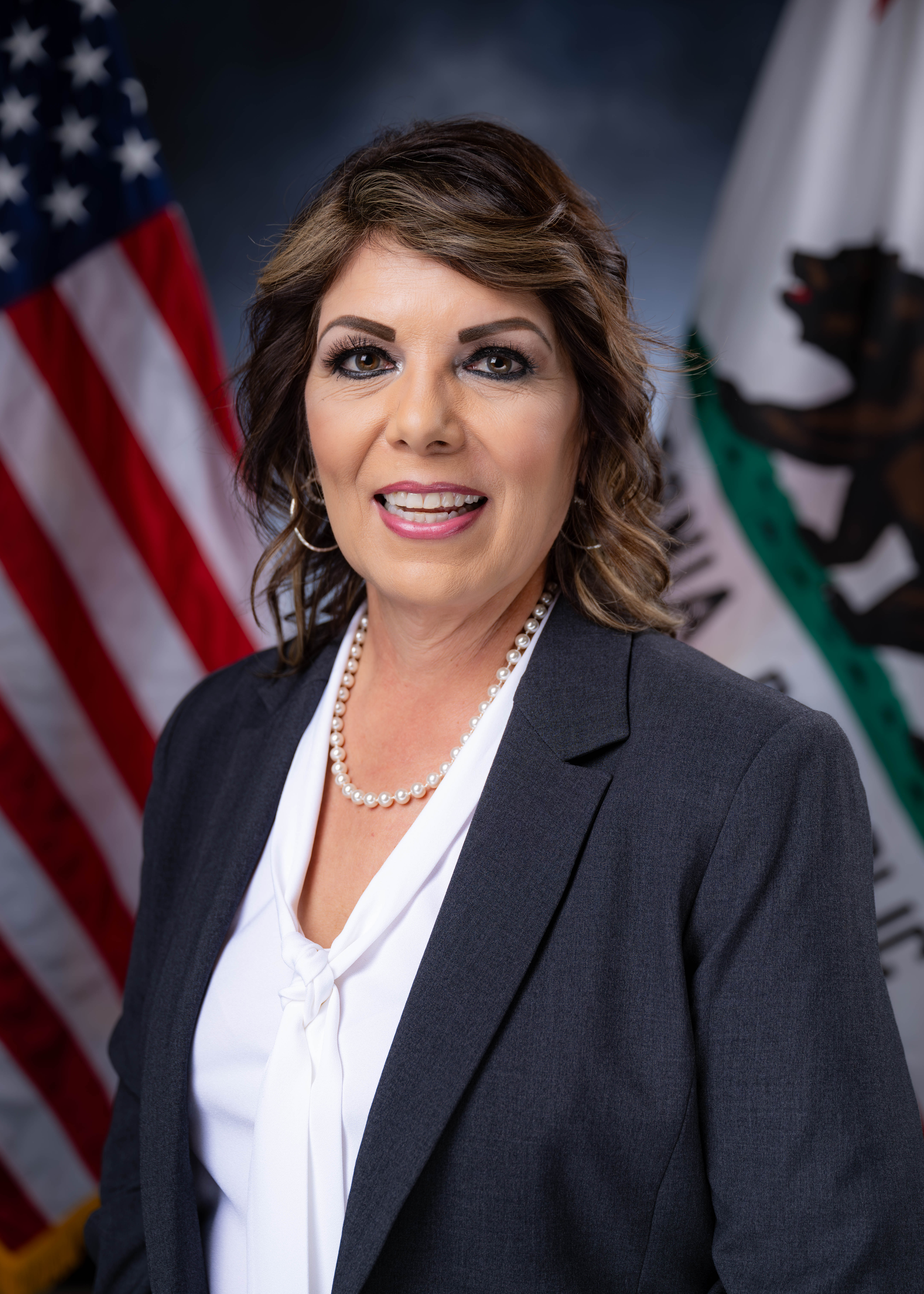
Asm. Michelle Rodriguez
Sponsored bills
Maddy summarySCR 103 designates the week of July 20-26, 2025, as "Probation Services Week" in California. This concurrent resolution recognizes the work of probation services professionals across the state. It is a symbolic observance with no new laws, regulations, or direct impact on individuals or policies. The bill does not alter existing statutes or create obligations for any entity.
Existing law requires, upon an Indian tribe's request, the State Department of Social Services to enter into an agreement with a tribe, consortium of tribes, or tribal organization regarding the care and custody of Indian children and jurisdiction over Indian child custody proceedings, and requires the department to negotiate in good faith with the Indian tribe, organization, or consortium in the state that requests development of an agreement with the state to administer all or part of the programs under Title IV-E of the Social Security Act on behalf of the Indian children who are under the authority of the tribe, organization, or consortium. Existing law makes an Indian tribe, tribal organization, or tribal consortium that is a party to an agreement eligible to receive allocations of child welfare services funds, in accordance with the agreement. Existing federal law, the Family First Prevention Services Act of 2018, among other things, provides states with an option to use federal funds under Title IV of the federal Social Security Act to provide mental health and substance abuse prevention and treatment services and in-home parent skill-based programs to a child who is a candidate for foster care or a child in foster care who is a pregnant or parenting foster youth, as specified. Existing law establishes the Family First Prevention Services program, and requires the department to have oversight of the program. Existing law authorizes a county or Indian tribe, consortium of tribes, or tribal organization that has entered into the above-described agreement with the state that elects to provide prevention services to provide those services for certain individuals for a certain period. This bill would provide that agreements between the department and a tribe, consortium of tribes, or tribal organization regarding the care and custody of Indian children and jurisdiction over Indian child custody proceedings include agreements that prevent entry into foster care, and would authorize such an agreement to be made for the sole purpose of the administration of prevention programs under the Family First Prevention Services program. The bill would also, subject to an appropriation for these purposes, require the department to provide funding to tribes, tribal organizations, or tribal consortiums to support the cost of independent legal representation provided by an attorney for a child and the child's parent, guardian, and Indian custodian pursuant to an agreement under the above-described provisions. The bill would require the department, by March 31, 2026, and in consultation with Indian tribes, to develop a cost allocation plan to allow specified funds to support the costs of independent legal representation.
Existing law requires the governing board of a school district and the governing board of a community college district, except as provided, to employ persons for positions not requiring certification qualifications or that are not academic positions, respectively, and to classify all of these employees and positions. Under existing law, those employees and positions are known as the classified service. Existing law requires the governing board of any school district, including city boards of education, and the governing board of any community college district, including city boards of education, to fix and order paid the compensation of persons a part of the classified service, as provided. Beginning with the 2026–27 school year, this bill would require a public school employer, defined to include the governing board of a school district, a school district, a county board of education, a county superintendent of schools, a charter school, an auxiliary organization, or a joint powers agency, as specified, and a community college district to (1) furnish to a classified school employee at the time of each payment of wages an accurate statement in writing and in a specified format that shows specified information, including, among other things, gross wages earned, all deductions, and all applicable hourly rates in effect during the payroll reporting period, as provided, (2) record the deductions made from the payment of wages and keep the record on file for at least 3 years at a specified location, and (3) afford current and former classified school employees the right to inspect or receive a copy of records pertaining to their employment, as provided.
Existing law establishes the Commission on Peace Officer Standards and Training within the Department of Justice and requires the commission to, among other things, develop and disseminate guidelines for all peace officers in California. This bill would require, on or before July 1, 2028, the commission to study and issue recommendations to the Legislature on the use of canines by law enforcement. The bill would require the commission to consider in its recommendations, among other things, instances of appropriate patrol use with a canine, as specified, and instances of appropriate use with a canine for detection, as specified. The bill would repeal these provisions on July 1, 2031.
Maddy summaryThis bill establishes January as National Human Trafficking Awareness Month in California to raise public awareness about human trafficking. The resolution recognizes the severity of human trafficking as a felony crime and highlights statistics showing its prevalence across the country and specific challenges with identifying male victims and labor trafficking cases. It aims to educate the public and encourage reporting and support for victims during this designated month.
Existing law establishes a workers' compensation system, administered by the Administrative Director of the Division of Workers' Compensation, to compensate an employee for injuries sustained in the course of employment. Existing law requires an employer to provide all medical services reasonably required to cure or relieve the injured worker from the effects of the injury. Existing law establishes a Workers' Compensation Appeals Board and sets forth various proceedings that are required to be brought forth before the board. Existing law authorizes an employer who pays or becomes obligated to pay compensation, salary in lieu of compensation, or an amount to the Department of Industrial Relations to make a claim or bring an action against a third person who caused the injury or death of an employee that gave rise to the employer's obligations. Existing law relieves the employer from an obligation to pay further compensation to or on behalf of the employee if the employer has paid litigation expenses, attorney's fees, and the employer's lien. Existing law requires any release or settlement of a claim to include notice to both the employer and employee, as specified, and the written consent of both the employer and employee, in order for the release or settlement to be valid. Existing law authorizes the appeals board to credit the employer with an amount equal to the recovery by the employee that has not been applied to certain expenses, to be applied against the employer's liability for compensation, as specified. Existing law authorizes an employer to enforce payment of a lien against a third party, or against the employee, if damages have been paid to the employee, in the manner provided for enforcement of money judgments. This bill would state that when the injured employee is a peace officer, as defined, or a firefighter, the employer will be entitled to receive no more than 13 of the third-party defendant's liability insurance policy limit, if the employee establishes that their total damages exceed the net recovery after satisfaction of the employer's claim and that the total liability insurance limits available are insufficient to fully compensate the employer and employee's proven damages. The bill would limit an employer's right to reimbursement, subrogation, or lien to the maximum recovery threshold, as specified. The bill would prohibit an employer from asserting any recovery by one of these injured employees as a credit or offset against future workers' compensation benefits and would require a settlement or release to limit an employer's claim for reimbursement to the portion of the settlement not allocated to the employee pursuant to these provisions. The bill would limit these provisions to those peace officers and firefighters who are employed by certain local entities, such as a city or county, among others.
(1) The Outdoor Advertising Act, a violation of which is a crime, provides for the regulation by the Department of Transportation of advertising displays, as defined, within view of public highways. Existing law exempts from certain provisions of the act advertising displays located in specific geographic areas in the City of Los Angeles if those displays meet prescribed conditions and requirements, including the condition that the advertising display is authorized by, or in accordance with, an ordinance adopted by the City of Los Angeles that regulates advertising displays by identifying the specific displays or establishing regulations that include, at a minimum, specified restrictions, as provided. This bill would authorize the ordinance adopted by the City of Los Angeles to authorize a framework of allowable signage that preserves flexibility in the ultimate placement, sizing, and scope of advertising displays, and define a range or maximum signage capacity, as specified. The bill would also authorize the City of Los Angeles to adopt implementing ordinances that sequence or phase the authorization of advertising displays over time. (2) This bill would declare that it is to take effect immediately as an urgency statute.
(1) Existing law prescribes the duties of the State Registrar of Vital Statistics (State Registrar) and local registrars of births and deaths with respect to the registration of certificates of live birth, fetal death, or death, and marriage licenses. Existing law requires the State Registrar to prescribe and furnish all record forms for use in carrying out the provisions governing vital records and prohibits the use of any record form or format other than those prescribed by the State Registrar. Existing law requires every live birth, fetal death, death, and marriage that occurs in the state to be registered with the local registrar. Existing law requires certificates of live birth, fetal death, or death, and a marriage license to include specified information, such as the full name of the child on a certificate of live birth and the full names of the parties to be married on a marriage license. Existing law also requires the county clerk to issue a confidential marriage license, as specified, on a form prescribed by the State Registrar. This bill would require, commencing no earlier than 2 years after an appropriation of funds by the Legislature, the State Registrar to require the use of a diacritical mark on an English letter within a name field to be properly recorded, when applicable, on a certificate of live birth, fetal death, death, marriage license and certificate, or confidential marriage license and certificate, and would require the use of a diacritical mark to be deemed an acceptable entry by the State Registrar. The bill would provide that the absence or presence of a diacritical mark on a certificate of live birth, fetal death, or death, or a marriage license and certificate or confidential marriage license and certificate does not render the document invalid nor affect any constructive notice imparted by proper recordation of the document. The bill would authorize the State Registrar to develop a list of acceptable diacritical marks for use on a certificate of live birth, fetal death, or death, or a marriage license and certificate or confidential marriage license and certificate through all-county letters or similar instructions from the State Registrar without taking further regulatory actions. The bill would authorize the State Registrar to remove any diacritical marks on the birth, fetal death, death, and marriage license and certificate data before furnishing the vital statistics to a federal, state, or local government agency. The bill would authorize, beginning July 1, 2026, if a name is not accurately recorded because of the absence of a diacritical mark on an English letter in any certificate of live birth, fetal death, death, or marriage already registered, the person asserting the omission, or the person's conservator, or if a minor, the person's parent or guardian, to make an affidavit under oath, as specified, stating the changes necessary to make the record correct. The bill would require the affidavit to be supported by the affidavit of one other person having knowledge of the facts and be filed with the State Registrar. The bill would require the State Registrar to, review the request and, if the request is accompanied with the payment of a specified fee, to issue an amendment to any certificate of live birth, fetal death, death, or marriage with the accurate name identified in the request. The bill would also authorize, if a name field of either of the parties married or their parents is not accurately recorded because of the absence of a diacritical mark on an English letter on any confidential license and certificate of marriage already registered, the party asserting the omission to make an affidavit, under oath, stating the changes necessary to make the record correct and file it with the county clerk. The bill would authorize the county clerk to charge a fee, not to exceed the amount of the fee for any other amended confidential marriage license and certificate issued by the county clerk and not to exceed the reasonable cost to provide the amended marriage license and certificate. The bill would require the county clerk to review the amendment for acceptance for filing, and if accepted, file the amendment and note the fact of the amendment, with its date, on the otherwise unaltered original confidential license and certificate of marriage. By requiring the affidavit to be under oath, the bill would expand the crime of perjury, thereby imposing a state-mandated local program. By increasing duties on county clerks, the bill would impose a state-mandated local program. (2) Existing law requires the collection of specified fees for certified copies of a fetal death record, death record, a birth certificate, marriage record, or marriage dissolution record. Existing law requires all applicants for certified copies of the above-described records to pay an additional fee of $3 to be collected by the State Registrar, the local registrar, county recorder, or county clerk, as appropriate. This bill would increase the additional fee charged for certified copies of the above-described records to $5. (3) The California Constitution requires the state to reimburse local agencies and school districts for certain costs mandated by the state. Statutory provisions establish procedures for making that reimbursement. This bill would provide that with regard to certain mandates no reimbursement is required by this act for a specified reason. With regard to any other mandates, this bill would provide that, if the Commission on State Mandates determines that the bill contains costs so mandated by the state, reimbursement for those costs shall be made pursuant to the statutory provisions noted above.
Existing law defines rape as an act of sexual intercourse accomplished under certain circumstances, including with a person not the spouse of the perpetrator where the person is incapable of giving legal consent because of a mental disorder or developmental or physical disability. This bill would remove the spousal exception from this definition of rape. By expanding the scope of a crime, this bill would impose a state-mandated local program. The California Constitution requires the state to reimburse local agencies and school districts for certain costs mandated by the state. Statutory provisions establish procedures for making that reimbursement. This bill would provide that no reimbursement is required by this act for a specified reason.