Maddy summaryThis bill designates February 2026 as Unclaimed Property Month in California to raise awareness about state-held financial assets. It encourages residents to check the state Controller's website to claim unclaimed funds such as uncashed checks and insurance proceeds. The resolution does not change any laws or policies but serves as a public awareness campaign to help people locate and claim their abandoned property. It directs the Assembly Chief Clerk to distribute copies of the resolution for public distribution.
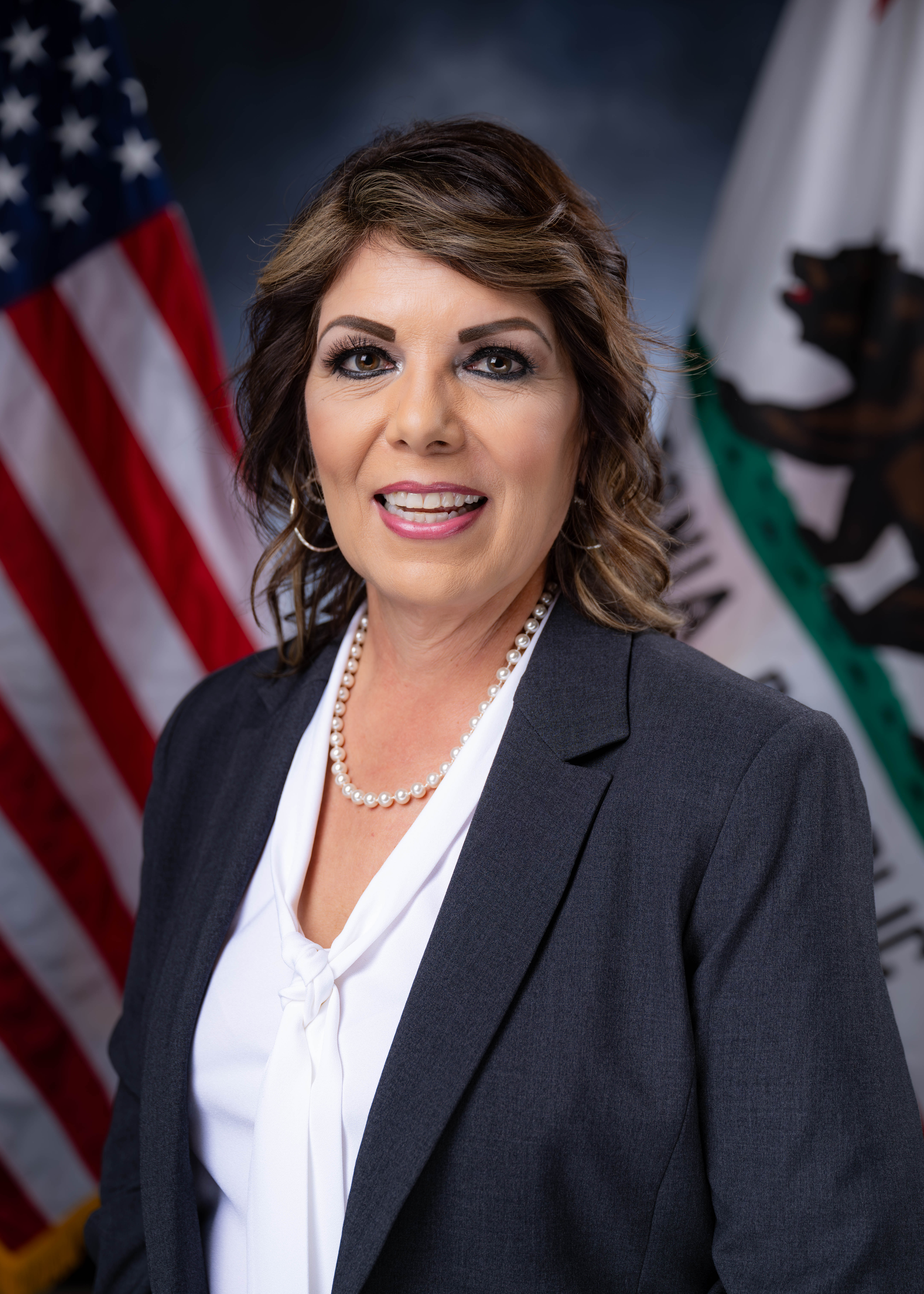
Asm. Michelle Rodriguez
Sponsored bills
Maddy summaryThis House Resolution declares January 2026 as School Board Recognition Month to honor the nearly 5,000 school board members across California's 1,000 school districts and county offices of education. The resolution recognizes these locally elected officials for their work in guiding public education and serving diverse communities, emphasizing their role in ensuring students' academic, social-emotional, and health needs are met. It calls on community members to join in acknowledging the dedication of school board members and collaborate to improve the education system. The bill has no operational effect beyond this symbolic recognition and does not change any laws or policies.
Maddy summaryThis House Resolution formally recognizes the importance of affordable homeownership for California families, particularly those with lower incomes, and highlights how nonprofit-led programs help build generational wealth and reduce economic disparities. The document emphasizes that existing state programs like CalHome support the construction and preservation of affordable homes through competitive funding to cities, counties, indigenous communities, and nonprofit builders such as Habitat for Humanity. While the resolution does not create new laws or funding, it serves as an official acknowledgment of homeownership's role in improving educational outcomes, health, civic participation, and neighborhood stability. The text also notes California's significant housing deficit and racial wealth gaps as context for why expanding affordable ownership opportunities is a priority for state policy.
Existing law authorizes any municipal corporation to acquire, construct, own, operate, or lease any public utility, and provides that "public utility" for these purposes means to supply the inhabitants of that municipal corporation with specified services, including a means of communication. Existing law similarly authorizes a municipal utility district and a public utility district to acquire, construct, own, operate, control, or use works for supplying the inhabitants of the district with specified services, including a means of communication. Existing law authorizes a county service area to acquire, construct, improve, maintain, and operate broadband internet access services. This bill would state the intent of the Legislature to enact legislation to implement a state standard of traffic control requirements for local governments during broadband deployment.
Existing law requires specified boards, including the Board of Registered Nursing and the Respiratory Care Board of California, to collect certain workforce data from their respective licensees and registrants for future workforce planning at least biennially. This bill would make nonsubstantive changes to those provisions.
Existing law, the Control, Regulate and Tax Adult Use of Marijuana Act (AUMA) , approved by the voters at the November 8, 2016, statewide general election, regulates the cultivation, distribution, transport, storage, manufacturing, testing, processing, sale, and use of marijuana for nonmedical purposes by people 21 years of age and older. The existing Medicinal and Adult-Use Cannabis Regulation and Safety Act (MAUCRSA) , among other things, consolidates the licensure and regulation of commercial medicinal and adult-use cannabis activities. Existing law establishes a workers' compensation system, administered by the Administrative Director of the Division of Workers' Compensation, to compensate an employee, as defined, for injuries sustained in the course of employment. Existing law requires every employer to secure the payment of workers' compensation as provided by law and imposes civil and criminal penalties on employers that fail to secure the payment of workers' compensation. Existing law authorizes an employer, pursuant to this provision, to insure against liability in insurers duly authorized to write compensation insurance in the state or to secure from the Director of Industrial Relations a certificate of consent to self-insure. This bill would authorize the administrative director or their agent to require an employer that is licensed or required to be licensed under MAUCRSA to provide proof that it has secured payment of workers' compensation to the administrative director or their agent. The bill would authorize the administrative director or their agent to establish a schedule for compliance that includes dates for when a licensee may be required to comply with these requirements. The bill would require the administrative director to provide assistance to any employer or entity that notifies the administrative director that it has been unable to obtain coverage and authorize the administrative director to extend the deadline for compliance, and would exempt any employer that secures the payment of workers' compensation pursuant to these provisions from civil or criminal liability for prior failure to secure the payment of compensation. The bill would authorize the administrative director to contract with one or more agents to assist employers in complying with these provisions, as specified.
(1) Under existing law, as part of the hazardous waste control laws, the Department of Toxic Substances Control (DTSC) generally regulates the management and handling of hazardous waste and hazardous materials. Existing law authorizes a public agency, as defined, to operate a household hazardous waste collection facility under permit from DTSC. The California Integrated Waste Management Act of 1989, which is administered by the Department of Resources Recycling and Recovery (CalRecycle) , requires a city and a county to prepare and submit to CalRecycle a countywide integrated waste management plan. The act requires the plan to include a household hazardous waste element that identifies a program in each city and county for the safe collection, recycling, treatment, and disposal of hazardous wastes that are generated by households. The California Oil Recycling Enhancement Act, administered by CalRecycle, establishes a used oil recycling program to promote and develop alternatives to illegal disposal of used oil. The act imposes a charge for every gallon of lubricating oil sold or transferred in the state, or imported into the state for use in the state, as specified. The act requires these charges to be deposited into the California Used Oil Recycling Fund, which is continuously appropriated to, among others, pay recycling incentives and to implement local used oil collection programs, as provided. This bill would make the act, as amended by this bill, inoperative upon the completion of specified conditions, including that CalRecycle submits a letter to the relevant committees of the Legislature indicating that specified conditions have been met and that CalRecycle is prepared to implement a lubricant and waste oil responsibility program as discussed below. This bill would create a producer responsibility program for lubricants and waste oil and require a producer responsibility organization (PRO) to provide a convenient collection and management system for covered products at no cost to residents or local governments. The bill would define "covered product" to mean a petroleum-based automotive product and other related products, as specified. The bill would require a producer of a covered product to register with the PRO, which would be required to develop and implement a producer responsibility plan for the collection, transportation, and the safe and proper management of covered products. The bill would require CalRecycle, in coordination with DTSC, to adopt regulations to implement the program with an effective date no earlier than July 1, 2028. This bill would require the PRO, within 12 months of the effective date of the regulations, to submit a product responsibility plan to CalRecycle. The bill would require the plan to include specified elements, including a funding mechanism that provides sufficient funding to carry out the plan. The bill would require, within 6 months of receipt of the plan, CalRecycle, in collaboration with DTSC, to approve, approve in part, or disapprove the plan, as specified. The bill would require CalRecycle to notify the PRO of its decision. If CalRecycle does not approve the plan in full, then the bill would require CalRecycle to specify the reasons for disapproval or identify the portions of the partially approved plan that do not comply with the program, as applicable. The bill would require the PRO to submit a revised plan if its plan is not fully approved. The bill would conditionally approve a plan if CalRecycle does not approve, approve in part, or disapprove a plan within one year of receipt of the plan. This bill would require the PRO to implement its plan within 90 days of approval. The bill would require the plan to be fully funded in a manner that equitably distributes the plan's costs among participant producers, as specified. The bill would require the PRO to reimburse local jurisdictions for costs associated with collecting illegally dumped covered products and for providing a convenient collection system for covered products if the PRO's plan relies on local jurisdictions to collect or manage covered products. This bill would require the PRO to prepare and submit to CalRecycle an annual report describing the activities carried out pursuant to the plan. The bill would require the PRO to retain specified documents, annually audit its accounting books, and make documents available to CalRecycle for review, as specified. The bill would require all reports and records provided to CalRecycle pursuant to the program to be provided under the penalty of perjury. By expanding the scope of a crime, the bill would impose a state-mandated local program. This bill would require a participant producer, through the PRO, to pay CalRecycle, on an unspecified schedule, an annual administrative charge, as determined by CalRecycle and DTSC. The bill would require the charge be set at an amount that is adequate to cover CalRecycle's and DTSC's actual and reasonable costs of administering and enforcing the program. The bill would provide for the imposition of administrative civil penalties on producers and other specified persons who violate the program. The bill would establish the Lubricant and Waste Oil Producer Responsibility Fund in the State Treasury and would require the administrative charges collected by CalRecycle to be deposited into that fund for expenditure by CalRecycle, upon appropriation by the Legislature, to cover CalRecycle's cost to implement the program. The bill would also establish the Lubricant and Waste Oil Penalty Account in the Lubricant and Waste Oil Producer Responsibility Fund and would require that the civil penalties collected by CalRecycle pursuant to the program be deposited into that account, for expenditure by CalRecycle, upon appropriation by the Legislature, for activities related to the collection, reuse, and recycling of covered products, grants for related purposes, and the administration and enforcement of the program. (2) Existing law, the Plastic Pollution Prevention and Packaging Producer Responsibility Act, establishes a producer responsibility program designed to ensure that producers of single-use packaging and food service ware covered by that program take responsibility for the costs associated with the end-of-life management of that material and ensure that the material is recyclable or compostable. The act requires producers, either individually or through participation in a producer responsibility organization, to have an approved plan that, among other things, describe how the producer or organization will comply with the act. This bill would exempt a product from the act if the product is included in an approved product responsibility plan pursuant to the lubricant and waste oil producer responsibility program, discussed above. (3) Existing constitutional provisions require that a statute that limits the right of access to the meetings of public bodies or the writings of public officials and agencies be adopted with findings demonstrating the interest protected by the limitation and the need for protecting that interest. This bill would make legislative findings to that effect. (4) The California Constitution requires the state to reimburse local agencies and school districts for certain costs mandated by the state. Statutory provisions establish procedures for making that reimbursement. This bill would provide that no reimbursement is required by this act for a specified reason.

Existing law establishes in the Business, Consumer Services, and Housing Agency a Department of Financial Protection and Innovation under the direction of the Commissioner of Financial Protection and Innovation. Under existing law, the department has charge of the execution of specified laws relating to various financial institutions and financial products and services. This bill would enact the California Elder Financial Abuse Prevention Act, which would authorize a depository institution, as defined, to take specified actions when, based on their own observations or information received from a governmental or law enforcement agency, the institution believes that an eligible adult, as defined, is the victim or target of financial abuse, including delaying or refusing a transaction involving the eligible adult and preventing the transfer of funds from the eligible adult's account. The bill would authorize a depository institution to notify an associated third party, as defined, if the depository institution believes an eligible adult may be the victim of financial abuse, and would exempt that disclosure from state privacy laws or requirements.
Existing law generally designates the State Air Resources Board as the state agency with the primary responsibility for the control of vehicular air pollution, and air pollution control districts and air quality management districts with the primary responsibility for the control of air pollution from all sources other than vehicular sources. Existing law requires the state board to inventory sources of air pollution within the air basins of the state, determine the kinds and quantity of air pollutants, and monitor air pollutants in cooperation with districts and other agencies. This bill would require the state board to expand its incident air monitoring program, subject to an appropriation by the Legislature for those purposes, to provide support for a regional network of air quality incident response centers operated by air districts, including at least one located in the South Coast Air Quality Management District, in order to facilitate emergency air monitoring response at the local and regional level. Prior to the state board establishing an air quality incident response center within an air district, the bill would require the state board to coordinate and develop operational plans for the air quality incident response centers with the relevant air districts. The bill would provide that funding made available to the state board for purposes of these provisions may be used for various purposes, including program funding to plan, create, equip, and maintain air quality incident response centers. To the extent that the bill would expand the duties of an air district, the bill would impose a state-mandated local program. The California Constitution requires the state to reimburse local agencies and school districts for certain costs mandated by the state. Statutory provisions establish procedures for making that reimbursement. This bill would provide that, if the Commission on State Mandates determines that the bill contains costs mandated by the state, reimbursement for those costs shall be made pursuant to the statutory provisions noted above.
Existing law, until January 1, 2023, prohibited loitering in a public place with the intent to commit prostitution, as defined, and made that crime a misdemeanor. This bill would reinstate those provisions and would prohibit law enforcement, as defined, from making an arrest pursuant to these provisions solely based on the individual's gender identity or sexual orientation. The bill would also require law enforcement, prior to making an arrest of the individual pursuant to these provisions, to document their attempts to offer the individual services. By creating a new crime, and by imposing new duties on local law enforcement, this bill would impose a state-mandated local program. The California Constitution requires the state to reimburse local agencies and school districts for certain costs mandated by the state. Statutory provisions establish procedures for making that reimbursement. This bill would provide that with regard to certain mandates no reimbursement is required by this act for a specified reason. With regard to any other mandates, this bill would provide that, if the Commission on State Mandates determines that the bill contains costs so mandated by the state, reimbursement for those costs shall be made pursuant to the statutory provisions noted above.