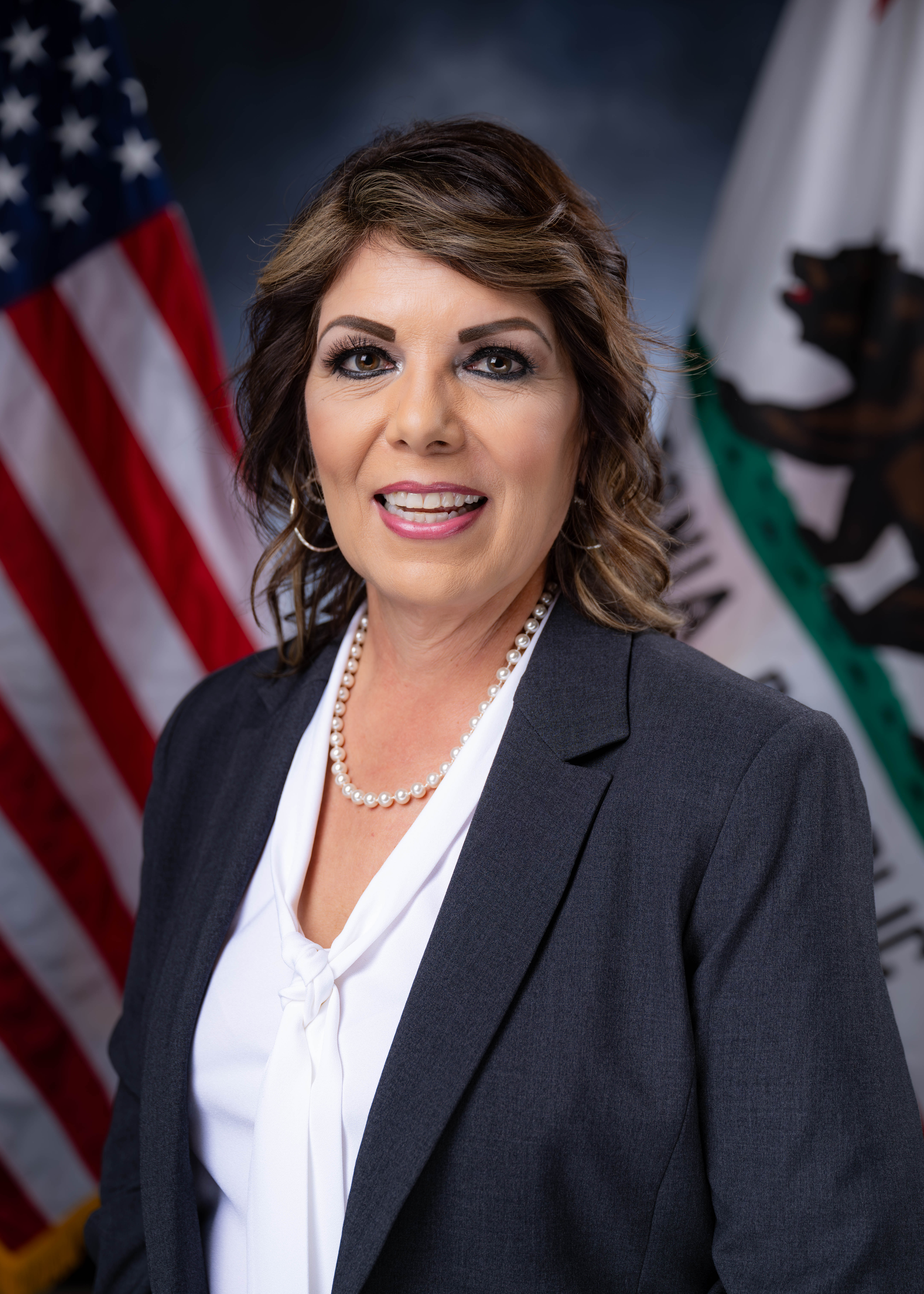
Photo of Michelle Rodriguez
D California House · District 53 On the 2026 ballot

Rep. Michelle Rodriguez

Compare
Total votes
4,687
all sessions
Attendance
94%
234 missed
Near the chamber average
With party
99%
of cast votes
Near the chamber average
Bipartisan score
0%
crosses aisle rarely
Near the chamber average
Sponsored
407
bills & resolutions
Near the chamber average
Committees
9
assignments
407 bills and resolutions

Sponsored bills

Total
407
Primary
40
Co-sponsor
367
This page
407
matching current filters
Co-sponsor SB 1399
Passed · California Senate · Co-sponsor
Locked detention facilities: civil immigration: reviews.

Existing law requires, until July 1, 2027, the Attorney General, or their designee, to engage in reviews of county, local, or private locked detention facilities in which noncitizens are being housed or detained for purposes of civil immigration proceedings in California, and, on or before March 1, 2019, to conduct a review of these facilities, as specified, including a review of the circumstances of apprehension and transfer. Existing law also requires the Department of Justice to provide, during the budget process, updates and information to the Legislature and the Governor, concerning the reviews, as provided and pursuant to a specified date. Existing law requires the comprehensive report to be completed by March 1, 2019, and to be posted on the Attorney General's internet website and made available to the public, as provided. Existing law makes these provisions inoperative on July 1, 2027, and repeals those provisions January 1, 2028. This bill would delete all dates specified above, including inoperative and repeal provisions, thereby indefinitely extending those provisions, and would delete the requirement for the review to include an individual's circumstances of apprehension and transfer. The bill would also make nonsubstantive changes.

Passed Aug 30, 2026 1 co-sponsor
Co-sponsor AB 2152
Passed · California House · Co-sponsor
California Environmental Quality Act: essential local fire station projects: infrastructure project streamlining.

The California Environmental Quality Act (CEQA) requires a lead agency, as defined, to prepare, or cause to be prepared, and certify the completion of, an environmental impact report (EIR) on a project that it proposes to carry out or approve that may have a significant effect on the environment or to adopt a negative declaration if it finds that the project will not have that effect. CEQA also requires a lead agency to prepare a mitigated negative declaration for a project that may have a significant effect on the environment if revisions in the project would avoid or mitigate that effect and there is no substantial evidence that the project, as revised, would have a significant effect on the environment. Existing law authorizes the Governor to certify projects meeting certain requirements as infrastructure projects and provide those certified projects with certain streamlining benefits, including requiring the lead agency to prepare the record of proceedings concurrently with the environmental review process and requiring the resolution of an action or proceeding challenging the certification of an EIR for certified projects or the granting of any project approvals, to the extent feasible, within 270 days of the filing of the record of proceedings with the court, as specified. Existing law requires the lead agency, within 10 days of the certification of an infrastructure project, to provide a public notice of the certification, as provided. If a lead agency fails to approve a project certified as an infrastructure project before January 1, 2033, existing law specifies that the certification is no longer valid. Existing law requires the Office of Land Use and Climate Innovation to make evidence and materials submitted for the certification of a project available to the public on its internet website at least 15 days before the certification of the project. This bill would also authorize the Governor to certify an essential local fire station project for streamlining as an infrastructure project if the Governor ensures that the project meets specified requirements, including, among others, that the applicant agrees to pay the costs of the trial court and the court of appeal in hearing and deciding any case challenging a lead agency's action on the project, and the applicant agrees to pay the costs of preparing the record of proceedings for the project, as specified. The bill would require a project to meet specified requirements to be eligible for certification as an essential local fire station project, including, among other things, (1) that the project is being undertaken by a city, county, city and county, or local fire agency, as provided, (2) that the project is not located on specified sensitive or hazardous sites, as described, and (3) that the project will employ best practices to avoid or mitigate significant environmental effects, as provided. The bill would require the Office of Land Use and Climate Innovation, for an essential local fire station project, to provide the Governor's office with evidence and materials to support consideration of the application no later than 45 days after the Office of Land Use and Climate Innovation posts the evidence and materials submitted for certification on its internet website.


Passed Aug 30, 2026 1 co-sponsor
Co-sponsor AB 1588
Passed · California House · Co-sponsor
Vehicles: Sideshow Accountability and Community Safety Act.

Existing law prohibits a person from, among other things, engaging in, aiding, or abetting a motor vehicle exhibition of speed on a highway or in an offstreet parking facility. Under existing law, a violation of this prohibition is punishable by imprisonment in a county jail for not more than 90 days, by a fine of not more than five hundred dollars ($500) , or by both that fine and imprisonment. Existing law, beginning on January 1, 2029, authorizes a court to suspend the privilege to operate a vehicle for 90 days to 6 months for a person who engages in, aids, or abets a motor vehicle exhibition of speed that occurred as part of a sideshow. For these purposes, existing law defines "sideshow" as an event in which 2 or more persons block or impede traffic on a highway or in an offstreet parking facility for the purpose of performing motor vehicle stunts, motor vehicle speed contests, motor vehicle exhibitions of speed, or reckless driving for spectators. This bill would revise the definition of sideshow to include the use or operation of any motor vehicle, including, but not limited to, motorcycles or off-highway motor vehicles, as specified, to barricade, block, impede, or otherwise obstruct traffic. The bill would also provide enhanced penalties for engaging in, aiding, or abetting a motor vehicle exhibition of speed as part of a sideshow, including, as specified, increasing fines, requiring a mandatory minimum jail sentence, and making the offense punishable as a misdemeanor or felony if the offense proximately causes injury to another person. By increasing the punishment for an existing crime, the bill would create a state-mandated local program. This bill would incorporate additional changes to Section 23109 of the Vehicle Code proposed by AB 1830 to be operative only if this bill and AB 1830 are enacted and this bill is enacted last. The California Constitution requires the state to reimburse local agencies and school districts for certain costs mandated by the state. Statutory provisions establish procedures for making that reimbursement. This bill would provide that no reimbursement is required by this act for a specified reason.

Passed Aug 30, 2026 1 co-sponsor
Co-sponsor SB 931
Passed · California Senate · Co-sponsor
Dolly Parton Day.

Existing law requires the Governor to proclaim various days as days of remembrance or recognition. This bill would require the Governor to annually proclaim September 25 as Dolly Parton Day. This bill would declare that it is to take effect immediately as an urgency statute.

Passed Aug 30, 2026 1 co-sponsor
Co-sponsor AB 69
Passed · California House · Co-sponsor
FAIR Plan policy notices and renewals.

The California FAIR Plan Association is a joint reinsurance association in which all insurers licensed to write basic property insurance participate to administer a program for the equitable apportionment of basic property insurance for persons who are unable to obtain that coverage through normal channels. Existing law requires the association to implement programs to help reduce the number of existing FAIR Plan policies, including clearinghouse programs in which a participating insurer offers homeowners or commercial insurance to FAIR Plan policyholders. Existing law requires an agent or broker transacting basic property insurance to assist a person in obtaining basic property insurance coverage by one of several specified methods, including making an application for insurance through the FAIR Plan. On and after January 1, 2028, this bill would authorize the association to share policyholder information with insurers participating in the clearinghouse program, as specified, to allow a participating insurer to offer a policy to a FAIR Plan policyholder and, if there is an agent or broker of record listed on the policy, would require the insurer to make the offer simultaneously to the agent or broker of record and the FAIR Plan policyholder. Commencing May 1, 2027, the bill would require a participating insurer to report to the association on a quarterly basis the number of policies it has issued to FAIR Plan policyholders. The bill would require the association to report aggregated numbers within 30 days, as specified, and post and quarterly update on its internet website a list of participating insurers in the clearinghouse programs. The bill would require the association to provide all policyholders with a notice regarding their coverage options at least annually, including with the initial policy issuance and upon each renewal. The bill would require an agent or broker transacting basic property insurance to assist a person in obtaining basic property insurance coverage by providing the person with information on the clearinghouse programs, among other specified assistance. The bill would require the association to require registered agents and brokers to complete the association's department-approved training on the association's and the broker's responsibility to advise policyholders on the voluntary market options. This bill would incorporate additional changes to Section 10095 of the Insurance Code proposed by AB 1680 to be operative only if this bill and AB 1680 are enacted and this bill is enacted last. This bill would incorporate additional changes to Section 10095.5 of the Insurance Code proposed by AB 2061 to be operative only if this bill and AB 2061 are enacted and this bill is enacted last.

Passed Aug 30, 2026 1 co-sponsor
Primary AB 2262
Passed · California House · Lead sponsor
Courts: disqualification of judges.

Existing law establishes procedures for a judge to disqualify themselves from a case. Under existing law, if a judge who should disqualify themselves refuses or fails to do so, a party may file with the clerk a written verified statement objecting to the hearing or trial before the judge and setting forth the facts constituting grounds for disqualification of the judge. Existing law requires copies of the statement to be served on each party and personally served on the judge alleged to be disqualified or on their clerk, provided that the judge is present in the courthouse or in chambers. This bill would require the statement to be served during regular business hours on the judge alleged to be disqualified at the courthouse in which the judge is sitting. The bill would, in addition to the clerk, permit service of the statement on the designee of the clerk of the court, provided that the judge is present in the courthouse or in chambers.

Passed Aug 28, 2026 0 co-sponsors
Co-sponsor AB 2504
Passed · California House · Co-sponsor
Community colleges: artificial intelligence: pilot program.

Existing law establishes the California Community Colleges, administered by the Board of Governors of the California Community Colleges, as one of the segments of public postsecondary education in the state. Existing law requires the board to appoint a chief executive officer, known as the Chancellor of the California Community Colleges. Existing law establishes community college districts throughout the state, under the administration of community college district governing boards, and authorizes these districts to provide instruction at the community college campuses they operate. This bill, upon appropriation, would require the chancellor's office to implement the Future of Creative Industries Pilot Program, commencing on or before July 1, 2028, and to select up to 10 community colleges to participate in the pilot program, as specified. The bill would require the chancellor's office, on or before January 1, 2032, to submit a report to the Legislature evaluating the effectiveness of the pilot program, as provided. The bill would repeal this pilot program on January 1, 2033.

Passed Aug 28, 2026 1 co-sponsor
Co-sponsor AB 2081
Passed · California House · Co-sponsor
Medi-Cal: Home and Community-Based Alternatives Waiver.

Existing law establishes the Medi-Cal program, which is administered by the State Department of Health Care Services and under which qualified low-income individuals receive health care services. The Medi-Cal program is in part governed by, and funded pursuant to, federal Medicaid program provisions. Under existing law, home- and community-based services (HCBS) approved by the United States Department of Health and Human Services are covered for eligible individuals to the extent that federal financial participation is available for those services under the state plan or waivers granted in accordance with certain federal provisions. Existing law authorizes the Director of Health Care Services to seek waivers for any or all approvable HCBS. Existing law sets forth provisions for the implementation of the Nursing Facility/Acute Hospital Transition and Diversion Waiver, which is the predecessor of the Home and Community-Based Alternatives (HCBA) Waiver, for purposes of providing care management services to individuals who are at risk of nursing facility or institutional placement, subject to federal cost neutrality. Existing law authorizes the director to propose that the waiver provide for achievement of annual cost neutrality in the aggregate to allow enrollment and authorization of waiver services based on medical necessity, and to require care management contractors to enroll at least 60% of all total annual enrollments from certain health care settings or populations. Existing law additionally sets forth provisions authorizing the director to expand the number of waiver slots up to 5,000 additional slots. This bill would recast the above-described waiver provisions to refer to the HCBA Waiver. The bill would authorize the director, beginning January 1, 2027, to semiannually evaluate the populations receiving the priority enrollment described above, and to designate additional populations to receive priority enrollment based on this evaluation, subject to applicable cost-neutrality requirements. The bill would delete the provision relating to the 5,000 slots. The bill would instead require the department, beginning in 2027, and for the HCBA Waiver period, to increase the total number of waiver slots by 5,000, in addition to any planned expansion of waiver slots federally approved as of January 1, 2026, as specified, consistent with the above-described requirements.

Passed Aug 28, 2026 1 co-sponsor
Co-sponsor AB 2756
Passed · California House · Co-sponsor
Medi-Cal: vision services: performance measures.

Existing law establishes the Medi-Cal program, which is administered by the State Department of Health Care Services and under which qualified low-income individuals receive health care services. The Medi-Cal program is in part governed by, and funded pursuant to, federal Medicaid program provisions. Under existing law, certain vision care benefits are covered under the Medi-Cal program, relating to, among other things, optometric and optician services and eyeglasses, as specified. This bill would require the department, by no later than January 1, 2028, to establish a list of performance measures to ensure that the vision services under the Medi-Cal program meet quality and access criteria. The bill would require that the performance measures be designed to evaluate utilization, access, and availability of Medi-Cal vision services. The bill would require certain information within the performance measures, relating to providers and examinations, among other factors. The bill would require the department, when evaluating performance measures, to consider certain criteria, including trended data and other state performance and quality measures. The bill would require the department to report on each performance measure only to the extent that the department has existing data sources from which to calculate the applicable measure, as specified. The bill would specify a timeline for the posting of performance measures and data on the department's internet website. The bill would also require the department to establish benchmarks for each performance measure and to annually prepare a summary report on complaints and grievances, as specified.

Passed Aug 28, 2026 1 co-sponsor
Showing 1 to 10 of 407 bills
1 2 3 41 Next