

Existing law establishes the California Career Technical Education Incentive Grant Program, administered by the State Department of Education, with the purpose of encouraging, maintaining, and strengthening the delivery of high-quality career technical education programs. Existing law provides, for the 2021–22 fiscal year and each fiscal year thereafter, that $300,000,000 shall be available to the department, upon appropriation by the Legislature, for the program. Existing law requires an applicant to demonstrate a proportional dollar-for-dollar match and sets that amount for the 2021–22 fiscal year, and each fiscal year thereafter, at $2 for every $1 received from the program. Existing law prohibits an applicant from being awarded an amount higher than the amount that the allocation formula determines them to be eligible to receive under the program. Existing law requires the Superintendent of Public Instruction, in administering the program, to perform specified duties, including, among other duties, to (1) determine, in collaboration with the executive director of the State Board of Education, and make public on a preliminary basis at least 30 days before a regularly scheduled meeting of the state board, the allocation formula, (2) distribute funding on a multiyear schedule, (3) require grant recipients to submit program reports, (4) manage the grant process, and (5) promote the success of K–12 career technical education programs, as provided. This bill would require the department, instead of the Superintendent, to perform the above-described duties. The bill would, for purposes of allocations commencing no later than the 2027–28 fiscal year and pursuant to the above-described requirements, also require the department to determine, in consultation with the executive director of the state board, a revised allocation formula that ensures that all funds appropriated for the program in any given fiscal year are fully allocated to program applicants in that fiscal year, as provided.
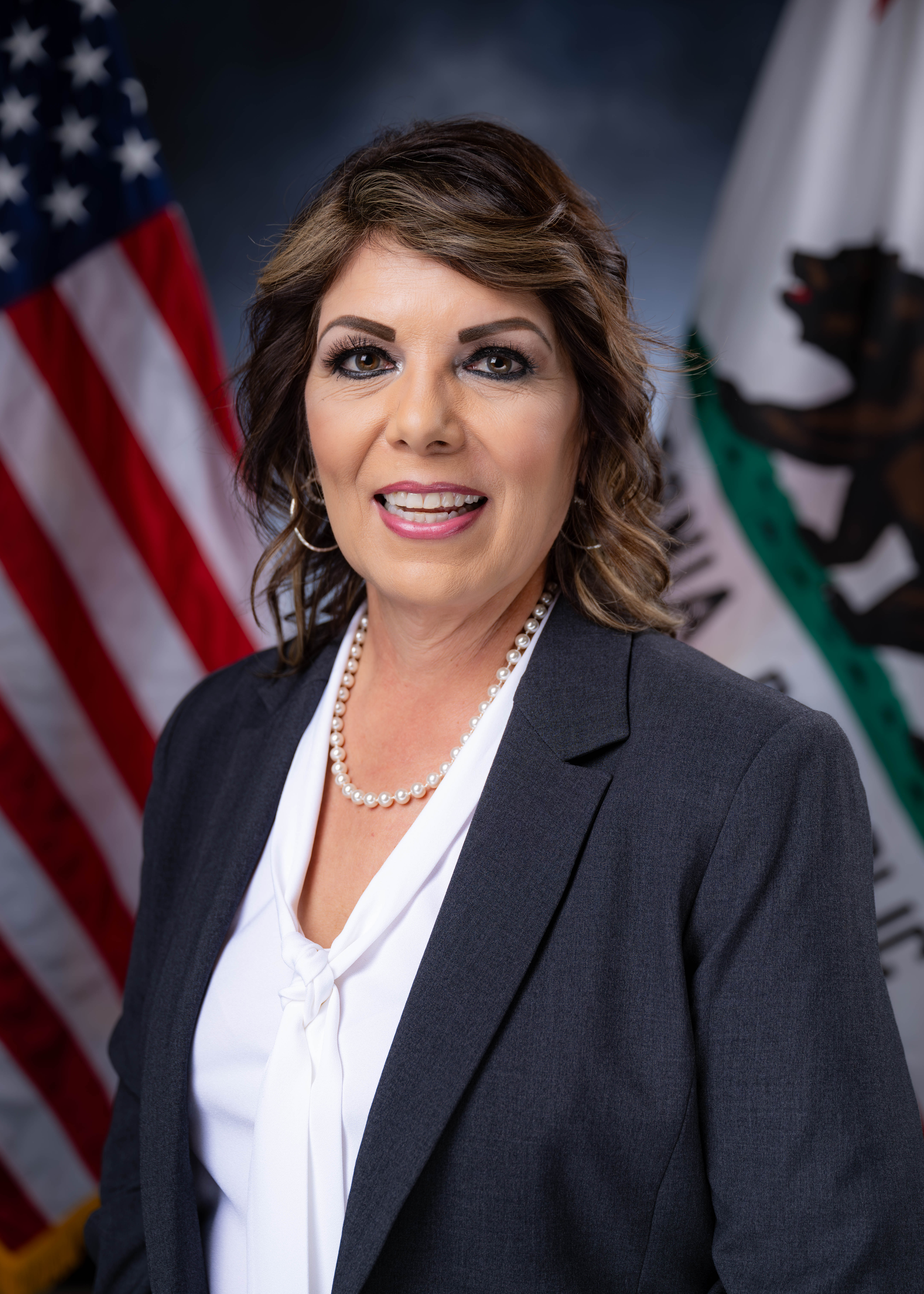
Rep. Michelle Rodriguez
Sponsored bills
Existing law establishes the Department of Health Care Access and Information under the control of the Director of the Department of Health Care Access and Information, to administer various health professions development programs. Existing law requires the department to maintain a Health Professions Career Opportunity Program to, among other things, implement programs at colleges and universities selected by the department and include in those programs pipeline programs that provide comprehensive academic enrichment, career development, mentorship, and advising in order to support students from underrepresented regions and backgrounds to pursue health careers. Existing law creates within the department the Health Professions Education Fund, for the primary purpose of providing scholarships and loans to students from underrepresented groups who are accepted to or enrolled in schools of medicine, dentistry, nursing, or other health professions. Existing law authorizes the department to receive private donations to be deposited into the fund and continuously appropriates all moneys in the fund to the department for those purposes. This bill would enact the California Podiatric Pipeline Program Act, to require the department to establish and administer the California Podiatric Pipeline Program to promote careers in podiatric medicine and support the educational advancement of California residents pursuing the doctor of podiatric medicine degree, as specified. The bill would specify that the department may use funds from the Health Professions Education Fund or Health Professions Pathways Program for the purposes of this bill, subject to the requirements of the fund. This bill would authorize the department to award planning or coordination grants to participating universities or colleges to support implementation of the program as funding is made available. The bill would also require the department, subject to an appropriation by the Legislature, to annually report to the Legislature regarding the number of students participating, the number matriculating into doctor of podiatric medicine programs, and recommendations for expanding residency opportunities for podiatric graduates. The bill would make implementation of these provisions contingent upon appropriation by the Legislature. The bill would repeal these provisions on January 1, 2032.
Existing law regulates various businesses to preserve and regulate competition and prohibit unfair practices, among other purposes. Existing law imposes various business practice restrictions on a food delivery platform, defined as an online business that acts as an intermediary between consumers and multiple food facilities to submit food orders from a consumer to a participating food facility, and to arrange for the delivery of the order from the food facility to the consumer. Existing law prohibits a food delivery platform from arranging the delivery of an order from a food facility without first obtaining an agreement with the food facility expressly authorizing the platform to take orders and deliver meals, as prescribed. This bill would prohibit a person from selling or transferring, or facilitating the sale or transfer of, a reservation for a restaurant, as defined, for an amount higher than that person paid to acquire the reservation, except as specified. The bill would authorize the Attorney General, any county counsel or city attorney, and an individual or entity who suffers actual harm as a result of a violation of the act to recover specified civil penalties. The bill would require a civil penalty recovered by the Attorney General pursuant to the act to be deposited in the Public Rights Law Enforcement Special Fund.
The Donahoe Higher Education Act sets forth the missions and functions of the public institutions of higher education, including the University of California, administered by the Regents of the University of California, the California State University, administered by the Trustees of the California State University, and the California Community Colleges, administered by the Board of Governors of the California Community Colleges. The provisions of the Donahoe Higher Education Act apply to the University of California only to the extent that the Regents of the University of California, by appropriate resolution, make them applicable. This bill would prohibit the University of California, California State University, or California Community Colleges from disqualifying a student from being hired for an employment position due to the student's failure to provide proof of federal work authorization, except where that proof is required by federal law or where that proof is required as a condition of a grant that funds the particular employment position for which the student has applied. This bill would require the University of California, the California State University, and the California Community Colleges to treat a specified prohibition in federal law on hiring undocumented noncitizens as inapplicable because that provision does not apply to any branch of state government. The bill would further provide that, to the extent student employment is considered a "benefit" for purposes of federal law, the bill constitutes authorization to provide that benefit for purposes of specified federal law. This bill would require the University of California, the California State University, and the California Community Colleges to implement the bill by January 6, 2027. The bill's provisions would apply to the University of California, unless it is found inapplicable to the University of California and then only to the extent that the Regents of the University of California, by appropriate resolution, make them applicable. By imposing new duties on community college districts, the bill would impose a state-mandated local program. The California Constitution requires the state to reimburse local agencies and school districts for certain costs mandated by the state. Statutory provisions establish procedures for making that reimbursement. This bill would provide that, if the Commission on State Mandates determines that the bill contains costs mandated by the state, reimbursement for those costs shall be made pursuant to the statutory provisions noted above.
The California Constitution authorizes the Legislature to exempt from taxation, in whole or in part, property that is used exclusively for religious, hospital, or charitable purposes, and is owned or held in trust by a nonprofit entity. Pursuant to that authority, existing law provides for a welfare exemption under which property used exclusively for an exempt purpose and owned and operated by specified entities, including foundations, limited liability companies, or corporations meeting certain statutory requirements is exempt from taxation. This bill would specify that for the purposes of the welfare exemption provisions above, "property used exclusively for religious, hospital, scientific, or charitable purposes" shall not include property, or any portion thereof, operated as a detention facility, as defined. The bill would declare that the above provision is declarative of, and not a change in, existing law.
Existing law establishes the Medi-Cal program, which is administered by the State Department of Health Care Services and under which qualified low-income individuals receive health care services, including emergency or nonemergency medical or nonmedical transportation services. The Medi-Cal program is, in part, governed and funded by federal Medicaid program provisions. Under this bill, commencing on July 1, 2027, and subject to an appropriation, Medi-Cal fee-for-service reimbursement for nonemergency ambulance transportation services, as defined, would be in an amount equal to 80% of the amount set forth in the federal Medicare ambulance fee schedule for the corresponding level of service, adjusted by the Geographic Practice Cost Index, as specified. The bill would require the department to establish a Medi-Cal managed care directed payment program for nonemergency ambulance transportation services, with the reimbursement rates set in an amount equal to at least the amount set forth under fee-for-service reimbursement. The bill would require the department to maximize federal financial participation in implementing the above-described provisions to the extent allowable. To the extent that federal financial participation is unavailable, the bill would require the department to implement the provisions using state funds, as specified. Under the bill, whenever the medical necessity of nonemergency ambulance transportation services needs to be certified for purposes of Medi-Cal coverage, either a physician or a nonphysician authorized under certain federal regulations would be permitted to complete that certification, as specified. The bill would require the department to revise and update the Medi-Cal provider manual or any guidance, as applicable, to implement this provision. Existing Medi-Cal regulations require that records of medical transportation providers include, among other information, odometer readings at each pickup and delivery location. Under this bill, for purposes of documenting mileage in their records under the Medi-Cal program, medical transportation providers would be authorized to utilize vehicle Global Positioning System (GPS) tracking, digital mapping software or applications, or another reasonable mechanism identified by the department, as specified, in addition to the above-described odometer readings. The bill would require the department to revise and update any corresponding regulations, including the above-described provision.
Maddy summaryThis bill designates September 2026 as Childhood Cancer Awareness Month. It directly affects state agencies and organizations by encouraging them to recognize this specific month for awareness activities. The measure does not change laws or allocate funding but serves as a formal commemorative resolution.
This measure would recognize and affirm the important role of artists, arts organizations, creative arts therapists, and arts for health initiatives in supporting behavioral health, promoting recovery, strengthening community resilience, and contributing to public safety. The measure would encourage and recognize exploration, support, and integration of arts and behavioral health within California's health care, behavioral health, and community-based systems.
Existing law vests the Public Utilities Commission with regulatory authority over public utilities, including electrical corporations and gas corporations. Existing law finds and declares that the California Council on Science and Technology (CCST) was organized as a nonprofit corporation at the request of the Legislature for the specific purpose of offering expert advice to the state government on public policy issues significantly related to science and technology. Existing law requests the CCST, every 3 years, to assess the infrastructure project types, scale, and pace necessary to achieve the state's energy, climate change, and air quality goals, as specified. This bill would require the CCST to establish, on or before March 1, 2027, upon appropriation by the Legislature, a program to, upon request of the Legislature, analyze legislation that would establish a mandated requirement or program, as defined, or otherwise affect electrical corporation or gas corporation ratepayers, as specified. The bill would require the analysis to include, among other things, whether the legislation will increase electricity or natural gas utility rates, and if so, would require an assessment of specified financial impacts. The bill would require the CCST to develop and implement conflict-of-interest provisions to prohibit a person from participating in an analysis for which the person knows or has reasons to know that the person has a material financial interest. The bill would repeal these provisions on January 1, 2032.
Existing law requires the State Board of Education, on or before January 31, 2024, to appoint an independent panel of experts for the purpose of creating an approved list of evidence-based, culturally, linguistically, and developmentally appropriate screening instruments for pupils in kindergarten and grades 1 and 2 to assess pupils for risk of reading difficulties, including possible neurological disorders such as dyslexia, as specified. Existing law requires the governing board or body of a school district, county office of education, or charter school serving pupils in kindergarten or grades 1 or 2 to adopt, on or before June 30, 2025, one or more screening instruments from the approved list to assess pupils for risk of reading difficulties, as specified, and commencing no later than the 2025–26 school year, requires those local educational agencies to assess each pupil in kindergarten and grades 1 and 2 for risk of reading difficulties using the screening instrument or instruments adopted by the governing board or body of the local educational agency, as specified. This bill would, on or before July 31, 2027, require the state board to approve and the State Department of Education to post on its internet website criteria and guidance for selecting evidence-based, culturally, linguistically, and developmentally appropriate mathematics diagnostic assessments for pupils in kindergarten and grades 1 and 2 to assess pupils' mathematics knowledge and learning needs and identify pupils in need of additional support. The bill would require the department, on or before January 31, 2028, to (1) publish on its internet website a list of approved diagnostic assessments that meet the criteria, and (2) post on its internet website additional guidance to assist local educational agencies in selecting diagnostic assessments from the approved list, as provided. The bill would require the list to include diagnostic assessments that are developed for both English learners and non-English learners, as provided. The bill would require the state board and the department to solicit stakeholder input when developing the criteria, guidance, and list of diagnostic assessments pursuant to these provisions and to allow for public comment. The bill would authorize the department to periodically update the list of approved assessments. The bill would require the governing board or body of a school district, county office of education, or charter school serving pupils in kindergarten or grades 1 or 2 to adopt, on or before June 30, 2028, one or more diagnostic assessments from the published list of approved diagnostic assessments to assess pupils' mathematics knowledge and learning needs. The bill would authorize a local educational agency to satisfy this requirement by using a diagnostic assessment that is not on the published list if the governing board or body self-certifies that the assessment tool meets the above-described criteria. The bill, commencing no later than the 2028–29 school year, would require those local educational agencies to assess each pupil in kindergarten and grades 1 and 2 for mathematics knowledge using the diagnostic assessment or assessments adopted by the governing board or body of the local educational agency. The bill would require a local educational agency to provide parents or guardians of pupils eligible for assessment with information about the assessment and to make pupil results available to parents or guardians, as required by the state board, as provided. By imposing additional duties on local educational agencies, the bill would impose a state-mandated local program. The bill would require the department, by April 30, 2028, to curate and maintain on its internet website guidance and resources on evidence-based support, intervention, and instructional strategies aligned with the Mathematics Framework for California Public Schools: Kindergarten Through Grade Twelve. The California Constitution requires the state to reimburse local agencies and school districts for certain costs mandated by the state. Statutory provisions establish procedures for making that reimbursement. This bill would provide that, if the Commission on State Mandates determines that the bill contains costs mandated by the state, reimbursement for those costs shall be made pursuant to the statutory provisions noted above.