

Pupil instruction: math assessments.
Summary
Existing law requires the State Board of Education, on or before January 31, 2024, to appoint an independent panel of experts for the purpose of creating an approved list of evidence-based, culturally, linguistically, and developmentally appropriate screening instruments for pupils in kindergarten and grades 1 and 2 to assess pupils for risk of reading difficulties, including possible neurological disorders such as dyslexia, as specified. Existing law requires the governing board or body of a school district, county office of education, or charter school serving pupils in kindergarten or grades 1 or 2 to adopt, on or before June 30, 2025, one or more screening instruments from the approved list to assess pupils for risk of reading difficulties, as specified, and commencing no later than the 2025–26 school year, requires those local educational agencies to assess each pupil in kindergarten and grades 1 and 2 for risk of reading difficulties using the screening instrument or instruments adopted by the governing board or body of the local educational agency, as specified. This bill would, on or before July 31, 2027, require the state board to approve and the State Department of Education to post on its internet website criteria and guidance for selecting evidence-based, culturally, linguistically, and developmentally appropriate mathematics diagnostic assessments for pupils in kindergarten and grades 1 and 2 to assess pupils' mathematics knowledge and learning needs and identify pupils in need of additional support. The bill would require the department, on or before January 31, 2028, to (1) publish on its internet website a list of approved diagnostic assessments that meet the criteria, and (2) post on its internet website additional guidance to assist local educational agencies in selecting diagnostic assessments from the approved list, as provided. The bill would require the list to include diagnostic assessments that are developed for both English learners and non-English learners, as provided. The bill would require the state board and the department to solicit stakeholder input when developing the criteria, guidance, and list of diagnostic assessments pursuant to these provisions and to allow for public comment. The bill would authorize the department to periodically update the list of approved assessments. The bill would require the governing board or body of a school district, county office of education, or charter school serving pupils in kindergarten or grades 1 or 2 to adopt, on or before June 30, 2028, one or more diagnostic assessments from the published list of approved diagnostic assessments to assess pupils' mathematics knowledge and learning needs. The bill would authorize a local educational agency to satisfy this requirement by using a diagnostic assessment that is not on the published list if the governing board or body self-certifies that the assessment tool meets the above-described criteria. The bill, commencing no later than the 2028–29 school year, would require those local educational agencies to assess each pupil in kindergarten and grades 1 and 2 for mathematics knowledge using the diagnostic assessment or assessments adopted by the governing board or body of the local educational agency. The bill would require a local educational agency to provide parents or guardians of pupils eligible for assessment with information about the assessment and to make pupil results available to parents or guardians, as required by the state board, as provided. By imposing additional duties on local educational agencies, the bill would impose a state-mandated local program. The bill would require the department, by April 30, 2028, to curate and maintain on its internet website guidance and resources on evidence-based support, intervention, and instructional strategies aligned with the Mathematics Framework for California Public Schools: Kindergarten Through Grade Twelve. The California Constitution requires the state to reimburse local agencies and school districts for certain costs mandated by the state. Statutory provisions establish procedures for making that reimbursement. This bill would provide that, if the Commission on State Mandates determines that the bill contains costs mandated by the state, reimbursement for those costs shall be made pursuant to the statutory provisions noted above.
Bill status
passed both
4 of 5 stages cleared
Introduction
Feb 2026
Committee Review
Aug 2026
Senate Passage
May 2026
Assembly Passage
Aug 2026
Governor
Introduced Feb 13, 2026
Last action Aug 27, 2026
Maddy AI version diff · 6 comparisons
What changed between versions
08/30/26 - Enrolled
→
SB1067
·
1 edit
MINOR
No substantive policy changes occurred between these two versions. The difference is purely presentational: the 'from' version is the formal enrolled bill document (with page numbers, signature blocks, and Governor approval line), while the 'to' version is a web-based rendering of the same enrolled text from the California Legislature website, complete with navigation menus and sidebar elements. All legislative provisions, dates, and requirements are identical.
TECHNICAL
The bill text was reformatted from a formal enrolled document (with page numbers, signature blocks, and Governor approval line) into a web-based display format that includes website navigation elements, a version history sidebar, and status information. No legislative language was added, removed, or altered.
Floor votes · Senate May 19, 2026 · Assembly Aug 24, 2026
How they voted
39–0
Passed · 1 other
Total votes 40
May 19, 2026
D
Democratic30
100% Yea
R
Republican10
90% Yea
Vote distribution
All Yea
All Nay
Mixed
No data
Full legislative history
Actions timeline
Total actions
26
Key actions
11
Committee
5
Amendments
7
Aug 27, 2026
Upper · Passed
Assembly amendments concurred in. (Ayes 40. Noes 0.) Ordered to engrossing and enrolling.
upper
Aug 24, 2026
Introduced
In Senate. Concurrence in Assembly amendments pending.
upper
Aug 24, 2026
Lower · Passed
Read third time. Passed. Ordered to the Senate.
lower
Aug 17, 2026
Lower · Passed
Read third time and amended.
lower
Aug 13, 2026
Lower · Passed
From committee: Do pass. (Ayes 15. Noes 0.) (August 13).
lower
Jul 2, 2026
Lower · Passed
Read second time and amended. Re-referred to Com. on APPR.
lower
Jul 2, 2026
Lower · Passed
From committee: Do pass as amended and re-refer to Com. on APPR. (Ayes 8. Noes 0.) (July 1).
lower
Jun 22, 2026
Lower · Passed
From committee with author's amendments. Read second time and amended. Re-referred to Com. on ED.
lower
May 26, 2026
Committee
Referred to Com. on ED.
lower
May 19, 2026
Upper · Passed
Read third time. Passed. (Ayes 39. Noes 0. Page 4342.) Ordered to the Assembly.
upper
May 14, 2026
Upper · Passed
From committee: Do pass. (Ayes 7. Noes 0. Page 4263.) (May 14).
upper
Apr 22, 2026
Upper · Passed
From committee: Do pass and re-refer to Com. on APPR. (Ayes 7. Noes 0. Page 4007.) (April 22). Re-referred to Com. on APPR.
upper
Apr 8, 2026
Upper · Passed
From committee with author's amendments. Read second time and amended. Re-referred to Com. on ED.
upper
Feb 26, 2026
Committee
Referred to Com. on ED.
upper
Feb 13, 2026
Introduced
Introduced. Read first time. To Com. on RLS. for assignment. To print.
upper
1 primary · 24 co-sponsors
Sponsors
Role
Legislator
Party
State
District
P

Akilah Weber Pierson
DDemocratic
Co

Aisha Wahab
DDemocratic
Co
Ben Allen
DDemocratic
Co
Blanca Rubio
DDemocratic
Co

Christopher Cabaldon
DDemocratic
Co
Corey Jackson
DDemocratic
Co

Diane Papan
DDemocratic
Co

Henry Stern
DDemocratic
Co
Isaac Bryan
DDemocratic
Co

Jasmeet Bains
DDemocratic
Co
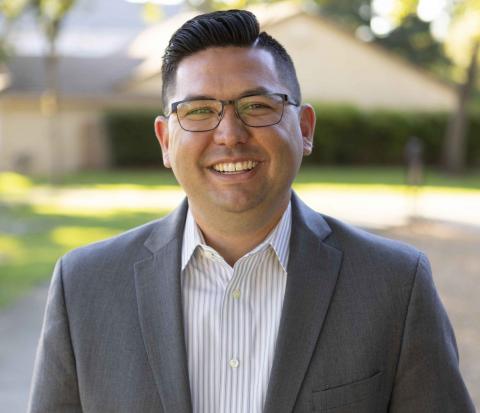
Joshua Hoover
RRepublican







Ask Maddy
·
AI policy assistant
Ask Maddy about SB 1067
Scope: CA
Hi! I can help you understand SB 1067. What would you like to know?
Try one of these
i
Maddy answers using official bill text and legislative records. Always verify before sharing.
Sources cited inline