

Existing law requires the Department of Health Care Access and Information, formerly known as the Office of Statewide Health Planning and Development, to establish a program to contract with programs that train certified nurse-midwives and programs that train licensed midwives in accordance with the global standards for midwifery education and the international definition of "midwife" as established by the International Confederation of Midwives in order to increase the number of students receiving quality education and training as a certified nurse-midwife or as a licensed midwife. Existing law requires these provisions to be implemented only upon an appropriation by the Legislature for these purposes in the annual Budget Act or another act. This bill would require the Department of Health Care Access and Information, upon appropriation from the Legislature for this purpose, to administer funding for a statewide study on midwifery education. The bill would require the study to be conducted by an outside consultant familiar with the health care and midwifery landscapes and workforce in California that would, among other things, identify viable education programs that can serve both rural and urban geographic areas. The bill would require the department to submit a report from the study's findings to the Legislature, to post the report on the department's internet website, and to notify all persons in the department's reproductive health and maternity care electronic mailing list, as specified. The bill would define "reproductive health care professionals" as, among others, medical doctors and licensed midwives.
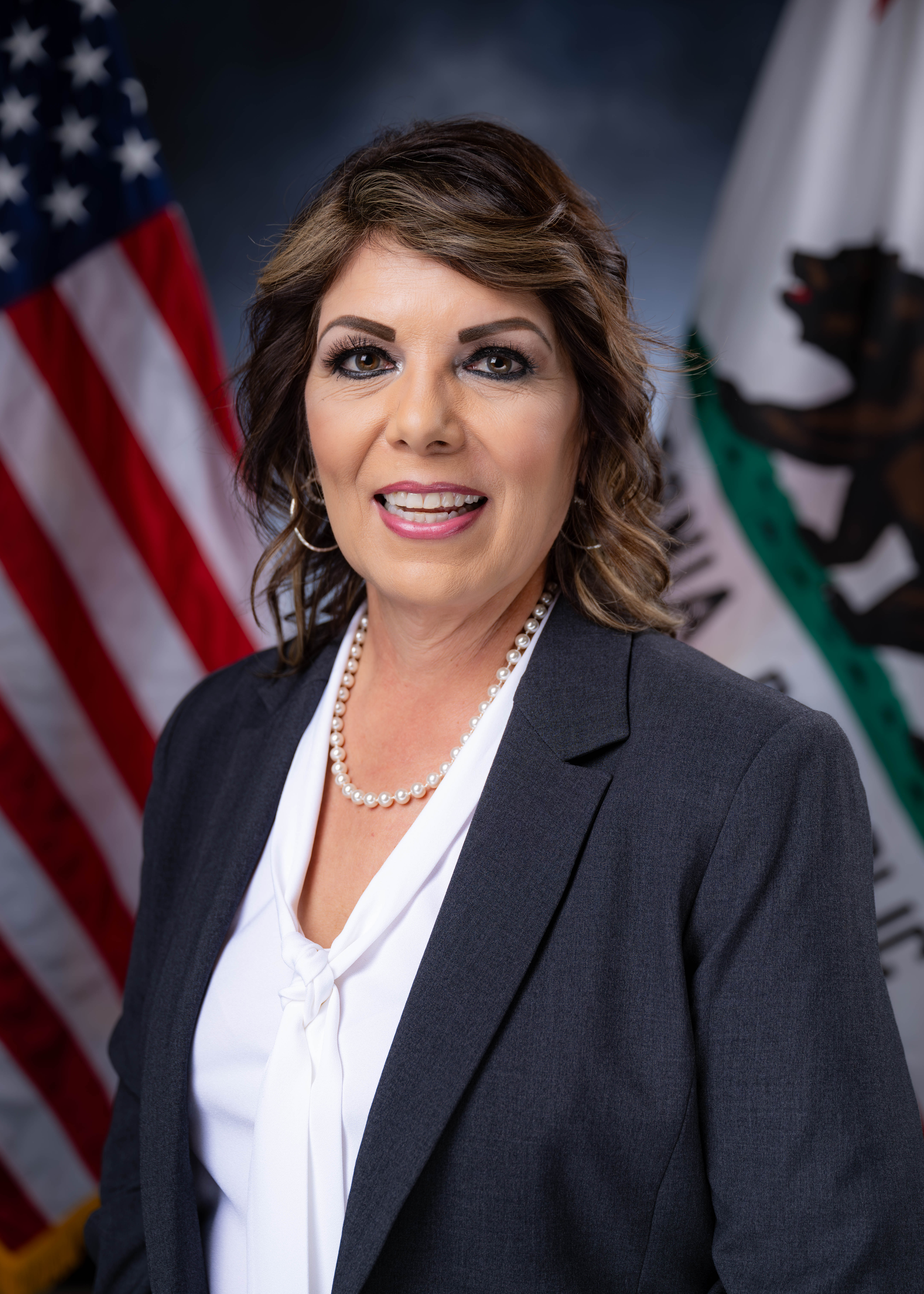
Asm. Michelle Rodriguez
Sponsored bills
Existing law, the California Public Records Act, generally requires public records to be open for inspection by the public. Existing law provides numerous exceptions to this requirement. Under existing law, the personnel records of peace officers and custodial officers are confidential and not subject to public inspection. Existing law provides certain exemptions to this confidentiality, including the reports, investigations, and findings of certain incidents involving the use of force by a peace officer. Existing law authorizes an agency to redact the records disclosed for specified purposes including, among others, to remove personal data or information, as specified, and where there is a specific, articulable, and particularized reason to believe that disclosure of the record would pose a significant danger to the physical safety of the peace officer, custodial officer, or another person. This bill would require a court in an action to compel disclosure pursuant to specified provisions, in determining whether there is a specific, articulable, and particularized reason to believe that disclosure of the record would pose a significant danger to the physical safety of a person, to consider whether a particular peace officer is currently operating undercover and their duties demand anonymity. This bill would incorporate additional changes to Section 832.7 of the Penal Code proposed by AB 847 and AB 1388, to be operative only if this bill and AB 847 or AB 1388 are enacted and this bill is enacted last.
Existing law defines the crime of burglary as entering specified buildings, places, or vehicles with the intent to commit grand or petty theft or a felony. Existing law clarifies that a structure designed for habitation is being used for dwelling purposes if, at the time of the burglary, it was not occupied solely because a disaster caused the occupants to leave the premises. This bill would specify that neither the fact that the structure entered has been damaged by a natural or other disaster, nor the extent of the damage, shall preclude conviction. Existing law defines looting as the commission of certain offenses during and within an affected county in a state of emergency or local emergency, as specified. Existing law includes any 2nd-degree burglary or grand theft in the definition of looting, and makes looting based on those offenses punishable by either imprisonment in a county jail for one year or as a felony. Existing law also makes the crime of looting based on petty theft punishable as a misdemeanor. Existing regulations define an "evacuation area" as a geographic area from which civilians have been evacuated pursuant to an evacuation order and where movement and entry are controlled by fire and law enforcement personnel having jurisdictional authority. Existing regulations define an "evacuation warning" as alerting community members in a defined area of a potential threat to life or property. This bill would recast the offense of looting to include first degree burglary, 2nd degree burglary, grand theft, trespass, and theft from a vehicle, when those offenses are committed in an evacuation zone, to the crime of looting. The bill would also, for the purposes of the offense of looting, define an evacuation zone to include an evacuation area or an area subject to an evacuation warning, and to include any residential dwelling units in such an area for a period of one year after the evacuation order, or up to 3 years if the property is undergoing construction. The bill would impose increased penalties for these offenses committed within an evacuation zone, as specified. By increasing the punishment of specified crimes, this bill would impose a state-mandated local program. The California Constitution requires the state to reimburse local agencies and school districts for certain costs mandated by the state. Statutory provisions establish procedures for making that reimbursement. This bill would provide that no reimbursement is required by this act for a specified reason. This bill would make the operation of its provisions contingent upon the enactment of Senate Bill 571 of the 2025–26 Regular Session.
Existing law requires the Department of Insurance to require all new applicants for license as a property broker-agent, casualty broker-agent, limited lines automobile insurance agent, personal lines broker-agent, life agent, or accident and health or sickness agent to meet specified prelicensing education standards that include 20 hours of prelicensing study as a prerequisite to qualification for a license. Existing law also requires 12 hours of study on ethics in addition to the 20 hours of prelicensing study. Existing law requires the curriculum for satisfying this requirement to be approved by the curriculum board and submitted to the Insurance Commissioner for final approval. Existing law requires the commissioner to charge a specified fee for filing an application for certification, and to renew certification, of the prelicensing education course mentioned above. This bill would eliminate the requirement that all new applicants must meet the 20 hours of prelicensing study, and would require a fee associated with the 12-hour ethics course certification. The bill would also make conforming changes. This bill would incorporate additional changes to Section 1757.2 of the Insurance Code proposed by AB 487 to be operative only if this bill and AB 487 are enacted and this bill is enacted last.
(1) Existing law, the Alcoholic Beverage Control Act, is administered by the Department of Alcoholic Beverage Control and regulates the granting of licenses for the manufacture, distribution, and sale of alcoholic beverages within the state. The act requires the department to make and prescribe rules to carry out the purposes and intent of existing state constitutional provisions on the regulation of alcoholic beverages, and to enable the department to exercise the powers and perform the duties conferred upon it by the state constitution and the act, not inconsistent with any statute of this state. The act makes it unlawful for any person other than a licensee of the department to sell, manufacture, or import alcoholic beverages in this state, with exceptions. The department, pursuant to its powers and in furtherance of emergency declarations and orders of the Governor under the California Emergency Services Act regarding the spread of the COVID-19 virus, established prescribed temporary relief measures to suspend certain legal restrictions relating to, among other things, the expansion of a licensed footprint, sales of alcoholic beverages to-go, and delivery privileges. Existing law authorizes the department, for a period of 365 days following the end of the state of emergency proclaimed by the Governor on March 4, 2020, in response to the COVID-19 pandemic, to permit licensees to exercise license privileges in an expanded license area authorized pursuant to a COVID-19 Temporary Catering Authorization approved in accordance with the Fourth Notice of Regulatory Relief issued by the department, as specified. Existing law makes these provisions effective only until July 1, 2026, and repeals them as of that date. This bill, instead, would make those provisions operative until January 1, 2029, repeal those provisions on that date, and make conforming changes. The bill would also prohibit the department from issuing any new COVID-19 Temporary Catering Authorizations on or after January 1, 2027. (2) The Planning and Zoning Law authorizes the legislative body of any city or county to adopt ordinances that regulate zoning within its jurisdiction, as specified. Under that law, variances and conditional use permits may be granted if provided for by the zoning ordinance. Existing law, to the extent that an outdoor expansion of a business to mitigate COVID-19 pandemic restrictions on indoor dining interferes with, reduces, eliminates, or impacts required parking for existing uses, requires a local jurisdiction that has not adopted an ordinance that provides relief from parking restrictions for expanded outdoor dining areas to reduce the number of required parking spaces for existing uses by the number of spaces that the local jurisdiction determines are needed to accommodate an expanded outdoor dining area. Existing law makes these provisions operative only until July 1, 2026, and repeals them on that date. This bill, instead, would make those provisions operative indefinitely. Because the bill would require local officials to perform additional duties for an extended period, the bill would impose a state-mandated local program. (3) Existing law, the California Retail Food Code, establishes uniform health and sanitation standards for, and provides for regulation by the State Department of Public Health of, retail food facilities. Existing law provides that these standards are primarily enforced by local enforcement agencies. Existing law restricts satellite food service to limited food preparation in a fully enclosed permanent food facility that meets specified requirements. Existing law requires a permanent food facility, before conducting satellite food service, to submit to the enforcement agency written operating standards. Existing law, until July 1, 2026, authorizes a permitted food facility within any local jurisdiction that is subject to retail food operation restrictions related to a COVID-19 public health response to prepare and serve food as a temporary satellite food service without obtaining a separate satellite food service permit or submitting written operating procedures. With regard to those provisions that authorize a permitted food facility to prepare and serve food as a temporary satellite food service, this bill, instead, would make those provisions operative indefinitely. (4) Existing law requires permanent food facilities to be fully enclosed in a building consisting of permanent floors, walls, and an overhead structure that meet prescribed minimum standards. This bill would, notwithstanding the requirements described above, authorize a restaurant to operate using open windows, folding doors, or nonfixed store fronts during hours of operation if the restaurant develops, and submits to the enforcement agency for approval, an integrated pest management and food safety risk mitigation plan and meets certain requirements, as specified. The bill would require the plan to be documented in writing, made available upon request to local environmental health enforcement officers, and updated annually or whenever there is a change to the facility or operation. The bill would require the restaurant to self-close upon observation of vermin activity inside the facility and remain closed until all vermin are eliminated. The bill would prohibit a local enforcement agency from unreasonably withholding approval of a proposed pest management and food safety risk mitigation plan and would require approval to be granted unless unique circumstances exist such that no reasonable conditions or measures can sufficiently mitigate a significant risk to public health or safety. (5) The California Constitution requires the state to reimburse local agencies and school districts for certain costs mandated by the state. Statutory provisions establish procedures for making that reimbursement. This bill would provide that no reimbursement is required by this act for a specified reason.
(1) Existing law authorizes a local authority, as defined, to adopt a program to regulate sidewalk vendors if the program complies with specified standards. These standards include restricting the local authority from requiring a sidewalk vendor to operate within specific parts of the public right-of-way, except when that restriction is directly related to objective health, safety, or welfare concerns. A violation of these provisions is punishable only by an administrative fine, as specified. This bill would prohibit a local authority, except as otherwise required by state or federal law, from providing voluntary consent to any individual to access, review, or obtain certain records of the local authority that include personally identifiable information of any sidewalk vendors in the jurisdiction without a subpoena or judicial warrant. The bill would also prohibit a local authority and its personnel from disclosing or providing in writing, verbally, or in any other manner personally identifiable information of any sidewalk vendor that is requested, except pursuant to a subpoena or a valid judicial warrant. The bill would define "personally identifiable information," for these purposes, to include an individual's name, business name, home address, business address, birthdate, telephone number, California driver's license or identification, and other related information. The bill would also define "immigration enforcement" for these purposes. Existing law authorizes a local authority to adopt additional requirements regulating the time, place, and manner of sidewalk vending if the requirements are directly related to objective health, safety, or welfare concerns. These include requiring the sidewalk vendor to obtain from the local authority a permit or valid business license, provided that the local authority issuing the permit or business license accepts a California driver's license or identification number, an individual taxpayer identification number, or a municipal identification number in lieu of a social security number for the issuance of a permit or business license, and that the number collected is not disclosed, except as specified. This bill would also prohibit a local authority, in the above-described circumstances, from inquiring into or collecting information about an individual's immigration or citizenship status, place of birth, or individual criminal history, or requiring an applicant to submit fingerprints, complete a LiveScan fingerprinting, or submit to a background check as part of an application for a permit or business license. The bill would require a local authority that inquired into or collected information or documentation regarding an individual's place of birth or criminal history, required an applicant to submit fingerprints or complete a LiveScan fingerprinting, or performed a background check before January 1, 2026, to destroy those records on or before March 1, 2026, unless those records are expressly required by law to be preserved. The bill would provide that specified personally identifiable information collected by a local authority is exempt from disclosure under the California Public Records Act. This bill would prohibit an agency or department of a local authority, including any nonpublic entity working on the local authority's behalf, as provided, from using local authority moneys or personnel to investigate, interrogate, detain, detect, or arrest persons for certain purposes, and from engaging in specified activities related to immigration enforcement, when enforcing certain provisions regulating sidewalk vendors. The bill, for specified contracts between a nonpublic entity and a local authority entered into or modified on or after January 1, 2026, would require a nonpublic entity to explicitly agree to adhere to these provisions and would immediately terminate the contract if it is found that the nonpublic entity has violated these provisions. (2) Existing law, the California Retail Food Code (the code) , establishes uniform health and sanitation standards for, and provides for regulation by the State Department of Public Health of, retail food facilities and requires local health agencies to enforce these provisions. Existing law requires compact mobile food operations to meet specified health and safety standards. For purposes of the code, a "compact mobile food operation," means a mobile food facility that operates from an individual or from a pushcart, stand, display, pedal-driven cart, wagon, showcase, rack, or other nonmotorized conveyance. Existing law makes a violation of these provisions by an operator or employee of a compact mobile food operation or a sidewalk vendor punishable only by an administrative fine, as specified. This bill would prohibit an enforcement agency, including any nonpublic entity working on the enforcement agency's behalf, as provided, from using enforcement agency moneys or personnel to investigate, interrogate, detain, detect, or arrest persons for certain purposes, and from engaging in specified activities related to immigration enforcement, when enforcing certain provisions regulating compact mobile food operations. The bill, for specified contracts between a nonpublic entity and an enforcement agency entered into or modified on or after January 1, 2026, would require a nonpublic entity to explicitly agree to adhere to these provisions and would immediately terminate the contract if it is found that the nonpublic entity has violated these provisions. This bill would also prohibit an enforcement agency from providing voluntary consent to any individual to access, review, or obtain certain records of the enforcement agency that include personally identifiable information of any sidewalk vendor or operator or employee of a compact mobile food operation in the jurisdiction without a subpoena or judicial warrant. The bill would further prohibit a local authority and its personnel from disclosing or providing in writing, verbally, or in any other manner personally identifiable information of any sidewalk vendor that is requested, except pursuant to a subpoena or a valid judicial warrant. Existing law prohibits a food facility from being open for business without a valid permit and requires a permit to be issued by the enforcement agency when investigation has determined that the proposed facility and its methods of operation conform to code requirements. This bill would require a permit application for a compact mobile food operation to comply with specified requirements. In this regard, the bill would require an enforcement agency to accept a California driver's license or identification number, an individual taxpayer identification, or a municipal identification number in lieu of a social security number. The bill would also prohibit an enforcement agency from, among other things, inquiring into the individual's immigration status, citizenship status, or criminal history, as prescribed. The bill would further require an enforcement agency that inquired into or collected information or documentation regarding an individual's place of birth or criminal history, required an applicant to submit fingerprints or complete a LiveScan fingerprinting, or performed a background check before January 1, 2026, to destroy those records on or before March 1, 2026, unless those records are expressly required by law to be preserved. The bill would provide that specified personally identifiable information collected by an enforcement agency is exempt from disclosure under the California Public Records Act. The bill would make other related changes to these provisions. To the extent the bill would impose new requirements on local governmental agencies, it would create a state-mandated local program. Existing constitutional provisions require that a statute that limits the right of access to the meetings of public bodies or the writings of public officials and agencies be adopted with findings demonstrating the interest protected by the limitation and the need for protecting that interest. This bill would make legislative findings to that effect. The California Constitution requires the state to reimburse local agencies and school districts for certain costs mandated by the state. Statutory provisions establish procedures for making that reimbursement. This bill would provide that, if the Commission on State Mandates determines that the bill contains costs mandated by the state, reimbursement for those costs shall be made pursuant to the statutory provisions noted above.
(1) If an individual with exceptional needs, as defined, transfers from outside the state to a district, as defined, in the state, or transfers from district to district, within the same academic year, existing law requires local educational agencies, as defined, to provide the pupil with a free appropriate public education, including services comparable to those described in the previously approved individualized education program, in consultation with the parents, until the local educational agency conducts a federally required assessment, if determined to be necessary by the local educational agency, and develops a new individualized education program, if appropriate, that is consistent with federal and state law. This bill would require a local educational agency, within 30 days of receipt of official records or specified unofficial records, to either adopt and implement the individualized education program previously adopted for the pupil or develop, adopt, and implement a new individualized education program for the pupil that is consistent with federal and state law, if applicable. To the extent the bill would impose additional duties on local education agencies, the bill would impose a state-mandated local program. (2) Existing law ratifies the Interstate Compact on Educational Opportunity for Military Children, as specified. Existing law requires the new school in which an individual with exceptional needs enrolls to take reasonable steps to promptly obtain the pupil's records from their previous school, including the individualized education program and supporting documents and any other records relating to the provision of special education and related services to the pupil, pursuant to specified federal law. This bill would expressly require those reasonable steps to also be consistent with specified requirements of the Interstate Compact on Educational Opportunity for Military Children, and would require the new school to accept unofficial records provided by the pupil's parent or guardian until validated by official records, consistent with specified requirements of the Interstate Compact on Educational Opportunity for Military Children. To the extent the bill would impose additional duties on local educational agencies, the bill would impose a state-mandated local program. (3) Existing law provides that each person between 6 and 18 years of age not exempted is subject to compulsory full-time education and requires a person subject to compulsory education to attend the public full-time day school or continuation school or classes in the school district in which the residence of the parents or legal guardian is located. Existing law provides that a pupil complies with the residency requirements if the pupil's parent is transferred or is pending transfer to a military installation within the state while on active military duty pursuant to an official military order, and requires a parent to provide proof of residence in the school district within 10 days after the published arrival date provided on official documentation. This bill would expressly provide that the above-described provisions apply to all pupils whose parent is an active duty member of the Armed Forces of the United States, including pupils eligible for services or accommodations pursuant to the federal Individuals with Disabilities Education Act, Section 504 of the federal Rehabilitation Act of 1973, or the federal Americans with Disabilities Act of 1990, as applicable. The bill would require school districts, upon notification that a pupil who is enrolling pursuant to the above-described provisions is receiving, or may eligible to receive, services or accommodations pursuant to federal law, to promptly coordinate with the pupil's parents and previous school, as provided. To the extent the bill would impose additional duties on local educational agencies, the bill would impose a state-mandated local program. (4) The California Constitution requires the state to reimburse local agencies and school districts for certain costs mandated by the state. Statutory provisions establish procedures for making that reimbursement. This bill would provide that, if the Commission on State Mandates determines that the bill contains costs mandated by the state, reimbursement for those costs shall be made pursuant to the statutory provisions noted above.
Existing law, the California Self-Storage Facility Act, authorizes a self-storage facility owner to terminate the right of an occupant to the use of a storage space if rent or other charges due remain unpaid for 14 consecutive days by sending a lien notice and the total sum due has not been paid by the termination date specified in the preliminary lien notice, in accordance with specified procedures. Existing law authorizes an owner to send lien notices to the occupant by email if the rental agreement states that lien notices may be sent by email and the occupant provides a written signature on the rental agreement consenting to receive lien notices by email. Existing law specifies the ways an owner may demonstrate actual delivery and receipt of the lien notices sent by email, including by posting the document on the owner's secure internet website and there is evidence demonstrating that the occupant logged onto the licensee's secure internet website and downloaded, printed, viewed, or otherwise acknowledged receipt of the document. This bill, instead, would provide that an owner may demonstrate actual delivery and receipt of a lien notice by delivering the document to the occupant's email address and there is evidence demonstrating that the occupant downloaded, printed, viewed, opened, or otherwise acknowledged receipt of the document.
Existing law, the Mobilehome Residency Law, governs the terms and conditions of residency in mobilehome parks and prescribes the content of a rental agreement for a tenancy. Existing law requires that a copy of the Mobilehome Residency Law be provided as an exhibit and incorporated into the rental agreement by reference, as specified. Existing law also requires that a copy of a specified notice containing the rights and responsibilities of homeowners and park managers be included in the rental agreement and requires management to provide a copy of the notice to all homeowners each year, as specified. Existing law requires these and other notices required by the Mobilehome Residency Law to be either personally delivered to the homeowner or sent by mail, as specified, to the homeowner, unless otherwise provided. Existing law allows all notices required by the Mobilehome Residency Law to be delivered before February 1 of each year to be combined into one notice, as specified. This bill would, instead, require notices required by the Mobilehome Residency Law to be delivered to both the homeowner and resident of the mobilehome. The bill would also authorize the notices required by the Mobilehome Residency Law to be delivered prior to February 1 of each year to be delivered by electronic mail if the homeowner or resident has provided affirmative, written consent, as defined. The bill would allow a homeowner or resident to revoke their consent to receive notices by electronic mail at any time, without any fee, charge, or penalty, and without any impact to the terms of their tenancy, as specified. The bill would require management to deliver personally or by mail to the homeowner or resident a notice stating that the homeowner or resident has agreed to receive notices by electronic mail and may revoke this agreement, as provided. This bill would make nonsubstantive changes reflective of existing law, as provided.
Existing law provides for the regulation of charter-party carriers of passengers by the Public Utilities Commission and includes specific requirements applicable to transportation network companies and their participating drivers. Existing law defines transportation network companies as certain organizations that, using an online-enabled application or platform, connect passengers with drivers using a personal vehicle. Existing law imposes specified requirements for liability insurance coverage on transportation network companies and their drivers, including a requirement that the insurance coverage provide for uninsured motorist coverage and underinsured motorist coverage in the amount of $1,000,000 from the moment a passenger enters the vehicle of a participating driver until the passenger exits the vehicle. Under existing law, that coverage may be satisfied by insurance maintained by the participating driver, the transportation network company, or a combination of insurance maintained by the participating driver and transportation network company. This bill would lower that amount to $60,000 per person and $300,000 per incident. The bill would also make the transportation network company responsible for maintaining the uninsured motorist coverage and underinsured motorist coverage. The bill would require the commission and the Department of Insurance to collaborate on a study of the impacts of the requirements established for uninsured motorist coverage and underinsured motorist coverage to assess whether those requirements are appropriate to the risk of transportation network company services, and to report the findings of this study to specified committees of the Legislature on or before December 31, 2030. Existing law requires the commission to develop, publish, and annually update a report containing specified information, including, among other things, the commission's annual work plan and an accounting of the commission's transactions and proceedings from the prior year. Existing law requires the commission to submit that report to the Governor and Legislature no later than February 1 of each year. This bill would require the report submitted on or before February 1, 2026, to also contain certain information regarding automobile accidents reported to the commission by transportation network companies and uninsured motorist and underinsured motorist claims resulting from those accidents, as specified. The bill would require the report submitted on or before February 1, 2027, to specify the average transportation network company rider fare paid during certain time periods, as provided. This bill would make the operation of its provisions contingent upon the enactment of AB 1340 of the 2025–26 Regular Session.