

Existing law requires the State Board of Education to adopt statewide academically rigorous content standards in the core curriculum areas of reading, writing, mathematics, history/social science, and science, as specified. Existing law requires the Instructional Quality Commission to, among other things, recommend curriculum frameworks to the state board and develop criteria for evaluating instructional materials. This bill would require the state board to, on or before January 1, 2028, develop and adopt academically rigorous content standards for ethnic studies instruction in high school. The bill would require the commission, on or before January 1, 2028, to review and recommend to the state board curriculum frameworks and instructional materials for ethnic studies instruction in high school, as specified. The bill would require the state board to provide the commission with evaluation criteria to use in providing its review and recommendations. The bill would state the intent of the Legislature to enact subsequent legislation to establish an advisory committee with a majority of the advisory committee's members being experts in African American studies, Asian American and Pacific Islander studies, Native American studies, and Latino and Chicanx studies, to provide input to the state board on proposed content standards and to the commission on proposed curriculum frameworks and instructional materials for ethnic studies instruction in high school. Existing law requires a pupil to complete designated coursework while in grades 9 to 12, inclusive, in order to receive a diploma of graduation from high school. These graduation requirements include, commencing for pupils graduating in the 2029–30 school year, the completion of a one-semester course in ethnic studies meeting specified requirements. Under existing law, the requirement to complete an ethnic studies course may be fulfilled by the completion of, among others, a course based on the model curriculum developed by the Instructional Quality Commission, an ethnic studies course taught as part of a course that has been approved as meeting the A–G requirements of the University of California and the California State University, or a locally developed ethnic studies course approved by the governing board of a school district or the governing body of a charter school. Existing law requires the curriculum, instruction, and instructional materials for these ethnic studies courses to meet specified requirements, including that they not reflect or promote any bias, bigotry, or discrimination against any person or group of persons on the basis of certain characteristics. Existing law makes these provisions relating to ethnic studies courses operative only upon an appropriation of funds by the Legislature for purposes of these provisions. This bill would require the curriculum, instruction, and instructional materials for any high school ethnic studies course, including ethnic studies courses meeting high school graduation requirements, to meet the above-described requirements, and would require the curriculum, instruction, and instructional materials for all high school ethnic studies courses to additionally, among other things, foster multicultural respect and understanding and focus on the domestic experience and stories of historically marginalized peoples in American society. To the extent that the bill would impose new duties on local educational agencies, the bill would impose a state-mandated local program. The bill would require a school district, county office of education, or charter school to provide, on or before June 30, 2026, the State Department of Education with a copy of all curricula, instruction, and instructional materials in ethnic studies that schools offer or plan to offer to pupils in any of grades 9 to 12, inclusive, and the adoption calendar for curricula, instruction, and instructional materials in ethnic studies proposed for adoption by the governing board or body of the local educational agency for instruction to these pupils. The bill would require a local educational agency that does not have an ethnic studies course in place for its pupils in any of grades 9 to 12, inclusive, on or before June 30, 2026, to provide the department with a copy of all curricula, instruction, and instructional materials in ethnic studies that its schools seek to adopt at least 60 days before being first presented at a public meeting of the governing board or body of the local educational agency for instruction to these pupils. The bill would require the department to post the information received pursuant to these requirements on its internet website. To the extent that the bill would impose new duties on local educational agencies, it would impose a state-mandated local program. The bill would require the department to monitor compliance with the requirements of this bill as part of its annual compliance monitoring of state and federal programs and to provide a report to the relevant policy and fiscal committees of the Legislature summarizing the data collected through compliance monitoring, as specified. The California Constitution requires the state to reimburse local agencies and school districts for certain costs mandated by the state. Statutory provisions establish procedures for making that reimbursement. This bill would provide that, if the Commission on State Mandates determines that the bill contains costs mandated by the state, reimbursement for those costs shall be made pursuant to the statutory provisions noted above.
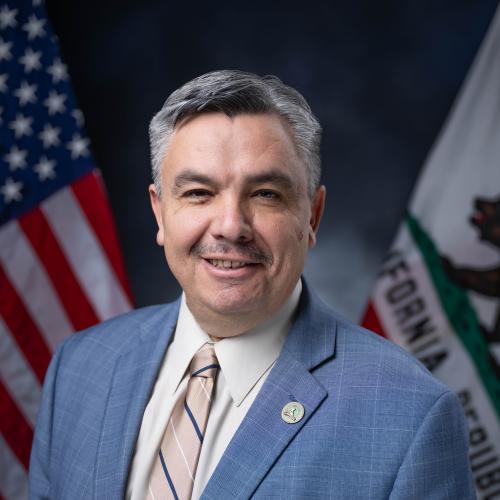
Asm. Juan Carrillo
Sponsored bills
Existing law, the Child Abuse and Neglect Reporting Act, establishes procedures for the reporting and investigation of suspected child abuse or neglect. Existing law requires certain professionals, including specified health practitioners and social workers, known as "mandated reporters," to report known or suspected child abuse or neglect to a local law enforcement agency or a county welfare or probation department, as specified. Existing law requires an employee of those agencies, in certain circumstances, to send or have sent, within 36 hours, a copy of a report made pursuant to these provisions to the attorney who represents the child, who is the subject of the report, in dependency court. Existing law requires the agency to maintain a copy of the written report and provide all information requested by the attorney for the child or the child's guardian ad litem within 30 days of the request. This bill would require an employee of those agencies to additionally send a copy of the report to the attorney who represents a parent or legal guardian of the child, as specified. Under the bill, that requirement would not apply to certain individuals, including a parent whose parental rights have been terminated or a parent who is not entitled to reunification services. The bill would require the agency to redact all personal identifying information, as defined, regarding all persons, other than the child, who are identified in the report. If the suspected abuse or neglect occurred in a placement, as provided, the bill would require an employee of the agency to send a copy of the report to all attorneys who represent children with an open dependency case in that placement, subject to specified redaction. By expanding the duties of local agencies that receive reports alleging abuse or neglect of children, this bill would impose a state-mandated local program. The California Constitution requires the state to reimburse local agencies and school districts for certain costs mandated by the state. Statutory provisions establish procedures for making that reimbursement. This bill would provide that no reimbursement is required by this act for a specified reason.
Existing law requires a person engaged in the production of human whole blood or human whole blood derivatives to be licensed by the state, and requires licensed blood banks and blood transfusion services to meet specified standards. Existing law authorizes the State Department of Public Health to establish and require compliance with additional requirements, as specified. This bill, the California Source Plasma Donation Centers Act, would authorize a person to operate a source plasma donation center for the purpose of collecting source plasma, as defined. The bill would, among other things, authorize a source plasma donation center to offer payment to a donor of money or other valuable consideration. The bill would require the operator of a source plasma donation center to obtain a license from the State Department of Public Health, as specified. The bill would authorize the department to regulate source plasma donation centers, including to inspect the property or records of the center and to suspend or revoke a license for violation of specified law or regulation. The bill would authorize the department to promulgate any regulations it deems necessary to implement the bill's provisions. The bill would make a violation of the bill's provisions a misdemeanor, and would authorize a district or city attorney to prosecute a violation of the bill's provisions. By creating a new crime, the bill would impose a state-mandated local program. This bill would require a local health officer, if they obtained records from a source plasma donation center of a plasma donor who had a reactive result to HIV antibody testing, upon completion of the officer's efforts to locate and notify the plasma donor, to expunge all of the individual's records. By imposing additional duties on local health officials, this bill would impose a state-mandated local program. Existing law establishes the Clinical Laboratory Improvement Fund and requires specified fees collected from the licensing and regulation of blood banks and blood transfusion services to be deposited in the fund, available upon appropriation, for the purpose of regulating blood banks and blood transfusion services. This bill would additionally require fees collected from the licensing and regulation of source plasma donation centers to be deposited in the fund for the purpose of regulating source plasma donation centers, upon appropriation by the Legislature. Existing law requires specified establishments that receive specified human whole blood and derivatives to be considered blood bank depositories and require specified procedures on blood for transfusion to be the sole responsibility of the blood bank depository. This bill would exempt source plasma donation centers from these provisions. The California Constitution requires the state to reimburse local agencies and school districts for certain costs mandated by the state. Statutory provisions establish procedures for making that reimbursement. This bill would provide that with regard to certain mandates no reimbursement is required by this act for a specified reason. With regard to any other mandates, this bill would provide that, if the Commission on State Mandates determines that the bill contains costs so mandated by the state, reimbursement for those costs shall be made pursuant to the statutory provisions noted above.
(1) Existing law, the Western Joshua Tree Conservation Act, prohibits any person or public agency from importing into the state, exporting out of the state, or taking, possessing, purchasing, or selling within the state, a western Joshua tree or any part or product of the tree, except as provided. Under existing law, the Department of Fish and Wildlife may authorize, by permit, the taking of a western Joshua tree if certain conditions are met, including, among other conditions, that the permittee mitigates all impacts to, and the taking of, the western Joshua tree. Existing law authorizes the department to enter into an agreement with any county or city to delegate to the county or city the ability to authorize the taking of a western Joshua tree associated with developing single-family residences, multifamily residences, accessory structures, and public works projects concurrent with its approval of the project if certain conditions are met. Existing law authorizes any person or public agency receiving a take authorization for a project to pay specified fees in lieu of satisfying the mitigation obligation on several bases, including if the project receives a permit issued by a county or city. This bill would additionally authorize the department to enter into an agreement with any city to delegate to the city the ability to authorize the taking of western Joshua trees associated with developing commercial and industrial projects. The bill would, relative to other project types subject to delegated local mitigation authority, limit the bases for commercial or industrial projects to pay specified fees in lieu of satisfying the mitigation obligation, as provided. (2) Existing law authorizes the department to issue a permit to authorize either the removal or trimming of a dead western Joshua tree or the trimming of a live western Joshua tree. This bill would remove the reference to a dead or live western Joshua tree, thereby authorizing the department to issue a permit to authorize either the removal or trimming of any western Joshua tree. Existing law authorizes the department to issue a permit for these purposes, without the payment of fees or other mitigation, provided that a dead western Joshua tree or any limbs to be removed meet at least one of a specified list of conditions. This bill would revise and recast this provision to instead authorize the department to issue a permit, without the payment of fees or other mitigation, if either the western Joshua tree is located within 100 feet of an existing single-family home and any associated accessory structure or that removal or trimming is necessary for the homeowner to meet defensible space requirements, as provided.
Maddy summaryThis bill establishes January as National Human Trafficking Awareness Month in California to raise public awareness about human trafficking. The resolution recognizes the severity of human trafficking as a felony crime and highlights statistics showing its prevalence across the country and specific challenges with identifying male victims and labor trafficking cases. It aims to educate the public and encourage reporting and support for victims during this designated month.
(1) The Outdoor Advertising Act, a violation of which is a crime, provides for the regulation by the Department of Transportation of advertising displays, as defined, within view of public highways. Existing law exempts from certain provisions of the act advertising displays located in specific geographic areas in the City of Los Angeles if those displays meet prescribed conditions and requirements, including the condition that the advertising display is authorized by, or in accordance with, an ordinance adopted by the City of Los Angeles that regulates advertising displays by identifying the specific displays or establishing regulations that include, at a minimum, specified restrictions, as provided. This bill would authorize the ordinance adopted by the City of Los Angeles to authorize a framework of allowable signage that preserves flexibility in the ultimate placement, sizing, and scope of advertising displays, and define a range or maximum signage capacity, as specified. The bill would also authorize the City of Los Angeles to adopt implementing ordinances that sequence or phase the authorization of advertising displays over time. (2) This bill would declare that it is to take effect immediately as an urgency statute.
(1) Under existing law, a caregiver who is 18 years of age or older and signs a caregiver's authorization affidavit under penalty of perjury for a minor who lives in their home is authorized to enroll the minor in school and consent to school-related medical care on behalf of the minor. Under existing law, a caregiver who is 18 years of age or older, signs the caregiver's authorization affidavit under penalty of perjury, and who is a certain type of relative of the minor who lives in their home, has the same rights to authorize medical care and dental care for the minor that are given to guardians, as specified. Under existing law, a person who acts in good faith reliance on a completed caregiver's authorization affidavit to provide medical or dental care, without actual knowledge of facts contrary to those stated on the affidavit, is not subject to criminal or civil liability or professional disciplinary action for that reliance, but is not relieved from liability for violations of other provisions of law. This bill, the Family Preparedness Plan Act of 2025, would revise the definition of relative to expand the type of relative who is authorized to execute a caregiver's authorization affidavit and grant them the same rights to authorize school-related medical care, as defined, for the minor that are given to guardians, as specified. By expanding who is authorized to sign a caregiver's authorization affidavit for these purposes under penalty of perjury, this bill would expand the crime of perjury, thereby imposing a state-mandated local program. This bill would amend the statutory form for a caregiver's authorization affidavit. (2) Existing law generally provides for the establishment and administration of guardianships. Existing law authorizes a court to appoint joint guardians of a person, an estate, or a person and an estate. Existing law requires a nomination of a guardian to become effective when made, and remain effective, unless stated otherwise in writing, as specified. This bill would authorize a court, in its discretion, to appoint a custodial parent and a person nominated by the custodial parent as joint guardians of the person of the minor, if the custodial parent will be temporarily unavailable due to specified circumstances, including, among other things, an immigration-related administrative action, as specified. The bill would make all records, petitions, orders, and documents related to these proceedings confidential, as specified. The bill would provide that absence is a basis for a delayed effectiveness of a guardianship and that such circumstances would not be a basis for subsequent legal incapacity for the nomination. (3) Existing law prohibits, except as required by state or federal law or as required to administer a state or federally supported educational program, school officials and employees of a local educational agency, as defined, from collecting information or documents regarding citizenship or immigration status of pupils or their family members. Existing law requires the governing board or body of a local educational agency to perform specified actions relating to pupils and immigration status, including, among others, providing information to parents and guardians, as appropriate, regarding their child's right to a free public education, regardless of immigration status or religious beliefs. Existing law requires the Attorney General, by April 1, 2018, in consultation with the appropriate stakeholders, to publish model policies limiting assistance with immigration enforcement at public schools, to the fullest extent possible consistent with federal and state law, as specified. Existing law requires all local educational agencies to adopt the model policies developed by the Attorney General, or equivalent policies, by July 1, 2018. This bill would revise the information disclosure requirements to require the governing board or body of a local educational agency to provide information related to specified guidance on immigration enforcement issued by the Attorney General and would require that information to be revised as necessary to be consistent with any revisions or updates to the Attorney General's guidance. This bill would also require local educational agencies to revise their model policies as necessary to be consistent with any revisions or updates to the model policies developed by the Attorney General, as specified. By imposing additional duties on local educational agencies, the bill would impose a state-mandated local program. (4) Existing law, the California Child Day Care Facilities Act, provides for the licensure and regulation of child daycare facilities, including daycare centers and daycare homes, by the State Department of Social Services. The act exempts certain types of facilities from licensure under its provisions, including California state preschool programs that meet certain requirements, including, among other things, that the programs are operated by local educational agencies in a school building. Similar to the provisions related to local educational agencies described above, this bill would prohibit licensed child daycare facilities, as defined, employees of licensed child daycare facilities, and license-exempt California state preschool program facilities from collecting information or documents regarding citizenship or immigration status of children or their family members, except as required by state or federal law or as required to administer a state or federally supported educational program. The bill would require the licensee or administrator of a licensed child day care facility, as applicable, to report to the department and the Attorney General any requests for information or access to the facility by an officer or employee of a law enforcement agency. The bill would authorize license-exempt California state preschool program facilities to make that report to the State Department of Education and the Attorney General. The bill would require the State Department of Social Services to provide any information on California state preschool programs collected pursuant to those provisions to the Superintendent of Public Instruction. The bill would require a licensed child daycare facility and a license-exempt California state preschool program facility to first exhaust any parental instruction relating to the child's care found in the child's emergency contact information if an employee of the facility is aware that a child's parent or authorized representative is not available to care for the child. The bill would require licensees or administrators of those facilities to request that parents or authorized representatives update their emergency contact information. The bill would require the Attorney General, by April 1, 2026, in consultation with the appropriate stakeholders, to publish model policies limiting assistance with immigration enforcement at child daycare facilities and license-exempt California state preschool program facilities similar to the model policies developed for local educational agencies described above. The bill would require the State Department of Social Services to inform licensed daycare facilities, and the State Department of Education to inform license-exempt California state preschool program facilities, of the model policies. The bill would require all California state preschool programs to adopt the model policies developed by the Attorney General, or equivalent policies, as soon as possible, but in no event later than July 1, 2026. The bill would require California state preschool programs to update these policies to conform with any revisions or updates to the model policies developed by the Attorney General. The bill would require a licensed child daycare facility and license-exempt California state preschool program facilities to provide the parent or authorized representative with information about how to access those model policies. The bill would require the State Department of Social Services to inform licensed child day care facilities, and the State Department of Education to inform license-exempt California state preschool program facilities, of any revisions or updates to the model policies and require any information, policies, or guidance provided by facilities to parents or authorized representatives to be updated to include any revisions or updates to the model policies issued by the Attorney General. The bill would authorize the State Department of Social Services to administer these provisions by interim licensing standards until regulations are adopted. (5) This bill would provide that its provisions are severable. (6) Existing constitutional provisions require a statute that limits the right of access to the meetings of public bodies or the writings of public officials and agencies to be adopted with findings demonstrating the interest protected by the limitation and the need for protecting that interest. This bill would make legislative findings to that effect. (7) The California Constitution requires the state to reimburse local agencies and school districts for certain costs mandated by the state. Statutory provisions establish procedures for making that reimbursement. This bill would provide that with regard to certain mandates no reimbursement is required by this act for a specified reason. With regard to any other mandates, this bill would provide that, if the Commission on State Mandates determines that the bill contains costs so mandated by the state, reimbursement for those costs shall be made pursuant to the statutory provisions noted above. This bill would incorporate additional changes to Section 234.7 of the Education Code proposed by AB 49, AB 419, or both, to be operative only if this bill and AB 49, AB 419, or both, are enacted and this bill is enacted last.
Existing law, subject to available funding, requires the State Department of Social Services to contract with qualified nonprofit legal services organizations to provide legal services to unaccompanied undocumented minors who are transferred to the care and custody of the federal Office of Refugee Resettlement and who are present in this state or are residing with a family member or other sponsor. Existing law requires contracts awarded pursuant to the above-described provision to be executed with qualified nonprofit legal services organizations that meet certain requirements, including having experience representing individuals in removal proceedings and asylum applications. This bill would, subject to available funding, provide legal counsel to immigrant youth in the State of California. The bill would define immigrant youth. The bill would require the department to allocate funding for these purposes, and would require the department to consider whether federal funding has been made available and dispersed to organizations or relevant projects in the state in determining the amount and allocation of contracts awarded. The bill would require the department to contract with qualified nonprofit legal services organizations that meet the above-described requirements or an office of the public defender that meets certain requirements. The bill would also authorize the department to fund social work services contracted by qualified nonprofit legal services organizations to assist immigrant youth.
(1) Existing law prescribes the duties of the State Registrar of Vital Statistics (State Registrar) and local registrars of births and deaths with respect to the registration of certificates of live birth, fetal death, or death, and marriage licenses. Existing law requires the State Registrar to prescribe and furnish all record forms for use in carrying out the provisions governing vital records and prohibits the use of any record form or format other than those prescribed by the State Registrar. Existing law requires every live birth, fetal death, death, and marriage that occurs in the state to be registered with the local registrar. Existing law requires certificates of live birth, fetal death, or death, and a marriage license to include specified information, such as the full name of the child on a certificate of live birth and the full names of the parties to be married on a marriage license. Existing law also requires the county clerk to issue a confidential marriage license, as specified, on a form prescribed by the State Registrar. This bill would require, commencing no earlier than 2 years after an appropriation of funds by the Legislature, the State Registrar to require the use of a diacritical mark on an English letter within a name field to be properly recorded, when applicable, on a certificate of live birth, fetal death, death, marriage license and certificate, or confidential marriage license and certificate, and would require the use of a diacritical mark to be deemed an acceptable entry by the State Registrar. The bill would provide that the absence or presence of a diacritical mark on a certificate of live birth, fetal death, or death, or a marriage license and certificate or confidential marriage license and certificate does not render the document invalid nor affect any constructive notice imparted by proper recordation of the document. The bill would authorize the State Registrar to develop a list of acceptable diacritical marks for use on a certificate of live birth, fetal death, or death, or a marriage license and certificate or confidential marriage license and certificate through all-county letters or similar instructions from the State Registrar without taking further regulatory actions. The bill would authorize the State Registrar to remove any diacritical marks on the birth, fetal death, death, and marriage license and certificate data before furnishing the vital statistics to a federal, state, or local government agency. The bill would authorize, beginning July 1, 2026, if a name is not accurately recorded because of the absence of a diacritical mark on an English letter in any certificate of live birth, fetal death, death, or marriage already registered, the person asserting the omission, or the person's conservator, or if a minor, the person's parent or guardian, to make an affidavit under oath, as specified, stating the changes necessary to make the record correct. The bill would require the affidavit to be supported by the affidavit of one other person having knowledge of the facts and be filed with the State Registrar. The bill would require the State Registrar to, review the request and, if the request is accompanied with the payment of a specified fee, to issue an amendment to any certificate of live birth, fetal death, death, or marriage with the accurate name identified in the request. The bill would also authorize, if a name field of either of the parties married or their parents is not accurately recorded because of the absence of a diacritical mark on an English letter on any confidential license and certificate of marriage already registered, the party asserting the omission to make an affidavit, under oath, stating the changes necessary to make the record correct and file it with the county clerk. The bill would authorize the county clerk to charge a fee, not to exceed the amount of the fee for any other amended confidential marriage license and certificate issued by the county clerk and not to exceed the reasonable cost to provide the amended marriage license and certificate. The bill would require the county clerk to review the amendment for acceptance for filing, and if accepted, file the amendment and note the fact of the amendment, with its date, on the otherwise unaltered original confidential license and certificate of marriage. By requiring the affidavit to be under oath, the bill would expand the crime of perjury, thereby imposing a state-mandated local program. By increasing duties on county clerks, the bill would impose a state-mandated local program. (2) Existing law requires the collection of specified fees for certified copies of a fetal death record, death record, a birth certificate, marriage record, or marriage dissolution record. Existing law requires all applicants for certified copies of the above-described records to pay an additional fee of $3 to be collected by the State Registrar, the local registrar, county recorder, or county clerk, as appropriate. This bill would increase the additional fee charged for certified copies of the above-described records to $5. (3) The California Constitution requires the state to reimburse local agencies and school districts for certain costs mandated by the state. Statutory provisions establish procedures for making that reimbursement. This bill would provide that with regard to certain mandates no reimbursement is required by this act for a specified reason. With regard to any other mandates, this bill would provide that, if the Commission on State Mandates determines that the bill contains costs so mandated by the state, reimbursement for those costs shall be made pursuant to the statutory provisions noted above.
Existing law creates the Vocational Nurse Education Program within the Department of Health Care Access and Information for persons agreeing to serve in an eligible county health facility, state-operated health facility, or a health workforce shortage area, before completing vocational nursing school. Existing law authorizes a person who qualifies for admission to a vocational nursing program to apply for funding under the program, as specified. Existing law establishes the Vocational Nurse Education Fund for the purpose of promoting the education of vocational nurses and related administrative costs. This bill would create the California Nurse-Midwifery Education Fund within the department for the purpose of establishing California-based, master's level, nurse-midwifery education programs within the California State University, the University of California, or both. The bill would require the department to administer the fund, and receive moneys from the General Fund for these purposes upon appropriation by the Legislature. The bill would require the department to establish a competitive application criteria to ensure the optimal sites selection for the education programs within the California State University system or the University of California, would require the department to ensure that a master's degree is an option for students as the culminating degree of the education programs receiving funds, and would require the education programs to meet specified requirements. The bill would also require the fund to support the annual operating costs for the development, operation, and maintenance of the education programs through the graduation of the first cohort of matriculated students, or 5 years, whichever is shorter.