This measure would call on Congress to enact legislation that restores and strengthens the full protections of the Voting Rights Act of 1965, and it would call on the President to sign the legislation.

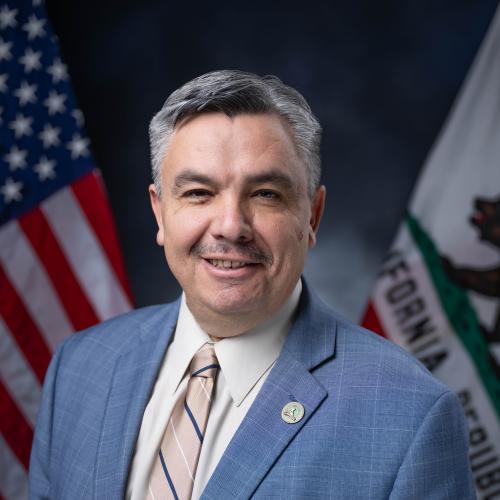
Rep. Juan Carrillo
Sponsored bills
Existing law, the Unfair Competition Law (UCL) , makes various practices unlawful and provides that a person who engages, has engaged, or proposes to engage in unfair competition is liable for a civil penalty and subject to injunction, as specified. The UCL authorizes actions prosecuted under its provisions to be brought by certain public attorneys, including by the Attorney General, a city attorney of a city having a population in excess of 750,000, or by a county counsel of any county within which a city has a population in excess of 750,000. The UCL prohibits the distribution, as provided, of any handbill, as defined, to any individual guest rooms in any hotel where the innkeeper has expressed objection to handbill distribution, as specified. The UCL provides that these provisions do not prohibit the distribution of a handbill to guest rooms in any hotel where the distribution has been requested or approved in writing by the innkeeper, or to any individual guest room when the occupant thereof has affirmatively requested or approved the distribution of the handbill during the duration of the guest's occupancy. This bill would require, under the UCL, the operator of a hotel, as defined, with actual knowledge of a reservation with the United States Customs and Border Protection or United States Immigration and Customs Enforcement to post a prescribed notice in a prominent and accessible place where it can be seen by all workers, as provided. The bill would also require an operator of a hotel with the above-described knowledge to disclose, upon request of a guest with a reservation at the time of check-in, the potential presence of the United States Customs and Border Protection or United States Immigration and Customs Enforcement on its premises during the guest's reservation. The bill would prohibit the liability of a hotel for violations of these provisions from exceeding $5,000, as provided. The bill would repeal its own provisions on January 1, 2029.
Existing law requires each law enforcement agency, on or before January 1, 2021, to maintain a policy that provides a minimum standard on the use of force. Existing law requires that the policy include, among other things, training standards and requirements relating to demonstrated knowledge and understanding of the law enforcement agency's use of force policy by officers, investigators, and supervisors. Existing law prohibits a law enforcement agency from authorizing the use of a carotid restraint or choke hold by any peace officer employed by that agency. This bill would, until January 1, 2030, prohibit a law enforcement agency, including a federal law enforcement agency, from using a wearable electroshock device within the State of California. The bill would also prohibit a law enforcement agency from using state funds to purchase a wearable electroshock device. The bill would require a law enforcement agency to update their use of force policies to prohibit the use of a wearable electroshock device. By increasing the duties on local law enforcement, the bill would impose a state-mandated local program. The bill would require the Division of Law Enforcement within the Department of Justice to conduct a study on the safety and community impacts of wearable electroshock devices and provide recommendations for appropriate standards and safeguards for their use, and would require the department to report to the Legislature on the findings and recommendations of the study on or before January 1, 2029. The California Constitution requires the state to reimburse local agencies and school districts for certain costs mandated by the state. Statutory provisions establish procedures for making that reimbursement. This bill would provide that, if the Commission on State Mandates determines that the bill contains costs mandated by the state, reimbursement for those costs shall be made pursuant to the statutory provisions noted above.

Existing law, the Western Joshua Tree Conservation Act, prohibits a person or public agency from importing into the state, exporting out of the state, or taking, possessing, purchasing, or selling within the state, a western Joshua tree or any part or product of the tree, except as provided. Under existing law, the Department of Fish and Wildlife may authorize, by permit, the taking of a western Joshua tree if certain conditions are met, including, among other conditions, that the permittee mitigates all impacts to, and the taking of, the western Joshua tree. Existing law authorizes the department to enter into an agreement with a county or city to delegate to the county or city the ability to authorize the taking of a western Joshua tree associated with developing single-family residences, multifamily residences, accessory structures, and public works projects concurrent with its approval of the project if certain conditions are met. Existing law authorizes a person or public agency receiving a take authorization for a project to pay specified fees in lieu of satisfying the mitigation obligation on several bases, including if the project receives a permit issued by a county or city. Existing law requires the department to annually adjust those fees and, by December 31, 2026, and every 3 years thereafter, to adopt and subsequently amend specified regulations adjusting the fees. This bill would additionally authorize the department to enter into an agreement with a city to delegate to the city the ability to authorize the taking of a western Joshua tree associated with developing commercial and industrial projects. This bill would additionally authorize a person or public agency receiving a take authorization from the department to pay specified fees in lieu of satisfying the mitigation obligation for (1) the removal of no more than 10, or the trimming of, western Joshua trees by an owner-occupant of an existing single-family residence if the western Joshua trees are within 30 feet of the existing single-family residence or 15 feet of an existing accessory structure, or within the construction footprint, or 15 feet of the construction footprint, of a new accessory structure that is proposed to be constructed for the existing single-family residence or (2) the removal of no more than 40, or the trimming of, western Joshua trees by the proponent of a public works project if the western Joshua trees are within the construction footprint, or 15 feet of the construction footprint, of a public works project to repair, rehabilitate, replace, or maintain an existing structure. The bill would authorize a county or city operating under an agreement with the department to authorize, by permit, without mitigation and subject to a fee to cover the administrative costs of issuing the permit, a project described above in (1) or (2) . The bill would require a property owner or proponent of a public works project seeking a permit to submit a request to the county or city, as applicable, that includes specified information. The bill would require, within 60 days of receipt of a request for a permit, the county or city, as applicable, to either notify the property owner or proponent of the public works project that the county or city will issue the permit or to deny the request if it does not meet the above-described requirements. The bill would, until the department certifies a certain programmatic environmental impact report, as specified, or until January 1, 2032, whichever occurs first, exempt from the California Environmental Quality Act the issuance of a permit by the department, a county, or a city for a project described above in (1) . This bill would delay from December 31, 2026, to June 30, 2027, the date by which the department is required to adopt regulations adjusting the fees for the taking of a western Joshua tree paid in lieu of mitigation. This bill would incorporate additional changes to Section 1927.8 of the Fish and Game Code proposed by SB 1062 to be operative only if this bill and SB 1062 are enacted and this bill is enacted last. This bill would declare that it is to take effect immediately as an urgency statute.
Existing law contains numerous provisions governing the qualifications, standards, and training of peace officers. Existing law specifies circumstances that disqualify a person from holding office or being employed as a peace officer, including, among other things, having been convicted of a felony. This bill, the GTFO Act, would, commencing January 1, 2028, disqualify from being a peace officer a person previously employed as a sworn law enforcement officer or individual contractor and personally engaged in immigration enforcement, as defined, except as specified. Existing law requires each class of public officers or employees declared by law to be peace officers to meet specified minimum standards, including that they be 18 years of age or older, be fingerprinted for purposes of search of local, state, and national fingerprint files to disclose a criminal record, and be of good moral character, as determined by a thorough background investigation. This bill would, for purposes of those background investigations, authorize a hiring agency to consider news articles, verified social media posts, filings of civil complaints, and other verified sources. This bill, for purposes of an applicant who was previously employed as a sworn law enforcement officer or individual contractor and personally engaged in immigration enforcement, would require the hiring agency to complete the background investigation before the candidate participates in a Peace Officer Standards and Training (POST) basic course. The bill would require the hiring agency to review the background investigation and determine if the individual is suitable to enter the POST basic course subject to certain suitability standards adopted by the Commission on Peace Officer Standards and Training. This bill would require every applicant seeking appointment as a peace officer or enrollment in a POST basic course to submit to the hiring agency a declaration submitted under penalty of perjury that states whether the applicant has, at any time been employed as a sworn law enforcement officer or individual contractor that personally engaged in immigration enforcement, as specified. By requiring this statement to be made under penalty of perjury, the bill would expand the scope of a crime and impose a state-mandated local program. Existing law, the State Civil Service Act, requires that the employment procedures of the Department of Human Resources (CalHR) and of each state agency conform to the federal and state laws governing employment practices, including the use of employment forms. Existing law requires employment forms used by a state agency to require a person applying for employment to disclose whether the person has entered into an agreement with the state regarding any previous employment with the state that prohibits the person from seeking or accepting any subsequent employment with the state. This bill would additionally require the above-described employment forms to require a person applying for employment to disclose whether the person has been employed as a sworn law enforcement officer or individual contractor that personally engaged in immigration enforcement, as defined. Existing law authorizes CalHR or a designated appointing power to refuse to examine or, after examination, to refuse to declare as eligible, or to withhold or withdraw from certification, prior to appointment, anyone who meets certain criteria, such as a person who has misrepresented themselves during the application process. This bill would add to these criteria a person who was previously employed as a sworn law enforcement officer or individual contractor and personally engaged in immigration enforcement, as defined, except as specified. Existing law makes a person ineligible to hold office or employment of any kind with the state, or any county, city, district, or other political or governmental unit of the state, if the person has by oath bound themselves to support, maintain, or further the military or political activities or policies of a foreign government, as specified, or to obey the orders or directions of any foreign government or its officials. This bill, commencing January 1, 2028, would make a person ineligible to hold public employment, including employment with a city, county, district, or any other public agency of the state, because the person was previously employed as a sworn law enforcement officer or individual contractor and personally engaged in immigration enforcement, as defined, except as specified. Existing law requires the Commission on Peace Officer Standards and Training to establish a certification program for peace officers. Existing law requires, for each applicant for admission to a basic course of training certified by the commission that includes the carrying and use of firearms, who is not sponsored by a local or other law enforcement agency or is not a peace officer employed by a state or local agency, department, or district, to submit written certification from the Department of Justice that the applicant is eligible to possess, receive, own, and purchase a firearm pursuant to state and federal law. This bill would, for purposes of an applicant for the basic course who was previously employed as a sworn law enforcement officer or individual contractor and personally engaged in immigration enforcement, require the commission to deny suitability for enrollment in the basic course, unless the commission receives notice from the hiring agency granting the applicant's suitability, as specified. The bill, by January 1, 2028, would require the commission to adopt, by regulation, a definition of "suitability," as specified. Existing law requires any background investigation of a candidate for a peace officer position to include an inquiry into whether the candidate has engaged or is engaging in membership in a hate group. This bill would require the background investigation to include an inquiry into whether the candidate has engaged in immigration enforcement. By increasing the duties of local agencies, this bill would impose a state-mandated local program. The bill would make the provisions of the act severable. The bill would include findings that changes proposed by this bill address a matter of statewide concern rather than a municipal affair and, therefore, apply to all cities, including charter cities. This bill would incorporate additional changes to Section 1029 of the Government Code proposed by AB 1627 to be operative only if this bill and AB 1627 are enacted and this bill is enacted last. The bill would also incorporate additional changes to Section 13510.8 of the Penal Code proposed by AB 2337 to be operative only if this bill and AB 2337 are enacted and this bill is enacted last. The California Constitution requires the state to reimburse local agencies and school districts for certain costs mandated by the state. Statutory provisions establish procedures for making that reimbursement. This bill would provide that with regard to certain mandates no reimbursement is required by this act for a specified reason. With regard to any other mandates, this bill would provide that, if the Commission on State Mandates determines that the bill contains costs so mandated by the state, reimbursement for those costs shall be made pursuant to the statutory provisions noted above.

Existing law provides that every executive or ministerial officer, employee, or appointee of the State of California, or any county or city therein, or any political subdivision thereof, who knowingly asks, receives, or agrees to receive any emolument, gratuity, or reward, or any promise thereof excepting such as may be authorized by law for doing an official act, is guilty of a misdemeanor. Existing law exempts from that offense certain employment by a peace officer while off duty, as specified. Existing law also provides that a peace officer shall not be prohibited from engaging in other employment while off duty, as specified. This bill would, notwithstanding those provisions, prohibit certain peace officers from engaging in any form of secondary employment, including contract based or as an individual contractor, that involves engaging in arresting, detaining, transporting, or deporting individuals pursuant to federal or out-of-state immigration laws. The bill would provide that failure to comply with this provision may constitute, for certain purposes, an act of serious misconduct and that it is grounds for decertification as a peace officer. The bill would require certain peace officers to report to their employing law enforcement agency any conditional offer of secondary employment relating to immigration enforcement. The bill would require the law enforcement agency to maintain specified records related to secondary employment. By imposing additional duties on local law enforcement agencies, this bill would impose a state-mandated local program. The bill would also explicitly state that these records related to secondary employment of certain peace officers are public records for the purposes of the California Public Records Act. The California Constitution requires the state to reimburse local agencies and school districts for certain costs mandated by the state. Statutory provisions establish procedures for making that reimbursement. This bill would provide that, if the Commission on State Mandates determines that the bill contains costs mandated by the state, reimbursement for those costs shall be made pursuant to the statutory provisions noted above.
Existing law contains numerous provisions governing the qualifications, standards, and training of peace officers. Existing law specifies circumstances that disqualify a person from holding office or being employed as a peace officer, including, among other things, any person previously employed in law enforcement in any state or United States territory or by the federal government whose name is listed in any of specified indexes whose certification as a law enforcement officer in that jurisdiction was revoked for misconduct or who, while employed as a law enforcement officer, engaged in serious misconduct that would have resulted in their certification being revoked by the commission if employed as a peace officer in this state. This bill would specify that, for purposes of the disqualification circumstances described above, the terms "employed in law enforcement" and "law enforcement officer" include a law enforcement officer employed in any state or United States territory or by the federal government who engages in immigration enforcement, as provided. The bill would make the provisions of the act severable. The bill would include findings that changes proposed by this bill address a matter of statewide concern rather than a municipal affair and, therefore, apply to all cities, including charter cities. This bill would incorporate additional changes to Section 1029 of the Government Code proposed by AB 1896 to be operative only if this bill and AB 1896 are enacted and this bill is enacted last.
Existing law requires the Governor to proclaim various days as days of remembrance or recognition. This bill would require the Governor to annually proclaim September 25 as Dolly Parton Day. This bill would declare that it is to take effect immediately as an urgency statute.
The Western Joshua Tree Conservation Act prohibits any person or public agency from importing into the state, exporting out of the state, or taking, possessing, purchasing, or selling within the state, a western Joshua tree or any part or product of the tree, except as specified. The act authorizes the Department of Fish and Wildlife to permit the taking of a western Joshua tree if specified conditions are met, including, but not limited to, that the permittee mitigates all impacts to, and taking of, the western Joshua tree through measures that are roughly proportional in extent to the authorized taking of the western Joshua tree. The act authorizes, in lieu of completing the mitigation measures, a permittee to elect to satisfy the mitigation obligation by paying fees pursuant to a specified fee schedule, as provided. The act authorizes the department to permit the removal or trimming of a dead western Joshua tree or trimming of a live western Joshua tree, without payment of fees or other mitigation, provided that the dead western Joshua tree or any limb to be removed satisfies a specified condition. The act requires a property owner seeking a permit to submit a permit request to the department with specified information, including a signed attestation or certification, as provided. This bill would alternatively allow the agent of a property owner to submit the permit request and to satisfy other related requirements imposed on a property owner. The bill would delete the requirement for the permit request to include a signed attestation or certification. The act authorizes the department to enter into memoranda of understanding with California Native American tribes to provide for the taking and possession of western Joshua trees for tribal cultural purposes. This bill would instead authorize the memoranda to include the taking, possession, purchase, or sale of western Joshua trees for tribal cultural purposes.
Existing law makes it unlawful to dump waste matter in certain locations, such as upon a public or private highway or road, upon private property without the consent of the owner, or in or upon a public park or other public property, as specified. Existing law also makes it unlawful to place, deposit, or dump rocks, concrete, asphalt, or dirt in certain locations, as specified. A person violating these provisions is guilty of an infraction, as specified. Existing law makes a violation of these provisions in commercial quantities, as defined, a misdemeanor punishable by imprisonment in a county jail and by a fine, as specified. Under existing law, a private owner is not restricted in the use of their own private property, unless the placing, depositing, or dumping of the waste matter on the property creates a public health and safety hazard, a public nuisance, or a fire hazard, as determined by a local health or fire department or the Department of Forestry and Fire Protection. This bill would make it a crime to transport waste matter, rocks, concrete, asphalt, dirt, or other construction debris for the purpose of placing, depositing, or dumping it in the locations described above. The bill would increase the maximum fine to $5000 for violating these provisions a 4th or subsequent time. The bill would also make it unlawful to transport for the purpose of placing, depositing, or dumping waste matter, rocks, concrete, asphalt, dirt or other construction debris in commercial quantities, as defined, in the locations described above. The bill would specify that the fact that a person is operating a vehicle with actual or apparent rocks, concrete, asphalt, dirt, or other construction debris in their vehicle does not in itself constitute reasonable suspicion to stop or detain the person, or probable cause to arrest the person. For a person who violates these provisions in commercial quantities in excess of 25 cubic yards, the bill would make that violation a misdemeanor punishable in a county jail for not more than one year and by a fine, as specified. For commercial quantities in excess of 50 cubic yards, the bill would make a violation punishable as a misdemeanor or a felony, as specified. By expanding the application of a crime and creating new crimes, this bill would impose a state-mandated local program. The bill would specify that a private owner or a person with the owner's permission is prohibited from placing, depositing, dumping, or transporting waste matter, rocks, concrete, asphalt, dirt, or construction debris on their property if the activity requires a permit or license from a state or local agency and one was not obtained, or creates a public health and safety hazard, a public nuisance, or a fire hazard, as determined by specified entities. The bill would prohibit a person from being charged with dumping commercial quantities under these provisions if it was completed during the course of the person's employment and at the direction of their employer, as specified. The California Constitution requires the state to reimburse local agencies and school districts for certain costs mandated by the state. Statutory provisions establish procedures for making that reimbursement. This bill would provide that no reimbursement is required by this act for a specified reason.