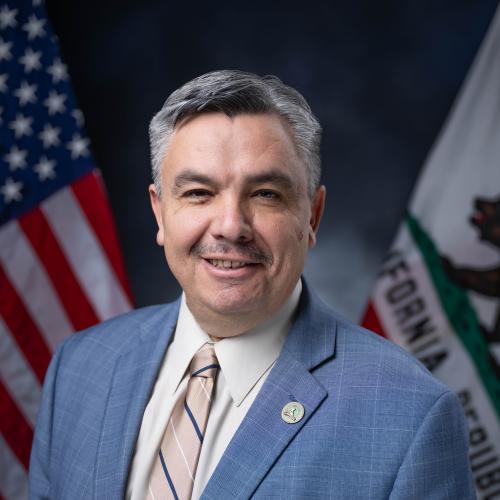
Photo of Juan Carrillo
D California House · District 39 On the 2026 ballot

Rep. Juan Carrillo

Compare
Total votes
10,001
all sessions
Attendance
96%
345 missed
Near the chamber average
With party
99%
of cast votes
Near the chamber average
Bipartisan score
0%
crosses aisle rarely
Near the chamber average
Sponsored
862
bills & resolutions
Near the chamber average
Committees
13
assignments
862 bills and resolutions

Sponsored bills

Total
862
Primary
84
Co-sponsor
778
This page
862
matching current filters
Co-sponsor SB 872
Passed · California Senate · Co-sponsor
Delta Levees and Canal Subsidence Fund.

Existing law, the Sacramento-San Joaquin Delta Reform Act of 2009, declares that the Sacramento-San Joaquin Delta (Delta) is a critically important natural resource for California and the nation and it serves as both the hub of the California water system and the most valuable estuary and wetland ecosystem on the west coast of North and South America. Existing law establishes in the Natural Resources Agency the Department of Water Resources (department) . Existing law requires the department and the Department of Fish and Wildlife to determine the principal options for the Delta and requires the department to evaluate and comparatively rate each option for its ability to do specified things, including, among others, to maintain Delta water quality for Delta users, and to preserve, protect, and improve Delta levees. Existing law establishes in the agency the Sacramento-San Joaquin Delta Conservancy. Existing law requires the conservancy to act as a primary state agency to implement ecosystem restoration in the Delta and to support efforts that advance environmental protection and the economic well-being of Delta residents. Existing law provides for the preservation of specified management areas of the Suisun Marsh, pursuant to a protection plan prepared and adopted by the San Francisco Bay Conservation and Development Commission, as provided. Existing law establishes the Delta Stewardship Council, and requires the council to develop, adopt, and implement a comprehensive long-term management plan for the Delta, known as the Delta Plan, as provided. Existing law requires the department, upon appropriation, to reimburse an eligible local agency for costs incurred for the maintenance or improvement of specified levees, in an amount not to exceed 75% of costs incurred in excess of a set amount per mile, as provided. This bill would require the department to reimburse 100% of the excess costs if a local agency demonstrates economic hardship and the reimbursement is for a project that addresses a threat to life, property, water supply, or habitat. This bill would establish the Delta Levees and Canal Subsidence Fund in the State Treasury and, upon appropriation, would make the moneys in the fund available to the Secretary of the Natural Resources Agency for expenditure consistent with the allocations described below. The bill would authorize the secretary to seek out, and the fund to accept, state moneys from, among other sources, any bond funds, the General Fund, or the Greenhouse Gas Reduction Fund. The bill would authorize the fund to accept moneys from nonstate sources, including federal and private moneys, and would continuously appropriate those moneys without regard to fiscal year, for allocation as described below, thereby making an appropriation. The bill would require the secretary to allocate moneys in the fund, as specified, subject to funding availability, as follows: (1) to the department for the purposes of supporting capital improvements to restore the original design water conveyance capacity for state water conveyance systems, as defined, impacted operationally by land subsidence, and (2) to the department for projects in the Delta or Suisun Marsh to improve existing levees, as specified. The bill would require the conservancy to convene a working group with specified representation to develop a list of recommended projects, as provided. The bill would require the conservancy to publish the list on its internet website, allow 45 days for public comment, and hold at least one community meeting before the list is approved by the conservancy's governing board. The bill would require the department to administer any grants or funding agreements from the list of projects. The bill would require at least 15% of the funds for projects in the Delta or Suisun Marsh, as described in (2) above, to be for Delta levee projects from the list developed by the working group, as provided. The bill would authorize the department to impose additional requirements on projects to meet the conditions of the funding source, as provided. The bill would prohibit these moneys from being expended to pay the costs of the design, construction, operation, mitigation, or maintenance of any additional Delta conveyance facilities, as provided. The bill would require the secretary, no later than January 1, 2032, and by January 1 every 5 years thereafter, to report to the Legislature on expenditures, as provided. This bill would also require the department to provide a report to the budget committees of the Assembly and Senate no later than May 1, 2027, and biennially thereafter, that contains a 5-year spending plan detailing the engineering and capital improvements necessary to address state water conveyance systems impacted operationally by land subsidence, as provided. The bill would authorize the department to charge the state water supply contractors for the actual and reasonable cost of developing the plan.

Passed Aug 27, 2026 1 co-sponsor
Co-sponsor SB 895
Passed · California Senate · Co-sponsor
California Science and Health Research Bond Act.

(1) Existing law establishes various grant and loan programs for research, including, among others, the California Institute for Regenerative Medicine, California Firefighter Cancer Prevention and Research Program, and the Public Interest Research, Development, and Demonstration Program. This bill would establish the California Foundation for Science and Health Research within the Government Operations Agency. The bill would require the Secretary of Government Operations to oversee the process of appointing the director of the foundation, and would authorize the Secretary of Government Operations to delegate the task of hiring and determining the salaries, bonuses, and benefits of additional personnel to the director, as specified. The bill would require the director and personnel of the foundation to be responsible for implementing the strategic objectives of the California Foundation for Science and Health Research Council, as described below, administering grants, loans, and contracts awarded by the council, and all other duties as deemed necessary for the operation of the foundation. This bill would create the California Foundation for Science and Health Research and Innovation Acceleration Fund and require the moneys in the fund to be used by the foundation to award grants and make loans to, and enter into contracts with, public or private research companies, universities, academic medical centers, institutes, and organizations for scientific research and development and for certain economic sectors, as specified, in specific areas of research, including, but not limited to, biomedical, behavioral health, and climate research. The bill would also create the California Foundation for Science and Health Research and Innovation Acceleration Benefit Fund, to consist solely of private donations. The bill would make the moneys in the benefit fund available for the same purposes as the California Foundation for Science and Health Research and Innovation Acceleration Fund. This bill would require that, prior to the first grant from the foundation and no later than one year from the date the bill takes effect, the council develop various provisions and requirements to facilitate the foundation's goals of affordability and equitable access. The foundation shall impose various requirements on the grantees, loan recipients, and contractors, as specified, including, among other things, developing strategies to promote equitable access to the subject invention in various specified communities and making the data resulting from the bond-funded research available to the broader scientific community, except in cases involving national security interests. The council shall also establish standards requiring that all grants, awards, and contracts be subject to intellectual property agreements that balance the opportunity for the State of California to benefit from the inventions, technologies, patents, royalties, and licenses that result from research funded by certain public and private grants, as specified. This bill would create the California Foundation for Science and Health Research Council, as specified, which shall be vested with full power, authority, and jurisdiction over the foundation. The bill would require the council to, among other things, develop the strategic objectives and priorities of the foundation and provide the opportunity for public comment on the foundation's priorities, as specified, determine the research projects that will be funded by the California Foundation for Science and Health Research and Innovation Acceleration Fund, develop objectives and opportunities that offer support to early career researchers, and adopt certain regulations and standards, as specified. The bill would also require the council to consider how the foundation's research priorities relate to or support various economic and industry considerations, as specified. The bill would provide that a majority of the members of the council constitutes a quorum for the transaction of any business, for the performance of any duty, or for the exercise of any power of the council, except as otherwise provided. The bill would authorize the council to establish one or more scientific peer review panels consisting of experts in specified fields of research for the purposes of reviewing and prioritizing proposals on the basis of the scientific merit of the proposal, the potential benefit to the health and well-being of the population, natural resources, and environment of the state, and the demonstrated background, training, and expertise of the researchers and investigators to conduct the proposed work. This bill would require all research and development funded by the California Foundation for Science and Health Research and Innovation Acceleration Fund to be conducted under established standards of open scientific exchange, peer review, and public oversight. The bill would require the funds and contracts to be awarded on the basis of the research priorities established for the foundation by the council and the scientific merit of the proposed research, as determined by an open, competitive, scientific peer review process that ensures objectivity, consistency, and high quality. This bill would enact the California Science and Health Research Bond Act, which, if approved by the voters, would authorize the issuance of bonds in the amount of $7,500,000,000, pursuant to the State General Obligation Bond Law, to finance grants and loans to fund research and operate and maintain facilities for research. The bill would provide for the submission of the bond act to the voters at the March 7, 2028, statewide primary election. (2) Existing law establishes prohibitions and penalties with respect to ethical obligations and conflicts of interest for public officials, including a prohibition on engaging in activities that are incompatible with their official duties and a prohibition on being financially interested in a contract made by them in their official capacity or the board of which they are a part. This bill would authorize a council member to participate in a decision to approve or award a grant, loan, or contract for the purpose of research into a disease in which the member or their immediate family member has a personal interest, as specified. The bill would provide that service with specified educational institutions and organizations is not incompatible with a council member's duties. The bill would provide that the prohibition on being financially interested in a contract, as specified, does not apply if the council member recuses themself from a decision to award or approve a grant, loan, or contract that would otherwise be subject to the prohibition. The bill would provide that council members are subject to certain disclosure requirements relating to personal investments and potential conflicts of interest, as specified. (3) Existing law, the Bagley-Keene Open Meeting Act, requires that all meetings of a state body be open and public and all persons be permitted to attend any meeting of a state body, with specified exceptions for authorized closed sessions. This bill would require the Bagley-Keene Open Meeting Act to apply to all meetings of the council and scientific peer review panels, except as specified for when the council or scientific peer review panels meet to consider or discuss specified matters in closed sessions, including matters involving information relating to patients or medical or scientific research subjects, the disclosure of which would constitute an unwarranted invasion of personal privacy. Existing constitutional provisions require that a statute that limits the right of access to the meetings of public bodies or the writings of public officials and agencies be adopted with findings demonstrating the interest protected by the limitation and the need for protecting that interest. This bill would make legislative findings to that effect. (4) This bill would declare that it is to take effect immediately as an urgency statute.


Passed Aug 27, 2026 1 co-sponsor
Co-sponsor AB 1622
Signed into law · California House · Co-sponsor
Electrified security fences.

Existing law, until January 1, 2028, authorizes an owner of real property to install and operate on their property an electrified security fence that is powered by an electrical energizer, driven by solar-charged batteries of no more than 12 volts of direct current, and used to protect and secure manufacturing or industrial property, or property zoned under another designation, but legally authorized to be used for a commercial purpose that stores, parks, services, sells, or rents vehicles or other materials, subject to specified conditions. Existing law prohibits a city, county, or city and county from prohibiting or conditioning the installation of an electrified security fence, as described above, except for requiring an administrative permit to confirm a fence abutting a property in residential use, or within 300 feet of a public park, childcare facility, recreation center, community center, or school facility, meets certain requirements. Existing law repeals these provisions on January 1, 2028. Existing law, starting January 1, 2028, authorizes an owner of real property to install and operate on their property an electrified security fence that is powered by an electrical energizer, and used to protect and secure commercial, manufacturing, or industrial property, or property zoned under another designation, but legally authorized to be used for a commercial, manufacturing, or industrial purpose, subject to specified conditions and subject to prohibitions imposed by a city, county, or city and county through a local ordinance. This bill would indefinitely extend the operation of the electrified security fence provisions subject to repeal on January 1, 2028, and would repeal the provisions that become operative on January 1, 2028. The bill would include findings that changes proposed by this bill address a matter of statewide concern rather than a municipal affair and, therefore, apply to all cities, including charter cities.

Signed into law Aug 27, 2026 1 co-sponsor
Co-sponsor AB 1628
Passed · California House · Co-sponsor
Child protection: safe surrender.

Existing law defines a safe-surrender site to mean a location designated by the board of supervisors of a county or by a local fire agency, or a location within a public or private hospital that is designated by that hospital, to be responsible for accepting physical custody of a minor child who is 72 hours old or younger from a parent or individual who has lawful custody of that child and who surrenders the child. Existing law requires personnel on duty at a safe-surrender site to accept physical custody of the minor child, and to notify child protective services or a county agency providing child welfare services as soon as possible, but no later than 48 hours after accepting custody of the child. Under existing law, a parent or other individual with lawful custody of a minor child 72 hours old or younger who voluntarily surrenders physical custody of the child to personnel on duty at a safe-surrender site cannot be prosecuted for child abandonment. This bill, the Keeping Infants from Danger (KID) Act, would expand the scope of these provisions to apply to children who are 30 days of age or younger. By imposing new duties on local officials, the bill would impose a state-mandated local program. This bill would also make a conforming change. The California Constitution requires the state to reimburse local agencies and school districts for certain costs mandated by the state. Statutory provisions establish procedures for making that reimbursement. This bill would provide that, if the Commission on State Mandates determines that the bill contains costs mandated by the state, reimbursement for those costs shall be made pursuant to the statutory provisions noted above.

Passed Aug 27, 2026 1 co-sponsor
Co-sponsor AB 1650
Passed · California House · Co-sponsor
Rental vehicles: law enforcement.

Existing law generally regulates the business of renting passenger vehicles to the public. The law prohibits a rental company from taking various actions, including requiring the purchase of a damage waiver, optional insurance, or another optional good or service, and using electronic surveillance technology to track a renter in order to impose fines or surcharges relating to the renter's use of a rental vehicle. This bill would require any privately owned vehicle rented by, or furnished to, any federal, state, or local law enforcement agency for the use of detaining, arresting, or transporting persons who have violated, or are suspected of having violated, any law, to display a temporary decal displaying the agency name and logo, as specified. The bill would authorize certain attorneys, including the Attorney General, to pursue a civil action against the entity renting the vehicle from the private owner for failure to comply with these provisions. The bill would require the rental car contract to include a term that compliance with state law is mandatory. The bill would exempt privately owned vehicles rented or otherwise furnished or loaned to a law enforcement agency for specified purposes and rental car contracts entered into prior to January 1, 2027, from these provisions. The bill would make related findings and declarations.

Passed Aug 27, 2026 1 co-sponsor
Primary AB 264
Passed · California House · Lead sponsor
Veterans: benefits.

Existing law establishes various educational benefits for dependents of veterans who were killed during military service or are totally disabled, as specified. Existing law defines "dependent of a veteran" to include the spouse of a totally disabled veteran. Existing law prohibits a dependent of a veteran from receiving these educational benefits during the time the dependent is entitled to receive specified federal educational benefits or duplicate assistance from any other government source. This bill would repeal that prohibition.

Passed Aug 27, 2026 0 co-sponsors
Co-sponsor AB 956
Passed · California House · Co-sponsor
Accessory dwelling units and junior accessory dwelling units.

Existing law, the Planning and Zoning Law, provides for the creation by local ordinance, or by ministerial approval if a local agency has not adopted an ordinance, of accessory dwelling units in areas zoned for single-family or multifamily dwelling residential use in accordance with specified standards and conditions. Existing law also provides for the creation of junior accessory dwelling units by local ordinance, or, if a local agency has not adopted an ordinance, by ministerial approval, in single-family residential zones in accordance with specified standards and conditions. Existing law, the Davis-Stirling Common Interest Development Act, among other things, makes void and unenforceable any covenant, restriction, or condition contained in any instrument affecting the transfer or sale of any interest in a planned development, and any provision of a governing document, that effectively prohibits or unreasonably restricts the construction or use of an accessory dwelling unit or junior accessory dwelling unit on a lot zoned for single-family residential use that meets the above-described standards and conditions for those units. This bill would revise the provision governing prohibitions or restrictions on the construction or use of an accessory dwelling unit or junior accessory dwelling unit on a lot zoned for single-family residential use to instead apply to a lot zoned to allow single-family residential use. Other existing law also generally makes void and unenforceable any covenant, restriction, or condition contained in any instrument affecting the transfer or sale of any interest in real property that either effectively prohibits or unreasonably restricts the construction or use of an accessory dwelling unit or junior accessory dwelling unit on a lot zoned for single-family residential use that meets the above-described standards and conditions for those units. This bill would similarly revise that provision to instead apply to a lot zoned to allow single-family residential use. Existing law requires a local agency to ministerially approve a building permit application within a residential or mixed-use zone to create certain accessory dwelling units and junior accessory dwelling units, or any combination of those units, if specified conditions are met, including, among other things, requiring the ministerial approval of one detached, new construction, accessory dwelling unit that does not exceed 4-foot side and rear yard setbacks for a lot with a proposed or existing single-family dwelling, as specified. This bill would increase the number of detached, new construction, accessory dwelling units that a local agency is required to ministerially approve on lots with a proposed or existing single-family dwelling, as described above, to 2. However, the bill would expressly state that a local agency is not required to ministerially approve an application for a building permit to create a junior accessory dwelling unit on the same lot where 2 detached, new construction, accessory dwelling units have been constructed. By imposing new duties on local governments with respect to the approval of accessory dwelling units, the bill would impose a state-mandated local program. The California Constitution requires the state to reimburse local agencies and school districts for certain costs mandated by the state. Statutory provisions establish procedures for making that reimbursement. This bill would provide that no reimbursement is required by this act for a specified reason.

Passed Aug 27, 2026 1 co-sponsor
Co-sponsor AB 2541
Passed · California House · Co-sponsor
Specialized license plates: The Lowrider.

Existing law establishes a specialized license plate program and requires the Department of Motor Vehicles to issue specialized license plates, also referred to as environmental license plates, on behalf of a sponsoring state agency if the agency receives 7,500 applications for that plate within a 12-month period, among other requirements. Existing law authorizes a person who is the registered owner or lessee of a vehicle to apply to the department for specialized license plates. Existing law imposes a fee, in addition to the regular registration fee, for the issuance, renewal, retention, transfer, and duplication of specialized license plates. Existing law requires that all revenue derived from these fees be deposited in the California Environmental License Plate Fund. This bill would require the Arts Council to apply to the department to sponsor "The Lowrider" specialized license plate program, as specified. The bill would require the design of the plate to reflect lowrider culture and heritage. The bill would require the council to consult with a nonprofit entity for plate design consultation, stakeholder engagement, publicity, and community outreach. The bill would authorize the council to accept and use donated or licensed artwork from a nonprofit entity for these purposes, and to use funds from nonprofit or private sources to augment implementation. The bill would require the department, after deducting its administrative costs, to deposit additional revenue derived from the issuance, renewal, transfer, and substitution of the plate into the Specialized License Plate Fund in the State Treasury. The bill would require the council to use those funds, upon appropriation by the Legislature, to fund projects that include, among others, supporting lowrider arts and cultural preservation efforts. The bill would authorize the council to use 4 to 6% of those funds to consult with or enter into an agreement with a nonprofit entity to support implementation of the program.

Passed Aug 26, 2026 1 co-sponsor
Primary AB 1688
Passed · California House · Lead sponsor
Child abuse or neglect: reporting.

Existing law, the Child Abuse and Neglect Reporting Act, establishes procedures for the reporting and investigation of suspected child abuse or neglect. Existing law requires certain professionals, including specified health practitioners and social workers, known as "mandated reporters," to report known or suspected child abuse or neglect to a local law enforcement agency or a county welfare or probation department, as specified. Existing law requires an employee of those agencies, in certain circumstances, to send or have sent, within 36 hours, a copy of a report made pursuant to these provisions to the attorney who represents the child, who is the subject of the report, in dependency court. Existing law requires the agency to maintain a copy of the written report and provide all information requested by the attorney for the child or the child's guardian ad litem within 30 days of the request. This bill would require, if a county welfare agency substantiates a report for an incident that occurred in an out-of-home placement, including, but not limited to, placement in foster or congregate care, or if a child is removed from an out-of-home placement due to abuse or neglect, a county welfare agency to send notice, containing specified information, of the report to the attorney who represents a parent or legal guardian of the child in dependency court and, in the case of an Indian child, the tribal representative. The bill would make that requirement inapplicable to a parent whose parental rights have been terminated. The bill would require, if a county welfare agency substantiates a report for an incident that occurred in an out-of-home placement, including, but not limited to, placement in foster or congregate care, or if a child is removed from an out-of-home placement due to abuse or neglect, the agency to send a notice of the report, as specified, to all attorneys who represent a child with an open dependency case in that placement, as provided. By expanding the duties of local agencies that receive reports alleging abuse or neglect of children, this bill would impose a state-mandated local program. The California Constitution requires the state to reimburse local agencies and school districts for certain costs mandated by the state. Statutory provisions establish procedures for making that reimbursement. This bill would provide that no reimbursement is required by this act for a specified reason.

Passed Aug 26, 2026 0 co-sponsors
Showing 21 to 30 of 862 bills
Previous 1 2 3 4 87 Next