

Existing law, the State Housing Law, establishes statewide construction and occupancy standards for buildings used for human habitation. Existing law requires the building department of every city or county to enforce the provisions of the State Housing Law, the State Building Standards Code, and other specified rules and regulations promulgated pursuant to the State Housing Law pertaining to standards for buildings used for human habitation. Existing law authorizes an officer, employee, or agent of an enforcement agency to enter and inspect any building or premises whenever necessary to secure compliance with, or prevent a violation of, any provision of the State Housing Law, the building standards published in the State Building Standards Code, and other rules and regulations promulgated pursuant to the provisions of the State Housing Law. Existing law provides certain immunities to a public entity or employee immunity relative to an inspection or license, as provided. This bill would require a city, including a charter city, county, or city and county, except as specified, to offer a homeowner or contractor, as described, the option of requesting remote inspections for all or a subset of an inspection required by a building permit for specified works in one- or 2-family dwelling units, by either January 1, 2028, or July 1, 2028, as provided. The bill would authorize these local agencies to adopt reasonable protocols governing the technical conduct of a remote inspection, as specified. The bill would apply the above-described immunities to remote inspections. The bill would authorize these local agencies to temporarily ban the homeowner or contractor from using the remote inspection if a homeowner is found to have willfully misrepresented the work, as provided. By imposing new duties on local agencies, the bill would impose a state-mandated local program. The bill would include findings that changes proposed by this bill address a matter of statewide concern rather than a municipal affair and, therefore, apply to all cities, including charter cities. The California Constitution requires the state to reimburse local agencies and school districts for certain costs mandated by the state. Statutory provisions establish procedures for making that reimbursement. This bill would provide that no reimbursement is required by this act for a specified reason.
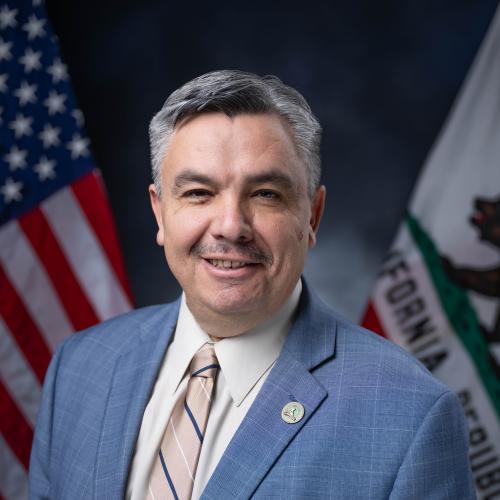
Rep. Juan Carrillo
Sponsored bills
Existing law establishes the California Career Technical Education Incentive Grant Program, administered by the State Department of Education, with the purpose of encouraging, maintaining, and strengthening the delivery of high-quality career technical education programs. Existing law provides, for the 2021–22 fiscal year and each fiscal year thereafter, that $300,000,000 shall be available to the department, upon appropriation by the Legislature, for the program. Existing law requires an applicant to demonstrate a proportional dollar-for-dollar match and sets that amount for the 2021–22 fiscal year, and each fiscal year thereafter, at $2 for every $1 received from the program. Existing law prohibits an applicant from being awarded an amount higher than the amount that the allocation formula determines them to be eligible to receive under the program. Existing law requires the Superintendent of Public Instruction, in administering the program, to perform specified duties, including, among other duties, to (1) determine, in collaboration with the executive director of the State Board of Education, and make public on a preliminary basis at least 30 days before a regularly scheduled meeting of the state board, the allocation formula, (2) distribute funding on a multiyear schedule, (3) require grant recipients to submit program reports, (4) manage the grant process, and (5) promote the success of K–12 career technical education programs, as provided. This bill would require the department, instead of the Superintendent, to perform the above-described duties. The bill would, for purposes of allocations commencing no later than the 2027–28 fiscal year and pursuant to the above-described requirements, also require the department to determine, in consultation with the executive director of the state board, a revised allocation formula that ensures that all funds appropriated for the program in any given fiscal year are fully allocated to program applicants in that fiscal year, as provided.
Existing law imposes taxes upon income and real property, and taxes upon certain transactions and excise taxes. The Fee Collection Procedures Law provides procedures for the collection of certain fees and surcharges and is administered by the California Department of Tax and Fee Administration (CDTFA) . Under existing law, a violation of the Fee Collection Procedures Law is a crime. This bill would, beginning July 1, 2028, establish the Private Detention Facility Tax Law, which would impose an annual tax on each private detention facility operator, as defined, equal to 25% of the operator's gross income, as defined, for the prior fiscal year, as defined. The bill would establish the Due Process for All Fund in the State Treasury, except as provided, and would require all revenues collected, less refunds and reimbursement to the CDTFA, be deposited into the fund. In the event that Assembly Bill 2465 is enacted, the bill would instead require all revenues be deposited into the Due Process for All Fund as established by that bill. The bill would direct moneys in the fund, upon appropriation by the Legislature, be used for immigration-related services. The bill would require the CDTFA to administer and collect the tax pursuant to the Fee Collection Procedures Law. By expanding the application of the crimes associated with the Fee Collection Procedures Law, the bill would impose a state-mandated local program. This bill would include a change in state statute that would result in a taxpayer paying a higher tax within the meaning of Section 3 of Article XIIIA of the California Constitution, and thus would require for passage the approval of 23 of the membership of each house of the Legislature. The California Constitution requires the state to reimburse local agencies and school districts for certain costs mandated by the state. Statutory provisions establish procedures for making that reimbursement. This bill would provide that no reimbursement is required by this act for a specified reason. This bill would take effect immediately as a tax levy.
The California Constitution authorizes the Legislature to exempt from taxation, in whole or in part, property that is used exclusively for religious, hospital, or charitable purposes, and is owned or held in trust by a nonprofit entity. Pursuant to that authority, existing law provides for a welfare exemption under which property used exclusively for an exempt purpose and owned and operated by specified entities, including foundations, limited liability companies, or corporations meeting certain statutory requirements is exempt from taxation. This bill would specify that for the purposes of the welfare exemption provisions above, "property used exclusively for religious, hospital, scientific, or charitable purposes" shall not include property, or any portion thereof, operated as a detention facility, as defined. The bill would declare that the above provision is declarative of, and not a change in, existing law.
Existing law, the California Child Day Care Facilities Act, provides for the licensure and regulation of child daycare facilities, including daycare centers and family daycare homes, by the State Department of Social Services. Existing law imposes various training requirements on child daycare facilities, including, among others, at least 15 hours of specified health and safety training that includes pediatric first aid, pediatric CPR, and preventive health practices, and mandated reporter training. A person who willfully or repeatedly violates any provision of the act or any rule or regulation promulgated under the act is guilty of a crime. Existing law prohibits licensed child daycare facilities, employees of licensed child daycare facilities, and license-exempt California state preschool program facilities from collecting information or documents regarding citizenship or immigration status of children or their family members. Existing law also requires the Attorney General, by April 1, 2026, in consultation with the appropriate stakeholders, to publish model policies limiting assistance with immigration enforcement at child daycare facilities, as specified, and requires the State Department of Social Services to inform licensed daycare facilities of the model policies. This bill would require the State Department of Social Services to notify all licensed and license-exempt family daycare home providers of a person's rights under the Fourth Amendment to the United States Constitution, as specified, and would also require the department to designate a statewide entity to develop and provide a training program about those rights. The bill would require the designated statewide entity to offer the training program commencing 60 days after the effective date of the bill, and would require licensed family daycare home providers to complete the training within specified timeframes. The bill would specify that a violation of these requirements is not subject to criminal, civil, or administrative penalties, and does not subject a licensee to citation under the act. This bill would declare that it is to take effect immediately as an urgency statute.
Maddy summaryThis bill designates September 2026 as Childhood Cancer Awareness Month. It directly affects state agencies and organizations by encouraging them to recognize this specific month for awareness activities. The measure does not change laws or allocate funding but serves as a formal commemorative resolution.
Existing law authorizes the Department of Transportation or a local authority, upon application in writing and if good cause appears, to issue a special or annual permit for the transporting of a manufactured home that does not exceed 14 feet in total width, exclusive of lights and devices, upon any highway, as specified. Existing law prescribes specified requirements and conditions for transporting the above-described manufactured homes and additional requirements and conditions for manufactured homes exceeding 14 feet but not exceeding 16 feet in width, including requiring the Department of Transportation, in cooperation with the Department of the California Highway Patrol, or the local authority to require pilot car or special escort services for the movement of these manufactured housing units, and makes it unlawful for a person to violate the terms or conditions of a permit issued to haul specified loads, including the above-described permits. Existing regulations provide a schedule for the number of pilot cars and Department of the California Highway Patrol escorts that are required based on the width and length of the load and the route class. This bill would remove the good cause requirement for the department or the local authority to issue the above-described permits. The bill would expand the issuance of a special or annual permit to include transportation of a manufactured home, factory-built housing, and commercial modular, as defined, not exceeding 14 feet in total width. By expanding the scope of an existing crime, the bill would create a state-mandated local program. The bill would clarify that a special permit is not required to move a manufactured home, factory-built housing, or commercial modular if the applicant has obtained an annual permit. The bill would authorize the Department of Transportation, in cooperation with the Department of the California Highway Patrol, or the local authority to require pilot car or special escort services for the movement of the above-described manufactured housing units, as specified. This bill would require the Department of Housing and Community Development, in consultation with the Department of Transportation and the Department of the California Highway Patrol, to convene a stakeholder workgroup, as specified, to gather feedback and provide a report on cost pressures associated with, and opportunities to facilitate and make efficient, the movement of a manufactured home, factory-built housing, and commercial modular, as specified. The bill would require the workgroup to begin no later than March 31, 2027, and meet at least quarterly. The bill would require the Department of Housing and Community Development, in consultation, to solicit feedback from the workgroup on specified topics, including the feasibility of deploying a single crew of Department of the California Highway Patrol escorts in operation across multiple jurisdictions. The bill would require the Department of Housing and Community Development, in consultation, to provide a report to the Legislature by January 1, 2029, as specified. The California Constitution requires the state to reimburse local agencies and school districts for certain costs mandated by the state. Statutory provisions establish procedures for making that reimbursement. This bill would provide that no reimbursement is required by this act for a specified reason.
The Bergeson-Peace Infrastructure and Economic Development Bank Act creates within the Governor's Office of Business and Economic Development the California Infrastructure and Economic Development Bank (bank) and requires it to administer the act, which, among other things, provides for the financing of certain economic development projects. This bill would establish, upon appropriation by the Legislature, the Multifamily Backstop Financing Program (program) , for purposes of supporting multifamily projects through the provision of state-backed credit backstops that would enable surety companies to issue payment and performance bonds to qualified offsite housing factories in the state. The bill would authorize the bank to provide credit backstops to surety companies and surety insurers that issue construction bonds according to specified parameters. The bill would require the bank to adopt rules and regulations necessary to implement the program.
This measure would recognize and affirm the important role of artists, arts organizations, creative arts therapists, and arts for health initiatives in supporting behavioral health, promoting recovery, strengthening community resilience, and contributing to public safety. The measure would encourage and recognize exploration, support, and integration of arts and behavioral health within California's health care, behavioral health, and community-based systems.
Existing law makes it a crime for a law enforcement officer to wear a facial covering in the performance of their duties, except as specified. Existing law defines law enforcement officer for these purposes as anyone designated by California law as a peace officer who is employed by a city, county, or other local agency, and any officer or agent of a federal law enforcement agency, agency or law enforcement agency of another state, or any person acting on behalf of a federal law enforcement agency. This bill would add peace officers employed by a state agency to the definition of law enforcement officers, thereby making those law enforcement officers subject to those criminal penalties. The bill would specify that facial coverings does not include certain items, including, among other things, sunglasses. The bill would, for all of the items excluded from the definition of facial coverings, limit that exclusion if the items are combined or otherwise used in a manner intended to conceal or obscure an officer's identity. By expanding the scope of a crime, this bill would impose a state-mandated local program. Existing law prohibits any person who is found to have committed an assault, battery, false imprisonment, false arrest, abuse of process, or malicious prosecution, while wearing a facial covering in a knowing and willful violation of these provisions, from asserting any privilege or immunity for their tortious conduct against a claim of civil liability, and makes that person liable for the greater of actual damages or statutory damages of not less than $10,000, whichever is greater. This bill would instead make a person who is found liable for false imprisonment or false arrest liable for those damages if the trier of fact finds that the person knowingly and willfully concealed their identity through the use of a facial covering at the time of the conduct giving rise to liability. Existing law requires a law enforcement agency operating in California to, by July 1, 2026, maintain and publicly post a written policy limiting the use of facial coverings, as specified. Existing law defines a law enforcement agency for these purposes as any entity of a city, county, or other local agency, that employs anyone designated by California law as a peace officer, any federal law enforcement agency, or any law enforcement agency of another state. This bill would add to the definition of law enforcement agency, a state entity that employs a peace officer and would change the date any law enforcement agency has to comply with that requirement to January 1, 2027. The bill would also require those policies to exempt certain surveillance operations related to enforcement of the Fish and Game Code, or similar federal law. The California Constitution requires the state to reimburse local agencies and school districts for certain costs mandated by the state. Statutory provisions establish procedures for making that reimbursement. This bill would provide that no reimbursement is required by this act for a specified reason.