

Existing law requires law enforcement agencies to report to the Department of Justice, as specified, any incident in which a peace officer is involved in a shooting or use of force that results in death or serious bodily injury. Existing law requires the state prosecutor to investigate incidents involving a shooting by a peace officer resulting in the death of an unarmed civilian. Existing law authorizes the state prosecutor to criminally prosecute any officer that, pursuant to an investigation, is found to have violated state law. Existing law provides that the Attorney General is the state prosecutor unless otherwise specified or named. This bill would require the state prosecutor to conduct an independent, transparent, and thorough investigation into incidents of an immigration enforcement officer-involved shooting resulting in the death of an unarmed civilian. The bill would authorize the state prosecutor to criminally prosecute an immigration enforcement officer that, pursuant to an investigation, is found to have violated state law. The bill would require the state prosecutor to post and maintain on a public internet website each written report, as specified. The bill provides that the Attorney General is the state prosecutor unless otherwise specified or named. This bill would provide that the provisions of this bill are severable.
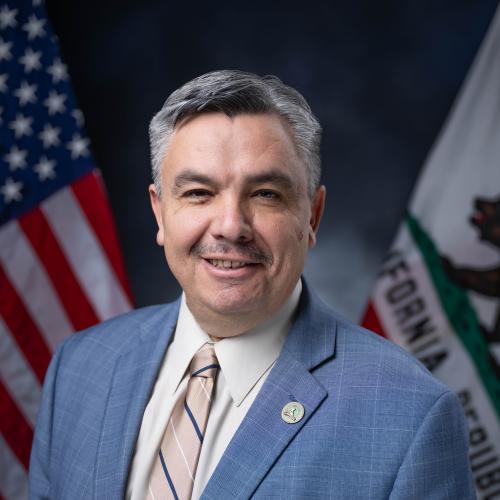
Rep. Juan Carrillo
Sponsored bills
Existing law vests the Public Utilities Commission with regulatory authority over public utilities, including electrical corporations. Existing law authorizes the commission to fix the rates and charges for every public utility and requires that those rates and charges be just and reasonable. Existing law requires each electrical corporation to file an advice letter for, and requires the commission to approve, a new tariff or rule that authorizes each electrical corporation to design and deploy all electrical distribution infrastructure on the utility side of the customer's meter for all customers installing separately metered infrastructure to support electric vehicle charging stations, other than those in single-family residences. This bill would require each electrical corporation, on or before April 1, 2027, to file an advice letter for, and require the commission, on or before September 1, 2027, to approve, a new or modified tariff or rule that authorizes the electrical corporation to design, construct, own, operate, and maintain all electrical distribution and service facilities located on the utility side of a customer's meter that are necessary to provide separately metered electrical service to hydrogen refueling stations, including hydrogen refueling stations located on premises that already receive electrical service for other uses. The bill would require that the tariff or rule authorize an electrical corporation to extend utility-side electrical distribution and service facilities from the existing distribution system to a dedicated revenue meter serving a heavy-duty hydrogen refueling station that serves vehicles that are 14,001 pounds or greater and authorize the installation of a dedicated revenue meter for the hydrogen refueling station load, as provided. The bill would require a facility installed pursuant to the tariff or rule to be treated, for cost allocation and customer contribution purposes, as line and service extensions, as provided. The bill would require that the tariff or rule require the electrical corporation to provide the applicant a good faith estimate before the applicant is required to execute a line or service extension agreement or make a nonrefundable payment, as provided. The bill would repeal its provisions on January 1, 2033. Under existing law, a violation of the Public Utilities Act or any order, decision, rule, direction, demand, or requirement of the commission is a crime. Because the provisions of the bill would be a part of the act and a violation of a commission action implementing the bill's requirements would be a crime, this bill would impose a state-mandated local program. The California Constitution requires the state to reimburse local agencies and school districts for certain costs mandated by the state. Statutory provisions establish procedures for making that reimbursement. This bill would provide that no reimbursement is required by this act for a specified reason.
Existing law includes various provisions limiting how state and local entities may use their resources for immigration enforcement purposes. This bill would prohibit the use of state-owned property for purposes of immigration enforcement, as specified. In this regard, the bill would prohibit, among other uses, staging, assembling, mobilizing, or deploying vehicles, equipment, or personnel for immigration enforcement purposes. The bill would require the Department of General Services and state agencies to work together to identify state-owned property previously or likely to be used for immigration enforcement purposes. The bill would require state agencies to post signage at those properties regarding the prohibition and to use physical barriers limiting access, as provided. The bill would require state agencies to develop procedures to ensure that an attempted or actual use of state-owned property for immigration enforcement purposes is documented in writing, that the documentation includes any photographic or video evidence, and that the Attorney General's office or the Attorney General's designee is notified. The bill would direct state agencies to make educational materials available regarding the rights of employees, tenants, and security staff if federal agents enter state-owned property. The bill would further require the Attorney General's office to design standardized signage and to make the signage available to download free of charge on the Attorney General's internet website.
Existing law, the Warren-911-Emergency Assistance Act, requires every local public agency to establish within its jurisdiction a basic emergency telephone system that includes, at a minimum, police, firefighting, and emergency medical and ambulance services. Existing law establishes the Office of Emergency Services within the office of the Governor and requires the office to be responsible for the state's emergency and disaster response services, as specified. Existing law requires the office, at specified intervals, to consult with, among others, the State Fire Marshal and the State Department of Public Health in order to review and update technical and operational standards for public agency systems. Existing law requires a public safety agency that provides "911" call processing services for emergency medical response to, by January 1, 2027, provide prearrival medical instructions to "911" callers requiring medical assistance, as specified. This bill would require a public safety agency described above that was not providing prearrival instructions to the "911" callers described above on or before January 1, 2027, to report to their local emergency medical services agency the status of their compliance with the above-described requirement on or before January 31, 2027.
The California Environmental Quality Act (CEQA) requires a lead agency, as defined, to prepare, or cause to be prepared, and certify the completion of an environmental impact report on a project that it proposes to carry out or approve that may have a significant effect on the environment or to adopt a negative declaration if it finds that the project will not have that effect. CEQA also requires a lead agency to prepare a mitigated negative declaration for a project that may have a significant effect on the environment if revisions in the project would avoid or mitigate that effect and there is no substantial evidence that the project, as revised, would have a significant effect on the environment. CEQA requires the Office of Land Use and Climate Innovation to prepare, develop, and transmit to the Secretary of the Natural Resources Agency for certification and adoption proposed revisions to the CEQA implementation guidelines to establish criteria for determining the significance of transportation impacts of projects within transit priority areas, and requires the criteria to promote the reduction of greenhouse gas emissions, the development of multimodal transportation networks, and a diversity of land uses. CEQA requires the office to recommend potential metrics, including, among other metrics, vehicle miles traveled, to measure these transportation impacts. This bill would require the Department of Transportation, in consultation with specified entities, to, on or before December 31, 2030, develop guidance on vehicle-miles-travel mitigation measures for transportation projects in nonmetropolitan counties, as provided. The bill would require the department to publish the guidance on its internet website and add the guidance as an addendum to the Transportation Analysis Framework and the Transportation Analysis under CEQA. The bill would specify that a transportation project for which the lead agency has issued a notice of preparation for the project's environmental impact report on or before December 31, 2031 is presumed to have a less than significant transportation impact as determined by the vehicle-miles-traveled metric if at least 70% of the project lies within one or more nonmetropolitan counties. Because the bill would impose additional duties on a lead agency in its analysis of significant transportation impacts, this bill would impose a state-mandated local program. The California Constitution requires the state to reimburse local agencies and school districts for certain costs mandated by the state. Statutory provisions establish procedures for making that reimbursement. This bill would provide that no reimbursement is required by this act for a specified reason.
Existing law requires the board of supervisors of each county, following each decennial federal census, and using that census as a basis, to adjust the boundaries of any or all of the supervisorial districts of the county so that the districts are as nearly equal in population as possible and comply with applicable federal law, and specifies the procedures the board of supervisors must follow in adjusting those boundaries. Existing law establishes independent redistricting commissions in the Counties of Los Angeles, San Diego, Orange, Riverside, San Luis Obispo, Kern, Fresno, and Sacramento, which are charged with adjusting the supervisorial district boundaries for their respective counties. This bill, upon appropriation by the Legislature, would establish the Citizens Redistricting Commission in the County of San Bernardino, which would be charged with adjusting the boundary lines of the districts of the Board of Supervisors of the County of San Bernardino. The commission would consist of 14 commissioners who meet specified qualifications. This bill would require the commission to adjust the boundaries of the supervisorial districts in accordance with specified criteria and adopt a redistricting plan in accordance with existing deadlines for the adoption of county supervisorial district boundaries. The bill would create specified procedures by which the commission may remove a commissioner. By increasing the duties on local officials, the bill would impose a state-mandated local program. This bill would make legislative findings and declarations as to the necessity of a special statute for the unique circumstances facing the County of San Bernardino. The California Constitution requires the state to reimburse local agencies and school districts for certain costs mandated by the state. Statutory provisions establish procedures for making that reimbursement. This bill would provide that, if the Commission on State Mandates determines that the bill contains costs mandated by the state, reimbursement for those costs shall be made pursuant to the statutory provisions noted above.
Existing law, the Lanterman-Petris-Short (LPS) Act, authorizes the involuntary commitment and treatment of a person, when the person, as a result of a mental health disorder, is a danger to themselves or others, or is gravely disabled. Existing law grants persons involuntarily detained in state hospitals as a result of developmental or mental health disabilities specified rights, including a right to dignity, privacy, and humane care, to be free from harm, to religious freedom and practice, and to physical exercise and recreational opportunities. This bill, the Civil Detainees' Bill of Rights Act of 2026, would clarify that all persons housed or detained for purposes of civil immigration proceedings in California at any state, county, local, or private locked detention facility, including any county, local, or private locked detention facility in which an individual is housed or detained on behalf of, or pursuant to a contract with, the federal Office of Refugee Resettlement or the United States Immigration and Customs Enforcement, have the legal rights and responsibilities guaranteed all other persons by the United States Constitution and federal law and the California Constitution and state law, unless specifically limited by federal or state law or regulations. The bill would grant persons housed or detained for the purposes of civil immigration proceedings in California certain rights, including a right to dignity, privacy, and humane care, a right to clean facilities and living quarters, and a right to safe and healthy food. The bill would reaffirm the intent of the Legislature that individuals housed or detained as a result of developmental or mental health disabilities have the rights described above. The bill would require the rights of individuals involuntarily housed as a result of developmental or mental health disabilities or civilly detained in California to be observed and protected by the operator of any facility in California in which the individuals are housed or civilly detained. The bill would authorize the Attorney General to bring a civil action for injunctive and other relief in order to protect any of the above-described rights, and would additionally authorize the Attorney General to seek a civil penalty not to exceed $2,500 for each violation. The bill would require all necessary access for the observations necessary to ensure compliance with the above-described requirements to be provided to the Attorney General. The bill would make related findings and declarations. The bill would declare that it is to take effect immediately as an urgency statute.
Existing law requires the governing board of a school district to have general control of, and be responsible for, all aspects of the interscholastic athletic policies, programs, and activities in its school district, as provided, and requires the governing board of a school district to ensure that all interscholastic policies, programs, and activities in the school district comply with state and federal law. Existing law authorizes the governing board of a school district to enter into associations or consortia with other governing boards for purposes of governing regional or statewide interscholastic athletics, as provided. Existing law describes the California Interscholastic Federation (CIF) as a voluntary organization that consists of school and school-related personnel with responsibility for administering interscholastic athletic activities in secondary schools and states the intent of the Legislature that the CIF, in consultation with the State Department of Education, implement specified policies relating to interscholastic athletics. Existing law, the 1998 California High School Coaching Education and Training Program, declares the intent of the Legislature to establish a California High School Coaching Education and Training Program, to be administered by school districts with an emphasis on specific components, including, among other components, sports psychology. Existing law requires every high school sports coach to complete, at their own expense, a coaching education program that meets the guidelines established by the California High School Coaching Education and Training Program. This bill would add a component on mental health training, as specified, to the list of components to be emphasized by the 1998 California High School Coaching Education and Training Program. The bill, commencing with the 2027–28 school year, would require a person who serves as a coach in an interscholastic athletic program at a high school, including a private school, that is a member of the California Interscholastic Federation to complete an initial training, and a subsequent training every 2 years, on mental health, as provided. The bill, commencing with the 2027–28 school year, would also require a school district, county office of education, or charter school that elects to offer an athletic program, other than an interscholastic athletic program, to ensure that the athletic program's coaches complete an initial training, and a subsequent training every 2 years, that covers sudden cardiac arrest, as provided, and youth athletics behavioral and mental health training, as provided. This bill would incorporate additional changes to Section 35179.1 of the Education Code proposed by AB 1626 to be operative only if this bill and AB 1626 are enacted and this bill is enacted last. This bill would make the operation of its provisions contingent upon the enactment of AB 1626 of the 2025–26 Regular Session.
Existing law generally regulates classes of insurance, including automobile liability insurance. Existing law prohibits classifying a private passenger motor vehicle as a commercial vehicle, for-hire vehicle, permissive use vehicle, or livery solely because its owner allows it to be shared, if specified criteria are met. In the event of a loss or injury that occurs during any time period when the vehicle is under the operation and control of a person other than the vehicle owner, existing law requires the personal vehicle sharing program to assume all liability of the owner and is considered the owner of the vehicle for all purposes. Existing law requires a personal vehicle sharing program to provide insurance coverages for the vehicle and operator at a minimum of $45,000 for bodily injury or death for one person, $90,000 for bodily injury or death for all persons, and $15,000 for property damage, and, on and after January 1, 2031, to provide liability coverage at least 3 times the minimum insurance requirements for private passenger vehicles. This bill would, instead of requiring a personal vehicle sharing program to assume all liability of the owner, require the program to assume liability of the owner for bodily injury or property damage to injured third parties resulting from personal vehicle sharing in amounts stated in the personal vehicle sharing program agreement, and not less than $250,000 for bodily injury or death for one person, $500,000 for bodily injury or death for all persons, and $100,000 for property damage. The bill would make these provisions inapplicable if the vehicle owner acts in concert with a shared vehicle driver who fails to return the shared vehicle pursuant to the terms of the personal vehicle sharing program agreement.
This measure would urge the President of the United States and Congress of the United States to immediately restore full and consistent funding and staffing for the National Park Service.