

Existing law establishes county boards of education and school districts throughout the state to administer the public elementary and secondary schools within their respective jurisdictions. Existing law requires county boards of education and the governing board of each school district to prescribe and enforce rules not inconsistent with state law for their own government. Existing law authorizes the members of city or county boards of education or the governing boards of school districts to receive compensation not to exceed a specified amount between $60 and $1,500 per month, based on the average daily attendance for the prior school year in the jurisdiction of the governing board, as provided. This bill would revise and recast provisions related to the compensation of members of city or county boards of education and the governing boards of school districts by increasing the authorized compensation to instead not exceed a specified amount between $600 and $4,500 per month, based on the average daily attendance for the prior school year in the jurisdiction of the governing board for the prior school year, as provided.
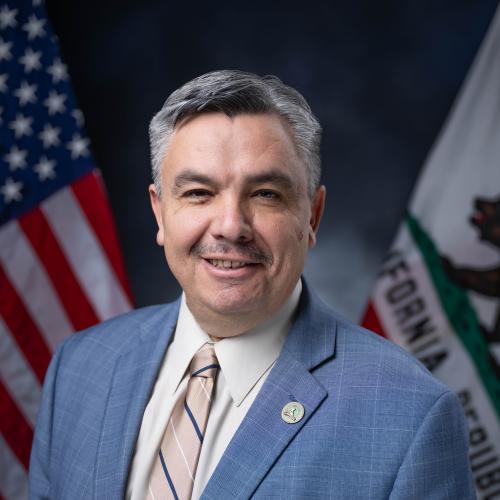
Asm. Juan Carrillo
Sponsored bills
The Planning and Zoning Law, among other things, provides for the creation of junior accessory dwelling units by local ordinance, or, if a local agency has not adopted an ordinance, by ministerial approval, in accordance with specified standards and conditions. Existing law requires an ordinance that provides for the creation of a junior accessory dwelling unit to, among other things, require owner-occupancy in the single-family residence in which the junior accessory dwelling unit is permitted. Under this bill, that owner-occupancy requirement would apply only if the junior accessory dwelling unit has shared sanitation facilities with the existing structure. The bill would require an ordinance that provides for the creation of a junior accessory dwelling unit to require that a rental of a junior accessory dwelling unit be for a term longer than 30 days. By imposing new duties on local governments with respect to the approval of junior accessory dwelling units, the bill would impose a state-mandated local program. The California Constitution requires the state to reimburse local agencies and school districts for certain costs mandated by the state. Statutory provisions establish procedures for making that reimbursement. This bill would provide that no reimbursement is required by this act for a specified reason.
(1) Existing law authorizes a local authority, as defined, to adopt a program to regulate sidewalk vendors if the program complies with specified standards. These standards include restricting the local authority from requiring a sidewalk vendor to operate within specific parts of the public right-of-way, except when that restriction is directly related to objective health, safety, or welfare concerns. A violation of these provisions is punishable only by an administrative fine, as specified. This bill would prohibit a local authority, except as otherwise required by state or federal law, from providing voluntary consent to any individual to access, review, or obtain certain records of the local authority that include personally identifiable information of any sidewalk vendors in the jurisdiction without a subpoena or judicial warrant. The bill would also prohibit a local authority and its personnel from disclosing or providing in writing, verbally, or in any other manner personally identifiable information of any sidewalk vendor that is requested, except pursuant to a subpoena or a valid judicial warrant. The bill would define "personally identifiable information," for these purposes, to include an individual's name, business name, home address, business address, birthdate, telephone number, California driver's license or identification, and other related information. The bill would also define "immigration enforcement" for these purposes. Existing law authorizes a local authority to adopt additional requirements regulating the time, place, and manner of sidewalk vending if the requirements are directly related to objective health, safety, or welfare concerns. These include requiring the sidewalk vendor to obtain from the local authority a permit or valid business license, provided that the local authority issuing the permit or business license accepts a California driver's license or identification number, an individual taxpayer identification number, or a municipal identification number in lieu of a social security number for the issuance of a permit or business license, and that the number collected is not disclosed, except as specified. This bill would also prohibit a local authority, in the above-described circumstances, from inquiring into or collecting information about an individual's immigration or citizenship status, place of birth, or individual criminal history, or requiring an applicant to submit fingerprints, complete a LiveScan fingerprinting, or submit to a background check as part of an application for a permit or business license. The bill would require a local authority that inquired into or collected information or documentation regarding an individual's place of birth or criminal history, required an applicant to submit fingerprints or complete a LiveScan fingerprinting, or performed a background check before January 1, 2026, to destroy those records on or before March 1, 2026, unless those records are expressly required by law to be preserved. The bill would provide that specified personally identifiable information collected by a local authority is exempt from disclosure under the California Public Records Act. This bill would prohibit an agency or department of a local authority, including any nonpublic entity working on the local authority's behalf, as provided, from using local authority moneys or personnel to investigate, interrogate, detain, detect, or arrest persons for certain purposes, and from engaging in specified activities related to immigration enforcement, when enforcing certain provisions regulating sidewalk vendors. The bill, for specified contracts between a nonpublic entity and a local authority entered into or modified on or after January 1, 2026, would require a nonpublic entity to explicitly agree to adhere to these provisions and would immediately terminate the contract if it is found that the nonpublic entity has violated these provisions. (2) Existing law, the California Retail Food Code (the code) , establishes uniform health and sanitation standards for, and provides for regulation by the State Department of Public Health of, retail food facilities and requires local health agencies to enforce these provisions. Existing law requires compact mobile food operations to meet specified health and safety standards. For purposes of the code, a "compact mobile food operation," means a mobile food facility that operates from an individual or from a pushcart, stand, display, pedal-driven cart, wagon, showcase, rack, or other nonmotorized conveyance. Existing law makes a violation of these provisions by an operator or employee of a compact mobile food operation or a sidewalk vendor punishable only by an administrative fine, as specified. This bill would prohibit an enforcement agency, including any nonpublic entity working on the enforcement agency's behalf, as provided, from using enforcement agency moneys or personnel to investigate, interrogate, detain, detect, or arrest persons for certain purposes, and from engaging in specified activities related to immigration enforcement, when enforcing certain provisions regulating compact mobile food operations. The bill, for specified contracts between a nonpublic entity and an enforcement agency entered into or modified on or after January 1, 2026, would require a nonpublic entity to explicitly agree to adhere to these provisions and would immediately terminate the contract if it is found that the nonpublic entity has violated these provisions. This bill would also prohibit an enforcement agency from providing voluntary consent to any individual to access, review, or obtain certain records of the enforcement agency that include personally identifiable information of any sidewalk vendor or operator or employee of a compact mobile food operation in the jurisdiction without a subpoena or judicial warrant. The bill would further prohibit a local authority and its personnel from disclosing or providing in writing, verbally, or in any other manner personally identifiable information of any sidewalk vendor that is requested, except pursuant to a subpoena or a valid judicial warrant. Existing law prohibits a food facility from being open for business without a valid permit and requires a permit to be issued by the enforcement agency when investigation has determined that the proposed facility and its methods of operation conform to code requirements. This bill would require a permit application for a compact mobile food operation to comply with specified requirements. In this regard, the bill would require an enforcement agency to accept a California driver's license or identification number, an individual taxpayer identification, or a municipal identification number in lieu of a social security number. The bill would also prohibit an enforcement agency from, among other things, inquiring into the individual's immigration status, citizenship status, or criminal history, as prescribed. The bill would further require an enforcement agency that inquired into or collected information or documentation regarding an individual's place of birth or criminal history, required an applicant to submit fingerprints or complete a LiveScan fingerprinting, or performed a background check before January 1, 2026, to destroy those records on or before March 1, 2026, unless those records are expressly required by law to be preserved. The bill would provide that specified personally identifiable information collected by an enforcement agency is exempt from disclosure under the California Public Records Act. The bill would make other related changes to these provisions. To the extent the bill would impose new requirements on local governmental agencies, it would create a state-mandated local program. Existing constitutional provisions require that a statute that limits the right of access to the meetings of public bodies or the writings of public officials and agencies be adopted with findings demonstrating the interest protected by the limitation and the need for protecting that interest. This bill would make legislative findings to that effect. The California Constitution requires the state to reimburse local agencies and school districts for certain costs mandated by the state. Statutory provisions establish procedures for making that reimbursement. This bill would provide that, if the Commission on State Mandates determines that the bill contains costs mandated by the state, reimbursement for those costs shall be made pursuant to the statutory provisions noted above.
Existing law requires the State Department of Public Health to license and regulate health facilities, including general acute care hospitals. Existing law makes a violation of these provisions a crime. Existing federal law, the Health Insurance Portability and Accountability Act of 1996 (HIPAA) , authorizes a covered health care provider to use specified protected health information to maintain a directory of patients in its facility, and to disclose that information to persons who ask for the patient by name. Existing federal law requires a covered health care provider to inform an individual of its privacy practices generally and the use and disclosure of information in the directory and to provide the patient with the opportunity to restrict or prohibit that use or disclosure. Existing law, the Confidentiality of Medical Information Act, prohibits a health care provider, a contractor, or a health care service plan from disclosing medical information, as defined, but does not prevent a general acute care hospital, upon an inquiry concerning a specific patient, from releasing a patient's name, address, age, and sex, and a general description of the reason for treatment, among other information, unless there is a specific written request by the patient to the contrary. This bill, beginning July 1, 2026, would require a general acute care hospital to inform a patient or the patient's representative, at the time of admission or as soon as reasonably possible in cases of patient incapacity or an emergency treatment circumstance, that the patient or the patient's representative may restrict or prohibit the use or disclosure of protected health information in the hospital's patient directory and would require the hospital to provide the patient or the patient's representative an acknowledgment of the hospital's privacy practices by using a separate document and having hospital personnel verbally inform the patient or the patient's representative, as specified. Because a violation of the bill's requirements would be a crime, this bill would impose a state-mandated local program. The California Constitution requires the state to reimburse local agencies and school districts for certain costs mandated by the state. Statutory provisions establish procedures for making that reimbursement. This bill would provide that no reimbursement is required by this act for a specified reason.
Existing law requires the state, through the State Department of Social Services and county welfare departments, to establish and support a public system of statewide child welfare services, which is defined to mean public social services that are directed toward the accomplishment of specified purposes, including protecting and promoting the welfare of all children and preventing the unnecessary separation of children from their families. This bill would authorize a county child welfare agency to establish a 3-year pilot program in which the county partners with a domestic violence consultant from a domestic violence victim service organization to offer support and guidance to county social workers in addressing the complex dynamics of families who are potentially experiencing both domestic violence and child maltreatment in order to enhance the social worker's knowledge of domestic violence and their ability to apply that knowledge to their work with parent survivors and their children through tailored engagement and intervention strategies. The bill would require a domestic violence consultant under the program to assist county social workers by providing education on domestic violence-related dynamics and services and discussing complicating factors and protective measures, as specified, among other things. The bill would require a county that implements the pilot program to conduct a comprehensive evaluation of the pilot program and report its findings to the Legislature on or before October 31, 2031. The bill would require a participating county to seek the input of the State Department of Social Services and stakeholders, including people with lived experience with domestic violence and child welfare, in the design and implementation of the evaluation.
Existing law establishes various boards and commissions in state government with specified duties and responsibilities. Existing law generally provides for legislative oversight of state board formation, which includes, among other things, any administrative or regulatory board, commission, and committee, whose members are appointed by the Governor, the Legislature, or both. Existing law requires the Governor to appoint every officer whose mode of appointment is not prescribed by law. This bill would require the office of the Governor, commencing January 1, 2027, to maintain on its internet website a list of each state board and commission and the membership list, stated purpose, duties, meeting frequency, internet website, and vacancies in the membership for each board or commission. The bill would require the office of the Governor, on or before January 31, 2028, and annually on January 31 thereafter, to create and publish on its internet website a report containing aggregate demographic information, as defined, of appointments made by the office during the prior calendar year, as specified. The bill would require the Secretary of the Senate and the Chief Clerk of the Assembly, commencing January 1, 2027, to maintain on their respective internet websites, or to include a link on their respective internet websites to any available resources that contain, a list of each state board or commission that each house has appointment authority over and the membership list, stated purpose, duties, meeting frequency, internet website, and any vacancies in the membership for that board or commission. The bill would also require the Secretary of the Senate and the Chief Clerk of the Assembly, on or before January 31, 2028, and annually on January 31 thereafter, to publish on their respective internet websites, to the extent available, aggregate demographic information, as defined, on their respective legislative appointments, made during the prior calendar year, as specified. The bill would require the aggregate demographic information to only include legislative appointments created by statute, and prohibit the information from including ex officio appointments of members of the Senate and the Assembly. The bill would require the above-described published aggregate demographic information on gubernatorial or legislative appointments to, among other things, be published on the respective entity's internet websites in a prescribed manner for purposes of ensuring the anonymity of the appointed individuals.
Existing law vests the Public Utilities Commission with regulatory authority over public utilities, including telephone corporations. The Moore Universal Telephone Service Act establishes the Universal Lifeline Telephone Service program in order to provide low-income households with access to affordable basic residential telephone service. Existing law requires the commission to accept applications for lifeline telephone service according to procedures specified by the commission. This bill would prohibit the commission, its staff, the lifeline program's third-party administrator, and lifeline service providers, and their contractors, agents, successors, or assignees, from sharing, disclosing, or otherwise making accessible any information provided by an applicant or subscriber to the lifeline program, or a subprogram or pilot program of the lifeline program, to any agency of a local government, a state government, or the federal government, or to an immigration authority, as defined, without a court-ordered subpoena or valid judicial warrant, except as specified. The bill would authorize the commission, its staff, the lifeline program's third-party administrator, and lifeline service providers, and the providers' agents, successors, or assignees, to request, but would prohibit those entities from requiring, applicants and subscribers to provide social security numbers to apply to, or participate in, the lifeline program. Existing law prohibits a telephone or telegraph corporation from making certain categories of personal information available to any other person or corporation without first obtaining the residential subscriber's consent in writing. Existing law exempts information provided to a law enforcement agency in response to lawful process from that prohibition. This bill would define "lawful process," for that purpose, to mean an action taken pursuant to a court-ordered subpoena or judicial warrant. Under existing law, a violation of the Public Utilities Act or any order, decision, rule, direction, demand, or requirement of the commission is a crime. Because certain provisions of this bill would be part of the act and therefore a violation of the bill's requirements, or a violation of a commission action implementing its requirements, would be a crime, the bill would impose a state-mandated local program. The California Constitution requires the state to reimburse local agencies and school districts for certain costs mandated by the state. Statutory provisions establish procedures for making that reimbursement. This bill would provide that no reimbursement is required by this act for a specified reason.
Existing law, the Mello-Granlund Older Californians Act, establishes the California Department of Aging and states that the mission of the department is to provide leadership to the area agencies on aging in developing systems of home- and community-based services that maintain individuals in their own homes or least restrictive homelike environments. This bill would, subject to an appropriation for these purposes, require the department to oversee a stakeholder process to support findings and recommendations on how to best support older and aging immigrants, as defined, regardless of their immigration status, in California through the establishment of a panel. The bill would authorize the director of the department to modify an existing panel for these purposes, if applicable. The bill would require the panel to include representatives from the State Department of Social Services and invite specified stakeholder and subject matter experts to participate. The bill would require the department and panel to consider specified issues, including affordability and access to social services and housing. The bill would require the first meeting to occur no later than 120 days after funding for the panel becomes available and would authorize the department to contract with academic research entities to supplement the stakeholder process. The bill would require the panel to issue findings and recommendations to both departments by July 1, 2028, on the most effective ways to implement policies and programs to support older and aging immigrants in California, regardless of their immigration status. The bill would require the departments to jointly submit a report containing the panel's findings to the Legislature on or before December 1, 2028. The bill would repeal these provisions on January 1, 2029. The bill makes relating findings and declarations.
Existing law, beginning January 1, 2026, prescribes various statewide warehouse design and build standards for any proposed new or expanded logistics use developments, as specified, including, among other things, standards for building design and location, parking, truck loading bays, landscaping buffers, entry gates, and signage. Existing law defines various terms, including "21st century warehouse," and "tier 1 21st century warehouse," for purposes of those provisions as logistics uses that, among other things, comply with specified building and energy efficiency standards, including requirements related to the availability of conduits and electrical hookups to power climate control equipment at loading bays, as specified. Existing law, subject to specified exceptions, defines "logistics use" for these purposes to mean a building in which cargo, goods, or products are moved or stored for later distribution to business or retail customers, or both, that does not predominantly serve retail customers for onsite purchases, and heavy-duty trucks are primarily involved in the movement of the cargo, goods, or products. This bill would clarify that a 21st century warehouse and a tier 1 21st century warehouse are required to comply with those standards as are in effect at the time that the building permit for a development of a 21st century warehouse is issued and make other clarifying changes relating to permissibility of use of conduits and electrical hookups at loading bays at those locations. The bill would revise the definition of "logistics use" and instead define "logistics use development" for these purposes to mean a building that is primarily used as a warehouse for the movement or the storage of cargo, goods, or products that are moved to business or retail customers, or both, that does not predominantly serve retail customers for onsite purchases, and heavy-duty trucks are primarily involved in the movement of the cargo, goods, or products. The bill would make various other technical and conforming changes to the provisions governing logistics use development. Existing law requires a facility operator, before issuance of a certificate of occupancy, to establish and submit for approval by a city, county, or city and county a truck routing plan that, among other things, described the operational characteristics of the use of the facility operator. Existing law requires, by January 1, 2028, a county or city to update its circulation element, as provided, and to provide for posting of conspicuous signage to identify truck routes and additional signage for truck parking and appropriate idling facility locations, as specified. Existing law authorizes the Attorney General to enforce those provisions concerning the circulation element and to impose a fine against a jurisdiction that is in violation of these provisions, as provided. This bill would, instead, require that the truck routing plan describe the operational characteristics of the logistics use development and of the logistics use development operator. The bill would require a jurisdiction, except as specified, to adopt a prescribed ordinance, on or before January 1, 2028, including that the ordinance establishes specific travel routes for the transport of goods, materials, or freight for storage, transfer, or redistribution to safely accommodate additional truck traffic and avoid residential areas and sensitive receptors, as provided. The bill would, instead, require a county or city that is located in a warehouse concentration region to update its circulation element, on or before January 1, 2026, as specified. On and after January 1, 2028, or January 1, 2030, as specified, the bill would require that all proposed development of a logistics use development be accessible via arterial roads, major thoroughfares, or roads that predominantly serve commercially oriented uses. The bill would authorize the Attorney General to bring an action against a city, county, or city and county that is in violation of these provisions. The bill would make a city, county, or city and county that has been found by a court to be in violation of these provisions subject to a civil penalty of up to $50,000 every 6 months, accrued from the date of the violation until the violation is cured, specified costs, and other relief deemed appropriate by the court. The bill would require a city or county to provide for posting of conspicuous signage to identify truck routes and additional signage for truck parking and appropriate locations for idling and parking, among other things. Existing law requires a city, county, or city and county to condition approval of a logistics use development on (1) 2-to-1 replacement of any demolished housing unit that was occupied within the last 10 years, unless the housing unit was declared substandard by a building official, prior to purchase by the developer, and (2) the provision to any displaced tenant with a specified amount if residential dwellings are affected through purchase, as provided. This bill would establish that nothing in the provisions described above regarding conditions placed upon approval of a logistics use development shall be construed to preclude the applicability of or compliance with other provisions that, among other things, prohibit an affected city or an affected county, as defined, from approving a development project that will require the demolition of occupied or vacant protected units, as defined, or that is located on a site where protected units were demolished in the previous 5 years, unless specified requirements are satisfied. Existing law provides for the creation of the South Coast Air Quality Management District in those portions of the Counties of Los Angeles, Orange, Riverside, and San Bernardino included within the area of the South Coast Air Basin, as specified. Existing law requires the district, subject to an appropriation for the express purpose, to deploy mobile air monitoring systems to collect air pollution measurements in communities that are near operational logistics use developments, use the data collected to conduct an air modeling analysis and submit its findings to the Legislature, and establish a process for receiving community input on how specified penalties assessed and collected are spent. This bill would delete the requirement that the district use the data collected, as described above, to conduct an air modeling analysis and, instead, based upon the amount of appropriated funds, authorize the district to use a combination of new air monitoring data or other measurement data to evaluate pollutant concentrations, as provided. The bill would also make nonsubstantive changes to references to the South Coast Air Quality Management District contained in those provisions. Existing law creates in the Transportation Agency, the Department of the California Highway Patrol under the control of a civil executive officer known as the Commissioner of the California Highway Patrol. Existing law requires the commissioner to establish a school for the training and education of the members of the California Highway Patrol, and for other employees of the department deemed necessary, in traffic regulation, in the performance of their duties, and in the proper enforcement of codes and laws respecting use of the highways. This bill would require the department, on or before January 1, 2027, to make specified training on enforcement of laws relating to commercial vehicles, including, but not limited to, truck route enforcement, available to city and county law enforcement agencies, as specified. The California Constitution requires the state to reimburse local agencies and school districts for certain costs mandated by the state. Statutory provisions establish procedures for making that reimbursement. This bill would provide that no reimbursement is required by this act for a specified reason.
Existing law, the Contractors State License Law, establishes the Contractors State License Board within the Department of Consumer Affairs and sets forth its powers and duties relating to the licensure and regulation of contractors. Existing law requires the board, with the approval of the Director of Consumer Affairs, to appoint a registrar of contractors to serve as the executive officer and secretary of the board. Existing law requires a licensee who is subject to a bonding provision under the law to maintain a bond as executed by an admitted surety insurer or as deposited with the registrar, as specified. Prior existing law authorized certain deposits to be given instead of the bond, as specified. Existing law requires all alternatives in lieu of a bond that had been filed with the registrar to be replaced for a surety bond or the deposit of lawful money or a cashier's check, as specified, by January 1, 2020. Existing law prohibits the board from charging legal fees against those deposits, as specified. This bill would exempt the board from liability for legal fees or costs in an action against any deposit described above, regardless of when it was filed with the registrar.