Maddy summaryThis House Resolution declares January 2026 as School Board Recognition Month to honor the nearly 5,000 school board members across California's 1,000 school districts and county offices of education. The resolution recognizes these locally elected officials for their work in guiding public education and serving diverse communities, emphasizing their role in ensuring students' academic, social-emotional, and health needs are met. It calls on community members to join in acknowledging the dedication of school board members and collaborate to improve the education system. The bill has no operational effect beyond this symbolic recognition and does not change any laws or policies.
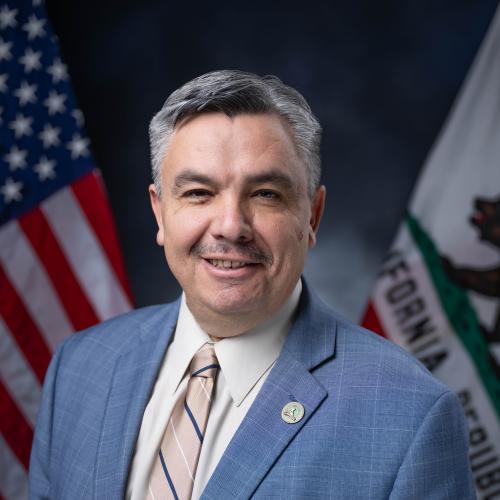
Asm. Juan Carrillo
Sponsored bills
Maddy summaryThis House Resolution formally recognizes the importance of affordable homeownership for California families, particularly those with lower incomes, and highlights how nonprofit-led programs help build generational wealth and reduce economic disparities. The document emphasizes that existing state programs like CalHome support the construction and preservation of affordable homes through competitive funding to cities, counties, indigenous communities, and nonprofit builders such as Habitat for Humanity. While the resolution does not create new laws or funding, it serves as an official acknowledgment of homeownership's role in improving educational outcomes, health, civic participation, and neighborhood stability. The text also notes California's significant housing deficit and racial wealth gaps as context for why expanding affordable ownership opportunities is a priority for state policy.
Existing law, the Dental Practice Act, provides for the licensure and regulation of dentists by the Dental Board of California within the Department of Consumer Affairs. Existing law requires an applicant for licensure to meet specified requirements, including, among others, furnishing satisfactory evidence of having graduated from a dental college approved by the board or by the Commission on Dental Accreditation of the American Dental Association (CODA) . Prior law provided for the approval of foreign dental schools by the board. Beginning January 1, 2024, existing law requires foreign dental schools seeking approval by the board to complete the international consultative and accreditation process with CODA. Notwithstanding that requirement, existing law maintained the approval of any foreign dental schools whose program was renewed by the board prior to January 1, 2020, through any date between January 1, 2024, and June 30, 2026, through that renewal date. This bill would instead maintain the approval of any foreign dental school whose program was approved by the board prior to January 1, 2024, until the school has been issued a denial of accreditation by CODA and the school does not appeal, the school has been issued a denial by CODA following the completion of the appeals process, or the school withdraws its application for accreditation by CODA, provided the school applies for accreditation on or before January 1, 2026, and updates the board on the accreditation process, as specified. The bill would specify that a graduate of a foreign dental school with this extended approval is eligible for licensure to practice dentistry pursuant to the requirements of the Dental Practice Act, including graduates who were enrolled in the school at the time the extended approval expires, provided they were enrolled on or after July 1, 2025. The bill would require an applicant who is a graduate of a foreign dental school with this extended approval to agree to practice dentistry full time in one of 5 specified practice settings for at least 2 years within the first 3 years of licensure. The bill would require the board, as part of the board's first sunset review report following January 1, 2032, to report specified information regarding workforce data of licensees and graduates of foreign dental schools with extended approval, as specified. The bill would state findings and declarations of the Legislature relating to the shortage or maldistribution of dentists in California.
Existing law establishes the Labor and Workforce Development Agency, consisting of various offices and entities, including the office of the Secretary of Labor and Workforce Development, the Agricultural Labor Relations Board, and the California Workforce Development Board. This bill would establish the Essential Worker Commission within the Labor and Workforce Development Agency, to review, investigate, and analyze issues relating to essential workers in the state, including workplace safety and health protections and wages and benefits for undocumented workers. The bill would require the Essential Worker Commission, based on that review, investigation, and analysis, to establish the Essential Worker Legal Work Program to provide essential workers with legal pathways to remain in California and work lawfully.
Existing law provides that a candidate for a nonpartisan office who at a primary election receives votes on a majority of all the ballots cast for candidates for that office is elected to that office. This bill would exempt from that provision candidates for county nonpartisan offices, including a county office in a charter county, but not including a charter city and county, and would require the candidates who received the highest and second highest number of votes cast for nomination to that office to be placed on the ballot at the ensuing general election, except as specified. By imposing new duties on counties, including county elections officials, the bill would impose a state-mandated local program. The California Constitution requires the state to reimburse local agencies and school districts for certain costs mandated by the state. Statutory provisions establish procedures for making that reimbursement. This bill would provide that, if the Commission on State Mandates determines that the bill contains costs mandated by the state, reimbursement for those costs shall be made pursuant to the statutory provisions noted above.
Existing law provides that it is the policy of the state that each electrical corporation upgrade the state's electrical distribution systems as needed. Existing law requires the Public Utilities Commission (PUC) , in consultation with the State Energy Resources Conservation and Development Commission (Energy Commission) and the Independent System Operator (ISO) , to take specified actions to facilitate the commercialization of microgrids for distribution customers of large electrical corporations. This bill would require the Governor's Office of Business and Economic Development, in conjunction with the ISO, to identify six electrical infrastructure modernization zones, as provided. The bill would require the PUC and the Energy Commission to recognize these zones as load growth priority areas. The bill would authorize an electrical corporation that serves a customer within an electrical infrastructure modernization zone to work with the local jurisdiction to update its electrical load projections. The bill would require the PUC to authorize an electrical corporation that serves a customer within an electrical infrastructure modernization zone to expedite cost recovery and to manage microgrids, as specified. Under existing law, a violation of the Public Utilities Act or any order, decision, rule, direction, demand, or requirement of the PUC is a crime. Because the provisions of this bill would be a part of the act, and because a violation of a PUC action implementing its requirements would be a crime, the bill would impose a state-mandated local program. The California Constitution requires the state to reimburse local agencies and school districts for certain costs mandated by the state. Statutory provisions establish procedures for making that reimbursement. This bill would provide that no reimbursement is required by this act for a specified reason. This bill would make legislative findings and declarations as to the necessity of a special statute for the unincorporated area known as Altadena in the County of Los Angeles.
Existing law designates 8 agencies in state government and requires the secretary of an agency to be generally responsible for the sound fiscal management of each department, office, or other unit within the agency. Existing law further requires the secretary of an agency to, among other duties, continually seek to improve the organization structure, the operating policies, and the management information systems of each department, office, or other unit. This bill would establish the Immigrant and Refugee Affairs Agency as an agency within state government, to be headed by a secretary who is appointed by the Governor and subject to Senate confirmation. The bill would specify that the purpose of the agency is to enhance, and reduce obstacles to, immigrant and refugee inclusion into the social, cultural, economic, and civic life of the state. The bill would authorize the secretary to, among other things, assist other state agencies in evaluating their programs for accessibility and effectiveness in providing services to immigrants and refugees and recommending policy and budget mechanisms for meeting immigrant and refugee inclusion. This bill would establish the Office of Immigrant and Refugee Affairs within the agency, under the direction of the Statewide Director of Immigrant and Refugee Inclusion. The bill would declare the intent to incorporate existing and future programs created to assist immigrants and refugees into the office. The bill would transfer to the office the property of any other office, agency, or department that relates to functions concerning immigrant and refugee affairs. The bill would require every officer and employee who is performing a function at another office, agency, or department that is transferred to the Office of Immigrant and Refugee Affairs to also be transferred to the office, and would provide that every officer and employee who is serving in the state civil service who is transferred to the office shall retain their status, position, and rights, except as specified. The bill would create the Immigrant and Refugee Inclusion Fund within the State Treasury, and would make the moneys in the fund available to the office upon appropriation by the Legislature. The bill would transfer to the office any unencumbered balance of any appropriation or other funds that were available for use in connection with any function transferred to the office. This bill would limit interagency sharing of information, would prohibit sharing of personal information of immigrants and refugees outside of the agency, and would prohibit use of agency resources to directly or indirectly participate or assist in immigration enforcement activity. Existing law establishes the Statewide Director of Immigrant Integration and requires the director serve as the statewide lead for the planning and coordination of immigrant services and policies in California. Existing law requires, among other things, that the director develop a comprehensive statewide report on programs and services that serve immigrants, develop an online clearinghouse of immigrant services, resources, and programs, and monitor the implementation of statewide laws and regulations that serve immigrants. This bill would recast those provisions to rename the director as the Statewide Director of Immigrant and Refugee Inclusion and would require the director to, among other things, develop a mission statement, strategic plan, and matrix of success for the office, and to report to the Legislature biannually on successes and challenges in meeting immigrant and refugee inclusion goals. The bill would require the director, by January 1, 2027, to report to the Governor and the Legislature on programs and services that serve immigrants and refugees and on a statewide plan for better implementation and coordination of immigrant and refugee assistance policies and programs. The bill would repeal the bill's provisions on January 1, 2036. Existing constitutional provisions require that a statute that limits the right of access to the meetings of public bodies or the writings of public officials and agencies be adopted with findings demonstrating the interest protected by the limitation and the need for protecting that interest. This bill would make legislative findings to that effect.

Existing law appropriates $10,000,000 from the General Fund for the 2021–22 fiscal year to the Superintendent of Public Instruction to administer the Dual Language Immersion Grant Program for the purpose of expanding access to quality dual language learning and fostering languages that English learners bring to California's education system. Under that program, the State Department of Education is required to award a minimum of 25 one-time Dual Language Immersion Grants over a period of 3 fiscal years of up to $380,000 per grant to an eligible entity to expand or establish dual language immersion programs. This bill would establish the Dual Language Immersion Education Instructional Materials Grant Program, to be administered by the Superintendent, for purposes of providing one-time grants of $100,000 to school districts, county offices of education, and charter schools to increase available instructional materials in partner languages for dual language immersion programs at one or more schoolsites, as provided. The bill would require a grant recipient to report to the department, on or before June 29, 2029, on how grant funds were expended, including a list of any materials obtained or developed. The bill would require the department to submit a report to the appropriate policy and fiscal committees of the Legislature, on or before December 31, 2029, that includes the data received from the grant recipients. The bill would make implementation of these provisions contingent upon an appropriation by the Legislature for these purposes in the annual Budget Act or another statute.
Existing law defines the duties of the Treasurer, which include, but are not limited to, keeping an account of all money received and disbursed. Existing law requires, as soon as April 1, 2022, but no later than specified, the Treasurer, in consultation with the California Housing Finance Agency, the Department of Housing and Community Development, and other relevant stakeholders, to develop a framework for the California Dream For All Program in accordance with the goals and intent of the program, including, among other things, making home ownership more affordable by reducing the cost of home ownership by up to 45 percent for lower and moderate-income Californians, and submit a report outlining the program framework to the Legislature, as specified. This bill, upon appropriation by the Legislature, on or before January 1, 2027, would require the Treasurer, in consultation with the California Housing Finance Agency, the Department of Housing and Community Development, and other stakeholders deemed relevant by the Treasurer, to develop the Building Home Ownership for All Program in accordance with the goals of the program, including, among other things, expanding access to home ownership and maximizing wealth-building opportunities by making it affordable for lower and moderate-income Californians to buy a home, as specified, and with the elements of the program, including, among other things, certain eligibility limits for persons obtaining housing under the program and for housing eligible under the program, as specified. The bill would require, on or before January 1, 2028, and annually thereafter, the Legislative Analyst to collaborate with the California Tax Allocation Committee to review the effectiveness of the program. The bill would repeal these provisions on December 31, 2031.
Existing law establishes the Medi-Cal program, which is administered by the State Department of Health Care Services and under which qualified low-income individuals receive health care services. The Medi-Cal program is, in part, governed and funded by federal Medicaid program provisions. Under existing law, community health worker (CHW) services are a covered Medi-Cal benefit subject to any necessary federal approvals. CHW is defined as a liaison, link, or intermediary between health and social services and the community to facilitate access to services and to improve the access and cultural competence of service delivery. Existing law requires a Medi-Cal managed care plan to engage in outreach and education efforts to enrollees with regard to the CHW services benefit, as specified. Existing law requires the department to inform stakeholders about implementation of the benefit. This bill would require the department to annually conduct an analysis of the CHW services benefit, submit the analysis to the Legislature, and publish the analysis on the department's internet website, with the first analysis due July 1, 2027. The bill would require the analysis to include, at a minimum, an assessment of the above-described outreach and education efforts conducted by each Medi-Cal managed care plan, an assessment of the CHW benefit utilization and services, a demographic disaggregation of CHWs providing the CHW benefit and the Medi-Cal beneficiaries receiving services, and data on Medi-Cal reimbursements for CHW services billed to the department, as specified.