

Existing law, the County Employees Retirement Law of 1937, prescribes retirement benefits for members of specified county and district retirement systems. Existing law establishes the Deferred Retirement Option Program as an optional benefit program for specified safety members of those systems that, by ordinance or resolution by the county board of supervisors or the governing body, elect to adopt it. The program provides eligible members access, upon service retirement, to a lump sum or, in some cases, monthly payments in addition to a monthly retirement allowance, as specified. Existing law, the Public Employees' Retirement Law (PERL) , creates the Public Employees' Retirement System (PERS) for the purpose of providing pension benefits to state employees and employees of contracting agencies and prescribes the rights and duties of members of the system and their beneficiaries. Existing law vests management and control of PERS in its board of administration. PERS provides a defined benefit to members of the program, based on final compensation, credited service, and age at retirement, subject to certain variations. This bill would establish the Deferred Retirement Option Program as a voluntary program within PERS for employees of State Bargaining Units 5 (Highway Patrol) and 8 (Firefighters) , and certain supervisory or managerial employees of the Department of the California Highway Patrol or the Department of Forestry and Fire Protection. The bill would require certain actions to occur, including completion of an actuarial analysis to determine the proposed program will be cost neutral, before the program becomes effective and applicable. The bill would require members who elect to participate in the program to meet certain requirements, including waiving any claims with respect to age and other discrimination in employment laws relative to the program. The bill would establish a program account for each participant and would require the Board of Administration of the Public Employees' Retirement System to, among other things and at least once annually, provide a statement to the participant that displays the value or balance of the participant's program account. The bill would require PERS to commence paying the member their monthly retirement allowance as of the first day of the month following the deferred retirement date. The bill would authorize the participant to designate a person or persons as beneficiaries of the participant's program account at any time during the program period from their election date to the deferred retirement calculation date. Beginning on July 1 of the fiscal year the program is implemented, and every 5 years thereafter, the bill would require the Board of Administration of the Public Employees' Retirement System to submit a report of an actuarial analysis to specified entities. The bill would entitle participants who entered the program prior to the effective date of any modifications by the Legislature to elect whether to become subject to those modified provisions or to remain subject to the program as it existed on the participant's election date. The bill would specify that the Legislature reserves the right to suspend the program through legislative action ratified by the Governor under certain circumstances. If the Legislature and the Governor approve the program's suspension, the bill would terminate all participants' benefit accrual and would prohibit any participant, eligible spouse, or beneficiary from having any vested right to any prospective program benefit, as specified. The bill would require the member's spouse, as applicable, to execute a signed statement acknowledging the spouse's understanding of, and agreement with, the member's election to participate in the program together with an express statement of the spouse's understanding and agreement that benefits payable to the spouse may be reduced as a result of participation in the program. Existing law requires the board of administration of PERS to administer the Public Employees' Medical and Hospital Care Act (PEMHCA) . PEMHCA further grants the board the power to approve health benefit plans and to contract with carriers offering health benefit plans. Under PEMHCA, an employee or annuitant may enroll in a health benefit plan approved or maintained by the board either as an individual or for self and family. Existing law defines an annuitant for purposes of receiving postretirement health benefits pursuant to PEMHCA and generally requires that a person retire within 120 days of separation from public employment, with specified exceptions. This bill would expand the definition of annuitant, thereby permitting a person, or a surviving family member of that person, as specified, whose deferred retirement date is within 120 days of separation from the Deferred Retirement Option Program and who receives a retirement allowance under any state retirement system to which the state was a contributing party to enroll in a health benefit plan under PEMHCA.
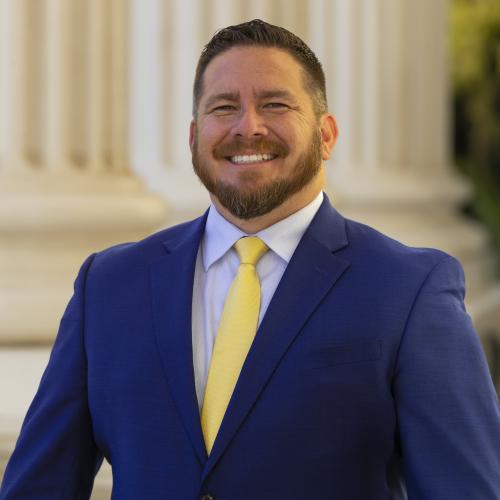
Asm. Juan Alanis
Sponsored bills
Existing law authorizes an unmarried person who is under 18 years of age to marry upon obtaining a court order granting permission and the written consent of at least one of the parents or the guardian of each underage party to the marriage, as specified. Existing law requires the court, if it considers it necessary, as part of the court order granting permission to marry, to require the parties to the prospective marriage of a minor to participate in premarital counseling, as specified. Existing law provides that 2 unmarried, unrelated adults who have chosen to share one another's lives in an intimate and committed relationship of mutual caring may establish a domestic partnership by filing a declaration with the Secretary of State, if certain requirements are met. Existing law provides that a person under 18 years of age who, together with the person with whom the person proposes to establish a domestic partnership, meets the requirements for a domestic partnership other than the requirement of being at least 18 years of age, is capable of consenting to and establishing a domestic partnership upon obtaining a court order granting permission to the underage person or persons to establish a domestic partnership. Under existing law, registered domestic partners have the same rights, protections, and benefits as spouses. This bill would repeal the authorization for a person under 18 years of age to be issued a marriage license or to establish a domestic partnership, thereby prohibiting a person under 18 years of age from being issued a marriage license or from establishing a domestic partnership. The bill would make conforming changes. Existing law requires the State Registrar to create a document, no later than March 1, 2020, concerning marriage certificates in which one or both of the parties were minors at the time of solemnization of the marriage. Existing law requires the State Registrar to update that document annually, as specified. Existing law requires the local registrar to submit specified information for the purposes of that report. This bill would repeal those provisions.
Existing law establishes the Department of Corrections and Rehabilitation to administer the state prison system under the direction of the Secretary of the Department of Corrections and Rehabilitation. Existing California constitutional provisions grant the department the authority to award credits earned for good behavior and approved rehabilitative or educational achievements in order to enhance public safety, improve rehabilitation, and avoid the release of prisoners by federal court order. This bill, the Second Chance Sports Act, would, until January 1, 2036, require the department to formalize, in consultation with specified individuals and organizations, a policy on organized sports programming. The bill would authorize the department to solicit and accept proposals and negotiate and enter into agreements with specified entities for the purposes of expanding access to sports programming as described above. The bill would establish the Second Chance Sports Fund within the State Treasury. The bill would require the department to seek advisement from the Legislature on the priorities for utilizing the moneys in the fund. The bill would make funds available, upon appropriation by the Legislature in the annual Budget Act, for the above-described purposes. The bill would require the Controller, on or before January 1, 2029, and annually thereafter, to provide a report to the Legislature on the amounts deposited into the fund. The bill would make related findings and declarations.
Existing law, added by the Governor's Reorganization Plan No. 1 of 1991, creates the Department of Pesticide Regulation, which is administered by the Director of Pesticide Regulation. Existing law authorizes the director to, among other things, adopt regulations for the issuance and renewal of licenses and certificates for pest control operations. The California Public Records Act requires a public agency, defined to mean a state or local agency, to make its public records available for public inspection and to make copies available upon request and payment of a fee, unless the public records are exempt from disclosure. This bill would, in order to protect the privacy of individual applicants, licensees, and certificate holders, prohibit personal information, as defined, collected pursuant to these provisions from being considered a public record, as specified, and would exempt that personal information from the California Public Records Act, as specified. The bill would authorize the department to disclose an individual applicant, licensee, or certificate holder's address of record, unless the individual applicant, licensee, or certificate holder has designated the address of record as personal information. Existing constitutional provisions require that a statute that limits the right of access to the meetings of public bodies or the writings of public officials and agencies be adopted with findings demonstrating the interest protected by the limitation and the need for protecting that interest. This bill would make legislative findings to that effect.
Existing law makes a person who is a dealer in or collector of junk, metals, or secondhand materials, or their agent, employee, or representative, who buys or receives any wire, cable, copper, lead, solder, mercury, iron, or brass that the person knows or reasonably should know is used by or belongs to specified entities, including a railroad, certain utility companies, or a public entity engaged in furnishing public utility service, without using due diligence to ascertain that the person selling or delivering that material has a legal right to do so, guilty of criminally receiving that property and, in addition to imprisonment, makes that act punishable by a fine of not more than $5,000. This bill would prohibit organized metal theft, described as acting in concert with one or more persons to steal metal materials from one or more of specified materials and items with the intent to sell, exchange, or return those metal materials for value, acting in concert with 2 or more persons to receive, purchase, or possess those metal materials knowing or believing it to have been stolen, acting as an agent of another to steal those metal materials as part of an organized plan to commit theft, or recruiting, coordinating, organizing, supervising, directing, managing, or financing another to undertake acts of theft of metal. The bill would make a violation of organized metal theft punishable as either a misdemeanor or a felony. The bill would make related findings and declarations and state the intent of the Legislature. By creating new crimes, the bill would impose a state-mandated local program. The California Constitution requires the state to reimburse local agencies and school districts for certain costs mandated by the state. Statutory provisions establish procedures for making that reimbursement. This bill would provide that no reimbursement is required by this act for a specified reason.
Existing law requires the California Community Colleges, on or before July 1, 2027, to adopt a common course numbering system for all general education requirement courses and transfer pathway courses, and requires each community college campus, on or before July 1, 2027, to incorporate common course numbers from the adopted system into its course catalog. This bill would require, on or before December 31, 2027, the California Community Colleges to develop and submit to the Legislature an implementation and funding plan to establish a common course numbering and alignment system for career technical education public safety courses that is focused on regional, agency-compliant, and professional standards, as provided. The bill would require the system to include a phased implementation for firefighting courses, law enforcement education courses, and courses related to a modern policing degree program, as specified. The bill would make implementation of the system contingent upon the availability of funding.
Existing law vests the State Energy Resources Conservation and Development Commission (Energy Commission) with the exclusive jurisdiction to certify thermal powerplants with a generating capacity of 50 megawatts or more. Existing law prohibits the Energy Commission from certifying a nuclear fission thermal powerplant, except for specified powerplants, and provides that a nuclear fission thermal powerplant, except those specified powerplants, is not a permitted land use in California unless certain conditions are met regarding the existence of technology for the construction and operation of nuclear fuel rod processing plants and of demonstrated technology or means for the disposal of high-level nuclear waste, as specified. Existing law, the 100 Percent Clean Energy Act of 2018, declares that it is the policy of the state to achieve 100% zero-carbon electricity by 2045. This bill would require the Energy Commission, on or before January 1, 2028, to prepare, as provided, a comprehensive assessment of the potential role for advanced nuclear technologies in supporting critical infrastructure in California, and of the potential for new, in-state nuclear powerplants to cost-effectively meet statewide needs for new electricity resources, and to meet the expressed policy of the state described above. The bill would authorize the Energy Commission to update the assessment as appropriate. The bill would authorize the Energy Commission, the Public Utilities Commission, the Independent System Operator, and other public agencies to evaluate the potential of nuclear energy to meet long-term resource needs.
Existing law establishes the Domestic Violence Prevention Act for the purpose of preventing acts of domestic violence, abuse, and sexual abuse and providing for a separation of the persons involved in the domestic violence for a period sufficient to enable those persons to seek a resolution of the causes of the violence. Existing law authorizes a court to issue an ex parte protective order enjoining a party from, among other things, disturbing the peace of the other party. Existing law provides that disturbing the peace of the other party refers to conduct that includes coercive control, as defined, which includes unreasonably engaging in specified actions, including isolating the other party from friends, relatives, or other sources of support. Existing law makes an intentional and knowing violation of a protective order punishable as a misdemeanor. This bill would include forced marriage for purposes of the act. The bill would define "forced marriage" as a spousal relationship in which one or both parties do not or cannot consent and one or both parties are compelled, through force, fraud, coercion, duress, abuse of power, or coercive control, to enter, attempt to enter, or maintain, a marriage, regardless of whether the marriage is legally valid. If a protective order is sought to protect against a forced marriage, the bill would authorize all persons engaged in conduct to arrange, officiate, finance, or facilitate a forced marriage or attempted forced marriage to be included in one action as respondents. The bill would provide that coercive control, for purposes of the act, includes interfering with, threatening, or attempting to prevent a party or witness from participating in a court proceeding. The bill would provide that conduct undertaken to compel, attempt to compel, prepare for, or facilitate a forced marriage constitutes disturbing the peace of the other party, as specified. The bill would require the provisions of the act to be liberally construed. The bill would authorize a court to grant relief regardless of whether a marriage has occurred or whether a purported marriage would be legally valid in this state or any other jurisdiction. Because a violation of a protective order is punishable as a crime, by expanding the bases for the issuance of these orders, the bill would expand an existing crime, thereby imposing a state-mandated local program. The California Constitution requires the state to reimburse local agencies and school districts for certain costs mandated by the state. Statutory provisions establish procedures for making that reimbursement. This bill would provide that no reimbursement is required by this act for a specified reason.
Existing law vests the Public Utilities Commission with regulatory authority over public utilities, including electrical corporations. Existing law requires the Wildfire Fund Administrator, in consultation with the commission and other entities, to prepare and submit to the Legislature and the Governor a report that evaluates and sets forth recommendations on new models or approaches that mitigate damage, accelerate recovery, and responsibly and equitable allocate burdens from natural catastrophes, including catastrophic wildfires, across stakeholders, as provided. This bill would require the commission, on or before January 1, 2028, to generate a report assessing the verified restitution shortfalls for victims of wildfires caused by electrical corporations occurring before July 12, 2019, and to recommend restitution mechanisms for electrical corporations to address restitution shortfalls, as provided. The bill would require the commission, in developing the restitution mechanisms, to ensure, among other things, that the verified restitution shortfalls are consistently and fairly paid to ensure full compensation is issued in a timely manner.
The California Environmental Quality Act (CEQA) requires a lead agency, as defined, to prepare, or cause to be prepared, and certify the completion of, an environmental impact report on a project that it proposes to carry out or approve that may have a significant effect on the environment or to adopt a negative declaration if it finds that the project will not have that effect. CEQA also requires a lead agency to prepare a mitigated negative declaration for a project that may have a significant effect on the environment if revisions in the project would avoid or mitigate that effect and there is no substantial evidence that the project, as revised, would have a significant effect on the environment. CEQA, until January 1, 2033, exempts from its requirements certain actions for affordable housing projects that meet specified requirements, including confirmation by a public agency that, among other things, the project site satisfies specified requirements and a vacant project site does not contain tribal cultural resources that could be affected by the development that were found pursuant to a consultation and the effects of which cannot be mitigated, as provided. This bill would extend the operation of the above-described exemption to January 1, 2037, and would expand the exemption to also include a public university or public college housing project, as defined, that meets specified requirements. Because the bill would extend the operation of the exemption and would increase duties on a lead agency related to the expansion of this exemption, the bill would impose a state-mandated local program. The California Constitution requires the state to reimburse local agencies and school districts for certain costs mandated by the state. Statutory provisions establish procedures for making that reimbursement. This bill would provide that no reimbursement is required by this act for a specified reason.