

Existing law designates specific days as holidays in this state, including, among others, Dr. Martin Luther King, Jr. Day and Cesar Chavez Day. Existing law designates certain days as judicial holidays and exempts others including, Lunar New Year, Diwali, and Genocide Remembrance Day. This bill would designate Sylvia Mendez Day as a state holiday, but would exempt the holiday from being a judicial holiday. The bill would include related legislative findings and declarations. This bill would incorporate additional changes to Section 135 of the Code of Civil Procedure proposed by AB 2017 to be operative only if this bill and AB 2017 are enacted and this bill is enacted last. The bill would also incorporate additional changes to Section 6700 of the Government Code proposed by AB 2017 and SB 1394 to be operative only if this bill and either or both of those bills are enacted and this bill is enacted last.
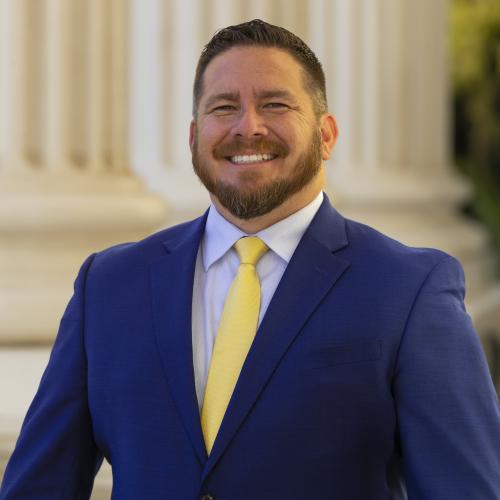
Rep. Juan Alanis
Sponsored bills
Existing law, the Knox-Keene Health Care Service Plan Act of 1975, provides for the licensure and regulation of health care service plans by the Department of Managed Health Care, and makes a willful violation of the act a crime. Existing law provides for the regulation of health insurers by the Department of Insurance. Existing law sets forth specified prior authorization and step therapy limitations for health care service plans and health insurers. This bill would require a health care service plan contract or health insurance policy issued, amended, or renewed on or after January 1, 2027, to require a health care service plan or health insurer to complete prior authorization within 30 days upon initial request, as specified, for a drug approved by the United States Food and Drug Administration (FDA) for the treatment of a rare disease if the drug is prescribed by a specialist with expertise in the condition or disease being treated, the specialist has determined the drug is medically necessary, and the drug is the only FDA-approved treatment for the rare disease. Because a willful violation of these provisions by a health care service plan would be a crime, the bill would impose a state-mandated local program. The California Constitution requires the state to reimburse local agencies and school districts for certain costs mandated by the state. Statutory provisions establish procedures for making that reimbursement. This bill would provide that no reimbursement is required by this act for a specified reason.
Existing law establishes, until January 1, 2028, the Prescribed Fire Liability Pilot Program, to be administered by the Department of Forestry and Fire Protection, to increase the pace and scale of the use of prescribed fire and cultural burning and to reduce barriers for conducting prescribed fires and cultural burning. Existing law creates the Prescribed Fire Claims Fund in the State Treasury to support coverage for losses from prescribed fires and cultural burning by nonpublic entities, such as cultural fire practitioners, private landowners, and nongovernmental entities. Under existing law, moneys in the fund are under the control of the department, and the department or a contracted third-party administrator is authorized to direct payments for claims from the fund, consistent with specified guidelines adopted by the department. These guidelines include, among other things, (1) a requirement that an eligible claim relate to either a prescribed fire conducted or supervised by a burn boss, as defined, or a cultural burn conducted or supervised by a cultural fire practitioner, and (2) a requirement that a claim shall not be paid from the fund unless the department reviewed and approved a burn plan before the prescribed fire or cultural burning. Existing law requires, upon order of the Department of Finance, the $20,000,000 appropriated to the Department of Forestry and Fire Protection by the Legislature in the Budget Act of 2021 be transferred into the fund, and provides that all moneys deposited or transferred into the fund be continuously appropriated to the department for these purposes. By Executive Order N-35-25, Governor Gavin Newsom suspended the limitation on public and governmental agencies enrolling in the Prescribed Fire Liability Pilot Program to the extent that the limitation would prohibit resource conservation districts and volunteer fire departments or districts from such enrollment. This bill would establish the Good Fire Act, which would indefinitely extend the Prescribed Fire Liability Program. The bill would explicitly state that the Prescribed Fire Claims Fund shall support coverage for losses from prescribed fires and cultural burning on any lands within the state. The bill would also expand program eligibility by changing the entities who may receive coverage for losses from prescribed fires and cultural burning from nonpublic entities to individuals and entities other than the department or the federal government, as provided. By extending the term of a continuous appropriation and authorizing the expenditure of continuously appropriated funds for new purposes, the bill would make an appropriation. This bill would eliminate the requirement for department approval for a plan reviewed and approved by a burn boss, and would require a burn plan to be submitted to the claims fund portal before ignition. The bill would also require the guidelines to include methods for prioritizing broadcast burns and burns by non-public individuals or entities or California Native American tribes in the event the fund is oversubscribed. Within one year of a claim being paid from the fund, the bill would require the department to submit a report to the Legislature regarding the claim process and propose statutory changes related to the fund, as provided. Existing law requires the State Fire Marshal, with the involvement of the Statewide Training and Education Advisory Committee, to develop a curriculum for, or amend into an existing curriculum, a certification program for burn bosses who possess authority to engage in a prescribed burning operation and to enter into the necessary contracts related to a prescribed burning operation. Existing law requires this curriculum to provide for the initial certification as well as the continuing education of burn bosses. Under existing law, specified civil liability protections and eligibility for claims from the Prescribed Fire Claims Fund extend to prescribed burns that, among other things, are reviewed and approved by a burn boss certified pursuant to these provisions, as provided. This bill would require, as part of the continuing education of burn bosses, the State Fire Marshal to require recertification no sooner than every 3 years. The bill would also require the department to consider methods to increase the pool of available instructors for the certification program, including the use of non-department instructors. The bill would require the department, in consultation with the Statewide Training and Education Advisory Committee, to develop a mechanism to allow specified individuals to be designated as a burn boss. The bill would authorize these individuals certified pursuant to this process to use the above-described recertification process to maintain currency. Existing law authorizes an entity that owns or controls brush-covered land, forest lands, woodland, grassland, shrubland, or a combination of those types of land within a state responsibility area to apply to the Department of Forestry and Fire Protection for permission to use prescribed burning for certain public purposes. Existing law requires the department, upon receipt of an application, to inspect the land in company with the applicant to determine whether a permit shall be granted, as provided. By Executive Order N-35-25, Governor Gavin Newsom suspended the above-described requirement that the department conduct a site visit or inspection before issuing a state burn permit for projects undertaken by burn bosses or cultural fire practitioners. This bill would authorize the department to waive the inspection requirement or modify the standard precautions for an application submitted by specified individuals. The California Environmental Quality Act (CEQA) requires a lead agency, as defined, to prepare, or cause to be prepared, and certify the completion of an environmental impact report on a project that it proposes to carry out or approve that may have a significant effect on the environment or to adopt a negative declaration if it finds that the project will not have that effect. CEQA also requires a lead agency to prepare a mitigated negative declaration for a project that may have a significant effect on the environment if revisions in the project would avoid or mitigate that effect and there is no substantial evidence that the project, as revised, would have a significant effect on the environment. Existing law exempts from CEQA specified wildfire risk reduction projects, including, among other projects, projects consisting of a prescribed fire or fuel reduction to reduce wildfire risk by reestablishing the fire return interval appropriate to the ecosystem for biodiversity or other benefits, excluding projects located on coastal sage scrub habitat or any other sensitive habitat. By Executive Order N-35-25, Governor Gavin Newsom suspended the requirements of CEQA as applied to the Department of Forestry and Fire Protection to the extent necessary for the department to assist local agencies and beneficial fire practitioners to complete beneficial fire projects that limit dangerous wildfire conditions to the greatest extent feasible. This bill would exempt from CEQA those actions taken by the department to assist in the implementation of prescribed fire or cultural burning projects that do not otherwise require compliance with CEQA. Existing law establishes various grant programs for purposes of wildfire prevention. This bill would require a state agency, department, board, or commission that has awarded grant funds for a project that includes the preparation for, or implementation of, a beneficial fire project to include as an allowable expense of the grant the payment of overtime or double rates of pay to employees or contractors who prepare for or implement the beneficial fire project when such expenses are necessary for the implementation of the beneficial fire project. Existing law authorizes the Director of Forestry and Fire Protection to provide grants to, or enter contracts or other cooperative agreements with, specified entities for the implementation and administration of projects and programs to improve forest health and reduce greenhouse gas emissions. Existing law authorizes the director to authorize advance payments and requires grantees who receive advance payments to file an accountability report with the department 4 months from the date of receiving the funds and every 4 months thereafter. This bill would instead require grantees who receive advance payments to file an accountability report within 6 months from the date of receiving the funds and every 6 months thereafter. This bill would incorporate additional changes to Section 4799.05 of the Public Resources Code proposed by AB 2513 to be operative only if this bill and AB 2513 are enacted and this bill is enacted last. This bill would declare that it is to take effect immediately as an urgency statute.
(1) Existing law authorizes certain entities to operate household hazardous waste collection facilities, as defined, including permanent and temporary household hazardous waste collection facilities, under permits issued by the Department of Toxic Substances Control. Existing law requires hazardous waste transported to a household hazardous waste collection facility to be transported by specified entities, and imposes conditions on the acceptance of hazardous waste by a household hazardous waste collection facility, including, among others, that the hazardous waste not exceed certain weight requirements. Existing law requires a person engaged in the transportation of hazardous waste to be registered with the department and to have a manifest while transporting the hazardous waste, except if the transport is from specified facilities or programs. A violation of the hazardous waste control laws is a crime. This bill would require, until January 1, 2030, the department to evaluate opportunities to increase safety and convenience related to the management and disposal of vape pens confiscated from students by a school, as provided, and identify any recommendations that require future legislative action. The bill would authorize a permanent household hazardous waste collection facility to mechanically disassemble vape pens and devices in a manner that does not result in the unauthorized release of hazardous materials, as specified. The bill would exempt from the above-described registration and manifest provisions a school transporting vape pens and devices confiscated from students. The bill would also impose the above-described conditions relating to the transport of hazardous waste on a public agency, contractor of a public agency, or a registered hazardous waste transporter, transporting vape pens and devices from schools, as provided. The bill would require any vape pens and devices to be transported in containers bearing the school's Environmental Protection Agency identification number. The bill would specify conditions that apply for purposes of determining how many vape pens and devices may be accepted by a household hazardous waste collection facility without exceeding the specified weight limits. Because a violation of these provisions would be a crime, the bill would impose a state-mandated local program. (2) Existing law requires all cartridges for electronic cigarettes and solutions for filling or refilling an electronic cigarette to be in child-resistant packaging. This bill would prohibit a person from marketing, promoting, labeling, branding, advertising, distributing, offering for sale, or selling a vape product in this state by (A) imitating a product that is not a vape product to conceal the nature of the vape product from parents, teachers, or other adults, or (B) including interactive videogame capabilities within a vape product, as provided. This bill would authorize a city, a county, a city and county, or the state to enforce the above-described prohibitions and to impose civil liability on a person or entity, or distributor, in violation of the prohibitions in specified fine amounts, including $1,000 for the first violation, or for a distributor, $50,000 per violation. The bill would require any civil penalties collected to be paid to whichever office brought the action, and would authorize the Attorney General to expend any penalties it collects, upon appropriation by the Legislature, to enforce the prohibitions. The bill would specify that any remedies provided pursuant to these provisions are not exclusive and are in addition to the remedies that may be available pursuant to specified provisions relating to unfair competition. The bill would make any person who violates the prohibitions guilty of an infraction punishable by a fine of not more than $500. By creating a new crime, the bill would impose a state-mandated local program. (3) Existing law, the Cigarette and Tobacco Products Licensing Act of 2003, provides for the licensure and regulation of manufacturers, distributors, wholesalers, importers, and retailers of cigarette or tobacco products. Existing law, except as specified, prohibits a tobacco retailer, or any of the tobacco retailer's agents or employees, from selling, offering for sale, or possessing with the intent to sell or offer for sale, a flavored tobacco product or a tobacco product flavor enhancer. Existing law authorizes the California Department of Tax and Fee Administration or a law enforcement agency, upon discovery that a retailer possesses, stores, owns, or has made a retail sale of flavored tobacco products or tobacco product flavor enhancers in violation of that prohibition to seize the flavored tobacco products or tobacco product flavor enhancers at the retail location or any other person's location. Existing law deems those seized flavored tobacco products or tobacco product flavor enhancers as forfeited to the state, and requires the department to issue a civil penalty against the retailer, as provided. Existing law also requires the department to suspend or revoke the license of a retailer upon a 2nd or 3rd seizure and forfeiture, as provided. This bill would apply those same seizure, forfeiture, and civil penalty provisions to a retailer who possesses, stores, owns, or has made a retail sale of vape products, as defined, in violation of the prohibitions related to a vape product described in paragraph (2) , above. Existing law authorizes a peace officer or department employee granted limited peace officer status, as provided, upon presenting appropriate credentials, to enter any place at which cigarettes or tobacco products are sold, produced, or stored or at any site where evidence of a violation of specified laws relating to cigarette or tobacco products may be discovered, and to conduct inspections in accordance with specified requirements. This bill would also authorize those inspections at any place where there is evidence of a violation of the prohibitions related to a vape product described in paragraph (2) , above. (4) This bill would incorporate additional changes to Section 22974.2 of the Business and Professions Code proposed by AB 762 to be operative only if this bill and AB 762 are enacted and this bill is enacted last. (5) The California Constitution requires the state to reimburse local agencies and school districts for certain costs mandated by the state. Statutory provisions establish procedures for making that reimbursement. This bill would provide that no reimbursement is required by this act for a specified reason.
Existing law authorizes a peace officer, humane society officer, or animal control officer to take possession of a stray or abandoned animal in specified circumstances, including when the animal is kept without proper care and attention, as specified. Existing law provides that if an animal is seized pursuant to those provisions or pursuant to a warrant, the owner is personally liable to the seizing agency for the cost of the seizure and care of the animal. Existing law deems the animal to then be abandoned by the owner under specified circumstances, including if the owner, within 14 days of notice of availability of the animal to be returned, fails to pay charges and take possession of the animal. This bill would make those provisions apply to animals seized pursuant to any provision of California law.
Existing law divides the state into agricultural districts, and provides for the management of these districts by district agricultural associations. Existing law requires the officers of the association to consist of a board of directors of 9 members, establishes a 4-year term of office for the directors, and requires the directors to be appointed by the Governor, as specified. This bill would, if the Governor has not filled a vacancy on the board of directors within 90 days and the board of directors has insufficient membership to establish a quorum, authorize the board of directors to temporarily appoint a director to fill the vacancy and to establish a quorum, as provided. The bill would authorize the Governor to appoint a different director to fill the vacancy for the unexpired term who would replace the temporary director on the board of directors, as specified.
Existing law requires the Board of Parole Hearings, among other responsibilities, to conduct parole suitability hearings and determine whether an individual is suitable for parole. Existing law establishes the Elderly Parole Program for the purpose of reviewing parole suitability of inmates who are 50 years of age or older and who have served a minimum of 20 years of continuous incarceration on their sentence. Existing law requires the Board of Parole Hearings, when considering the release of qualifying inmates, to give special consideration to whether certain criteria have reduced the elderly inmate's risk for future violence. Existing law excludes various persons from these provisions, including persons sentenced pursuant to existing sentencing provisions commonly known as the 3 strikes law. Under an existing court order, although statutorily excluded, an individual may be eligible for parole under the Elderly Parole Program when they are 60 years of age or older and have been continuously incarcerated for at least 25 years. This bill would instead specify that persons convicted of various sexual offenses, including rape, sodomy, or aggravated sexual assault of a child, or sentenced pursuant to a provision applicable where the crimes involved had multiple victims, as specified, are not eligible for parole under the Elderly Parole Program, unless the person is 65 years of age or older and has served a minimum of 25 years of continuous incarceration on their current sentence. The bill would require the board to review a sexual dangerousness screening of an individual sentenced to an indeterminate sentence for a sexually violent offense, as defined, and would require the board to refer a person whose sexual dangerousness screening indicates that they may qualify as a sexually violent predator to the State Department of State Hospitals for further evaluation, as described. The bill would require commissioners who conduct hearings to undergo training in sex offender behaviors and risks. Existing law defines a sexually violent predator to mean a person who has been convicted of a sexually violent offense against one or more victims and who has a diagnosed mental disorder that makes the person a danger to the health and safety of others in that it is likely that the person will engage in sexually violent criminal behavior. For purposes of this definition, a conviction for a sexually violent offense includes convictions that resulted in either a determinate or an indeterminate prison sentence, as specified. Existing law requires the Secretary of the Department of Corrections and Rehabilitation to refer a person who is in custody under that department's jurisdiction, and who is serving a determinate sentence or whose parole has been revoked, for evaluation by the State Department of State Hospitals at least 6 months prior to that individual's scheduled date for release from prison if the secretary determines that the person may be a sexually violent predator. Existing law requires a petition for commitment as a sexually violent predator to be filed in the county in which the person was convicted of the sexual offense for which the person was committed to the jurisdiction of the Department of Corrections and Rehabilitation. This bill would also require the Executive Officer of the Board of Parole Hearings to make that referral and revise the criteria for referral to additionally apply to a person who is serving an indeterminate prison sentence. The bill would also authorize the secretary, or the Executive Officer of the Board of Parole Hearings, to refer the person for evaluation if the person's scheduled release date is less than 4 months after the date of the decision to grant parole, or if the person will be scheduled for a parole hearing in the next 6 months. By imposing additional duties on counties regarding commitment of persons as sexually violent predators, this bill would impose a state-mandated local program. The California Constitution requires the state to reimburse local agencies and school districts for certain costs mandated by the state. Statutory provisions establish procedures for making that reimbursement. This bill would provide that, if the Commission on State Mandates determines that the bill contains costs mandated by the state, reimbursement for those costs shall be made pursuant to the statutory provisions noted above.
Under existing law, if a person is convicted of either driving under the influence (DUI) of any alcoholic beverage or drug, or under the combined influence of any alcoholic beverage and drug or driving while having 0.08% or more, by weight, of alcohol in the person's blood within 10 years of 2 separate violations of specified DUI offenses, or any combination thereof, that resulted in convictions, that person has committed an offense punishable by imprisonment in the county jail for not less than 120 days nor more than one year and by a fine, as specified. This bill would, instead, make the above DUI conviction punishable as a wobbler by imprisonment in the county jail for not less than 120 days nor more than one year and by a fine, as specified, or by imprisonment in the county jail for 16 months or 2 or 3 years and a fine, as specified. By increasing the punishment of a crime, this bill would impose a state-mandated local program. Under existing law, if a person is convicted of DUI and the offense occurred within 10 years of 3 or more separate violations for driving under the influence that resulted in specified convictions, that person has committed an offense punishable as either a misdemeanor or a felony. This bill would, instead, make the above DUI conviction punishable as a wobbler if the offense occurred within 10 years of 3 separate violations for driving under the influence that resulted in specified convictions, and punishable as a felony by imprisonment in the county jail for 16 months or 2 or 3 years and a fine, as specified, if the offense occurred within 10 years of 4 or more separate violations for driving under the influence that resulted in specified convictions. By increasing the punishment of a crime, this bill would impose a state-mandated local program. This bill would make conforming changes. This bill would incorporate additional changes to Sections 23546, 23550, and 23550.5 of the Vehicle Code proposed by AB 1830 to be operative only if this bill and AB 1830 are enacted and this bill is enacted last. The California Constitution requires the state to reimburse local agencies and school districts for certain costs mandated by the state. Statutory provisions establish procedures for making that reimbursement. This bill would provide that no reimbursement is required by this act for a specified reason.
Existing law describes the California Interscholastic Federation (CIF) as a voluntary organization that consists of school and school-related personnel with responsibility for administering interscholastic athletic activities in secondary schools, and sets forth the Legislature's intent regarding the CIF's implementation of certain policies. Existing law requires the CIF, on or before January 1, 2023, and on or before January 1 every 7 years thereafter, to report to the appropriate policy committees of the Legislature and the Governor on its evaluation and accountability activities undertaken pursuant to specified provisions. Existing law requires the report to include the goals and objectives of the CIF with regard to, and the status of, among other things, the quality of coaching and officiating, as provided. Existing law requires all noncertificated candidates, prior to assuming a paid or volunteer position to work with pupils in a pupil activity program sponsored by a school district, including an interscholastic program, to obtain an Activity Supervisor Clearance Certificate from the Commission on Teacher Credentialing. Existing law requires the commission, upon verification of a candidate's personal identification and verification that the candidate meets specified requirements, to initially issue an Activity Supervisor Clearance Certificate to the candidate for a 5-year period and authorizes the certificate to be renewed, as provided. This bill would require the CIF to verify the eligibility of its officials to officiate CIF contests by requiring those officials to annually register through a platform, as provided. The bill would require the platform to consist of (1) , until July 1, 2028, a statewide and standardized background screening, (2) , commencing July 1, 2028, a record of a valid Activity Supervisor Clearance Certificate issued by the commission, including the applicable expiration date, (3) a record of rules tests, online training modules, sport-specific annual certification, and continuing education requirements, and (4) a record of liability insurance coverage. The bill would require the CIF to verify, as specified, that all components of the platform are complete before an official is deemed and marked as eligible to receive an assignment to officiate. The bill would require the CIF to ensure that its participating member schools, school districts, county offices of education, and charter schools can access the platform to verify the eligibility of an official, as specified. The bill, commencing July 1, 2028, would require the commission to regularly publish a list on its internet website of Activity Supervisor Clearance Certificate holders who have their certificate suspended or revoked by the commission and would require the CIF to ensure that the platform selected by the CIF regularly reviews the list published by the commission in order to update the eligibility of the officials whose Activity Supervisor Clearance Certificate has been suspended or revoked.
Existing law prohibits a person from, among other things, engaging in, aiding, or abetting a motor vehicle exhibition of speed on a highway or in an offstreet parking facility. Under existing law, a violation of this prohibition is punishable by imprisonment in a county jail for not more than 90 days, by a fine of not more than five hundred dollars ($500) , or by both that fine and imprisonment. Existing law, beginning on January 1, 2029, authorizes a court to suspend the privilege to operate a vehicle for 90 days to 6 months for a person who engages in, aids, or abets a motor vehicle exhibition of speed that occurred as part of a sideshow. For these purposes, existing law defines "sideshow" as an event in which 2 or more persons block or impede traffic on a highway or in an offstreet parking facility for the purpose of performing motor vehicle stunts, motor vehicle speed contests, motor vehicle exhibitions of speed, or reckless driving for spectators. This bill would revise the definition of sideshow to include the use or operation of any motor vehicle, including, but not limited to, motorcycles or off-highway motor vehicles, as specified, to barricade, block, impede, or otherwise obstruct traffic. The bill would also provide enhanced penalties for engaging in, aiding, or abetting a motor vehicle exhibition of speed as part of a sideshow, including, as specified, increasing fines, requiring a mandatory minimum jail sentence, and making the offense punishable as a misdemeanor or felony if the offense proximately causes injury to another person. By increasing the punishment for an existing crime, the bill would create a state-mandated local program. This bill would incorporate additional changes to Section 23109 of the Vehicle Code proposed by AB 1830 to be operative only if this bill and AB 1830 are enacted and this bill is enacted last. The California Constitution requires the state to reimburse local agencies and school districts for certain costs mandated by the state. Statutory provisions establish procedures for making that reimbursement. This bill would provide that no reimbursement is required by this act for a specified reason.