

Existing law, the California Emergency Services Act, authorizes the Governor to proclaim a state of emergency when specified conditions of disaster or extreme peril to the safety of persons and property exist, and authorizes the Governor to exercise certain powers in response to that emergency, including, but not limited to, suspending specified statutes, ordinances, orders, regulations, or rules. This bill would impose specific duties on the Department of Housing and Community Development if the Office of Emergency Services makes a written determination, within 10 days after the date that the Governor declared a state of emergency relating to a wildfire, that the wildfire caused substantial structural damage requiring significant rebuilding efforts, as defined. The bill would require the department, under this condition, to consult with other specified state entities and local governments to identify state permitting requirements and local procedures that could be suspended or revised to support recovery and rebuilding efforts as a result of the wildfire, as specified. The bill would require the department to prepare and submit initial and periodic reports to the Governor and Legislature with the information and recommendations. This bill, on or before July 1, 2028, would require the Department of Housing and Community Development, in consultation with other specified state entities, to convene a workgroup to review and provide a report to the Governor and the Legislature with recommendations regarding any provision of the California Building Standards Code that should be suspended for specified types of projects to facilitate rapid, safe, disaster-resilient, and cost-effective rebuilding and recovery guidance for any future state of emergency. The bill would require the workgroup to review and update the report to the Governor and Legislature after the release of every update to the California Building Standards Code. This bill, starting January 1, 2028, would require, upon the Governor's declaration of a state of emergency relating to a wildfire, every state agency or political subdivision, as defined, involved in postdisaster response, debris removal, reconstruction, housing, or land-use permitting to accept electronic submission of any application, form, plan set, appeal, or request for state agency or political subdivision action related to recovery efforts for that state of emergency, as provided. By imposing new duties on local agencies, the bill would impose a state-mandated local program. The California Constitution requires the state to reimburse local agencies and school districts for certain costs mandated by the state. Statutory provisions establish procedures for making that reimbursement. This bill would provide that, if the Commission on State Mandates determines that the bill contains costs mandated by the state, reimbursement for those costs shall be made pursuant to the statutory provisions noted above.
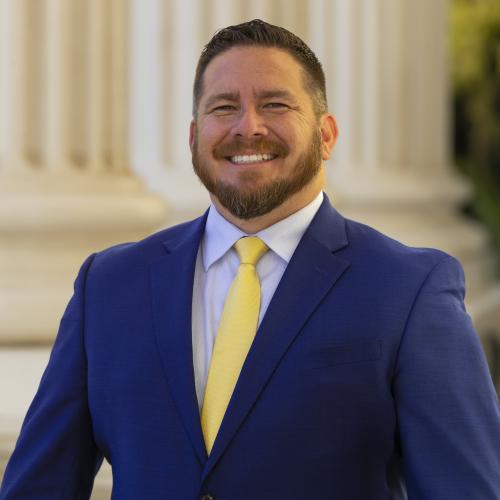
Rep. Juan Alanis
Sponsored bills
Existing law provides for the civil commitment of a person who is determined to be a sexually violent predator. Existing law establishes a procedure by which a person committed as a sexually violent predator may petition for conditional release and requires the court, if it makes a specified determination, to place the person on conditional release. Existing law generally requires that a person released on conditional release pursuant to these provisions be placed in the person's county of domicile prior to their incarceration unless extraordinary circumstances exist requiring placement outside the county, as specified. Existing law prohibits a person being released under these provisions from being placed within 14 mile of any public or private school, as specified, if the person has previously been convicted of specified sexual misconduct of a child or if the court finds that the person has a history of improper sexual conduct with children. This bill would additionally prohibit a person being released under the above-described provisions from being placed within 14 mile of a day care center. The bill would define a day care center and private school for purposes of these provisions and would prohibit the subsequent establishment of a day care center or private school, including a private school that is a home, from rendering an existing placement noncompliant, as specified.
The Public Employees' Retirement Law (PERL) establishes the Public Employees' Retirement System (PERS) to provide a defined benefit to members of the system based on final compensation, credited service, and age at retirement, subject to certain variations. Existing law creates the Public Employees' Retirement Fund, which is continuously appropriated for purposes of PERS, including depositing employer and employee contributions. Under the California Constitution, assets of a public pension or retirement system are trust funds. The California Public Employees' Pension Reform Act of 2013 (PEPRA) establishes a variety of requirements and restrictions on public employers offering defined benefit pension plans. In this regard, PEPRA restricts the amount of compensation that may be applied for purposes of calculating a defined pension benefit for a new member, as defined, by restricting it to specified percentages of the contribution and benefit base under a specified federal law with respect to old age, survivors, and disability insurance benefits. Existing law, the Teachers' Retirement Law, establishes the State Teachers' Retirement System (STRS) and creates the Defined Benefit Program of the State Teachers' Retirement Plan, which provides a defined benefit to members of the program, based on final compensation, creditable service, and age at retirement, subject to certain variations. This bill, for service performed on and after January 1, 2027, would prohibit the pensionable compensation for calendar year 2027 used to calculate the defined benefit paid to a new member of a retirement system subject to PEPRA who retires from the system from exceeding specified percentages of the contribution and benefit base under the specified federal law with respect to old age, survivors, and disability insurance benefits. The bill would make related, conforming changes to these provisions on pensionable compensation. The bill also would require a new member of STRS to be subject to specified limits of the Teachers' Retirement Law. PEPRA requires each retirement system that offers a defined benefit plan for safety members of the system to use one of 3 formulas for safety members, 2% at age 57, 2.5% at age 57, or 2.7% at age 57. This bill would establish new retirement formulas, for employees first hired on or after January 1, 2027, as 2.5% at age 55, 2.7% at age 55, or 3% at age 55, subject to certain exceptions. For new members hired on or after January 1, 2013, who are safety members, the bill would require employers to adjust the formulas for service performed on or after January 1, 2027, to offer the formula that has the same fraction at age 55 as the fraction at age 57 in the formula the employer offered pursuant to existing law. The bill would authorize a public employer and a recognized employee organization to negotiate a prospective increase to the retirement benefit formulas for safety members and new safety members, consistent with the formulas permitted under PEPRA, including the new formulas described above. This bill would authorize an employer and its employees to agree in a memorandum of understanding to be subject to a higher safety plan or a lower safety plan, subject to certain requirements, including that the memorandum of understanding is collectively bargained in accordance with applicable laws. By increasing the contribution to continuously appropriated funds, and by increasing expenditures from those funds, this bill would make an appropriation.
Existing law, the Nevaeh Youth Sports Safety Act, requires a youth sports organization to ensure, by January 1, 2028, that its athletes have access to an automated external defibrillator (AED) during any official practice or match. Existing law requires a youth sports organization, commencing January 1, 2028, to ensure that its AED is maintained and tested according to specified operation and maintenance guidelines. This bill would require, commencing January 1, 2028, a public or private local facility with a permanent sports infrastructure, as defined, to ensure that the youth sports organization has access to an AED procured and maintained by the facility during an official practice or match permitted by the facility, except as specified with respect to local educational agencies. The bill would require the youth sports organization, commencing January 1, 2028, to ensure there is access to an operational AED if an AED is not available at a public or private local facility where an official practice or match is taking place. The bill would additionally require a public or private local facility, commencing January 1, 2028, to ensure that its AED is maintained and tested according to specified operation and maintenance guidelines. The bill would require a public or private local facility to work in collaboration with the youth sports organization to ensure that any AED that is installed be accessible to youth sports organizations at the time of official practices or matches permitted by the facility. The bill would require a public or private local facility that has installed an AED to work with the youth sports organization to identify means to share the financial costs associated with ensuring the AED is maintained and accessible at the facility, or to identify means to share the financial costs associated with installing an AED at the facility.
(1) Existing federal law, known as Title IX, prohibits a person, on the basis of sex, from being excluded from participation in, being denied the benefits of, or being subject to discrimination under any educational program or activity receiving federal financial assistance. A portion of the Donahoe Higher Education Act, known as the Equity in Higher Education Act, requires the appropriate governing board or body of each campus of the University of California, the California State University, and the California Community Colleges, private postsecondary educational institutions, and independent institutions of higher education, as a condition of receiving state financial assistance, to, among other things, provide training to all employees on the identification of sexual harassment, including the person to whom it should be reported. Provisions of the Donahoe Higher Education Act apply to the University of California only to the extent that the Regents of the University of California act, by resolution, to make them apply. This bill would require those postsecondary educational institutions, as part of employee training, to include certain information related to human trafficking. The bill would also require those postsecondary educational institutions to ensure that each employee annually completes this training. The bill would prohibit the failure of a postsecondary educational institution employee to report human trafficking to the institution or to local law enforcement authorities from, by itself, resulting in the liability of the institution. (2) Existing law requires the governing board of a community college district, the Trustees of the California State University, the Board of Directors of the College of the Law, San Francisco, the Regents of the University of California, and the governing board of a postsecondary educational institution receiving public funds for student financial assistance to require the appropriate officials at each campus to compile records of crimes on campus that are reported and involve violence, hate violence, theft, destruction of property, illegal drugs, or alcohol intoxication. Under existing law, this requirement and others related to student safety do not apply to community colleges unless and until the Legislature makes funds available to the community colleges for this purpose. This bill would require the appropriate officials at each campus to also compile records of crimes on campus that are reported and involve human trafficking. The bill would impose this requirement and others related to student safety on all community colleges, regardless of whether the Legislature has made funds available to community colleges for this purpose. (3) Existing law requires the Trustees of the California State University, the governing board of independent postsecondary institutions, the governing board of a community college district, and the Regents of the University of California to adopt rules requiring each of their respective campuses to enter into written agreements with local law enforcement agencies that clarify operational responsibility for investigations of certain violent crimes, sexual assaults, and hate crimes occurring on campus. Existing law requires these written agreements to be reviewed and updated, as specified. This bill would require the written agreements with local law enforcement agencies to also clarify operational responsibilities for investigations of human trafficking occurring on campus. The bill would also require the written agreements between community colleges and local law enforcement agencies to apply to additional on-campus crimes. The bill would require these written agreements to be reviewed and updated, if necessary, on or before July 1, 2027, and every 5 years thereafter. (4) Existing law requires the governing board of a community college district, the Trustees of the California State University, the Regents of the University of California, and the governing boards of independent postsecondary educational institutions, in order to receive state funds for student financial assistance, to (A) adopt a policy concerning sexual assault, domestic violence, dating violence, and stalking involving a student, as specified, and (B) adopt detailed and victim-centered policies and protocols regarding sexual assault, domestic violence, dating violence, and stalking involving a student, as provided. This bill would require those postsecondary educational institutions to also adopt a policy concerning incidents of human trafficking that involve students, faculty, or staff. The bill would require the policy to include, among other things, a statement that human trafficking is a state and federal crime, and the physical and mental signs that may indicate that human trafficking is occurring. (5) Existing law establishes various student financial aid programs, including the Cal Grant Program. As a condition for participation in the Cal Grant Program, existing law requires the governing board of a community college district, the Trustees of the California State University, the Regents of the University of California, and the governing board of a private or independent postsecondary educational institution to adopt and implement written policies and procedures to ensure that any report of certain violent crimes, sexual assault, or hate crimes, committed on or off campus, that is received by a campus security authority, and made by the victim for purposes of notifying the institution or law enforcement, is immediately, or as soon as practicably possible, forwarded to the appropriate law enforcement agency, as provided. This bill would require those postsecondary educational institutions, on or before July 1, 2027, to adopt and implement revised written policies and procedures that include human trafficking in the above-described reporting requirement. (6) By imposing new duties on community college districts, this bill would create a state-mandated local program. The California Constitution requires the state to reimburse local agencies and school districts for certain costs mandated by the state. Statutory provisions establish procedures for making that reimbursement. This bill would provide that, if the Commission on State Mandates determines that the bill contains costs mandated by the state, reimbursement for those costs shall be made pursuant to the statutory provisions noted above.
Existing law establishes the California Community Colleges, the California State University, the University of California, independent institutions of higher education, and private postsecondary educational institutions as the segments of postsecondary education in the state. This bill, which would be known as Sarah Shulze's Law, would require each campus of the California State University, each community college of a community college district, and each private postsecondary educational institution and independent institution of higher education that receives state financial assistance, and would request each campus of the University of California, to require a person who serves as a coach or trainer in an athletic program, as a condition of the person's employment or volunteer service, to complete a student mental health training on or before July 1, 2028, and every 2 years thereafter. The bill would require the training, at a minimum, to cover suicide prevention education and would authorize the training to be provided by an entity that offers free, online, or other types of training courses. By imposing new duties on community college districts, the bill would impose a state-mandated local program. The California Constitution requires the state to reimburse local agencies and school districts for certain costs mandated by the state. Statutory provisions establish procedures for making that reimbursement. This bill would provide that, if the Commission on State Mandates determines that the bill contains costs mandated by the state, reimbursement for those costs shall be made pursuant to the statutory provisions noted above.
Existing law generally punishes the willful disobedience of a court order as contempt of court by imprisonment in a county jail for a term not exceeding 6 months, a fine not exceeding $1,000, or both that imprisonment and fine. Existing law makes the willful and knowing violation of specified protective orders or stay-away court orders punishable by imprisonment in a county jail for not more than one year, by a fine of not more than $1,000, or by both that imprisonment and fine for a first offense, and makes a 2nd or subsequent conviction for a violation of these specified protective orders or stay-away court orders occurring within 7 years of a prior conviction and involving an act of violence or credible threat of violence punishable as either a misdemeanor or a felony. If a violation of specified protective orders or stay-away court orders results in a physical injury, the individual is required to be in a county jail for at least 48 hours, whether a fine or imprisonment is imposed, or the sentence suspended. This bill would make a willful and knowing violation of specified criminal protective orders or stay-away orders punishable as either a misdemeanor or a felony if the subject of the criminal protective order was charged with, or convicted of, a felony for the conduct upon which the criminal protective order was based. The bill would make a second or subsequent conviction for a violation of specified protective orders or stay-away orders a felony. If a violation of specified protective orders or stay-away orders alleges a physical injury, the bill would require the court to consider the violation of the protective order or stay-away order and alleged injury when considering the seriousness of the offense charged and the protection of the public for purposes of setting, reducing, or denying bail. By increasing the punishment for a crime, this bill would impose a state-mandated local program. The California Constitution requires the state to reimburse local agencies and school districts for certain costs mandated by the state. Statutory provisions establish procedures for making that reimbursement. This bill would provide that no reimbursement is required by this act for a specified reason.
Existing law makes it unlawful to dump waste matter in certain locations, such as upon a public or private highway or road, upon private property without the consent of the owner, or in or upon a public park or other public property, as specified. Existing law also makes it unlawful to place, deposit, or dump rocks, concrete, asphalt, or dirt in certain locations, as specified. A person violating these provisions is guilty of an infraction, as specified. Existing law makes a violation of these provisions in commercial quantities, as defined, a misdemeanor punishable by imprisonment in a county jail and by a fine, as specified. Under existing law, a private owner is not restricted in the use of their own private property, unless the placing, depositing, or dumping of the waste matter on the property creates a public health and safety hazard, a public nuisance, or a fire hazard, as determined by a local health or fire department or the Department of Forestry and Fire Protection. This bill would make it a crime to transport waste matter, rocks, concrete, asphalt, dirt, or other construction debris for the purpose of placing, depositing, or dumping it in the locations described above. The bill would increase the maximum fine to $5000 for violating these provisions a 4th or subsequent time. The bill would also make it unlawful to transport for the purpose of placing, depositing, or dumping waste matter, rocks, concrete, asphalt, dirt or other construction debris in commercial quantities, as defined, in the locations described above. The bill would specify that the fact that a person is operating a vehicle with actual or apparent rocks, concrete, asphalt, dirt, or other construction debris in their vehicle does not in itself constitute reasonable suspicion to stop or detain the person, or probable cause to arrest the person. For a person who violates these provisions in commercial quantities in excess of 25 cubic yards, the bill would make that violation a misdemeanor punishable in a county jail for not more than one year and by a fine, as specified. For commercial quantities in excess of 50 cubic yards, the bill would make a violation punishable as a misdemeanor or a felony, as specified. By expanding the application of a crime and creating new crimes, this bill would impose a state-mandated local program. The bill would specify that a private owner or a person with the owner's permission is prohibited from placing, depositing, dumping, or transporting waste matter, rocks, concrete, asphalt, dirt, or construction debris on their property if the activity requires a permit or license from a state or local agency and one was not obtained, or creates a public health and safety hazard, a public nuisance, or a fire hazard, as determined by specified entities. The bill would prohibit a person from being charged with dumping commercial quantities under these provisions if it was completed during the course of the person's employment and at the direction of their employer, as specified. The California Constitution requires the state to reimburse local agencies and school districts for certain costs mandated by the state. Statutory provisions establish procedures for making that reimbursement. This bill would provide that no reimbursement is required by this act for a specified reason.
Existing law authorizes the Public Utilities Commission to supervise and regulate every public utility in the state, including telephone corporations, and to fix just and reasonable rates and charges for public utilities. Existing law establishes the state's 6 universal service funds in the State Treasury, including the California High-Cost Fund-A Administrative Committee Fund (CHCF-A) and the California High-Cost Fund-B Administrative Committee Fund (CHCF-B) , and provides that moneys in each of the state's universal service funds are the proceeds of rates and are held in trust for the benefit of ratepayers and to compensate telephone corporations for their costs of providing universal service. Moneys in the funds may only be expended to accomplish specified telecommunications universal service programs, upon appropriation in the annual Budget Act or upon supplemental appropriation. Existing law, the CHCF-A program, until January 1, 2028, requires the commission to develop, implement, and maintain a suitable program to establish a fair and equitable local rate structure aided by universal service rate support to small independent telephone corporations that serve rural areas and are subject to rate-of-return regulation by the commission. Existing law, the CHCF-B program, until January 1, 2028, requires the commission to develop, implement, and maintain a suitable, competitively neutral, and broad-based program to establish a fair and equitable local rate support structure aided by universal service rate support to telephone corporations serving areas where the cost of providing services exceeds rates charged by providers, as determined by the commission. This bill would extend the CHCF-A program and CHCF-B program requirements to January 1, 2033. Under existing law, a violation of the Public Utilities Act or an order, decision, rule, direction, demand, or requirement of the commission is a crime. Because the CHCF-A program and CHCF-B program, which would be extended under the provisions of this bill, are part of the act, and a violation of a commission action implementing the programs' requirements would be a crime, the bill would impose a state-mandated local program. The California Constitution requires the state to reimburse local agencies and school districts for certain costs mandated by the state. Statutory provisions establish procedures for making that reimbursement. This bill would provide that no reimbursement is required by this act for a specified reason. This bill would declare that it is to take effect immediately as an urgency statute.
Existing law requires a prosecuting attorney to disclose to the defendant or their attorney all relevant real evidence seized or obtained as a part of the investigation of the offenses charged that is in the possession of the prosecuting attorney or known to be in the possession of the investigating agencies. Existing law requires the disclosures to be made at least 30 days prior to the trial, unless good cause is shown why a disclosure should be denied, restricted, or deferred. Existing law prohibits an attorney from disclosing or permitting to be disclosed to a defendant, members of the defendant's family, or anyone else copies of child pornography evidence, unless specifically permitted to do so by the court after a hearing and a showing of good cause. Existing law authorizes an attorney to disclose or permit to be disclosed copies of child pornography evidence to persons employed by the attorney or to persons appointed by the court to assist in the preparation of a defendant's case if that disclosure is required for that preparation. This bill would require the court, in specified criminal cases involving sexually explicit material depicting an adult victim, to issue a protective order governing the disclosure of that material, with conditions sufficient to safeguard the victim's privacy, prevent unnecessary copying, transmission, or dissemination of the material, and ensure the defendant's right to a fair trial and a meaningful opportunity to participate in their own defense. This bill would, if the court issues that protective order, prohibit the parties from disclosing to any person copies of sexually explicit material depicting an adult victim, unless specifically permitted to do so by the protective order. The bill would authorize an attorney for any party to disclose or permit to be disclosed copies of sexually explicit material depicting an adult victim subject to the protective order, to a person necessary for the preparation of the case, including the defendant. The bill would, if a party receives any other sexually explicit material of the adult victim, require the party to notify the court for inclusion of the material in any existing protective order, or inclusion in a new or separate protective order. By increasing duties on local prosecutors, this bill would impose a state-mandated local program. This bill would clarify that these provisions do not relieve the prosecution from the duty to disclose the existence of any relevant or exculpatory evidence nor affect the admissibility of any relevant evidence in court. The California Constitution requires the state to reimburse local agencies and school districts for certain costs mandated by the state. Statutory provisions establish procedures for making that reimbursement. This bill would provide that, if the Commission on State Mandates determines that the bill contains costs mandated by the state, reimbursement for those costs shall be made pursuant to the statutory provisions noted above.