

Existing law creates the Commission on State Mandates and establishes procedures for implementing the requirement in the California Constitution that the state reimburse local agencies and school districts for certain costs mandated by the state. Existing law makes a reimbursement claim for actual costs filed by a local agency or school district subject to the initiation of an audit by the Controller and authorizes the Controller to make a field review of a claim after it has been submitted but before it has been reimbursed. Existing law requires the Controller to notify the claimant in writing within 30 days after issuance of a remittance advice of any adjustment to a claim for reimbursement that results from an audit or review. This bill would, instead, require the Controller to notify the claimant in writing within 30 days of any adjustment that results from an audit or review. The bill would also allow a local agency or school district, upon receipt of the notice, to elect, at its discretion, to have the Controller offset any reduced reimbursement, as prescribed, or to adjust the payment of claims.
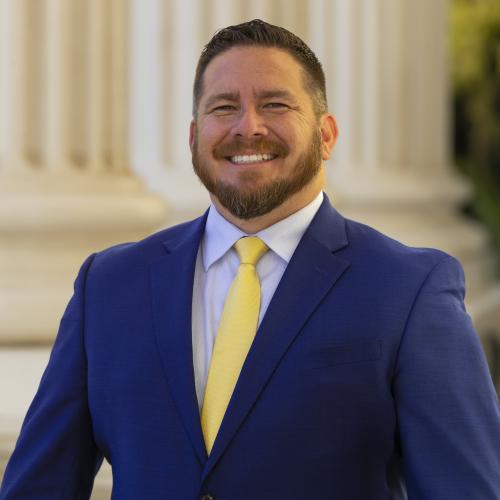
Rep. Juan Alanis
Sponsored bills
Existing law establishes the Medi-Cal program, which is administered by the State Department of Health Care Services and under which qualified low-income individuals receive health care services. The Medi-Cal program is in part governed by, and funded pursuant to, federal Medicaid program provisions. Under existing law, certain vision care benefits are covered under the Medi-Cal program, relating to, among other things, optometric and optician services and eyeglasses, as specified. This bill would require the department, by no later than January 1, 2028, to establish a list of performance measures to ensure that the vision services under the Medi-Cal program meet quality and access criteria. The bill would require that the performance measures be designed to evaluate utilization, access, and availability of Medi-Cal vision services. The bill would require certain information within the performance measures, relating to providers and examinations, among other factors. The bill would require the department, when evaluating performance measures, to consider certain criteria, including trended data and other state performance and quality measures. The bill would require the department to report on each performance measure only to the extent that the department has existing data sources from which to calculate the applicable measure, as specified. The bill would specify a timeline for the posting of performance measures and data on the department's internet website. The bill would also require the department to establish benchmarks for each performance measure and to annually prepare a summary report on complaints and grievances, as specified.
(1) Beginning on July 1, 2026, for the financial aid award year of 2026–27 and each award year thereafter, existing federal law establishes the federal Workforce Pell Grant program to award grants to eligible students who are enrolled, or accepted for enrollment, in a short-term educational program that, among other things, provides an education aligned with the requirements of high-skill, high-wage, or in-demand industry sectors or occupations, as provided. Existing law establishes the Labor and Workforce Development Agency, which is composed of various departments responsible for protecting and promoting the rights and interests of workers in California. Existing law establishes the Student Aid Commission as the primary state agency for the administration of state-authorized student financial aid programs available to students attending all segments of postsecondary education. This bill would prohibit a postsecondary educational institution from disbursing federal Workforce Pell Grant program funds to students enrolled in the institution's short-term programs, and advertising, marketing, or informing students about the availability of those funds unless the institution has (A) obtained authorization from the commission, on behalf of the Governor, that the institution meets the requirements of specified provisions related to the federal Workforce Pell Grant program, and (B) obtained approvals and met all requirements set forth by the United States Department of Education. This bill would prohibit the commission from authorizing a postsecondary educational institution to receive federal Workforce Pell Grant program funds for a short-term program if the institution, among other things, partners, contracts, or affiliates with an entity that is not accredited by a specified accrediting agency, as provided. The bill would authorize the commission to use the California Priority Programs List to determine whether a short-term program satisfies specified requirements under the federal Workforce Pell Grant program, as provided. (2) Existing federal law, the Workforce Innovation and Opportunity Act (WIOA) , provides for workforce development activities, including activities in which states may participate. Existing state law, the California Workforce Innovation and Opportunity Act (CalWIOA) , establishes the California Workforce Development Board to assist the Governor in the development, oversight, and continuous improvement of California's workforce investment system and the alignment of the education and workforce investment systems to the needs of the 21st century economy and workforce. CalWIOA creates the Consolidated Work Program Fund in the State Treasury, for the receipt of all moneys deposited pursuant to WIOA and requires moneys in the fund to be made available, upon appropriation by the Legislature, to the Employment Development Department for expenditure consistent with the purposes of WIOA. Existing law contains various programs for job training and employment investment, including work incentive programs, as specified, and establishes local workforce investment boards to perform duties related to the implementation and coordination of local workforce investment activities. Existing law requires local workforce investment boards to spend a minimum percentage of specified funds for adults and dislocated workers on federally identified workforce training programs and allows the boards to leverage specified funds to meet the funding requirements, as specified. Existing law requires a local workforce development area that does not meet the expenditure requirements to submit a corrective action plan to the Employment Development Department that provides reasons for not meeting the requirements and describes actions taken to address the identified expenditure deficiencies. Existing law also requires the department to calculate for each local workforce development board whether the local workforce development board met the expenditure requirements and make annual reports regarding the training and supportive services expenditures. This bill, starting July 1, 2028, instead of requiring the local workforce development boards to spend a minimum percentage of specified funds for adults and dislocated workers, would require the boards to ensure that at least 50% of participants enrolled in the adult and dislocated worker programs receive workforce training services, and would prescribe the training services that count toward the participant training requirement. The bill would require a local workforce development area that does not meet the participant training requirement to submit a corrective action plan to the Employment Development Department that provides reasons for not meeting that requirement and describes actions taken to address the identified participant training deficiencies. By imposing new requirements on local workforce development boards, the bill would impose a state-mandated local program. The bill would require the Employment Development Department to calculate for each local workforce development board, among other things, whether the local workforce development board met the participant training requirement and make annual reports regarding the number of participants enrolled in adult and dislocated worker program, the percentage of those enrolled participants receiving training services, and the training expenditures and supportive service expenditures made by local workforce development boards, as specified. The bill would also make nonsubstantive conforming changes. The California Constitution requires the state to reimburse local agencies and school districts for certain costs mandated by the state. Statutory provisions establish procedures for making that reimbursement. This bill would provide that, if the Commission on State Mandates determines that the bill contains costs mandated by the state, reimbursement for those costs shall be made pursuant to the statutory provisions noted above.
Existing law establishes the California Career Technical Education Incentive Grant Program, administered by the State Department of Education, with the purpose of encouraging, maintaining, and strengthening the delivery of high-quality career technical education programs. Existing law provides, for the 2021–22 fiscal year and each fiscal year thereafter, that $300,000,000 shall be available to the department, upon appropriation by the Legislature, for the program. Existing law requires an applicant to demonstrate a proportional dollar-for-dollar match and sets that amount for the 2021–22 fiscal year, and each fiscal year thereafter, at $2 for every $1 received from the program. Existing law prohibits an applicant from being awarded an amount higher than the amount that the allocation formula determines them to be eligible to receive under the program. Existing law requires the Superintendent of Public Instruction, in administering the program, to perform specified duties, including, among other duties, to (1) determine, in collaboration with the executive director of the State Board of Education, and make public on a preliminary basis at least 30 days before a regularly scheduled meeting of the state board, the allocation formula, (2) distribute funding on a multiyear schedule, (3) require grant recipients to submit program reports, (4) manage the grant process, and (5) promote the success of K–12 career technical education programs, as provided. This bill would require the department, instead of the Superintendent, to perform the above-described duties. The bill would, for purposes of allocations commencing no later than the 2027–28 fiscal year and pursuant to the above-described requirements, also require the department to determine, in consultation with the executive director of the state board, a revised allocation formula that ensures that all funds appropriated for the program in any given fiscal year are fully allocated to program applicants in that fiscal year, as provided.
Existing regulations require each public agency that is responsible for household hazardous waste management to complete and submit a "Form 303 Household Hazardous Waste Collection Report" (Form 303) electronically to the Department of Resources Recycling and Recovery each year. Existing regulations require the reporting timeframe to be July 1 of the previous fiscal year through June 30 of that fiscal year, with the information required to be submitted to the state by October 1 of the following fiscal year. Existing law requires a public agency, or its contractor, operating a household hazardous waste collection facility to, on or before October 1 of each year, submit a copy of the completed Form 303 to the officer or agency authorized to implement and enforce specified hazardous materials laws. Existing law requires that the completed Form 303 also be submitted to the Department of Toxic Substances Control until specified regulations adopted by the Secretary for Environmental Protection are effective and other conditions are met. This bill would require that Form 303 to instead report information for the prior calendar year. The bill would require a copy of the completed Form 303 to instead be submitted to the Department of Resources Recycling and Recovery, and would require the Department of Resources Recycling and Recovery to provide a copy of the completed form to the Department of Toxic Substances Control upon request.
Maddy summaryThis bill designates September 2026 as Childhood Cancer Awareness Month. It directly affects state agencies and organizations by encouraging them to recognize this specific month for awareness activities. The measure does not change laws or allocate funding but serves as a formal commemorative resolution.
Existing law designates the Department of Food and Agriculture as the lead department in noxious weed management and requires the department, in cooperation with the Secretary of the Natural Resources Agency, to implement provisions relating to noxious weed management. Existing law prohibits a person from selling, distributing, or transporting into, or within, a weed-free area any seed of a noxious weed that the secretary has declared the area to be practically free from. This bill would prohibit an online marketplace, as defined, from facilitating the sale or shipment of a noxious weed for delivery to an address located in the state. The bill would authorize the Secretary of Food and Agriculture, if the secretary or a county agricultural commissioner identifies a shipment of a noxious weed and the secretary determines that the shipment originated from or occurred through a transaction conducted through an online marketplace in violation of this prohibition, to provide written notice, including specified information, to the online marketplace that it may be subject to an administrative penalty for violating this prohibition. The bill would authorize the secretary to levy a specified administrative penalty against an online marketplace for violating this prohibition if both the online marketplace received that written notice and, after any written notice, the secretary or a county agricultural commissioner identifies a shipment of a noxious weed and the secretary determines that the shipment originated from or occurred through a transaction conducted through an online marketplace in violation of this prohibition, unless the marketplace demonstrates to the secretary that it has implemented and maintains reasonable controls, as defined. The bill would also authorize the secretary to levy a separate administrative penalty against an online marketplace to recover all reasonable costs associated with remediating any damage caused by a violation of this prohibition in an amount equal to those reasonable costs. The bill would provide that review of the secretary's decision to impose an administrative penalty pursuant to these provisions may be sought by the online marketplace within 30 days of the date of the decision, as specified. The bill would require all moneys collected pursuant to these provisions to be deposited into the Department of Food and Agriculture Fund to, upon appropriation by the Legislature, cover costs related to the enforcement of provisions relating to plant quarantine and pest control. The bill would prohibit an online marketplace subject to an administrative penalty pursuant to these provisions from being subject to other fines or penalties for a violation of this prohibition. The bill would make its provisions operative on April 1, 2027.
Existing law requires the State Department of Public Health to license and regulate various health facilities, including general acute care hospitals. Existing law requires the department to issue a special permit, in addition to a license, to a health facility to offer one or more special services, such as an emergency center, if specified requirements are met, including that the department finds that the standards of care and services are adequate and appropriate. Existing law requires the department to issue a special permit to allow a general acute care hospital to offer emergency stabilization services at a location that is neither inside nor contiguous to the applicant hospital if the hospital provides satisfactory evidence to the department that, among other things, the hospital has a written transfer agreement with the hospital closest to the location where emergency stabilization services will be provided and satisfactory evidence to the department that this location meets certain requirements, including that the location is in the town of Paradise within the County of Butte and serves the same area previously served by Feather River Hospital. This bill would require the department to issue a waiver, as specified, to a publicly owned and operated general acute care hospital, in collaboration with Del Puerto Health Care District, to operate one rural emergency stabilization care unit and waive designated general acute care hospital licensure requirements if specified conditions are met. The bill would limit the term of the waiver based on prescribed factors, including the completion of a hospital build within a 5-mile radius of the emergency stabilization care unit or within 10 years from the initial issuance of the waiver, except as specified. This bill would make legislative findings and declarations as to the necessity of a special statute for Del Puerto Health Care District.
This measure would recognize and affirm the important role of artists, arts organizations, creative arts therapists, and arts for health initiatives in supporting behavioral health, promoting recovery, strengthening community resilience, and contributing to public safety. The measure would encourage and recognize exploration, support, and integration of arts and behavioral health within California's health care, behavioral health, and community-based systems.
Existing law vests the Public Utilities Commission with regulatory authority over public utilities, including electrical corporations and gas corporations. Existing law finds and declares that the California Council on Science and Technology (CCST) was organized as a nonprofit corporation at the request of the Legislature for the specific purpose of offering expert advice to the state government on public policy issues significantly related to science and technology. Existing law requests the CCST, every 3 years, to assess the infrastructure project types, scale, and pace necessary to achieve the state's energy, climate change, and air quality goals, as specified. This bill would require the CCST to establish, on or before March 1, 2027, upon appropriation by the Legislature, a program to, upon request of the Legislature, analyze legislation that would establish a mandated requirement or program, as defined, or otherwise affect electrical corporation or gas corporation ratepayers, as specified. The bill would require the analysis to include, among other things, whether the legislation will increase electricity or natural gas utility rates, and if so, would require an assessment of specified financial impacts. The bill would require the CCST to develop and implement conflict-of-interest provisions to prohibit a person from participating in an analysis for which the person knows or has reasons to know that the person has a material financial interest. The bill would repeal these provisions on January 1, 2032.