

Existing law establishes the Maddy Emergency Medical Services (EMS) Fund and authorizes each county to establish an emergency medical services fund for reimbursement of costs related to emergency medical services. Existing law, until January 1, 2027, requires 15% of the fund to be used to, among other things, improve access to, and coordination of, pediatric trauma and emergency services, with specified preferences, and requires the cost of administering money deposited into the EMS Fund to be reimbursed from the money collected, as specified. Existing law, until January 1, 2027, authorizes county boards of supervisors to elect to levy an additional penalty, for deposit into the EMS Fund, in the amount of $2 for every $10 upon fines, penalties, and forfeitures collected for criminal offenses. Existing law, until January 1, 2027, requires 15% of the funds collected pursuant to that provision to be used to provide funding for pediatric trauma centers. This bill would extend the operative date of these provisions until January 1, 2037.
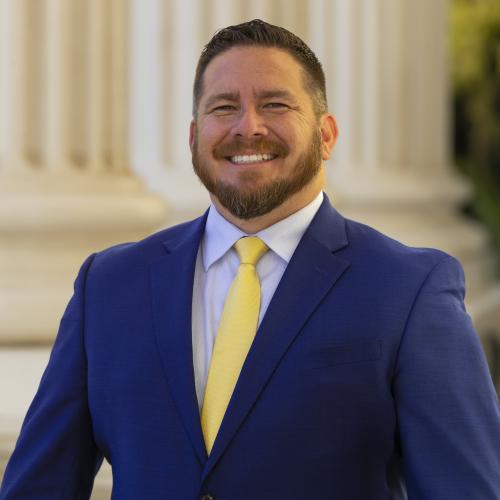
Asm. Juan Alanis
Sponsored bills
This measure would urge the President of the United States and Congress of the United States to immediately restore full and consistent funding and staffing for the National Park Service.
Maddy summaryCalifornia Assembly Resolution 140 designates August 2026 as Children's Get Offline and Get Outdoors Month to promote awareness of the benefits of screen-free play for child development. The resolution cites research linking excessive social media use and reduced free play time to increased rates of anxiety, depression, and other behavioral issues among teenagers. It encourages families and communities to support unstructured outdoor activities and highlights ongoing federal efforts to protect children's mental health through technology guardrails.
Existing law establishes categories of peace officers with varying powers and authority to make arrests and carry firearms. Under existing law, in certain counties, including the Counties of Butte and Calaveras, a deputy sheriff, who is employed to perform duties exclusively or initially relating to custodial assignments with responsibilities for maintaining the operations of county custodial facilities, is a peace officer whose authority extends to any place in the state only while engaged in the performance of the duties of the officer's employment and for the purpose of carrying out the primary function of employment relating to the officer's custodial assignments, or when performing other law enforcement duties directed by the officer's employing agency during a local state of emergency. This bill would include a deputy sheriff employed by the County of Fresno or the County of San Joaquin within that definition of peace officer. The bill would make related findings and declarations.
Existing law requires the governing board of a school district or the governing body of a charter school that requires a course in health education for graduation from high school to include instruction in performing compression-only cardiopulmonary resuscitation (CPR) , as provided. Existing law also encourages those entities to provide to pupils general information on the use and importance of an automated external defibrillators (AED) . Existing law further requires the State Department of Education to provide guidance on how to implement these provisions, including, but not limited to, who may provide instruction. Existing law establishes the Instructional Quality Commission and requires the commission to, among other things, recommend curriculum frameworks to the State Board of Education. This bill would require the commission, when the physical education framework is next revised after January 1, 2027, to consider including content on the importance, performance, and use of CPR and AEDs in that framework.
Existing law, the Child Care and Development Services Act, administered by the State Department of Social Services, establishes a system of childcare and development services for children up to 13 years of age, which includes various programs and services, including, among others, general childcare and development programs and migrant childcare and development programs. Existing law, the Uniform Electronic Transactions Act (UETA) , provides that a record or signature may not be denied legal effect or enforceability solely because it is in electronic form. This bill would specify that a signature required by the Child Care and Development Services Act may be satisfied by use of an electronic signature in compliance with the UETA. The bill would authorize documents with an electronic signature to be created and stored in an electronic format in compliance with the UETA, and would authorize the department to adopt regulations to implement these provisions. Existing law, the Early Education Act, requires the Superintendent of Public Instruction to, among other things, provide an inclusive and cost-effective preschool program. The Early Education Act and the Child Care and Development Services Act authorize contractors operating or providing services under the acts to use digital signatures that comply with state and federal standards, including specified state regulations. This bill would instead condition the authority of contractors operating under the Early Education Act and the Child Care and Development Services Act to use an electronic signature on compliance with the UETA.
Existing law, the California Retail Food Code, establishes uniform health and sanitation standards for retail food facilities, which are primarily enforced by local public health agencies. Violation of the California Retail Food Code is a misdemeanor, except as otherwise provided. Existing law limits the size of a passthrough window service opening to 216 square inches, and requires the opening to be provided with a solid or screened window, equipped with a self-closing device. Existing law authorizes a passthrough window of up to 432 square inches if equipped with an air curtain device. This bill would remove the requirement that the 216 square inch solid or screened window has to be equipped with a self-closing device. The bill would require a passthrough window service opening of up to 432 square inches to be equipped with an air curtain device or a self-closing device. The bill would require a passthrough window service opening that is larger than 432 square inches to be equipped with both a self-closing device and an air curtain device. The bill would require a passthrough window or other service opening to be used specifically for food delivery operations and not as a general entrance or exit for employees or customers. By expanding the scope of an existing crime, this bill would impose a state-mandated local program. The California Constitution requires the state to reimburse local agencies and school districts for certain costs mandated by the state. Statutory provisions establish procedures for making that reimbursement. This bill would provide that no reimbursement is required by this act for a specified reason.
Maddy summaryCalifornia Assembly Resolution 137 formally recognizes the Diwali festival scheduled for November 8, 2026, and encourages state residents to participate in the celebration. The resolution highlights the cultural significance of the holiday for Indian Americans and South Asian communities, noting its themes of unity, joy, and the triumph of light over darkness. It also acknowledges that California previously designated Diwali as an official state holiday in 2025. This measure serves as a commemorative statement rather than a law with new regulatory or financial provisions.
This measure would recognize August 26, 2026, as Women's Equality Day and its historic importance to women's rights, including the battle to attain those rights in the past, present, and future.
Existing law regulates the operation of recreational off-highway motor vehicles on lands, other than a highway, that are open and accessible to the public. Existing law generally prohibits a motor vehicle from being driven upon a highway unless it is registered. However, existing law authorizes off-highway motor vehicles that are issued identification plates or devices to cross highways in certain situations, including, among others, a peace officer operating an off-highway motor vehicle in an emergency response situation. This bill would expand the above-described provision to additionally authorize first responders, as defined, to operate off-highway motor vehicles in an emergency response situation. The bill would also authorize peace officers and first responders to operate off-highway motor vehicles upon a highway, at a distance not to exceed 5 miles, for the purpose of accessing off-highway recreational areas or locations of patrol, within jurisdictions that have adopted a policy or plan for the operation of those off-highway motor vehicles pursuant to the provisions described below. The bill would require peace officers and first responders operating off-highway motor vehicles pursuant to these provisions to comply with the terms and requirements of the policy or plan adopted by the applicable local authority. Existing law prohibits a local authority from enacting or enforcing an ordinance on matters covered by the Vehicle Code unless expressly authorized by the Vehicle Code. Existing law authorizes local authorities to adopt rules and regulations by ordinance or resolution regarding specified matters. This bill would authorize a local authority to regulate the operation of off-highway motor vehicles subject to identification by peace officers and first responders upon highways within the local authority's jurisdiction while performing official duties subject to specified requirements. Among those requirements, the bill would require a local authority, after public review, to adopt a policy or plan for the operation of off-highway motor vehicles by peace officers and first responders while performing official duties and to make the policy or plan available to the public on its internet website. The bill would also require the policy or plan to include, among other things, a requirement that off-highway motor vehicles may only be operated upon a highway for up to 5 miles for the purpose of accessing an off-highway recreational area or a location of patrol.