

Existing law establishes the California Community Colleges, the California State University, and the University of California as the 3 segments of public institutions of higher education in the state. Existing law requires the California State University and each community college district, and requests the University of California, to grant priority registration for enrollment to a member or former member of the Armed Forces of the United States who is a resident of California and who has received an honorable discharge, a general discharge, or an other than honorable discharge, and to any member or former member of the State Guard, as specified, for any academic term attended at one of these institutions for 4 academic years after leaving state or federal active duty for use within 15 years of leaving state or federal active duty. This bill would, commencing July 1, 2027, remove the above-described provision limiting priority registration to 4 academic years after leaving state or federal active duty for use within 15 years of leaving state or federal active duty. To the extent the bill would add additional duties on community college districts, the bill would impose a state-mandated local program. The California Constitution requires the state to reimburse local agencies and school districts for certain costs mandated by the state. Statutory provisions establish procedures for making that reimbursement. This bill would provide that, if the Commission on State Mandates determines that the bill contains costs mandated by the state, reimbursement for those costs shall be made pursuant to the statutory provisions noted above.
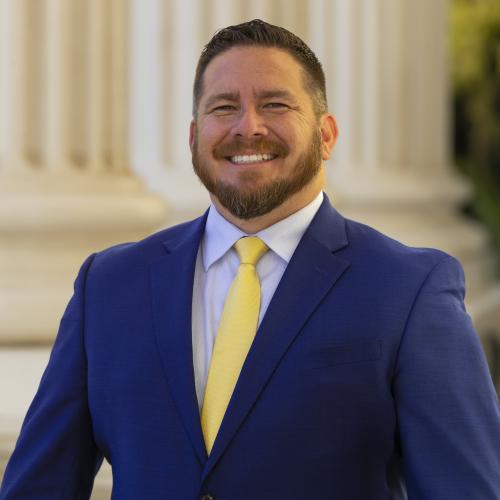
Rep. Juan Alanis
Sponsored bills
Existing law establishes the California Community Colleges, the California State University, the University of California, independent institutions of higher education, and private postsecondary educational institutions as the segments of postsecondary education in the state. The missions and functions of these segments are set forth in the Donahoe Higher Education Act. This bill would provide that public higher education additionally consists of tribal colleges and universities geographically located in California that are operated by an Indian tribal government, as defined.
Existing law makes it a misdemeanor to possess nitrous oxide with the intent of inhaling it for specified purposes, including to cause intoxication. Existing law also makes it a misdemeanor to sell nitrous oxide to any person under 18 years of age. Existing law makes it a misdemeanor to dispense nitrous oxide to a person and knowing that the person will use it for specified prohibited purposes, if that person then causes death or great bodily injury to themselves or another person. Under existing law, the Cigarette and Tobacco Products Licensing Act of 2003, the California Department of Tax and Fee Administration (CDTFA) administers and enforces a statewide program to license manufacturers, importers, distributors, wholesalers, and retailers of cigarettes and tobacco products. Existing law specifically requires a retailer, distributor, or wholesaler, as defined, to hold a license from the CDTFA to engage in the sale of cigarettes or tobacco products. Existing law subjects these licenses to suspension or revocation for violations of existing law. Existing law imposes specified noticing and posting requirements for retailer licenses that are revoked. A violation of these provisions is a misdemeanor. This bill would, except as specifically exempted, prohibit the sale and distribution of a nitrous oxide container that is capable of holding more than 8 grams of nitrous oxide or from which an individual may directly inhale nitrous oxide. The bill would also prohibit the sale and distribution of a nitrous oxide that has, or is marketed as having, the taste or smell of any food. The bill would prohibit knowingly selling or distributing a device that allows an individual to inhale nitrous oxide from the container or hold nitrous oxide for the purposes of inhalation. The bill would punish a violation of these provisions as an infraction, as specified. The bill would also authorize a court to suspend a business license if the business has a prior conviction for violating these prohibitions, and to revoke a license to sell tobacco products if the business has 2 prior convictions for violating these prohibitions. The bill would make any person, distributor, or business found to have violated these prohibitions liable for all reasonable costs incurred by a public agency in the investigation, inspection, seizure, storage, transportation, handling, venting, abatement, disposal, or destruction of nitrous oxide products, nitrous oxide containers, inhalation devices, or related materials involved in the violation, as specified. This bill would prohibit a person that is engaged in the business of selling cigarettes or tobacco products in this state from possessing, storing, owning, or selling nitrous oxide, in violation of the criminal provisions outlined above, at any site where cigarettes and tobacco products are stored or sold. The bill would authorize the CDTFA to seize nitrous oxide products, as prescribed. The bill would subject a violator to civil penalties in amounts depending on the aggregate retail value of the seized nitrous oxide and the number of violations within 5 years of the first violation. The bill would require the deposit of collected civil penalties in the Cigarette and Tobacco Products Compliance Fund. The bill would also subject a violator who commits a 2nd violation to license suspension and who commits a 3rd violation to license revocation, as prescribed. This bill would establish procedures for the CDTFA to follow for a court-ordered revocation. The bill would require the CDTFA to assess a $250 civil penalty for each revoked license and to deposit collected civil penalties into the fund, to be made available to the department, upon appropriation by the Legislature, for purposes of administering the bill. The bill would authorize a licensee to apply for a new license at the previously revoked location 6 months after the date of revocation and would authorize the CDTFA, at its discretion, to issue a new license. The bill would apply these noticing and posting requirements to a retailer subject to a court-ordered revocation pursuant to the bill. The California Constitution provides for the establishment of the State Board of Equalization, which, before July 1, 2017, had primary responsibility for most of the state's duties, powers, and responsibilities regarding the administration of taxes and fees. Existing law, on July 1, 2017, transferred to the CDTFA various duties, powers, and responsibilities of the State Board of Equalization, including administration of the Cigarette and Tobacco Products Licensing Act of 2003, as specified. This bill would change references in the provisions of the Cigarette and Tobacco Products Licensing Act of 2003 amended by this bill from the "State Board of Equalization" to the "California Department of Tax and Fee Administration" to reflect the transfer of the board's duties, powers, and responsibilities to the CDTFA. Because this bill would create new crimes, it would impose a state-mandated local program. The California Constitution requires the state to reimburse local agencies and school districts for certain costs mandated by the state. Statutory provisions establish procedures for making that reimbursement. This bill would provide that no reimbursement is required by this act for a specified reason.
Existing law prohibits Members of the Legislature from entering into, or requesting that another party enter into, a nondisclosure agreement relating to the drafting, negotiation, or discussion of proposed legislation, and makes any nondisclosure agreement relating to the drafting, negotiation, or discussion of proposed legislation void and unenforceable. Existing law provides an exception for nondisclosure agreements, or portions thereof, that prevent only the disclosure of trade secrets, financial information, or proprietary information, as specified. This bill would prohibit an elective or appointive officer of a state agency acting in their official capacity from entering into, or requesting that another party enter into, a nondisclosure agreement relating to the drafting, negotiation, or discussion of a proposed regulation or legislation. The bill would also make any nondisclosure agreement relating to the drafting, negotiation, or discussion of a proposed regulation or legislation entered into by an elective or appointive officer of a state agency acting in their official capacity after the effective date of this bill void and unenforceable. The bill would provide an exception for nondisclosure agreements, or portions thereof, that prevent only the disclosure of trade secrets, private financial information, or proprietary information, as specified.
Existing law authorizes, upon reasonable belief that a person is in unlawful possession of an agricultural commodity, as specified, the Secretary of Food and Agriculture, a county agricultural commissioner, or any peace officer to hold or seize the commodity and requires the commodity to be turned over to the custody of the commissioner. Existing law authorizes the commissioner if, for any reason, the commodity is not released to the rightful owner after being in the custody of the commissioner, as specified, to sell the commodity and hold all of the proceeds derived from the sale of the commodity for a period of not less than 6 months, during which time the lawful owner of the commodity may submit satisfactory proof of ownership and obtain possession of the proceeds. Existing law requires if, after retention of the proceeds for a period of at least 6 months, no demand is made or if proof of ownership is not supplied, the commissioner to deposit the proceeds of the sale of the commodity into the general fund of the county. This bill would require the commissioner to hold the proceeds of the sale of a commodity for at least 3 months, rather than 6 months, before depositing them into the general fund of the county.
Existing law establishes a specialized license plate program and requires the Department of Motor Vehicles to issue specialized license plates, also referred to as environmental license plates, on behalf of a sponsoring state agency if the agency receives 7,500 applications for that plate within a 12-month period, among other requirements. Existing law authorizes a person who is the registered owner or lessee of a vehicle to apply to the department for specialized license plates. Existing law imposes a fee, in addition to the regular registration fee, for the issuance, renewal, retention, transfer, and duplication of specialized license plates. Existing law requires that all revenue derived from these fees be deposited in the California Environmental License Plate Fund. This bill would require the Arts Council to apply to the department to sponsor "The Lowrider" specialized license plate program, as specified. The bill would require the design of the plate to reflect lowrider culture and heritage. The bill would require the council to consult with a nonprofit entity for plate design consultation, stakeholder engagement, publicity, and community outreach. The bill would authorize the council to accept and use donated or licensed artwork from a nonprofit entity for these purposes, and to use funds from nonprofit or private sources to augment implementation. The bill would require the department, after deducting its administrative costs, to deposit additional revenue derived from the issuance, renewal, transfer, and substitution of the plate into the Specialized License Plate Fund in the State Treasury. The bill would require the council to use those funds, upon appropriation by the Legislature, to fund projects that include, among others, supporting lowrider arts and cultural preservation efforts. The bill would authorize the council to use 4 to 6% of those funds to consult with or enter into an agreement with a nonprofit entity to support implementation of the program.
Existing law makes it unlawful for a person who has 0.08% or more, by weight, of alcohol in their blood to drive a vehicle or to drive under the influence of alcohol or drugs and prescribes certain penalties depending on additional facts, such as whether the driving resulted in an injury to another. Existing decisional law holds that the slight volitional movement of the vehicle is sufficient for a driving under the influence violation. This bill would state that for the purposes of a driving under the influence violation, "drive" includes the volitional movement of a vehicle with driver support features engaged that require a person to supervise the vehicle in order to steer, brake, or accelerate, as needed to maintain safety. To the extent that this bill would expand the scope of a crime, it would impose a state-mandated local program. The California Constitution requires the state to reimburse local agencies and school districts for certain costs mandated by the state. Statutory provisions establish procedures for making that reimbursement. This bill would provide that no reimbursement is required by this act for a specified reason.
Existing law, the California Building Standards Law, establishes the California Building Standards Commission within the Department of General Services. Existing law requires the commission to approve and adopt building standards and to codify those standards in the California Building Standards Code. Existing law authorizes local governments to enact ordinances or regulations that make building standards amendments to the California Building Standards Code, as specified. Existing law establishes a streamlined approval process for a local permit for a tenant improvement related to a restaurant, as defined. This bill would establish a similar streamlined approval process for a local permit for a tenant improvement relating to a retailer, as defined. In this regard, the bill would require a local building department, upon the request and at the expense of the permit applicant, to allow a qualified professional certifier, defined as a licensed architect or engineer who meets certain requirements, to certify that the plans and specifications of the tenant improvement comply with all applicable building, health, and safety codes, as specified, unless otherwise provided by specified provisions. The bill would require a qualified professional certifier, or the applicant, as applicable, to prepare certain affidavits related to the tenant improvement under penalty of perjury. The bill would require the local building department to approve or deny the permit application within 20 business days of receiving a complete application. The bill would also authorize the applicant to resubmit corrected plans addressing the deficiencies identified in the initial denial, would limit the local building department's review of each subsequent resubmission to the deficiencies identified in the initial denial, and would require the local building department to approve or deny each subsequent resubmission within 10 business days of receipt. The bill would require each local building department to conduct audits of tenant improvements submitted for certification, as specified. The bill would authorize a city or county to adopt additional qualifications or requirements for qualified professional certifiers, including penalties or reasonable administrative fines for certain actions. The bill would make qualified professional certifiers liable for any damages arising from negligent plan review. The bill would also require the applicant to indemnify the local agency from any property damage or personal injury arising from construction permitted under the above-described provisions. The bill would further require the use of a qualified professional certifier to be temporary in cases in which there is an excessive delay, as defined. Existing law establishes the California Architects Board and the Board for Professional Engineers, Land Surveyors, and Geologists to administer the licensure and regulation of architects and engineers, respectively. Existing law specifies grounds for disciplinary action by the boards. This bill would deem making a false statement in a certification described above to be grounds for disciplinary action against a licensee who serves as a qualified professional certifier. Existing law, the Government Claims Act, establishes the liability and immunity of a public entity for its acts or omissions that cause harm to persons. Where a public entity is under a mandatory duty imposed by an enactment that is designed to protect against the risk of a particular kind of injury, the act makes the public entity liable for an injury of that kind proximately caused by its failure to discharge the duty unless the public entity establishes that it exercised reasonable diligence to discharge the duty. This bill, notwithstanding the above-described liability of a public entity for failure to discharge certain mandatory duties, would provide that a public entity or public employee is not liable for an injury caused by their discretionary or ministerial acts or omissions relating to the issuance or denial of a permit pursuant to the bill's provisions. Existing law, the California Environmental Quality Act (CEQA) , requires a lead agency, as defined, to prepare, or cause to be prepared, and certify the completion of, an environmental impact report on a project that it proposes to carry out or approve that may have a significant effect on the environment or to adopt a negative declaration if it finds that the project will not have that effect. CEQA does not apply to the approval of ministerial projects. To the extent that the streamlined, ministerial review processes established by the bill would apply to final, discretionary approval of a tenant improvement, the bill would exempt those projects from CEQA. This bill would also make related findings and declarations. The bill would include findings that changes proposed by this bill address a matter of statewide concern rather than a municipal affair and, therefore, apply to all cities, including charter cities. By adding to the duties of local officials with respect to the review and approval of tenant improvements for retailers, and by expanding the scope of various crimes related to these provisions, this bill would impose a state-mandated local program. The California Constitution requires the state to reimburse local agencies and school districts for certain costs mandated by the state. Statutory provisions establish procedures for making that reimbursement. This bill would provide that no reimbursement is required by this act for specified reasons.
Existing law requires the State Energy Resources Conservation and Development Commission to undertake various actions in furtherance of meeting the state's clean energy and pollution reduction objectives. Existing law requires the commission, beginning November 1, 2003, and biennially thereafter, to adopt an integrated energy policy report that contains an overview of major energy trends and issues facing the state, presents policy recommendations based on an in-depth and integrated analysis of the most current and pressing energy issues facing the state, and includes an assessment and forecast of system reliability and the need for resource additions, efficiency, and conservation, as specified. Existing law requires the commission, as part of the 2027 edition of the integrated energy policy report, to include an assessment of the potential for fusion energy to contribute to California's power supply, as specified. This bill would require the commission, in coordination with specified agencies, to develop a strategic plan for the development of fusion energy in California, as specified. The bill would require the commission to submit the strategic plan to the Legislature on or before December 31, 2029. This bill would require the commission, in coordination with relevant agencies and the fusion energy industry, to (1) develop a strategy for the expansion and development of fusion research and development in California, (2) develop a strategy for supporting the commercialization of fusion energy in California, (3) develop a regulatory framework for fusion energy and a roadmap for licensing and permitting for new fusion energy research and fusion energy facilities, and (4) assess the level at which fusion energy at scale would best support California's long-term renewable energy and greenhouse gas emission reduction goals. The bill would require the information described in this paragraph to be included in the strategic plan, as specified. Existing law authorizes persons proposing specified electrical generation, electrical transmission, hydrogen production, energy storage, and geothermal projects to apply, on or before June 30, 2030, to the commission to certify sites and related facilities as environmental leadership development projects, as specified. Existing law makes a site and related facility certified by the commission subject to streamlining benefits related to the California Environmental Quality Act (CEQA) with no further action by the applicant or the Governor. Under existing law, the commission's certification is in lieu of any permit, certificate, or similar document required by any governmental agency and supersedes any applicable statute, ordinance, or regulation, except as specified. This bill would expand the types of facilities eligible to be certified as environmental leadership development projects by the commission to include a discretionary project, as described, for the manufacture, production, or assembly of specialized products, components, or systems that are integral to fusion energy.
Existing law requires the governing board of a school district to have general control of, and be responsible for, all aspects of the interscholastic athletic policies, programs, and activities in its school district, as provided, and requires the governing board of a school district to ensure that all interscholastic policies, programs, and activities in the school district comply with state and federal law. Existing law authorizes the governing board of a school district to enter into associations or consortia with other governing boards for purposes of governing regional or statewide interscholastic athletics, as provided. Existing law describes the California Interscholastic Federation (CIF) as a voluntary organization that consists of school and school-related personnel with responsibility for administering interscholastic athletic activities in secondary schools and states the intent of the Legislature that the CIF, in consultation with the State Department of Education, implement specified policies relating to interscholastic athletics. Existing law, the 1998 California High School Coaching Education and Training Program, declares the intent of the Legislature to establish a California High School Coaching Education and Training Program, to be administered by school districts with an emphasis on specific components, including, among other components, sports psychology. Existing law requires every high school sports coach to complete, at their own expense, a coaching education program that meets the guidelines established by the California High School Coaching Education and Training Program. This bill would add a component on mental health training, as specified, to the list of components to be emphasized by the 1998 California High School Coaching Education and Training Program. The bill, commencing with the 2027–28 school year, would require a person who serves as a coach in an interscholastic athletic program at a high school, including a private school, that is a member of the California Interscholastic Federation to complete an initial training, and a subsequent training every 2 years, on mental health, as provided. The bill, commencing with the 2027–28 school year, would also require a school district, county office of education, or charter school that elects to offer an athletic program, other than an interscholastic athletic program, to ensure that the athletic program's coaches complete an initial training, and a subsequent training every 2 years, that covers sudden cardiac arrest, as provided, and youth athletics behavioral and mental health training, as provided. This bill would incorporate additional changes to Section 35179.1 of the Education Code proposed by AB 1626 to be operative only if this bill and AB 1626 are enacted and this bill is enacted last. This bill would make the operation of its provisions contingent upon the enactment of AB 1626 of the 2025–26 Regular Session.