

Under existing law, a prisoner can reduce their term of imprisonment by earning credit for, among other things, continuous incarceration, good behavior, and participation in approved rehabilitative programming. Existing law makes an inmate of a county jail or state prison who has completed training for assignment to a conservation camp, state or county facility, or a correctional institution as an inmate firefighter, or who is assigned to a state or county facility or a correctional institution as an inmate firefighter, and who is eligible to earn one day of credit for every one day of incarceration, instead eligible to earn 2 days of credit for every one day served in that assignment or after completing that training. Existing law authorizes a juvenile court to order placement of a ward at the Pine Grove Youth Conservation Camp if specified criteria are met, including if the county has entered into a contract with the Department of Corrections and Rehabilitation and the department has found the ward amenable. Existing law authorizes the department to enter into contracts with counties to operate the Pine Grove Youth Conservation Camp through a state-local partnership, or other management arrangement, to train justice-involved youth, as specified, in wildland firefighting skills. This bill would require an incarcerated individual hand crew member, in addition to receiving credits, and a ward or youth hand crew member placed at the Pine Grove Youth Conservation Camp to be paid an hourly wage equal to $7.25 while assigned to an active fire incident. The bill would require that wage rate to be reviewed annually. The bill would require the Department of Corrections and Rehabilitation and counties to maintain regulations regarding an administrative adjudication and remedy process for any disputes over sums owned pursuant to these provisions. This bill would declare that it is to take effect immediately as an urgency statute.
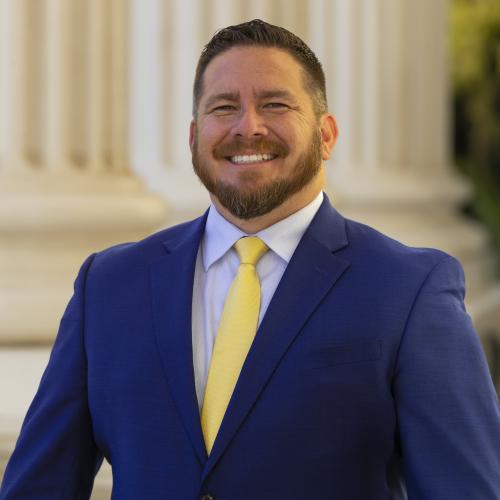
Asm. Juan Alanis
Sponsored bills
Existing law governs the business of buying, selling, and dealing in secondhand and used machinery and all ferrous and nonferrous scrap metals and alloys, also known as "junk." Existing law requires junk dealers and recyclers to keep a written record of all sales and purchases made in the course of their business, including the place and date of each sale or purchase of junk and a description of the item or items, as specified. Existing law requires the written record to include a statement indicating either that the seller of the junk is the owner of it, or the name of the person they obtained the junk from, as shown on a signed transfer document. Existing law prohibits a junk dealer or recycler from providing payment for nonferrous materials until the junk dealer or recycler obtains a copy of a valid driver's license of the seller or other specified identification. Existing law requires a junk dealer or recycler to preserve the written record for at least 2 years. Existing law makes a violation of the recordkeeping requirements a misdemeanor. This bill would require junk dealers and recyclers to include additional information in the written record, including the time and amount paid for each sale or purchase of junk made, and the name of the employee handling the transaction. The bill would revise the type of information required to be included in the description of the item or items of junk purchased or sold, as specified. The bill would require the statement referenced above indicating ownership or the name of the person from whom the seller obtained the junk from to be signed. Existing law prohibits a junk dealer or recycler from possessing certain materials, including a fire hydrant or manhole cover or lid, without written certification from the agency owning or previously owning the material specifying that the agency has either sold the material or is offering the material for sale, salvage, or recycling and that the person is authorized to negotiate the sale of the material. Existing law makes it a crime for any person who is engaged in the salvage, recycling, purchase, or sale of scrap metal to possess specified items, including a fire hydrant or a manhole cover or lid, that were owned or previously owned by specified public entities and that have been stolen or obtained in a manner constituting theft or extortion, knowing the property to be stolen or obtained in that manner, or to fail to report possession of those items, as specified. A person who violates those provisions is subject to a criminal fine of not more than $3,000. This bill would expand the list of materials and items subject to those provisions to include, among other things, items reasonably recognizable as street lights and related equipment, and would increase the maximum amount of the criminal fine to $5,000. Existing law makes a person who is a dealer in or collector of junk, metals, or secondhand materials, or their agent, employee, or representative, who buys or receives any wire, cable, copper, lead, solder, mercury, iron, or brass that the person knows or reasonably should know is used by or belongs to specified entities, including a railroad, certain utility companies, or a public entity engaged in furnishing public utility service, without using due diligence to ascertain that the person selling or delivering that material has a legal right to do so, guilty of criminally receiving that property and, in addition to imprisonment, makes that act punishable by a fine of not more than $1,000. This bill would instead make the act punishable by a fine of not more than $5,000. By expanding the scope of existing crimes, the bill would impose a state-mandated local program. The California Constitution requires the state to reimburse local agencies and school districts for certain costs mandated by the state. Statutory provisions establish procedures for making that reimbursement. This bill would provide that no reimbursement is required by this act for a specified reason.
(1) Existing law prescribes the duties of the State Registrar of Vital Statistics (State Registrar) and local registrars of births and deaths with respect to the registration of certificates of live birth, fetal death, or death, and marriage licenses. Existing law requires the State Registrar to prescribe and furnish all record forms for use in carrying out the provisions governing vital records and prohibits the use of any record form or format other than those prescribed by the State Registrar. Existing law requires every live birth, fetal death, death, and marriage that occurs in the state to be registered with the local registrar. Existing law requires certificates of live birth, fetal death, or death, and a marriage license to include specified information, such as the full name of the child on a certificate of live birth and the full names of the parties to be married on a marriage license. Existing law also requires the county clerk to issue a confidential marriage license, as specified, on a form prescribed by the State Registrar. This bill would require, commencing no earlier than 2 years after an appropriation of funds by the Legislature, the State Registrar to require the use of a diacritical mark on an English letter within a name field to be properly recorded, when applicable, on a certificate of live birth, fetal death, death, marriage license and certificate, or confidential marriage license and certificate, and would require the use of a diacritical mark to be deemed an acceptable entry by the State Registrar. The bill would provide that the absence or presence of a diacritical mark on a certificate of live birth, fetal death, or death, or a marriage license and certificate or confidential marriage license and certificate does not render the document invalid nor affect any constructive notice imparted by proper recordation of the document. The bill would authorize the State Registrar to develop a list of acceptable diacritical marks for use on a certificate of live birth, fetal death, or death, or a marriage license and certificate or confidential marriage license and certificate through all-county letters or similar instructions from the State Registrar without taking further regulatory actions. The bill would authorize the State Registrar to remove any diacritical marks on the birth, fetal death, death, and marriage license and certificate data before furnishing the vital statistics to a federal, state, or local government agency. The bill would authorize, beginning July 1, 2026, if a name is not accurately recorded because of the absence of a diacritical mark on an English letter in any certificate of live birth, fetal death, death, or marriage already registered, the person asserting the omission, or the person's conservator, or if a minor, the person's parent or guardian, to make an affidavit under oath, as specified, stating the changes necessary to make the record correct. The bill would require the affidavit to be supported by the affidavit of one other person having knowledge of the facts and be filed with the State Registrar. The bill would require the State Registrar to, review the request and, if the request is accompanied with the payment of a specified fee, to issue an amendment to any certificate of live birth, fetal death, death, or marriage with the accurate name identified in the request. The bill would also authorize, if a name field of either of the parties married or their parents is not accurately recorded because of the absence of a diacritical mark on an English letter on any confidential license and certificate of marriage already registered, the party asserting the omission to make an affidavit, under oath, stating the changes necessary to make the record correct and file it with the county clerk. The bill would authorize the county clerk to charge a fee, not to exceed the amount of the fee for any other amended confidential marriage license and certificate issued by the county clerk and not to exceed the reasonable cost to provide the amended marriage license and certificate. The bill would require the county clerk to review the amendment for acceptance for filing, and if accepted, file the amendment and note the fact of the amendment, with its date, on the otherwise unaltered original confidential license and certificate of marriage. By requiring the affidavit to be under oath, the bill would expand the crime of perjury, thereby imposing a state-mandated local program. By increasing duties on county clerks, the bill would impose a state-mandated local program. (2) Existing law requires the collection of specified fees for certified copies of a fetal death record, death record, a birth certificate, marriage record, or marriage dissolution record. Existing law requires all applicants for certified copies of the above-described records to pay an additional fee of $3 to be collected by the State Registrar, the local registrar, county recorder, or county clerk, as appropriate. This bill would increase the additional fee charged for certified copies of the above-described records to $5. (3) The California Constitution requires the state to reimburse local agencies and school districts for certain costs mandated by the state. Statutory provisions establish procedures for making that reimbursement. This bill would provide that with regard to certain mandates no reimbursement is required by this act for a specified reason. With regard to any other mandates, this bill would provide that, if the Commission on State Mandates determines that the bill contains costs so mandated by the state, reimbursement for those costs shall be made pursuant to the statutory provisions noted above.
Existing law defines rape as an act of sexual intercourse accomplished under certain circumstances, including with a person not the spouse of the perpetrator where the person is incapable of giving legal consent because of a mental disorder or developmental or physical disability. This bill would remove the spousal exception from this definition of rape. By expanding the scope of a crime, this bill would impose a state-mandated local program. The California Constitution requires the state to reimburse local agencies and school districts for certain costs mandated by the state. Statutory provisions establish procedures for making that reimbursement. This bill would provide that no reimbursement is required by this act for a specified reason.
Existing law creates the Vocational Nurse Education Program within the Department of Health Care Access and Information for persons agreeing to serve in an eligible county health facility, state-operated health facility, or a health workforce shortage area, before completing vocational nursing school. Existing law authorizes a person who qualifies for admission to a vocational nursing program to apply for funding under the program, as specified. Existing law establishes the Vocational Nurse Education Fund for the purpose of promoting the education of vocational nurses and related administrative costs. This bill would create the California Nurse-Midwifery Education Fund within the department for the purpose of establishing California-based, master's level, nurse-midwifery education programs within the California State University, the University of California, or both. The bill would require the department to administer the fund, and receive moneys from the General Fund for these purposes upon appropriation by the Legislature. The bill would require the department to establish a competitive application criteria to ensure the optimal sites selection for the education programs within the California State University system or the University of California, would require the department to ensure that a master's degree is an option for students as the culminating degree of the education programs receiving funds, and would require the education programs to meet specified requirements. The bill would also require the fund to support the annual operating costs for the development, operation, and maintenance of the education programs through the graduation of the first cohort of matriculated students, or 5 years, whichever is shorter.
Existing law, the Cal Grant Program, establishes the Cal Grant A Entitlement Awards, the Cal Grant B Entitlement Awards, the California Community College Expanded Entitlement Awards, the California Community College Transfer Entitlement Awards, the Competitive Cal Grant A and B Awards, the Cal Grant C Awards, and the Cal Grant T Awards under the administration of the Student Aid Commission. Existing law, the Cal Grant Reform Act, revises and recasts the provisions establishing and governing the existing Cal Grant Program into a new Cal Grant Program. Existing law specifies that the act becomes operative only if General Fund moneys over the multiyear forecasts beginning in the 2024–25 fiscal year are available to support ongoing augmentations and actions, and if funding is provided in the annual Budget Act to implement the act. Under either Cal Grant Program that is operative, existing law establishes eligibility requirements for awards under the program for participating students attending qualifying institutions, including, among others, California residency requirements, as provided. Existing law establishes the Middle Class Scholarship Program (MCSP) under the administration of the commission. Existing law makes an undergraduate student eligible for a scholarship award under the MCSP if the student is enrolled at the University of California or the California State University, or enrolled in upper division coursework in a community college baccalaureate program, and meets certain eligibility requirements, including, among others, that the applicant meets the eligibility requirements for a Cal Grant. This bill would extend Cal Grant and MCSP eligibility to a student who was not a resident of California at the time of high school graduation or its equivalent but meets all other applicable eligibility requirements and is a dependent natural or adopted child, stepchild, or spouse of a member of the Armed Forces of the United States stationed outside of California on active duty, if the member of the Armed Forces of the United States otherwise maintains California as their state of legal residence. The bill also would make conforming changes.
Existing law requires the Department of Resources Recycling and Recovery to adopt and revise regulations setting forth minimum standards for composting, in accordance with law. Existing regulations require all compostable materials handling activities to obtain a permit prior to commencing operations and to comply with specified requirements. Existing regulations specify 4 regulatory tiers for composting operations, with different requirements for each tier. The 4 tiers are excluded, enforcement agency notification, registration permit, and full solid waste facility permit. In the excluded tier, existing regulations specify the "excluded activities" that do not constitute compostable material handing operations or facilities and, therefore, are not subject to permit requirements or other regulatory requirements. One of the excluded activities is the composting of green material, agricultural material, food material, and vegetative food material, alone or in combination, if the total amount of feedstock and compost onsite at any one time does not exceed 100 cubic yards and 750 square feet. This bill would expand this excluded activity exemption for composting activities by eliminating the maximum square-foot condition and authorizing a total amount of feedstock and compost onsite at any one time of up to 200 cubic yards, or 500 cubic yards for a composting activity owned by a public agency, as defined. The bill would also authorize the Department of Resources Recycling and Recovery to further increase those amounts by regulation. The bill would also make the composting of agricultural materials and residues that are from a large-scale biomass management event at an agricultural facility that does not otherwise operate as a solid waste facility an excluded activity, as specified. Existing regulations prohibit a composting operation from giving away or selling more than 1,000 cubic yards of compost product annually if it is in the excluded tier or if it is an agricultural material composting operation in the enforcement agency notification tier, its feedstock is both green material and agricultural material, and the operation is located on land zoned for agricultural uses. This bill would authorize composting activities to give away or sell up to 5,000 cubic yards of compost product annually. The bill would authorize the Department of Resources Recycling and Recovery to increase, by regulation, that amount when the composting is of agricultural materials and residues that are from a large-scale biomass management event at an agricultural facility.
Existing law prohibits a dead animal hauler or any other person from transporting a dead animal to any place, other than to certain specified facilities or destinations, unless a certain waiver is granted by the State Veterinarian, as specified. Existing law requires the Department of Resources Recycling and Recovery to adopt and revise minimum standards for solid waste handling, transfer, composting, transformation, and disposal, as prescribed. Pursuant to this authority, the department has adopted a regulation that prohibits the composting of unprocessed mammalian tissue except when received from certain sources. This bill would, notwithstanding those prohibitions, authorize any part of a livestock carcass resulting from a routine livestock mortality event or on-farm processing to be composted if certain requirements are met, including, among others, that the composting is conducted in accordance with best management practices for livestock composting adopted by the Secretary of Food and Agriculture, as specified.
Existing law makes it a crime to willfully threaten to commit a crime that will result in death or great bodily injury to another person, with the specific intent that the statement is to be taken as a threat that, on its face and under the circumstances in which it is made, is so unequivocal, unconditional, immediate, and specific as to convey to the person threatened a gravity of purpose and an immediate prospect of execution of the threat, and thereby reasonably causes the threatened person to be in sustained fear for their own safety or the safety of their immediate family, as defined. Under existing law, this crime is punishable by imprisonment in a county jail for no more than one year for a misdemeanor, or by imprisonment in state prison for a felony. This bill would make it a crime for a person to willfully threaten, by any means, including, but not limited to, an image or threat posted or published on an internet web page, to commit a crime at specified locations, including a daycare and workplace, with specific intent that the statement is be taken as a threat, even if there is no intent of actually carrying it out, if the threat, on its face and under the circumstances in which it is made is so unequivocal, unconditional, immediate, and specific as to convey to the person or persons threatened a gravity of purpose and an immediate prospect of execution of the threat, and if the threat causes a person or person to reasonably be in sustained fear for their own safety or the safety of others at the specified locations. This bill would make this crime, for a person 18 years of age or older, punishable as a wobbler by imprisonment in the county jail for not more than one year or by imprisonment in the county jail for 16 months or 2 or 3 years. If a person under 18 years of age commits this crime, the bill would require the person to be referred to specified services in lieu of being declared a ward of the court, if eligible. If the person is ineligible, the bill would require the offense to be punished as a misdemeanor. By creating a new crime and imposing additional duties on local governments, this bill would create a state-mandated local program. The California Constitution requires the state to reimburse local agencies and school districts for certain costs mandated by the state. Statutory provisions establish procedures for making that reimbursement. This bill would provide that with regard to certain mandates no reimbursement is required by this act for a specified reason. With regard to any other mandates, this bill would provide that, if the Commission on State Mandates determines that the bill contains costs so mandated by the state, reimbursement for those costs shall be made pursuant to the statutory provisions noted above.
Existing law makes a person who, with the intent to cause cruel or extreme pain and suffering for the purpose of revenge, extortion, persuasion, or for any sadistic purpose, inflicts great bodily injury upon the person of another guilty of torture, and makes the crime punishable by imprisonment in the state prison for a term of life. Existing law specifies that an inmate imprisoned under a life sentence shall not be paroled until they have served a term of at least 7 years or as established pursuant to a law that establishes a minimum term. This bill would prohibit a person imprisoned for committing the crime of torture from being eligible for parole until they have served at least 10 years, if the defendant is an adult who had care or custody of the victim and the victim was 14 years of age or younger at the time of the crime. By creating a new sentencing enhancement, the bill would impose a state-mandated local program. The California Constitution requires the state to reimburse local agencies and school districts for certain costs mandated by the state. Statutory provisions establish procedures for making that reimbursement. This bill would provide that no reimbursement is required by this act for a specified reason.