

Existing law establishes the Department of Veterans Affairs. The department, among other services, provides veterans and their dependents and survivors with assistance in processing service-related disability claims, assistance in obtaining affordable housing, and information about health ailments associated with military service. This bill would require the department to establish a program to fund, upon appropriation by the Legislature, an academic study of mental health among women veterans in California, as specified. The bill would require the department to submit a report that summarizes the findings and recommendations of the study to the Legislature no later than June 30, 2029. The bill would repeal these provisions on January 1, 2030.
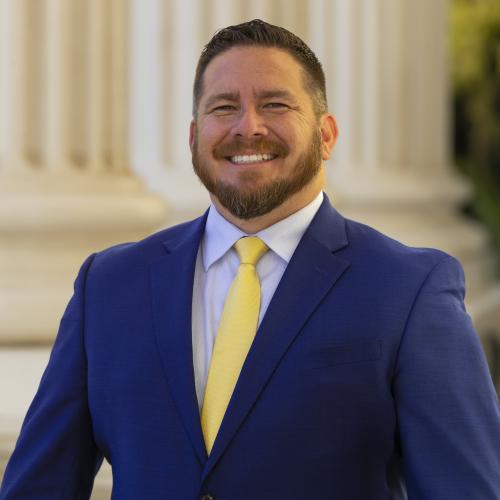
Asm. Juan Alanis
Sponsored bills
Existing law requires, upon an Indian tribe's request, the State Department of Social Services to enter into an agreement with a tribe, consortium of tribes, or tribal organization regarding the care and custody of Indian children and jurisdiction over Indian child custody proceedings, and requires the department to negotiate in good faith with the Indian tribe, organization, or consortium in the state that requests development of an agreement with the state to administer all or part of the programs under Title IV-E of the Social Security Act on behalf of the Indian children who are under the authority of the tribe, organization, or consortium. Existing law makes an Indian tribe, tribal organization, or tribal consortium that is a party to an agreement eligible to receive allocations of child welfare services funds, in accordance with the agreement. Existing federal law, the Family First Prevention Services Act of 2018, among other things, provides states with an option to use federal funds under Title IV of the federal Social Security Act to provide mental health and substance abuse prevention and treatment services and in-home parent skill-based programs to a child who is a candidate for foster care or a child in foster care who is a pregnant or parenting foster youth, as specified. Existing law establishes the Family First Prevention Services program, and requires the department to have oversight of the program. Existing law authorizes a county or Indian tribe, consortium of tribes, or tribal organization that has entered into the above-described agreement with the state that elects to provide prevention services to provide those services for certain individuals for a certain period. This bill would provide that agreements between the department and a tribe, consortium of tribes, or tribal organization regarding the care and custody of Indian children and jurisdiction over Indian child custody proceedings include agreements that prevent entry into foster care, and would authorize such an agreement to be made for the sole purpose of the administration of prevention programs under the Family First Prevention Services program. The bill would also, subject to an appropriation for these purposes, require the department to provide funding to tribes, tribal organizations, or tribal consortiums to support the cost of independent legal representation provided by an attorney for a child and the child's parent, guardian, and Indian custodian pursuant to an agreement under the above-described provisions. The bill would require the department, by March 31, 2026, and in consultation with Indian tribes, to develop a cost allocation plan to allow specified funds to support the costs of independent legal representation.
Existing law, the California Farmland Conservancy Program Act, establishes within the Department of Conservation the California Farmland Conservancy Program. Existing law authorizes the program to offer financial assistance, including grants or contracts, for projects and activities on agricultural lands, as defined, that support agricultural conservation and sustainable land management. This bill would require the department, in collaboration with the California Agricultural Land Equity Task Force, to establish the Farmland Access and Conservation for Thriving Communities Program in the department to provide financial and technical assistance to support agricultural land acquisition and protection. The bill would require the department, subject to specified requirements, to provide financial assistance under the program to qualified entities for the purpose of acquiring agricultural lands to transfer or provide long-term leases to qualified farmer participants, as specified. The bill would establish the Farmland Access Fund in the State Treasury and would make moneys in the fund available, upon appropriation by the Legislature, to the department for program expenditures. The bill would authorize the department to contract with one or more nonprofit organizations to administer the program. The bill would make the operation of the program contingent upon the Legislature making an appropriation for purposes of the program.
Existing law establishes the Commission on Peace Officer Standards and Training within the Department of Justice and requires the commission to, among other things, develop and disseminate guidelines for all peace officers in California. This bill would require, on or before July 1, 2028, the commission to study and issue recommendations to the Legislature on the use of canines by law enforcement. The bill would require the commission to consider in its recommendations, among other things, instances of appropriate patrol use with a canine, as specified, and instances of appropriate use with a canine for detection, as specified. The bill would repeal these provisions on July 1, 2031.
Maddy summaryThis bill establishes January as National Human Trafficking Awareness Month in California to raise public awareness about human trafficking. The resolution recognizes the severity of human trafficking as a felony crime and highlights statistics showing its prevalence across the country and specific challenges with identifying male victims and labor trafficking cases. It aims to educate the public and encourage reporting and support for victims during this designated month.
Existing law generally provides protections for minors on the internet, including the California Age-Appropriate Design Code Act that, among other things, requires a business that provides an online service, product, or feature likely to be accessed by children to do certain things, including estimate the age of child users with a reasonable level of certainty appropriate to the risks that arise from the data management practices of the business or apply the privacy and data protections afforded to children to all consumers and prohibits an online service, product, or feature from, among other things, using dark patterns to lead or encourage children to provide personal information beyond what is reasonably expected to provide that online service, product, or feature or to forego privacy protections. This bill, beginning January 1, 2027, would require, among other things related to age verification with respect to software applications, an operating system provider, as defined, to provide an accessible interface at account setup that requires an account holder, as defined, to indicate the birth date, age, or both, of the user of that device for the purpose of providing a signal regarding the user's age bracket to applications available in a covered application store and to provide a developer, as defined, who has requested a signal with respect to a particular user with a digital signal via a reasonably consistent real-time application programming interface regarding whether a user is in any of several age brackets, as prescribed. The bill would require a developer to request a signal with respect to a particular user from an operating system provider or a covered application store when the application is downloaded and launched. This bill would prohibit an operating system provider or a covered application store from using data collected from a third party in an anticompetitive manner, as specified. This bill would punish noncompliance with a civil penalty to be enforced by the Attorney General, as prescribed. This bill would declare its provisions to be severable.
Existing law, the Sex Offender Registration Act (act) , requires a person convicted of specified crimes to register with law enforcement as a sex offender while residing in California or while attending school or working in California, as specified. Existing law establishes 3 tiers of registration based on specified criteria, for periods of at least 10 years, at least 20 years, and life, respectively, for a conviction of specified sex offenses. Existing law exempts from mandatory registration under the act a person convicted of certain offenses involving minors if the person is not more than 10 years older than the minor and if that offense is the only one requiring the person to register. A willful failure to register, as required by the act, is a misdemeanor or felony, depending on the underlying offense. This bill would require offenders convicted of engaging in an act of unlawful sexual intercourse with a minor who is more than 3 years younger than the offender or, if the offender was 21 years of age or older, engaging in an act of unlawful sexual intercourse with a minor who is under 16 years of age, if the offense occurred on or after January 1, 2026, to register for 10 years as a tier one offender under the act, unless the offender was not more than 10 years older than the minor and if that offense is the only one requiring the offender to register. By expanding the scope of a crime, this bill would impose a state-mandated local program. The California Constitution requires the state to reimburse local agencies and school districts for certain costs mandated by the state. Statutory provisions establish procedures for making that reimbursement. This bill would provide that no reimbursement is required by this act for a specified reason.
Existing law, commencing January 1, 2019, made various changes to the law governing ignition interlock devices (IID) , including, among other things, requiring a person who has been convicted of driving a motor vehicle under the influence of an alcoholic beverage, as specified, to install for a specified period of time as ordered by the court, an IID on the vehicle they operate, provided however that installation of an IID is discretionary for a first offender, as specified; authorizing a person convicted of driving a motor vehicle under the influence, if all other requirements are satisfied, including the installation of an IID, to apply for a restricted driver's license without completing a period of license suspension or revocation; and requiring ignition interlock device manufacturers to be in compliance with specified provisions relating to payment for the costs of an ignition interlock device. Existing law makes these changes operative until January 1, 2026. On January 1, 2026, existing law, as it relates to these provisions, is generally reinstated to read as it read prior to January 1, 2019. Existing law makes it a crime to violate certain provisions relating to IIDs and motor vehicles equipped with IIDs. This bill would extend the operation of these provisions until January 1, 2033, and would instead reinstate the law to how it read prior to January 1, 2019, on January 1, 2033. By extending the application of a crime, the bill would impose a state-mandated local program. The California Constitution requires the state to reimburse local agencies and school districts for certain costs mandated by the state. Statutory provisions establish procedures for making that reimbursement. This bill would provide that no reimbursement is required by this act for a specified reason.
Existing law requires the governing board of each school district to fix the length of the schoolday for grades and classes of the schools maintained by the school district, subject to certain conditions and requirements. Under existing law, in continuation high schools and continuation education classes, a day of attendance is 180 minutes of attendance and a pupil is prohibited from being credited with more than 15 hours of attendance per school week, proportionately reduced for those school weeks having weekday holidays on which classes are not held. This bill would authorize the governing board of a school district that maintains a continuation high school or continuation education classes to offer youth workforce development programs, as defined, to pupils on one or 2 weekdays per school week if it ensures that those pupils are otherwise enrolled in at least 15 hours of class attendance per school week. The bill would require a school district that implements a youth workforce development program for these purposes to establish procedures to track pupil attendance and pupil participation while engaging in a youth workforce development program.
Existing law grants to a depicted individual a cause of action against a person who creates and intentionally discloses sexually explicit material if the person knows, or reasonably should have known, that the depicted individual in that material did not consent to its creation or disclosure or who intentionally discloses sexually explicit material that the person did not create if the person knows the depicted individual in that material did not consent to the creation of the sexually explicit material. Existing law defines "sexually explicit material" for purposes of that provision to mean any portion of an audiovisual work that shows the depicted individual performing in the nude or appearing to engage in, or being subjected to, sexual conduct and defines "depicted individual" to mean an individual who appears, as a result of digitization, to be giving a performance the individual did not actually perform or to be performing in an altered depiction. Existing law authorizes a plaintiff to recover, among other relief, statutory damages of not less than $1,500 but not more than $30,000, or $150,000 for a malicious violation, as prescribed. This bill would revise and recast the provision described above to additionally grant to a depicted individual a cause of action against a person who knows, or reasonably should know, that the depicted individual was a minor when the digitized sexually explicit material was created and would additionally grant a cause of action to that depicted individual against a person who knowingly facilitates or recklessly aids or abets conduct prohibited by that provision. The bill would define "digitized sexually explicit material" to mean any portion of a visual or audiovisual work created or substantially altered through digitization, including an image, that shows the depicted individual in the nude or appearing to engage in, or being subjected to, sexual conduct. This bill would make a person that provides a service that enables the ongoing operation of a deepfake pornography service presumed to be engaged in knowing facilitation or reckless aiding or abetting, as described above, if a depicted individual or public prosecutor provides the person with evidence sufficient to demonstrate that the person is providing services that enable the ongoing operation of a deepfake pornography service that engages in conduct described in the provisions described above, and the person fails to take all necessary steps to stop providing services that enable the ongoing operation of a deepfake pornography service within 30 days of receiving that evidence, as specified. This bill would increase the maximum statutory damages available to a depicted individual to $50,000 if the violation was not malicious and $250,000 for a malicious violation and would authorize certain public attorneys to bring a civil action to enforce these provisions, as specified.