

Existing law establishes the State Department of Public Health and sets forth its powers and duties pertaining to, among other things, protecting, preserving, and advancing public health. Existing law requires the department, in consultation with specified stakeholders, to develop a plan, addressing specified issues, with recommendations and guidelines for counties to use in the case of a significant air quality event caused by wildfires or other sources. This bill, the Wildfire Smoke and Health Outcomes Data Act, would require the State Department of Public Health, in consultation with the Department of Forestry and Fire Protection and the Wildfire and Forest Resilience Task Force, to create, operate, and maintain a statewide integrated wildfire smoke and health data platform on or before July 1, 2028, that, among other things, would integrate wildfire smoke and health data from multiple databases. Under the bill, the purposes for the data platform would include providing adequate information to understand the negative health impacts on California's population caused by wildfire smoke and evaluating the effectiveness of investments in forest health and wildfire mitigation on health outcomes in California. This bill would require the State Department of Public Health, in consultation with the Department of Forestry and Fire Protection and the Wildfire and Forest Resilience Task Force, to develop, among other things, protocols for data sharing, documentation, quality control, and promotion of open-source platforms and decision support tools related to wildfire smoke and health data. This bill would authorize the State Department of Public Health, the Department of Forestry and Fire Protection, and the Wildfire and Forest Resilience Task Force, where appropriate, to utilize data from existing sources, including open source data and other external data, for purposes of implementing the act. This bill would create the Wildfire Smoke and Health Administration Fund. Under the bill, moneys in the fund would be available, upon appropriation by the Legislature, to the State Department of Public Health, the Department of Forestry and Fire Protection, and the Wildfire and Forest Resilience Task Force for the collection, management, and improvement of wildfire smoke and health data for the purposes of the act. The bill would specify that these provisions do not change existing law with respect to the jurisdiction of the public entities involved. The bill would make related findings and declarations.
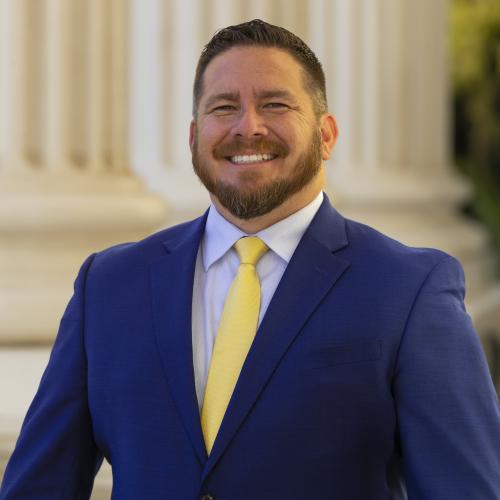
Asm. Juan Alanis
Sponsored bills
Existing law requires a pupil to complete designated coursework while in grades 9 to 12, inclusive, in order to receive a diploma of graduation from high school. The coursework requirements include, among others, the completion of one course in visual or performing arts, foreign language, or career technical education. Existing law eliminates the authorization for career technical education to count toward that graduation requirement on July 1, 2027, or upon the occurrence of a specified event relating to career technical education requirements of the University of California and the California State University, whichever occurs earlier, as specified. This bill, subject to an appropriation by the Legislature for this purpose, would delete the above-described authorization and instead would indefinitely require, commencing with pupils graduating in the 2031–32 school year, the completion of a separate, stand-alone one-semester course in career technical education, that is prohibited from being combined with any other course, as a high school graduation requirement. The bill, subject to an appropriation by the Legislature for this purpose, would require school districts, county offices of education, and charter schools with pupil in grades 9 to 12, inclusive, to, commencing with the 2028–29 school year, offer a separate, stand-alone one-semester course in career technical education, that is prohibited from being combined with any other course. To the extent that the bill imposes new duties on school districts, county offices of education, and charter schools, the bill would impose a state-mandated local program. The California Constitution requires the state to reimburse local agencies and school districts for certain costs mandated by the state. Statutory provisions establish procedures for making that reimbursement. This bill would provide that, if the Commission on State Mandates determines that the bill contains costs mandated by the state, reimbursement for those costs shall be made pursuant to the statutory provisions noted above.
The Personal Income Tax Law, in conformity with federal income tax law, generally defines "gross income" as income from whatever source derived, except as specifically excluded, and provides various exclusions from gross income. Existing law, known as the Golden State Scholarshare Trust Act, establishes the Golden State Scholarshare College Savings Trust (Scholarshare trust) , under the administration of the Scholarshare Investment Board, to provide financial aid for postsecondary education costs of participating students. Existing state and federal law generally includes in gross income distributions from a qualified tuition program, as defined to include the Scholarshare trust, except as provided. Existing federal law, the Consolidated Appropriations Act, 2023, excludes from gross income, for federal income tax purposes, distributions from a qualified tuition program that are made after December 31, 2023, and are paid in a direct trustee-to-trustee transfer to a Roth IRA, as described. This bill would exempt from gross income distribution made from a long-term qualified tuition program during the taxable years beginning on or after January 1, 2025, and before January 1, 2030, that are paid in a direct trustee-to-trustee transfer to a Roth IRA, and would conform state tax law to those changes relating to federal law, as described above. Existing law requires a bill authorizing a new tax expenditure to contain, among other things, specific goals, purposes, and objectives the tax expenditure will achieve, detailed performance indicators, and data collection requirements. This bill would include additional information required for any bill authorizing a new tax expenditure. This bill would take effect immediately as a tax levy.
(1) Existing property tax law, pursuant to authority granted by the California Constitution, provides for a homeowners' exemption in the amount of $7,000 of the full value of a "dwelling," as defined, and authorizes the Legislature to increase this exemption. This bill, beginning with the lien date for the 2026–27 fiscal year, would increase the homeowners' exemption, for certain homeowners, from $7,000 to $50,000 of the full value of a dwelling. By imposing additional duties on local tax officials, the bill would impose a state-mandated local program. (2) The California Constitution requires the Legislature, whenever it increases the homeowners' property tax exemption, to provide a comparable increase in benefits to qualified renters. The Personal Income Tax Law authorizes various credits against the taxes imposed by that law, including a credit for qualified renters in the amount of $120 for spouses filing joint returns, heads of household, and surviving spouses if adjusted gross income is $50,000 or less, and in the amount of $60 for other individuals if adjusted gross income is $25,000 or less. Existing law requires the Franchise Tax Board to annually adjust for inflation these adjusted gross income amounts. This bill, for taxable years beginning on and after January 1, 2026, would increase this credit for a qualified renter to $550 for spouses filing joint returns, heads of household, and surviving spouses, as specified, if adjusted gross income is $50,000 or less, as adjusted for inflation, and to an amount equal to $275 for other individuals, as specified, if adjusted gross income is $25,000 or less, as adjusted for inflation. (3) Existing law requires any bill authorizing a new tax expenditure to contain, among other things, specific goals that the tax expenditure will achieve, detailed performance indicators, and data collection requirements. This bill would include additional information required for any bill authorizing a new tax expenditure. (4) The California Constitution requires the state to reimburse local agencies and school districts for certain costs mandated by the state. Statutory provisions establish procedures for making that reimbursement. This bill would provide that, if the Commission on State Mandates determines that the bill contains costs mandated by the state, reimbursement for those costs shall be made pursuant to the statutory provisions noted above. (5) Existing law requires the state to reimburse local agencies annually for certain property tax revenues lost as a result of any exemption or classification of property for purposes of ad valorem property taxation. This bill would provide that, notwithstanding those provisions, no appropriation is made and the state shall not reimburse local agencies for property tax revenues lost by them pursuant to the bill. (6) This bill would take effect immediately as a tax levy.
The Personal Income Tax Law and the Corporation Tax Law allow various credits against the taxes imposed by those laws. This bill, for taxable years beginning on or after January 1, 2025, and before January 1, 2030, would allow a credit against those taxes to a qualified taxpayer, as defined, for retail theft prevention measures, as specified. The bill would limit the credit allowed to a taxpayer to no more than $10,000 per taxable year. Existing law requires any bill authorizing a new tax expenditure to contain, among other things, specific goals, purposes, and objectives that the tax expenditure will achieve, detailed performance indicators, and data collection requirements. This bill also would include additional information required for any bill authorizing a new tax expenditure. This bill would take effect immediately as a tax levy.
The Personal Income Tax Law and the Corporation Tax Law, in conformity with federal income tax law, generally defines gross income as income from whatever source derived, except as specifically excluded, and provides various exclusions from gross income. This bill, for taxable years beginning on or after January 1, 2025, and before January 1, 2030, would provide an exclusion from gross income for amounts received from a settlement entity, as defined, by a qualified taxpayer, as defined, to replace property that is located in a city or county in this state and that was damaged or destroyed by a disaster or accidental or human-caused event for which a state of emergency or local emergency, as defined, was proclaimed. Existing law requires a bill authorizing a new tax expenditure to contain, among other things, specific goals, purposes, and objectives the tax expenditure will achieve, detailed performance indicators, and data collection requirements. This bill would include additional information required for any bill authorizing a new tax expenditure. This bill would take effect immediately as a tax levy.
The Personal Income Tax Law allows various credits against the tax imposed by that law. Existing law requires any bill authorizing a new tax credit to contain, among other things, specific goals, purposes, and objectives that the tax credit will achieve, detailed performance indicators, and data collection requirements. This bill would allow credits against the tax imposed by the Personal Income Tax Law for each taxable year beginning on or after January 1, 2026, and before January 1, 2031, to a qualified taxpayer for qualified costs relating to qualified home hardening, as defined, and for qualified costs relating to qualified vegetation management, as defined, in specified amounts, not to exceed an aggregate amount of $50,000,000 per taxable year. This bill would require a qualified taxpayer to reserve a credit for qualified costs relating to qualified home hardening or qualified vegetation management to be eligible for the above-described credits and provide all necessary information for this purpose, as specified. This bill also would include additional information required for any bill authorizing a new income tax credit and would require the Legislative Analyst's Office to prepare a written report regarding the credits, as provided. This bill would take effect immediately as a tax levy.
The Personal Income Tax Law, in conformity with federal income tax laws, defines "gross income" as income from whatever source derived, except as specifically excluded, and provides various exclusions from gross income, including an exclusion for combat-related special compensation. This bill, for taxable years beginning on or after January 1, 2025, and before January 1, 2035, would exclude from gross income retirement pay received by a qualified taxpayer, as defined, during the taxable year, not to exceed $20,000, from the federal government for service performed in the uniformed services, as defined. The bill, for taxable years beginning on or after January 1, 2025, and before January 1, 2035, would also exclude from gross income annuity payments received by a qualified taxpayer, as defined, during the taxable year, not to exceed $20,000, pursuant to a United States Department of Defense Survivor Benefit Plan. The bill would make related findings and declarations. Existing law requires any bill authorizing a new tax expenditure to contain, among other things, specific goals, purposes, and objectives that the tax expenditure will achieve, detailed performance indicators, and data collection requirements. This bill also would include additional information required for any bill authorizing a new tax expenditure. This bill would take effect immediately as a tax levy.
The California Constitution provides that all property is taxable, and requires that it be assessed at the same percentage of fair market value, unless otherwise provided by the California Constitution or federal law. The California Constitution and existing property tax law provide various exemptions from taxation, including, among others, a disabled veterans' exemption and a veterans' organization exemption. This bill would exempt from taxation, property owned by, and that constitutes the principal place of residence of, a veteran, the veteran's spouse, or the veteran and the veteran's spouse jointly, if the veteran is 100% disabled. The bill would provide an unmarried surviving spouse a property exemption in the same amount that they would have been entitled to if the veteran was alive and if certain conditions are met. The bill would require certain documentation to be provided to the county assessor to receive the exemption and would prohibit any other real property tax exemption from being granted to the claimant if receiving the exemption provided by the provisions of this bill. The bill would make these exemptions applicable for property tax lien dates occurring on or after January 1, 2025, but occurring before January 1, 2035. By imposing additional duties on local tax officials, the bill would impose a state-mandated local program. Existing law requires any bill authorizing a new tax expenditure to contain, among other things, specific goals, purposes, and objectives that the tax expenditure will achieve, detailed performance indicators, and data collection requirements. This bill would state that it is the intent of the Legislature to apply those requirements to the bill and would set forth specified information relating to those requirements. The California Constitution requires the state to reimburse local agencies and school districts for certain costs mandated by the state. Statutory provisions establish procedures for making that reimbursement. This bill would provide that, if the Commission on State Mandates determines that the bill contains costs mandated by the state, reimbursement for those costs shall be made pursuant to the statutory provisions noted above. Existing law requires the state to reimburse local agencies annually for certain property tax revenues lost as a result of any exemption or classification of property for purposes of ad valorem property taxation. This bill would provide that, notwithstanding those provisions, no appropriation is made and the state shall not reimburse local agencies for property tax revenues lost by them pursuant to the bill. This bill would take effect immediately as a tax levy.
Maddy summarySCR 103 designates the week of July 20-26, 2025, as "Probation Services Week" in California. This concurrent resolution recognizes the work of probation services professionals across the state. It is a symbolic observance with no new laws, regulations, or direct impact on individuals or policies. The bill does not alter existing statutes or create obligations for any entity.