

The Personal Income Tax Law imposes taxes on taxable income, as provided. Under existing law, every employer who pays wages to a resident employee for services performed either within or without this state, or to a nonresident employee for services performed in this state, is required to deduct and withhold from those wages, except as provided, for each payroll, a tax computed in an amount substantially equivalent to the amount reasonably estimated to be due under the Personal Income Tax Law. Under existing law, every employer required to withhold those taxes is required to, for each calendar quarter, file a withholding report, a quarterly return, and a report of wages in a form prescribed by the Employment Development Department, and pay over the taxes required to be withheld. This bill would authorize an employer to claim a credit in an amount equal to the amount of overtime wages, as defined, paid during that quarter to specified agricultural employees covered by a certain wage order. The bill would require the credit to be claimed on the employer's report of contributions, quarterly return, and report of wages, or in an electronic funds transfer, as specified. The bill would prohibit the total amount claimed in any given quarter from exceeding the amount that would have been remitted for that quarter to the Employment Development Department for employee withholdings.
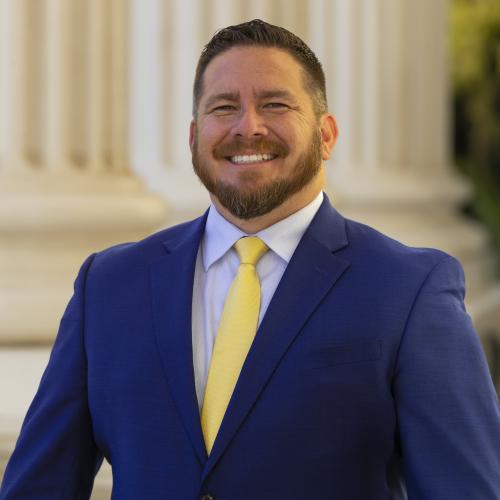
Asm. Juan Alanis
Sponsored bills
Existing law provides that an emergency regulation adopted by the State Water Resources Control Board following a Governor's proclamation of a state of emergency based on drought conditions, for which the board makes specified findings, may remain in effect for up to one year, as provided, and may be renewed if the board determines that specified conditions relating to precipitation are still in effect. This bill would require the board, within 180 days following a finding by the board that a nonfee emergency regulation is no longer necessary, as provided, to conduct a comprehensive economic study assessing the impacts of the regulation, as specified. The bill would require the board to make the study publicly available on its internet website no later than 30 days after completion.
Existing law, the Cigarette and Tobacco Products Licensing Act of 2003, requires the California Department of Tax and Fee Administration to issue a license to a retailer to engage in the sale of cigarettes or tobacco products upon receipt of a completed application and payment of certain fees unless any of certain exceptions apply. Existing law subjects licenses issued by the act to suspension or revocation for specified violations. Existing law prohibits a person from dispensing or distributing nitrous oxide to a person if the distributor knows or should know that the person is going to use the nitrous oxide for certain unlawful purposes and that person proximately causes great bodily injury or death to that person or another person. Existing law also requires a person who dispenses or distributes nitrous oxide to record each transaction involving the dispensing or distribution of nitrous oxide in a written or electronic document, as specified. Existing law makes a violation of either of these provisions a misdemeanor. This bill would require a court to order the suspension, for up to one year, of the business license of a person who knowingly violates either of those provisions after having been previously convicted of a violation of the respective provision, except as specified. This bill would specify violations subjecting licenses to suspension or revocation include, among others, the crimes above, as specified. The bill would exempt from the license issuance requirement the issuance of a license to a retailer who has been convicted of specified crimes relating to the distribution of nitrous oxide, including the misdemeanors described above.
Existing law requires the State Air Resources Board to adopt and implement motor vehicle emission standards, in-use performance standards, and motor vehicle fuel specifications for the control of air contaminants and sources of air pollution that the state board has found necessary, cost effective, and technologically feasible. The California Global Warming Solutions Act of 2006 establishes the state board as the state agency responsible for monitoring and regulating sources emitting greenhouse gases and requires the state board to adopt rules and regulations to achieve the maximum technologically feasible and cost-effective greenhouse gas emission reductions from those sources. Pursuant to its authority, the state board has adopted the Advanced Clean Fleets Regulation, which imposes various requirements for transitioning local, state, and federal government fleets of medium- and heavy-duty trucks, other high-priority fleets of medium- and heavy-duty trucks, and drayage trucks to zero-emission vehicles. The Advanced Clean Fleets Regulation authorizes entities subject to the regulation to apply for exemptions from its requirements under certain circumstances. This bill would require the state board to establish the Advanced Clean Fleets Regulation Appeals Advisory Committee by an unspecified date for purposes of reviewing appeals of denied requests for exemptions from the requirements of the Advanced Clean Fleets Regulation. The bill would require the committee to include representatives of specified governmental and nongovernmental entities. The bill would require the committee to meet monthly and would require recordings of its meetings to be made publicly available on the state board's internet website. The bill would require the committee to consider, and make a recommendation on, an appeal of an exemption request denial no later than 60 days after the appeal is made. The bill would require specified information relating to the committee's consideration of an appeal to be made publicly available on the state board's internet website. The bill would require the state board to consider a recommendation of the committee at a public meeting no later than 60 days after the recommendation is made. This bill would exempt from the Advanced Clean Fleets Regulation or any similar regulation vehicles reasonably anticipated to respond to emergency situations, or that support those efforts. The bill would prohibit the state board from requiring a state or local government fleet owner to provide documentation showing an executed zero-emissions vehicle purchase agreement in order to count an internal combustion engine vehicle as a zero-emissions vehicle purchase for purposes of postponing a zero-emissions vehicle transition mandate in the Advanced Clean Fleets Regulation.
The California Environmental Quality Act (CEQA) requires a lead agency, as defined, to prepare, or cause to be prepared, and certify the completion of an environmental impact report on a project that it proposes to carry out or approve that may have a significant effect on the environment or to adopt a negative declaration if it finds that the project will not have that effect. CEQA also requires a lead agency to prepare a mitigated negative declaration for a project that may have a significant effect on the environment if revisions in the project would avoid or mitigate that effect and there is no substantial evidence that the project, as revised, would have a significant effect on the environment. Under existing law, the recommendation, continuous evaluation, and execution of statewide environmental goals, policies, and plans are included within the scope of the executive functions of the Governor. Existing law establishes the Office of Land Use and Climate Innovation in the Governor's office for the purpose of serving the Governor and the Governor's cabinet as staff for long-range planning and research and constituting the comprehensive state planning agency. This bill would require, on or before July 1, 2027, the Office of Land Use and Climate Innovation to consult with regional, local, state, and federal agencies to develop a technical advisory on thresholds of significance for greenhouse gas and noise pollution effects on the environment to assist local agencies. The bill would require the technical advisory to provide suggested thresholds of significance for all areas of the state, as specified, and would provide that lead agencies may elect to adopt these suggested thresholds of significance. The bill would also require the Office of Land Use and Climate Innovation to post the technical advisory on its internet website.
Existing law establishes the California State Library, which includes the California Research Bureau, under the control of an executive known as the "State Librarian." Existing law authorizes the California State Library to serve as the central reference and research library for the departments of state government and to, among other things, maintain adequate legislative reference and research library services for the Legislature. Existing law declares as legislative policy that all of the territory of the state shall be included within a community college district, except that territory located within a county where the county residents accounted for fewer than 350 units of average daily attendance in the state's community colleges during the preceding fiscal year, and that territory located within such a county may be included within a community college district pursuant to prescribed procedures. This bill instead would declare as legislative policy that all of the territory of the state shall be included within a community college district or otherwise provided with equivalent opportunities for residents to participate in both in-person and online community college programs and courses. This bill would require the California Research Bureau to conduct a study and prepare a report evaluating the provision of community college services and opportunities to residents of the underserved Counties of Amador, Alpine, Mariposa, Modoc, and Sierra that are not fully included within the territory of a community college district, and would require the report to include policy recommendations regarding how the state can ensure that residents of those 5 counties have opportunities to participate in both in-person and online community college programs and courses equivalent to those of similarly sized communities that are fully included within the territory of a community college district, as provided. To assist with and inform the development of the report and recommendations, the bill would require the California Research bureau to convene and consult a working group that includes specified voluntary representatives, and would authorize the bureau to request and receive information from specified entities. The bill would require the California Research bureau to submit the report and recommendations to the Assembly Committee on Higher Education, the Senate Committee on Education, and the Governor on or before December 31, 2027. The bill would repeal these provisions as of January 1, 2032. This bill would make legislative findings and declarations as to the necessity of a special statute for the Counties of Amador, Alpine, Mariposa, Modoc, and Sierra.
Existing law establishes the University of California, administered by the Regents of the University of California, the California State University, administered by the Trustees of the California State University, and the California Community Colleges, administered by the Board of Governors of the California Community Colleges, as the 3 segments of public postsecondary education in the state. The Donahoe Higher Education Act prohibits the campuses of those segments from charging mandatory systemwide tuition or fees to specified students who apply for a waiver, including a child of any veteran of the United States military who has a service-connected disability, has been killed in service, or has died of a service-connected disability, an undergraduate student who is a recipient of a Medal of Honor, or an undergraduate student who is a child of a recipient of a Medal of Honor and who is no more than 27 years old, if certain requirements are satisfied. This bill would additionally prohibit the campuses of the 3 segments of public postsecondary education from charging those students any mandatory campus-based fees, as provided. To the extent the bill would add additional duties on community college districts, the bill would impose a state-mandated local program. The bill would apply to the campuses of the University of California only to the extent that the regents, by appropriate resolution, make it apply. The California Constitution requires the state to reimburse local agencies and school districts for certain costs mandated by the state. Statutory provisions establish procedures for making that reimbursement. This bill would provide that, if the Commission on State Mandates determines that the bill contains costs mandated by the state, reimbursement for those costs shall be made pursuant to the statutory provisions noted above.
Existing law establishes the Elderly Parole Program for the purpose of reviewing the parole suitability of inmates who are 50 years of age or older and who have served a minimum of 20 years of continuous incarceration on their sentence. Existing law requires the Board of Parole Hearings, when considering the release of qualifying inmates, to give special consideration to whether certain criteria have reduced the elderly inmate's risk for future violence. Existing law excludes various persons from these provisions, including persons sentenced pursuant to existing sentencing provisions commonly known as the three strikes law. Under an existing court order, although statutorily excluded, an individual may be eligible for parole under the Elderly Parole Program when they are 60 years of age or older and have been continuously incarcerated for at least 25 years. This bill would instead specify that persons required to register as sexual offenders, habitual sexual offenders, and persons convicted of various sexual offenses, including rape or sodomy, are not suitable for parole under the Elderly Parole Program until the person is 60 years of age or older and has served a minimum of 25 years of continuous incarceration on their current sentence.
The California Environmental Quality Act (CEQA) requires a lead agency, as defined, to prepare, or cause to be prepared, and certify the completion of an environmental impact report on a project that it proposes to carry out or approve that may have a significant effect on the environment or to adopt a negative declaration if it finds that the project will not have that effect. CEQA also requires a lead agency to prepare a mitigated negative declaration for a project that may have a significant effect on the environment if revisions in the project would avoid or mitigate that effect and there is no substantial evidence that the project, as revised, would have a significant effect on the environment. CEQA requires the Office of Land Use and Climate Innovation, formerly named the Office of Planning and Research, to prepare and develop, and the Secretary of the Natural Resources Agency to certify and adopt, guidelines for the implementation of CEQA. The CEQA guidelines require a lead agency, immediately after deciding that an environmental impact report is required for a project, to send a notice of preparation stating that an environmental impact report will be prepared to the office and each responsible and trustee agency, as specified. This bill would require the office to conduct a study to, among other things, evaluate how locked-in guidelines could impact regulatory certainty for future project proponents, lead agencies, and stakeholders and assess how locked-in guidelines could affect the speed and efficiency of the environmental review process pursuant to CEQA. The bill would define "locked-in guidelines" as CEQA guidelines, that are in effect at the time of the first issuance of the notice of preparation for a project, that apply to the project throughout the course of the environmental review process pursuant to CEQA, regardless of changes in the guidelines that occur after the first issuance of the notice of preparation. The bill would require, on or before January 1, 2027, the office to submit a report to the Governor and the Legislature on the study. The bill would repeal these provisions on January 1, 2028.
The Safe Drinking Water, Wildfire Prevention, Drought Preparedness, and Clean Air Bond Act of 2024, approved by the voters as Proposition 4 at the November 5, 2024, statewide general election, authorized the issuance of bonds in the amount of $10,000,000,000 pursuant to the State General Obligation Bond Law to finance projects for safe drinking water, drought, flood, and water resilience, wildfire and forest resilience, coastal resilience, extreme heat mitigation, biodiversity and nature-based climate solutions, climate-smart, sustainable, and resilient farms, ranches, and working lands, park creation and outdoor access, and clean air programs. The act makes $135,000,000 available, upon appropriation by the Legislature, to the Office of Emergency Services for a wildfire mitigation grant program to provide, among other things, loans, direct assistance, and matching funds for projects that prevent wildfires, increase resilience, maintain existing wildfire risk reduction projects, reduce the risk of wildfires to communities, or increase home or community hardening. The act provides that eligible projects include, but are not limited to, grants to local agencies, state agencies, joint powers authorities, tribes, resource conservation districts, fire safe councils, and nonprofit organizations for structure hardening of critical community infrastructure, wildfire smoke mitigation, evacuation centers, including community clean air centers, structure hardening projects that reduce the risk of wildfire for entire neighborhoods and communities, water delivery system improvements for fire suppression purposes for communities in very high or high fire hazard areas, wildfire buffers, and incentives to remove structures that significantly increase hazard risk. This bill would include in the list of eligible projects grants to the above-mentioned entities for improvements to public evacuation routes in very high and high fire hazard severity zones, mobile rigid dip tanks, as defined, to support firefighting efforts, prepositioned mobile rigid water storage, as defined, and improvements to the response and effectiveness of fire engines and helicopters. The bill would also include grants, in coordination with the Public Utilities Commission, to local agencies, state agencies, special districts, joint powers authorities, tribes, and nonprofit organizations for backup electrical generators for water reservoirs.