

The California Control of Profits of Organized Crime Act provides the procedure for the forfeiture of property and proceeds acquired through a pattern of criminal profiteering activity. Under the act, "criminal profiteering activity" includes human trafficking, and a "pattern of criminal profiteering activity" means engaging in at least 2 incidents of criminal profiteering that meet specific requirements. Under existing law other the act, an interest in a vehicle, real property, or other thing of value that was put to substantial use for the purpose of facilitating the crime of human trafficking that involves a commercial sex act where the victim was less than 18 years of age at the time of the commission of the crime, may be seized and ordered forfeited by the court upon the conviction of a person guilty of human trafficking that involves a commercial sex act where the victim is an individual under 18 years of age. This bill would rename the act as the "California Control of Profits of Organized Crime and Human Trafficking Act" and recast its provisions to authorize the forfeiture of property and proceeds acquired through human trafficking without the requirement to establish a pattern of criminal profiteering activity. The bill would reallocate the proceeds of forfeiture related to human trafficking to the Victim-Witness Assistance Fund and the Board of State and Community Corrections, as specified. The bill would specify that the provisions of the act are prohibited from being deemed to modify the provisions for forfeiture applicable to an interest in property that was put to substantial use for the purpose of facilitating the crime of human trafficking that involves a commercial sex act where the victim was less than 18 years of age at the time of the commission.
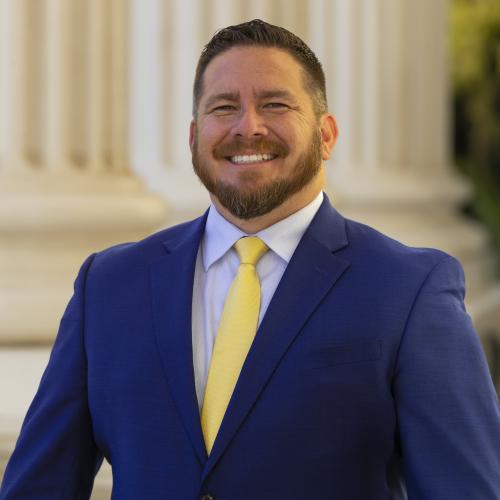
Asm. Juan Alanis
Sponsored bills
Existing law provides for the establishment of apprenticeship programs in various trades, to be approved by the Chief of the Division of Apprenticeship Standards within the Department of Industrial Relations in any trade in the state or in a city or trade area whenever the apprentice training needs justify the establishment. This bill would require the division, upon appropriation by the Legislature, to establish and administer a Quick Service Restaurant Young Workforce Apprenticeship Program to provide grants, reimbursements, or other funding to apprenticeship programs for the support of quick-service restaurant youth apprenticeship programs, as described. The Personal Income Tax Law and the Corporation Tax Law authorize various credits against the taxes imposed by those laws. This bill, for taxable years beginning on or after January 1, 2026, and before January 1, 2031, would allow a credit against those taxes in the amount of $1,000 for each registered apprentice employed for at least 6 months by a qualified taxpayer, as defined, not to exceed 100 registered apprentices per taxable year per qualified taxpayer. Existing law requires any bill authorizing a new tax expenditure to contain, among other things, specific goals, purposes, and objectives that the tax expenditure will achieve, detailed performance indicators, and data collection requirements. This bill also would include additional information required for any bill authorizing a new tax expenditure. The bill would require the Franchise Tax Board to provide information to the Division of Apprenticeship Standards to complete a report relating to the tax credit that would be established by the bill. The bill would make any information shared by the Franchise Tax Board subject to limitations relating to the sharing of taxpayer information, the violation of which is a crime. By expanding the scope of a crime, this bill would impose a state-mandated local program. The California Constitution requires the state to reimburse local agencies and school districts for certain costs mandated by the state. Statutory provisions establish procedures for making that reimbursement. This bill would provide that no reimbursement is required by this act for a specified reason.
Existing law defines the crime of burglary, which consists of entering specified buildings, places, or vehicles with the intent to commit grand or petty theft or a felony. Existing law defines burglary of the first degree as any burglary of an inhabited building and makes burglary of the first degree punishable by imprisonment in the state prison for 2, 4, or 6 years. Existing law defines all other burglary as burglary of the 2nd degree and makes it punishable by imprisonment in the county jail for one year or as a felony. Existing law defines any 2nd degree burglary during and within an affected county in a state of emergency or local emergency, as specified, as looting, punishable by either imprisonment in a county jail for one year or as a felony. This bill would make that crime punishable instead as a felony. By increasing the punishment of a crime, this bill would impose a state-mandated local program. The California Constitution requires the state to reimburse local agencies and school districts for certain costs mandated by the state. Statutory provisions establish procedures for making that reimbursement. This bill would provide that no reimbursement is required by this act for a specified reason.
Existing law, the California Emergency Services Act, authorizes the Governor to proclaim a state of emergency, as defined, under specified circumstances. Existing law makes it a misdemeanor to impersonate a peace officer or an officer or member of a fire department or the Office of the State Fire Marshal. This bill would make impersonating a peace officer or an officer or member of a fire department or the Office of the State Fire Marshal during a state of emergency or local emergency punishable as either a misdemeanor or a felony, as specified. By increasing the punishment of a crime, this bill would impose a state-mandated local program. The California Constitution requires the state to reimburse local agencies and school districts for certain costs mandated by the state. Statutory provisions establish procedures for making that reimbursement. This bill would provide that no reimbursement is required by this act for a specified reason.
Existing law authorizes the State Air Resources Board to designate public fire protection agencies or other equivalent agencies to issue permits, subject to the rules and regulations of the state board, for agricultural burning, which includes wildland vegetation management burning, as specified. This bill would revise those provisions to also require the state board to designate those agencies to oversee agricultural burning activities and to adopt rules and regulations to ensure those activities are conducted safely and effectively. The bill would exempt wildland vegetation management burning from the above-described permit requirement if that activity is conducted by, or under the supervision of, the applicable agency designated by the state board. The bill would require the state board to develop guidelines and best practices for wildland vegetation management burning to ensure public safety and environmental protection. By expanding the duties of local agencies, the bill would impose a state-mandated local program. The California Constitution requires the state to reimburse local agencies and school districts for certain costs mandated by the state. Statutory provisions establish procedures for making that reimbursement. This bill would provide that, if the Commission on State Mandates determines that the bill contains costs mandated by the state, reimbursement for those costs shall be made pursuant to the statutory provisions noted above.
The California Beverage Container Recycling and Litter Reduction Act, a violation of which is a crime, requires a distributor of beverage containers, as defined, to pay to the Department of Resources Recycling and Recovery a monthly redemption payment for every beverage container sold or transferred, as provided. The act requires the department to deposit those amounts into the California Beverage Container Recycling Fund. The fund is continuously appropriated to, among other things, pay refund values and administrative fees to processors that receive empty beverage containers from recyclers. Until January 1, 2028, the act continuously appropriates $60,000,000 annually from the fund to the department to make market development payments to glass beverage container manufacturers who purchase recycled glass collected within this state for use in manufacturing new beverage containers in this state. This bill would require the department, subject to the availability of funds, to pay a market development payment to a person who purchases a material produced from a by-product of glass recycling or processing that contains certain contaminants, cannot be remelted for use in glass beverage containers or fiberglass insulation, as specified, and that would otherwise be sent to a landfill or be used as low grade aggregate. The bill would, until January 1, 2030, authorize the department to expend up to $5,000,000 annually from the fund for these market development payments and up to $1,000,000 annually to facilitate the transportation of waste glass product by waste glass product end users. By authorizing new uses for continuously appropriated funds, this bill would make an appropriation.
Under existing law, the California Child Day Care Facilities Act, the State Department of Social Services licenses and regulates family daycare homes. Existing law requires the department to charge an applicant for licensure under the act an initial application fee and an annual license fee and authorizes a child daycare facility to use a bona fide business or personal check to pay the annual license fee. This bill would also authorize a child daycare facility to use a bona fide business or personal check to pay the initial application fee and, beginning January 1, 2028, require the department to accept credit card payments for initial application fees and license fees from child daycare facilities. The bill would also require the department, beginning no later than January 1, 2028, to accept initial applications for licensure electronically.
Existing law allows the court to issue a protective order restraining a defendant from any contact with the victim if the defendant has been convicted of a crime of domestic violence, human trafficking, a crime in furtherance of a criminal street gang, or a registerable sex offense. Under existing law, the protective order may be valid for up to 10 years, as determined by the court. This bill would additionally allow the court to issue a permanent protective order restraining a defendant from any contact with the victim if the defendant has been convicted of any serious or violent felony, as defined, or any felony requiring registration as a sex offender. The bill would also authorize the court to permanently extend certain previously issued orders under certain circumstances. The bill would require the Judicial Council to develop forms, instructions, and rules relating to these orders. The bill would make other conforming changes. By authorizing the issuance of protective orders in certain circumstances and the extension of certain protective orders, a violation of which is punishable as a crime, this bill would impose a state-mandated local program. The California Constitution requires the state to reimburse local agencies and school districts for certain costs mandated by the state. Statutory provisions establish procedures for making that reimbursement. This bill would provide that no reimbursement is required by this act for a specified reason.
The Personal Income Tax Law allows various credits against the taxes imposed by that law. This bill would allow a credit against those taxes for each taxable year beginning on or after January 1, 2025, and before January 1, 2030, to a qualified taxpayer, as defined, in an amount equal to 40% of the taxpayer's qualified expenses, as defined, not to exceed $400 per taxable year, or $2,000 cumulatively. Existing law requires any bill authorizing a new tax credit to contain, among other things, specific goals, purposes, and objectives that the tax credit will achieve, detailed performance indicators, and data collection requirements. The bill would also include additional information required for any bill authorizing a new tax expenditure. This bill would take effect immediately as a tax levy.
Existing law requires each state and local agency that employs peace officers to annually report to the Attorney General specified data on all stops conducted by that agency's peace officers for the preceding calendar year. Existing law defines "stop" for purposes of these provisions to mean any detention by a peace officer of a person or any peace officer interaction with a person in which the peace officer conducts a search of the person's body or property in the person's possession or control. Existing law requires the Attorney General to establish the Racial and Identity Profiling Advisory Board (RIPA) for the purpose of eliminating racial and identity profiling and improving diversity and racial and identity sensitivity in law enforcement. Existing law requires RIPA to include various members, including 2 representatives of human or civil rights tax-exempt organizations, 2 representatives of community organizations, and 2 religious clergy members, as specified. Existing law authorizes the Governor, President pro Tempore of the Senate, and Speaker of the Assembly to each prescribe up to 2 other members to membership of RIPA. This bill would require RIPA to include in its membership the president of the California District Attorneys Association, or their designee. Existing law requires RIPA to issue a report annually that provides RIPA's analysis of, among other things, the reported stop data described above. Existing law also requires the report to provide detailed findings on the past and current status of racial identity profiling and to make policy recommendations for eliminating racial and identity profiling, as specified. This bill would authorize any member of RIPA to cause a dissenting opinion to be included in the report, as specified. The bill would additionally authorize RIPA to include a response to a dissenting opinion in its report.