

Existing law, the Digital Equity Bill of Rights, provides that it is the principle of the state to ensure digital equity for all residents of the state, that, among other things, residents have access to broadband that meets specific requirements, and provides that it is the policy of the state that, to the extent technically feasible, broadband internet subscribers benefit from equal access to broadband internet service within the service area of a broadband provider. This bill, contingent upon funding for this purpose, would require a broadband internet service provider, on or before January 1, 2027, and annually thereafter, to submit to the Department of Consumer Affairs, or the Department of Broadband and Digital Equity if Assembly Bill 693 of the 2025–26 Regular Session is enacted, a report containing broadband internet access service pricing and speed data that includes, among other information, the advertised speeds offered to consumers and the advertised and total prices paid by consumers. The bill would require the department to publish an annual broadband internet access service affordability and speed report aggregating and analyzing the data submitted by the broadband internet service providers and would require the department to make the data submitted by broadband internet service providers available to the public, as specified. The bill would make a broadband internet service provider that fails to comply with these provisions subject to an administrative penalty not to exceed $1,000 per violation per day until compliance is achieved. This bill would require a broadband internet service provider to establish and maintain a dedicated consumer complaint resolution process that allows consumers to submit complaints via telephone, email, and an online portal, and would require a broadband internet service provider to respond to a complaint within 7 business days and provide a resolution, explanation, or corrective action within a specified timeframe. The bill would prescribe remedies for a consumer if a broadband internet service provider fails to resolve a complaint within the specified timeframe or refuses to act in good faith, including the issuance of a minimum credit of $50 for a complaint that remains unresolved beyond 60 days without valid justification. The bill would require a broadband internet service provider to disclose the complaint resolution process and remedies clearly and conspicuously in its terms of service, in its billing statements, and on its internet website. The bill would require a broadband internet service provider to report complaint statistics to the department, as specified. Existing constitutional provisions require that a statute that limits the right of access to the meetings of public bodies or the writings of public officials and agencies be adopted with findings demonstrating the interest protected by the limitation and the need for protecting that interest. This bill would make legislative findings to that effect.
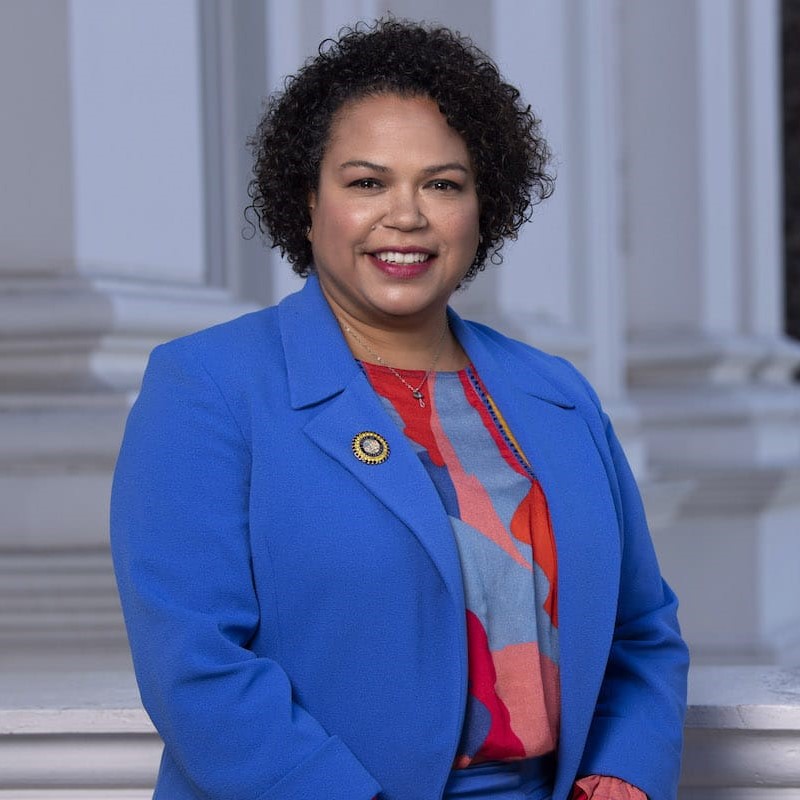
Asm. Mia Bonta
Sponsored bills
Existing law establishes a system of public elementary and secondary schools in this state and authorizes local educational agencies throughout the state to operate schools and provide instruction to pupils in kindergarten and grades 1 to 12, inclusive. Existing law authorizes local educational agencies to employ personnel to provide services in schools pursuant to that system. This bill would require the State Department of Education to, on or before July 1, 2027, develop an online cultural competency training delivery platform and online cultural competency training curriculum for school employees to support pupils of color. The bill would, commencing with the 2027–28 school year and ending with the completion of the 2031–32 school year, require a school district, county office of education, or charter school serving pupils in kindergarten or any of grades 1 to 12, inclusive, to annually provide that training to all school employees, unless an employee is exempt from the training or an employee provides proof of completion for a cultural competency training completed while employed at another local educational agency, as provided. The bill would also require local educational agencies to provide a proof of completion to school employees that complete the training and to ensure that all school employees complete the required training on paid time during the employees' regular work hours or designated professional development hours, as provided. By imposing additional duties on local educational agencies, this bill would impose a state-mandated local program. The bill would require the department to (1) monitor compliance with the training requirement as part of the department's annual compliance monitoring of state and federal programs, (2) report data, within 9 months of the completion of the 5-year training period, from that compliance monitoring to the Legislature, and (3) post the report on the department's internet website, as provided. The bill would make these provisions inoperative on July 1, 2033, and would repeal them as of January 1, 2034. The California Constitution requires the state to reimburse local agencies and school districts for certain costs mandated by the state. Statutory provisions establish procedures for making that reimbursement. This bill would provide that, if the Commission on State Mandates determines that the bill contains costs mandated by the state, reimbursement for those costs shall be made pursuant to the statutory provisions noted above.
Existing law establishes the Medi-Cal program, which is administered by the State Department of Health Care Services and under which qualified low-income individuals receive health care services. The Medi-Cal program is, in part, governed and funded by federal Medicaid program provisions. Under existing law, home- and community-based services (HCBS) approved by the United States Department of Health and Human Services are covered for eligible individuals to the extent that federal financial participation is available for those services under the state plan or waivers granted in accordance with certain federal provisions. Existing law authorizes the Director of Health Care Services to seek waivers for any or all approvable HCBS. Existing law sets forth provisions for the implementation of the Nursing Facility/Acute Hospital Transition and Diversion Waiver, which is the predecessor of the Home and Community-Based Alternatives (HCBA) Waiver, for purposes of providing care management services to individuals who are at risk of nursing facility or institutional placement. This bill would recast those provisions to refer to the HCBA Waiver. The bill would delete a provision authorizing the expansion of the number of waiver slots up to 5,000 additional slots, and would instead require the enrollment of all eligible individuals who apply for the HCBA Waiver. The bill would require the department, by March 1, 2026, to seek any necessary amendments to the waiver to ensure that there is sufficient capacity to enroll all eligible individuals who are currently on a waiting list for the waiver, as specified. The bill would require the department, by March 1, 2026, to submit a rate study to the appropriate fiscal and policy committees of the Legislature addressing the sustainability, quality, and transparency of rates for the HCBA Waiver. The bill would require that the study include an assessment of the effectiveness of the methods used to pay for services under the waiver, with consideration of certain factors. The bill would make related legislative findings.
Existing law authorizes the governing board of a school district that determines during a fiscal year that its revenues are less than the amount necessary to meet its current year expenditure obligations to request an emergency apportionment through the Superintendent of Public Instruction, subject to specified requirements. Existing law authorizes emergency apportionments to be provided through an interim loan from the General Fund and lease financing made available by the California Infrastructure and Economic Development Bank, which is authorized to issue bonds for purposes of the emergency apportionments and related costs, or as an alternative to lease financing, as an emergency apportionment from the General Fund. Existing law prescribes the financing conditions on emergency apportionments, including the calculation of the interest rate. Existing law, notwithstanding any other law, authorizes the Inglewood Unified School District, through the State Department of Education, to request cashflow loans from the General Fund for a total of up to $55,000,000 for emergency operational purposes, as provided. Existing law requires the interest on these loans to be charged at the annual rate of return of the Pooled Money Investment Account, plus an additional 2%. This bill, notwithstanding any other law, and once the Inglewood Unified School District has successfully repaid at least 10 years of a General Fund cashflow loan made pursuant to those provisions, would authorize the school district to seek, and would require the Department of Finance to grant, a waiver of interest on that loan for the next succeeding fiscal year if specified conditions are met, including, among other conditions, that the Los Angeles County Superintendent of Schools, in consultation with the County Office Fiscal Crisis and Management Assistance Team, determines that the school district is making substantial progress towards fiscal solvency and that a waiver of interest would help the school district to exit receivership, as provided. In each subsequent fiscal year, the bill would authorize the school district to seek, and would require the Department of Finance to grant, a subsequent waiver of interest for the applicable fiscal year if the school district again meets those same requirements. To the extent the bill would impose additional duties on the Los Angeles County Superintendent of Schools, the bill would impose a state-mandated local program. This bill would make legislative findings and declarations as to the necessity of a special statute for the Inglewood Unified School District. The California Constitution requires the state to reimburse local agencies and school districts for certain costs mandated by the state. Statutory provisions establish procedures for making that reimbursement. This bill would provide that, if the Commission on State Mandates determines that the bill contains costs mandated by the state, reimbursement for those costs shall be made pursuant to the statutory provisions noted above.
Existing law designates 8 agencies in state government and requires the secretary of an agency to be generally responsible for the sound fiscal management of each department, office, or other unit within the agency. Existing law further requires the secretary of an agency to, among other duties, continually seek to improve the organization structure, the operating policies, and the management information systems of each department, office, or other unit. This bill would establish the Immigrant and Refugee Affairs Agency as an agency within state government, to be headed by a secretary who is appointed by the Governor and subject to Senate confirmation. The bill would specify that the purpose of the agency is to enhance, and reduce obstacles to, immigrant and refugee inclusion into the social, cultural, economic, and civic life of the state. The bill would authorize the secretary to, among other things, assist other state agencies in evaluating their programs for accessibility and effectiveness in providing services to immigrants and refugees and recommending policy and budget mechanisms for meeting immigrant and refugee inclusion. This bill would establish the Office of Immigrant and Refugee Affairs within the agency, under the direction of the Statewide Director of Immigrant and Refugee Inclusion. The bill would declare the intent to incorporate existing and future programs created to assist immigrants and refugees into the office. The bill would transfer to the office the property of any other office, agency, or department that relates to functions concerning immigrant and refugee affairs. The bill would require every officer and employee who is performing a function at another office, agency, or department that is transferred to the Office of Immigrant and Refugee Affairs to also be transferred to the office, and would provide that every officer and employee who is serving in the state civil service who is transferred to the office shall retain their status, position, and rights, except as specified. The bill would create the Immigrant and Refugee Inclusion Fund within the State Treasury, and would make the moneys in the fund available to the office upon appropriation by the Legislature. The bill would transfer to the office any unencumbered balance of any appropriation or other funds that were available for use in connection with any function transferred to the office. This bill would limit interagency sharing of information, would prohibit sharing of personal information of immigrants and refugees outside of the agency, and would prohibit use of agency resources to directly or indirectly participate or assist in immigration enforcement activity. Existing law establishes the Statewide Director of Immigrant Integration and requires the director serve as the statewide lead for the planning and coordination of immigrant services and policies in California. Existing law requires, among other things, that the director develop a comprehensive statewide report on programs and services that serve immigrants, develop an online clearinghouse of immigrant services, resources, and programs, and monitor the implementation of statewide laws and regulations that serve immigrants. This bill would recast those provisions to rename the director as the Statewide Director of Immigrant and Refugee Inclusion and would require the director to, among other things, develop a mission statement, strategic plan, and matrix of success for the office, and to report to the Legislature biannually on successes and challenges in meeting immigrant and refugee inclusion goals. The bill would require the director, by January 1, 2027, to report to the Governor and the Legislature on programs and services that serve immigrants and refugees and on a statewide plan for better implementation and coordination of immigrant and refugee assistance policies and programs. The bill would repeal the bill's provisions on January 1, 2036. Existing constitutional provisions require that a statute that limits the right of access to the meetings of public bodies or the writings of public officials and agencies be adopted with findings demonstrating the interest protected by the limitation and the need for protecting that interest. This bill would make legislative findings to that effect.
The Personal Income Tax Law allows various credits against the taxes imposed by that law, including a young child tax credit to a qualified taxpayer in a specified amount multiplied by the earned income tax credit adjustment factor, as provided. That law also allows a payment from the continuously appropriated Tax Relief and Refund Account for an amount in excess of tax liability. Existing law defines "qualified taxpayer" for this purpose to include an eligible individual, as defined, who has a qualifying child, defined to be a child younger than 6 years of age as of the last day of the taxable year, and who meets other specified criteria. This bill, for taxable years beginning on or after January 1, 2025, would instead define a "qualifying child" to mean a child younger than a specified age as of the last day of the taxable year, as described. By increasing the payments from the Tax Relief and Refund Account, a continuously appropriated fund, the bill would make an appropriation. Existing law requires any bill authorizing a new tax expenditure to contain, among other things, specific goals that the tax expenditure will achieve, detailed performance indicators, and data collection requirements. This bill would include additional information required for any bill authorizing a new tax expenditure.
Existing law establishes, until January 1, 2030, the Racial Equity Commission within the Office of Planning and Research and requires the commission to develop resources, best practices, and tools for advancing racial equity by, among other things, developing a statewide Racial Equity Framework that includes methodologies and tools that can be employed to advance racial equity and address structural racism in California. Existing law, the California Fair Employment and Housing Act, establishes the Civil Rights Department and sets forth its powers and duties, including, among others, receiving, investigating, and prosecuting complaints alleging violations of civil rights, as specified. This bill would require the Civil Rights Department (department) , to, upon appropriation by the Legislature, review, investigate, and make certain determinations regarding applications from persons who claim they are the dispossessed owner, as defined, of property taken as a result of racially motivated eminent domain. The bill would define "racially motivated eminent domain" to mean when the state, county, city, city and county, district, or other political subdivision of the state acquires private property for public use and does not distribute just compensation to the owner at the time of the taking, and the taking, or the failure to provide just compensation, was due, in whole or in part, to the owner's ethnicity or race. Upon a determination that providing property or just compensation is warranted, as provided, the bill would require the department to certify that the dispossessed owner is entitled to the return of the taken property, as specified, or other publicly held property, as defined, of equal value, or financial compensation, as specified. Upon a determination that the dispossessed owner is entitled to other publicly held property of equal value, the bill would require the department to solicit and select, as specified, a list of recommendations of publicly held properties that are suitable as compensation, as provided. Upon a rejection of the determination of the department by the state or local agency that took property by racially motivated eminent domain, the bill would authorize the dispossessed owner, as specified, to bring an action to challenge the taking or the amount of compensation, as provided. Upon a determination that an applicant is not a dispossessed owner or issuing property or just compensation is not warranted, the bill would require the department to notify the applicant of its finding and provide an appeal process, as specified. The bill would require the department to prioritize processing applications for claims made by the individual or individuals who held legal title to the affected property at the time of its taking, as specified. The bill would make every finding, decision, determination, or other official act of the department subject to judicial review. Existing law generally prohibits state agencies from employing in-house counsel to act on behalf of the agency or its employees in specified judicial or administrative adjudicative proceedings, but exempts specified agencies from this provision. This bill would exempt the Civil Rights Department from that provision, as specified. This bill would make related findings and declarations, including those related to a gift of public funds.
Existing law defines murder as the unlawful killing of a human being, or a fetus, with malice aforethought. Existing law also defines manslaughter as the unlawful killing of a human being without malice, and establishes 3 kinds of manslaughter: voluntary, involuntary, and vehicular. This bill would require a law enforcement agency to review the casefile regarding an open unsolved homicide upon written application by certain persons to determine if a reinvestigation would result in probative investigative leads, as specified. The bill would define a homicide to include murder and manslaughter and an open unsolved homicide as a homicide committed after January 1, 1990, but no less than 3 years prior to the date of the application for case review, that was investigated by a law enforcement agency, for which all probative investigative leads have been exhausted and for which no suspect has been identified. If the review determines that a reinvestigation would result in probative investigative leads, this bill would require a reinvestigation, as specified. The bill would allow only one reinvestigation from being undertaken at any one time with respect to the same victim. By imposing new duties on local law enforcement agencies, this bill would impose a state-mandated local program. The California Constitution requires the state to reimburse local agencies and school districts for certain costs mandated by the state. Statutory provisions establish procedures for making that reimbursement. This bill would provide that, if the Commission on State Mandates determines that the bill contains costs mandated by the state, reimbursement for those costs shall be made pursuant to the statutory provisions noted above.
Existing law establishes the California Housing Finance Agency in the Department of Housing and Community Development, and authorizes the agency to, among other things, make loans to finance affordable housing, including residential structures, housing developments, multifamily rental housing, special needs housing, and other forms of housing, as specified. Existing law establishes the California Dream for All Program to provide shared appreciation loans to qualified first-time homebuyers, as specified. Existing law establishes in the State Treasury the California Dream for All Fund, which is continuously appropriated for expenditure pursuant to the program, as specified. This bill would require, upon establishment of the certification process for the descendants of American slavery established by the Bureau for Descendants of American Slavery, at least 10% of the moneys in the fund to be reserved for applicants who meet the requirements for a loan under the program and have been certified as descendants of formerly enslaved people, as specified. This bill would become operative only if SB 518 of the 2025–26 Regular Session is enacted and takes effect on or before January 1, 2027, and establishes the Bureau for Descendants for American Slavery.
The California Constitution prohibits the state from discriminating against, or granting preferential treatment to, any individual or group on the basis of race, sex, color, ethnicity, or national origin in the operation of public employment, public education, or public contracting. The Donahoe Higher Education Act sets forth, among other things, the missions and functions of California's public and independent segments of higher education and their respective institutions of higher education. A provision of the act applies to the University of California only to the extent that the Regents of the University of California, by appropriate resolution, act to make the provision applicable. This bill would state that the California State University, the University of California, independent institutions of higher education, and private postsecondary educational institutions may consider providing a preference in admissions to an applicant who is a descendant of slavery, as defined, to the extent it does not conflict with federal law.