

Existing law establishes the Department of Consumer Affairs, which is composed of specified boards that license and regulate various professions. Existing law requires those boards to expedite the licensure process for an applicant who holds a current license in another jurisdiction in the same profession or vocation and supplies evidence that they are married to or in a domestic partnership or other legal union with an active duty member of the Armed Forces of the United States who is assigned to a duty station in this state under official active duty military orders. This bill would require those boards to expedite applications for applicants seeking licensure who are descendants of American slaves once a process to certify descendants of American slaves is implemented, as specified. This bill would make these provisions operative only if SB 518 of the 2025–26 Regular Session is enacted establishing the Bureau for Descendants of American Slavery, and would make these provisions operative when the certification process is implemented pursuant to that measure. The bill would repeal these provisions 4 years from the date on which they become operative or on January 1, 2032, whichever is earlier.
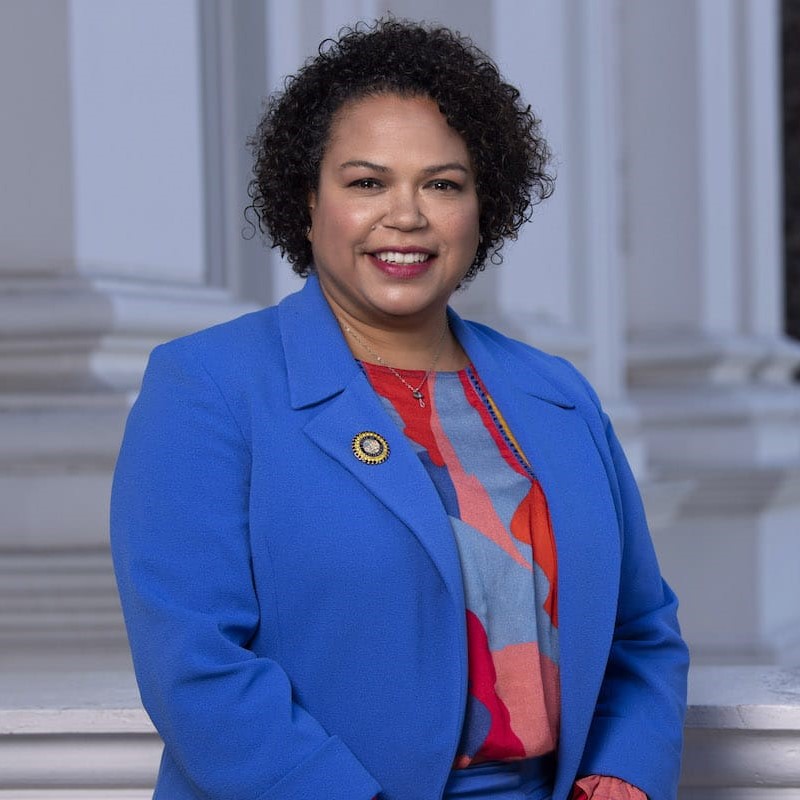
Asm. Mia Bonta
Sponsored bills
The State Government Strategic Planning and Performance and Review Act requires each agency, department, office, or commission for which strategic planning efforts are recommended, as specified, to develop a strategic plan and to report to the Governor and the Joint Legislative Budget Committee by April 1 each year on the steps being taken to develop and adopt a strategic plan. The act requires the report to include a description of the elements to be included in the strategic plan, the process for developing and adopting the strategic plan, and the timetable for the plan's completion. This bill would instead require each agency, department, office, or commission subject to the Governor's authority to develop and report on the above-described strategic plan. The bill would also require each agency, department, office, or commission subject to the Governor's authority to, for any strategic plans applicable and if feasible, develop or update the strategic plan to reflect the use of data analysis and inclusive practices to more effectively advance racial equity and to respond to identified disparities with changes to the organization's policies, programs, and operations, among other things.
Existing law establishes the Office of Small Business Advocate (OSBA) within the Governor's Office of Business and Economic Development, also known as GO-Biz, to advocate for causes of small business and to provide small businesses with the information they need to survive in the marketplace. This bill, upon appropriation by the Legislature, would require OSBA to allocate 90% of the moneys appropriated to the Small Business Recovery Fund, which would be created within the State Treasury, for purposes of a small business recovery grant program to provide competitive grants to small businesses, as defined, that are directly impacted by a state of emergency proclaimed by the Governor or other specified emergencies. The bill would require the funds to be used for, among other things, to support recovery and rebuilding efforts, and would require a grantee to match the amount of the grant awarded. The bill would require OSBA to award grants in amounts that range from $2,500 to $100,000, inclusive. This bill would require OSBA to allocate 5% of the moneys appropriated to the fund to the Small Business Technical Assistance Program administered by GO-Biz, for grants to small business technical assistance centers that provide direct service to disaster-affected areas, and 5% to the Capital Infusion Program administered by GO-Biz, to support increased demand for capital-related technical assistance in disaster areas. This bill would require the Director of the Office of Small Business Advocate to prepare and submit a report to the Legislature on the results of grant funds awarded for each state of emergency proclaimed by the Governor, as provided. This bill would repeal the Small Business Recovery Fund Act on January 1, 2032.
(1) Existing law, the Medical Practice Act, provides for the licensure and regulation of physicians and surgeons by the Medical Board of California and requires the board to adopt and administer standards for the continuing education of those licensees. Existing law requires the board, in determining its continuing education requirements, to consider including a course in menopausal mental or physical health. This bill would delete that requirement of the board. The bill would require, beginning July 1, 2026, and until July 1, 2032, a qualifying physician and surgeon, as defined, who completes continuing medical education courses in perimenopause, menopause, and postmenopausal care to receive 2 hours of credit for each hour completed of that coursework, as specified. Existing law, the Osteopathic Act, provides for the licensure and regulation of osteopathic physicians and surgeons by the Osteopathic Medical Board of California and requires the board to adopt and administer standards for the continuing education of those licensees. This bill would require osteopathic physicians and surgeons to receive the same credit as described above for completed coursework relating to perimenopause, menopause, and postmenopausal care. (2) Existing law, the Knox-Keene Health Care Service Plan Act of 1975, provides for the licensure and regulation of health care service plans by the Department of Managed Health Care and makes a willful violation of the act a crime. Existing law also provides for the regulation of health insurers by the Department of Insurance. Existing law sets forth specified coverage requirements for health care service plan contracts and health insurance policies. This bill would require a health care service plan contract or health insurance policy that covers outpatient prescription drugs, except as specified, that is issued, amended, or renewed on or after January 1, 2026, to include coverage for evaluation and treatment options for symptoms of perimenopause and menopause. The bill would require a health care service plan or health insurer to annually provide clinical care recommendations, as specified, for hormone therapy to all contracted primary care providers who treat individuals with perimenopause and menopause. Because a willful violation of these provisions by a health care service plan would be a crime, the bill would impose a state-mandated local program. (3) The California Constitution requires the state to reimburse local agencies and school districts for certain costs mandated by the state. Statutory provisions establish procedures for making that reimbursement. This bill would provide that no reimbursement is required by this act for a specified reason.
Maddy summaryThis bill establishes January as National Human Trafficking Awareness Month in California to raise public awareness about human trafficking. The resolution recognizes the severity of human trafficking as a felony crime and highlights statistics showing its prevalence across the country and specific challenges with identifying male victims and labor trafficking cases. It aims to educate the public and encourage reporting and support for victims during this designated month.
Existing law requires the State Department of Education to incorporate age-appropriate materials relating to, among other things, genocide and the Holocaust into publications that provide examples of curriculum resources for teacher use, consistent with the subject frameworks on history and social science. Under existing law, the Legislature encourages the incorporation of survivor, rescuer, liberator, and witness oral testimony into the teaching of genocide and the Holocaust. Existing law, upon appropriation by the Legislature, establishes the California Teachers Collaborative for Holocaust and Genocide Education to establish a statewide teacher professional development program on genocide, including the Holocaust, for school district, county office of education, and charter school teachers, and provides that the collaborative's mission is to ensure that genocide, including Holocaust, education is taught consistent with, among other things, content standards, curriculum frameworks, and instructional materials adopted by the State Board of Education, in ways that are interdisciplinary and age-appropriate to pupils of different grade levels. This bill would require the Superintendent of Public Instruction to establish the Holocaust and Genocide Education Grant Program to provide direct allocations to school districts, county offices of education, and charter schools for the purposes of providing Holocaust and genocide education and professional development on Holocaust and genocide education, as provided. The bill would establish the Holocaust and Genocide Education Grant Program Fund in the State Treasury, and would require moneys in the fund to be available, upon appropriation by the Legislature, to the Superintendent for purposes of the grant program. The bill would require the department to issue a notice to school districts, county offices of education, and charter schools serving pupils in grades 7 to 12, inclusive, regarding genocide and Holocaust instruction, and would authorize the department to issue a survey to these local educational agencies on the status of Holocaust and genocide instruction at their schools, as provided.
(1) Existing law creates the Metropolitan Transportation Commission as a local area planning agency for the 9-county San Francisco Bay area with comprehensive regional transportation planning and other related responsibilities. Existing law creates various transit districts located in the San Francisco Bay area, with specified powers and duties relating to providing public transit services. This bill would establish the Public Transit Revenue Measure District with jurisdiction extending throughout the boundaries of the Counties of Alameda, Contra Costa, San Mateo, and Santa Clara and the City and County of San Francisco and would require the district to be governed by the same board that governs the commission, thereby imposing a state-mandated local program. The bill would authorize a retail transactions and use tax applicable to the entire district to be imposed by the board of the district or by a qualified voter initiative for a duration of 14 years, and in an amount of 0.5% in each of the above-described counties located within the district and 1% in the City and County of San Francisco, subject to voter approval at the November 3, 2026, statewide general election. After payments are made for various administrative expenses, the bill would require the district to transfer specified portions of the proceeds of the tax to the commission for allocation to certain programs and other purposes and for allocation to the Alameda-Contra Costa Transit District, the Peninsula Corridor Joint Powers Board, commonly known as Caltrain, the San Francisco Bay Area Rapid Transit District, the San Francisco Municipal Transportation Agency, and other specified transit agencies, for transit operations expenses, and would require the district to transfer specified portions of the proceeds of the tax directly to other specified local transportation agencies, including the San Mateo County Transit District and the Santa Clara Valley Transportation Authority, for public transit expenses, as prescribed. By adding to the duties of local officials with respect to elections procedures for this bill on behalf of the district, the bill would impose a state-mandated local program. (2) Existing law requires the commission to develop regional transit service objectives, develop performance measures of efficiency and effectiveness, specify uniform data requirements to assess public transit service benefits and costs, and formulate procedures for establishing regional transportation priorities in the allocation of funds for transportation purposes. This bill would require the commission to contract with, and manage, a third-party consultant to conduct a financial efficiency review of the Alameda-Contra Costa Transit District, Caltrain, the San Francisco Bay Area Rapid Transit District, and the San Francisco Municipal Transportation Agency, as specified. The bill would require the review to be completed in 2 phases, with the analysis for the 2nd phase only required if the tax measure is approved by the voters of the Public Transit Revenue Measure District. The bill would require the consultant to transmit the analysis for each phase to an oversight committee, which the bill would create with a prescribed membership, for review and adoption. The bill would require a transit operator subject to the financial efficiency review to take specified actions in response to the analysis for the first phase and, subject to review of the oversight committee, to adopt an implementation plan that describes the cost-saving measures identified in the analysis for the 2nd phase that the operator plans to implement, as specified. The bill would require a transit operator subject to the financial efficiency review to verify its compliance with the requirements of the review as a condition of receiving funds from the tax measure approved by the voters of the district. The bill would require each transit operator to which the commission allocates funds to comply with a maintenance of effort requirement as a condition of receiving those funds, as provided. This bill would require the commission, if the tax measure is approved by the voters of the district and other conditions are satisfied, to establish an ad hoc adjudication committee for a transit operator subject to the above-described financial efficiency review to assess and adjudicate petitions submitted by a participating county transportation entity, as defined, or a county board of supervisors with regard to the performance of the transit operator within the geographic jurisdiction of the entity submitting the petition, as provided. As part of this process, the bill would require an ad hoc adjudication committee, among other things, to determine whether to direct the commission to withhold funding from the tax measure allocated to the transit operator if the committee agrees with a claim regarding the performance of the transit operator, as specified. This bill would require the commission to submit a report to the Legislature on or before March 31, 2026, on its forecast of the impacts to ridership on the Alameda-Contra Costa Transit District, Caltrain, the San Francisco Bay Area Rapid Transit District, and the San Francisco Municipal Transportation Agency from planned transportation projects and strategies included in its adopted regional transportation plan. By adding to the duties of the commission, the bill would impose a state-mandated local program. (3) The Bay Area County Traffic and Transportation Funding Act authorizes the formation of county transportation authorities in each of the 9 bay area counties, and provides for the imposition of a retail transaction and use tax in each of those counties of either 12 of 1% or 1%, subject to voter approval, with revenues to be used for various transportation purposes. This bill would instead provide that a retail transaction and use tax imposed under those provisions in the County of San Mateo or the City and County of San Francisco may be imposed in 18 of 1% increments up to 1%. (4) This bill would declare that its provisions are severable. (5) The California Constitution requires the state to reimburse local agencies and school districts for certain costs mandated by the state. Statutory provisions establish procedures for making that reimbursement. This bill would provide that, if the Commission on State Mandates determines that the bill contains costs mandated by the state, reimbursement for those costs shall be made pursuant to the statutory provisions noted above.
Existing law prohibits the prosecuting attorney, attorney for the defendant, or investigator for either the prosecution or the defendant from interviewing, questioning, or speaking to a victim or witness whose name has been disclosed pursuant to existing law without first clearly identifying themselves and identifying the full name of the agency by whom they are employed, and identifying whether they represent, or have been retained by, the prosecution or the defendant. Under existing law, if an interview takes place in person, the party is also required to show the victim or witness a business card, official badge, or other form of official identification before commencing the interview or questioning. This bill would require a peace officer, as defined, or a prosecuting attorney, before any initial formal interview of an immediate family member of a person who has been killed or seriously injured by a peace officer, to clearly identify themselves and if the interview takes place in person, to show identification, to inform the person of the status of their family member, to inform the person that they are conducting a formal interview for the purposes of an investigation, as specified, and to inform the person that they have a choice to come to the station for the formal interview if they are asked to go and can have a trusted support person with them. The bill would provide that its provisions do not apply if the immediate family member is under custodial interrogation, as specified, or if the delay would result in the loss or destruction of evidence or pose an imminent threat to public safety. By increasing duties on local law enforcement, this bill would impose a state-mandated local program. The California Constitution requires the state to reimburse local agencies and school districts for certain costs mandated by the state. Statutory provisions establish procedures for making that reimbursement. This bill would provide that, if the Commission on State Mandates determines that the bill contains costs mandated by the state, reimbursement for those costs shall be made pursuant to the statutory provisions noted above.
Existing law establishes procedures for the formation of regional park districts and prescribes the powers, functions, and duties of those districts. The East Bay Regional Park District is one such regional park district. This bill would authorize the East Bay Regional Park District to establish and administer the East Bay Hills Conservation Program to address resource and recreational goals of the East Bay Hills, as defined. The bill would authorize the Park District to collaborate with California Native American tribes and state, regional, and local partners to help achieve specified goals of the program. The bill would require the East Bay Hills to be acknowledged as an area of statewide significance in local land use policy documents developed or updated on or after January 1, 2026, affecting land use within the East Bay Hills. To the extent that this bill would impose new duties on local entities, the bill would impose a state-mandated local program. This bill would make legislative findings and declarations as to the necessity of a special statute for the East Bay Regional Park District. The California Constitution requires the state to reimburse local agencies and school districts for certain costs mandated by the state. Statutory provisions establish procedures for making that reimbursement. This bill would provide that, if the Commission on State Mandates determines that the bill contains costs mandated by the state, reimbursement for those costs shall be made pursuant to the statutory provisions noted above.
Existing law requires the Department of Insurance to regulate health insurers. Existing law requires an individual or small group health insurance policy issued, amended, or renewed on or after January 1, 2017, to include, at a minimum, coverage for essential health benefits pursuant to the federal Patient Protection and Affordable Care Act. Existing law requires a health insurance policy to cover the same health benefits that the benchmark plan, the Kaiser Foundation Health Plan Small Group HMO 30 plan, offered during the first quarter of 2014, as specified. This bill would express the intent of the Legislature to review California's essential health benefits benchmark plan and establish a new benchmark plan for the 2027 plan year for health insurers. The bill would require, commencing January 1, 2027, if the United States Department of Health and Human Services approves a new essential health benefits benchmark plan for the state, as specified, the benchmark plan for health insurers to include certain additional benefits, including coverage for specified fertility services and specified durable medical equipment.