

Maddy summaryThis bill creates a new program in North Carolina that requires individuals convicted of domestic violence to register on a public list if they have at least one prior domestic violence conviction. The State Bureau of Investigation will maintain this registry, which will include the offender's name, date of birth, conviction details, and a photograph, while keeping addresses and social security numbers private. Registration periods last two years for one prior offense, five years for two prior offenses, and ten years for three or more prior offenses, with fees of $150 paid by the offender to cover registry costs. The law takes effect on December 1, 2026, and applies to offenses committed on or after that date, though prior convictions do not need to have occurred by then.
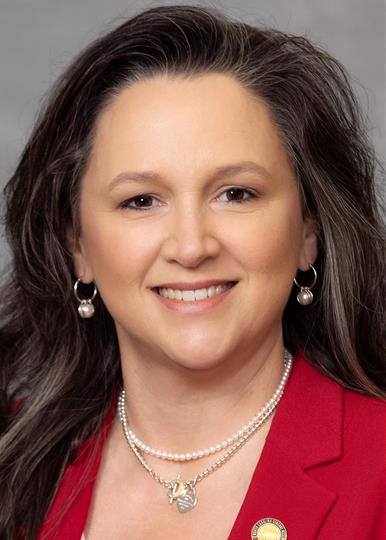
Rep. Heather Rhyne
Sponsored bills
Maddy summaryHB 434, titled "Lower Healthcare Costs," is a procedural bill focused on updating definitions related to health insurance utilization review in North Carolina. It rewrites statutory definitions (e.g., "medical necessity," "clinical peer," "closely related service") within existing insurance regulations but does not introduce new cost-saving mechanisms or policy changes. The bill directly affects insurers, healthcare providers, and covered individuals by standardizing terminology used in prior authorization processes. As a definition-only update, it has no concrete policy impact on healthcare costs or patient access, and the title does not align with its actual scope.
Maddy summaryHB 491 prepares North Carolina's Medicaid program to implement work requirements if authorized by the federal Centers for Medicare and Medicaid Services (CMS). It requires the state's Division of Health Benefits to negotiate with CMS, notify oversight committees within 30 days of starting talks, and submit detailed reports after CMS approves any work requirements plan. The bill does not enact work requirements itself but establishes procedures for future implementation, including timelines for reporting funding needs. This would directly affect current Medicaid recipients if CMS approves work requirements, though the bill is procedural and conditional on federal approval. The legislation is currently in committee review and has not yet become law.
Maddy summaryHB 118 modifies North Carolina's property tax exemption for disabled veterans, replacing a flat $45,000 exclusion with a percentage-based system tied to the veteran's VA disability rating. It directly affects veterans with a 50% or higher service-connected disability rating (or surviving spouses under specific conditions), allowing them to exclude a portion of their home's appraised value from property taxes - equal to their disability percentage. For example, a veteran with a 70% disability rating would exclude 70% of their home's value from taxes. The bill takes effect for taxes due in 2025 and prohibits combining this relief with other property tax exemptions.
Maddy summaryThe bill title "Defund Planned Parenthood and Cost Transparency" does not match the actual content of HB 192, which is focused on education funding. This bill raises teacher salaries for the 2025-2026 school year using a new salary schedule (e.g., $5,000 for 0 years experience, $6,823 for 25+ years) and reinstates education-based supplements for advanced degrees ($126-$253 monthly). It appropriates $1.597 billion for salary increases and $8 million for supplements, while directing the North Carolina Collaboratory to study a student-based funding system by February 2026. The bill directly affects public school teachers, instructional support staff, and school psychologists. The title appears to be incorrect based on the provided bill text.
Maddy summaryHB 402 requires North Carolina state agencies to assess the financial impact of proposed permanent rules. If a rule would cost affected individuals or businesses $20 million or more over five years, it must be approved by the General Assembly before taking effect. For rules with a $1 million or more annual cost impact, agencies must prepare a fiscal note for review by the Office of State Budget and Management. The bill also mandates a two-thirds vote by agency boards to adopt rules exceeding the $1 million cost threshold. This directly affects state agencies creating regulations and the businesses or residents who would bear the costs of those rules.
Maddy summaryHB 318 requires North Carolina county jails and detention facilities to check the immigration status of individuals charged with specific offenses (including certain felonies, misdemeanors, and impaired driving) and to notify U.S. Immigration and Customs Enforcement (ICE) if a detainer is issued. If ICE issues a detainer, facilities must hold the person for up to 48 hours (or until ICE takes custody) and notify ICE 2 hours before the person would otherwise be released. For pretrial defendants facing similar charges, the bill mandates a two-hour hold to allow ICE to issue a detainer; if none is received, the defendant must be released. The law also shields state officials from liability when following these procedures.
Maddy summaryHB 546 modernizes North Carolina's Medicaid program by requiring the state to develop team-based care coordination for individuals with alcohol and opioid use disorders, including screening, medication, and recovery support. The bill also allows telehealth-only providers to enroll in Medicaid without needing a physical office in the state and mandates a statewide specialty plan for children in foster care or receiving adoption assistance, to be implemented by December 2025. These changes directly affect Medicaid beneficiaries with substance use disorders, telehealth providers, and eligible children and families. The Department of Health and Human Services must report on the implementation of the substance use care and telehealth provisions by October 1, 2025.
Maddy summaryHB 412 aims to reform North Carolina's child care system by separating the quality rating system (QRIS) from state-subsidized child care program requirements, directly affecting licensed child care providers and families using subsidies. Key provisions require the state Division of Child Development to develop a plan by May 2026 to decouple QRIS from subsidy reimbursement rates, using a unified market rate study (not segmented by star ratings) to inform potential rate adjustments. The bill also updates facility regulations, allowing school buildings approved for school occupancy to meet child care licensing standards for after-school programs without separate outdoor play area requirements. These changes seek to increase child care supply and optimize state funding while maintaining federal compliance, though the current subsidy system remains in effect until legislative approval.
Maddy summaryHB 309 creates a separate Transylvania Rural Development Authority with nine appointed members (residents of Transylvania County) to operate independently from the county government. It establishes governance rules, including member appointment terms, conflict-of-interest restrictions, and requirements for public meetings. The bill also updates the charter of the Town of Boiling Springs to revise its incorporation language. These changes apply only to Transylvania County and the Town of Boiling Springs, with no new funding or policy changes beyond structural reorganization.