

Maddy summaryHB 268 authorizes the University of North Carolina system to finance specific capital projects at UNC Chapel Hill and UNC Wilmington using alternative funding sources like gifts, grants, and revenue bonds - instead of state general funds. It specifically covers major projects including Chapel Hill's electrical system upgrade and Fetzer Hall addition, plus Wilmington's parking deck and student housing. The bill allows the university board to issue special obligation bonds up to 5% over the project costs to cover expenses, with potential adjustments approved by the state budget director. This directly affects the two universities by enabling them to fund these infrastructure improvements through non-state appropriations.

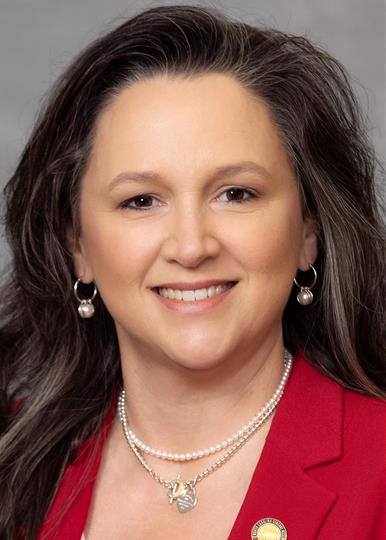
Rep. Heather Rhyne
Sponsored bills
Maddy summaryHB 437 establishes "Drug-Free Homeless Service Zones" within 300 feet of facilities that provide homeless services (like shelters or transitional housing) using public funds. It increases penalties for drug offenses committed in these zones: individuals 21+ face Class E felony charges, while facility operators allowing such offenses face Class 1 misdemeanor charges. Facilities must display visible signs identifying the zone, and the law applies to offenses committed on or after December 1, 2025. The bill directly affects homeless service providers, their operators, and individuals committing drug offenses in designated zones.
Maddy summaryHB 133, the NC Farmland and Military Protection Act, bans U.S.-designated adversarial foreign governments from buying, leasing, or holding interests in agricultural land or land within 75 miles of major military installations like Fort Bragg and Camp Lejeune. It directly affects foreign governments identified by the U.S. State Department as adversaries under arms regulations, preventing them from acquiring land critical to food production or near military sites. The law excludes agricultural research leases under 250 acres and makes any violating land transfer legally void. This focuses on restricting foreign control of strategic land without altering existing domestic land transactions.
Maddy summaryHB 372 prevents North Carolina cities from banning or requiring permits for "no-impact home-based businesses," directly affecting residents who run small home businesses like crafts or consulting. The bill prohibits cities from mandating rezoning, fire sprinklers, or applications for these businesses, while allowing limited regulations to ensure safety, residential compatibility, and compliance with laws (e.g., no traffic spikes or visible storefronts). It defines "no-impact" businesses as those operating inside homes/yards, selling legal goods, with minimal employees or visitors, and not generating street parking. The law does not override private agreements like homeowners association (HOA) rules or restrictions on illegal activities (e.g., drug sales).
Maddy summaryHB 517 modifies North Carolina's Nonprofit Corporations Act to expand merger options for charitable organizations and simplify disclosure requirements. It allows charitable nonprofits to merge with specific tax-exempt limited liability companies (LLCs) that would qualify for 501(c)(3) status if not disregarded for tax purposes, and clarifies rules for merging with unincorporated entities like partnerships. The bill also permits charitable organizations to satisfy state disclosure obligations by providing the acknowledgment required for federal tax deductions, aligning state and federal compliance. This directly affects North Carolina-based charitable nonprofits and their merger partners by reducing administrative barriers and clarifying legal pathways.
Maddy summaryThis bill requires the North Carolina Department of Health and Human Services, the Department of Information Technology, and the Administrative Office of the Courts to study the state's involuntary commitment process. The agencies must identify gaps in the current system and submit a report with recommendations by February 1, 2027. Key areas for improvement include ensuring judges receive timely clinical data, training legal officials on community-based treatment options, and updating electronic forms to capture consistent data. The legislation also aims to increase data sharing between health and court systems to support more effective legal and clinical outcomes.
Maddy summaryThis bill creates a voluntary program allowing businesses in North Carolina to contribute to portable benefit accounts for their independent contractors. The plan enables hiring parties to fund benefits such as health insurance, retirement, and disability through a third-party administrator, which helps contractors maintain coverage when moving between jobs. To encourage participation, the legislation allows businesses to deduct contributions as business expenses and permits contractors to exclude those amounts from their taxable income. Additionally, the bill includes a $100,000 appropriation to fund public education about the program, which will take effect on July 1, 2026.
Maddy summaryHB 1200, known as the Tax-Free Family Essentials Act, removes the state sales tax on specific items including diapers, baby wipes, over-the-counter children's medication, prenatal vitamins, and feminine hygiene products. The bill directly affects families purchasing these goods by exempting them from the tax, while also clarifying the legal definitions of these items to ensure consistent application. These tax exemptions will take effect on October 1, 2026, and apply to all sales occurring on or after that date.
Maddy summaryThis House Resolution honors the life and memory of James Michael "Mike" Clampitt, a former member of the North Carolina House of Representatives from District 119. The bill formally recognizes his extensive background in public service, which included decades as a firefighter and deputy sheriff in North Carolina before his election to the state legislature. It expresses the House's appreciation for his legislative work and extends condolences to his family, with a copy of the resolution sent to them.
Maddy summaryHB 171 prohibits North Carolina state agencies from implementing diversity, equity, and inclusion (DEI) programs, including in hiring, employment practices, or training. It defines DEI broadly as any initiative influencing hiring or benefits based on protected characteristics (like race or gender) beyond merit-based processes. The bill mandates state auditor compliance audits, imposes civil penalties up to $5,000 per violation, and allows employees to file lawsuits after submitting a grievance to their agency. It explicitly excludes compliance with existing anti-discrimination laws (such as Title IX and the ADA) and protects First Amendment rights.