

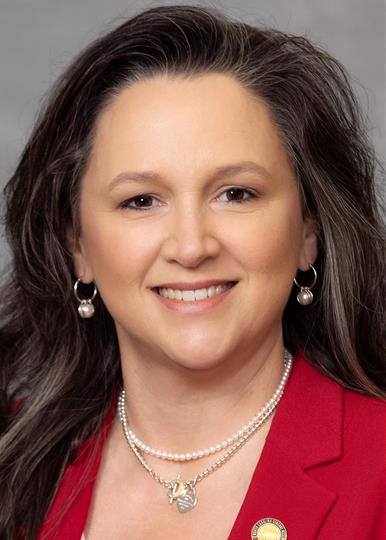
Photo of Heather Rhyne
R North Carolina House · District 97 On the 2026 ballot

Rep. Heather Rhyne

Compare
Total votes
502
all sessions
Attendance
98%
9 missed
Near the chamber average
With party
100%
of cast votes
Higher than 87% of chamber peers
Bipartisan score
0%
crosses aisle rarely
Lower than 89% of chamber peers
Sponsored
112
bills & resolutions
Near the chamber average
Committees
10
assignments
112 bills and resolutions

Sponsored bills

Total
112
Primary
20
Co-sponsor
92
This page
112
matching current filters
Co-sponsor HR 1238
Passed · North Carolina House · Co-sponsor
Honor 2026 Carolina Hurricanes Team.

Maddy summaryThis House Resolution honors the Carolina Hurricanes hockey team for winning the 2026 Stanley Cup and recognizes their contributions to the state of North Carolina. The bill formally acknowledges the team's historic season, including their record-breaking regular performance and playoff victory, while also praising the owner, management, and coaching staff for their leadership. It directs the Principal Clerk to send a certified copy of the resolution to the team, its owner Tom Dundon, and head coach Rod Brind'Amour. This measure serves as a commemorative gesture rather than establishing new laws or funding.

Passed Jun 23, 2026 1 co-sponsor
Co-sponsor HB 565
Passed · North Carolina House · Co-sponsor
Limit Use of AI Medicaid/Commercial Insurance.

Maddy summaryHB 565 ("Check Yes, Save Lives") allows North Carolina taxpayers to register as organ donors by checking a box on their state income tax return, starting with tax returns for 2026 and later. This directly affects all North Carolina taxpayers who file income tax returns, providing a simple, automatic way to enroll in the organ donation program during annual tax filing. The bill amends tax and organ donation statutes to add income tax return enrollment as a valid method for making an anatomical gift (under Section 130A-412.7(1a)), while keeping existing options like driver's license or wills. It requires coordination between the Department of Revenue and Motor Vehicles to update the Organ Donor Registry, ensuring the tax-based enrollment is properly recorded. The policy change streamlines donor registration without altering the existing organ donation process or eligibility.

Passed Jun 23, 2026 1 co-sponsor
Primary HB 536
Signed into law · North Carolina House · Lead sponsor
Physical Therapy Practice Act Modifications.

Maddy summaryHB 536 modifies North Carolina's Physical Therapy Practice Act by establishing a new Board of Examiners to regulate the profession. The Board will consist of eight members (including a medical doctor, four physical therapists, two physical therapist assistants, and a public member) appointed to oversee licensing, discipline, and continuing education requirements for physical therapists and assistants. The bill clarifies that physical therapy practice excludes surgery, chiropractic, or medical diagnosis, and specifies that the Board may investigate complaints confidentially while making disciplinary decisions public. This legislation directly affects licensed physical therapists, physical therapist assistants, and the public by setting standards for practice, licensure, and professional conduct in North Carolina.

Signed into law Jun 22, 2026 0 co-sponsors
Co-sponsor HB 315
Signed into law · North Carolina House · Co-sponsor
Prohibit Litigation Investments/Amend Workers' Compensation Benefits.

Maddy summaryHB 315 creates new criminal offenses for wrongfully entering restricted business areas (like secure storage rooms) and for stealing or fraudulently obtaining gift cards. It directly affects businesses (by protecting secure areas), gift card holders (by criminalizing theft of their cards), and individuals who commit these acts. Key provisions include classifying unauthorized building entry as a misdemeanor or felony based on prior offenses, defining gift card theft as a Class 1 misdemeanor for cards under $1,000 (or felony for higher value), and expanding "organized retail theft" to include conspiracy around gift cards with penalties tied to total value stolen. The law takes effect December 1, 2025, and applies to offenses committed after that date.

Signed into law Jun 22, 2026 1 co-sponsor
Co-sponsor HB 1123
Signed into law · North Carolina House · Co-sponsor
UNC Omnibus and Capital Contracting Law Changes.

Maddy summaryThis bill authorizes the University of North Carolina system to finance specific capital improvement projects, such as dormitory renovations and new construction, using non-state funds like gifts, grants, and hospital receipts. It allows the university to issue special obligation bonds to cover these costs and includes a mechanism for the Director of the Budget to adjust project funding if necessary. Additionally, the legislation standardizes the residency determination process for admission to the North Carolina School of Science and Mathematics and revises tuition grant rules for graduates of that school and the UNC School of the Arts. These changes aim to support university infrastructure development and ensure equitable access to specialized science and arts programs for North Carolina residents.

Signed into law Jun 19, 2026 1 co-sponsor
Primary HB 1203
In committee · North Carolina House · Lead sponsor
Family Support for Those Who Serve Act.

Maddy summaryThis bill expands tuition waivers at North Carolina community colleges to children of public safety workers who are injured or disabled in the line of duty. It allows children aged 17 to 24 of law enforcement officers, experienced correctional officers, and firefighters to attend classes for free if their parent is permanently and totally disabled due to a traumatic work-related injury. The waiver covers the cost of tuition for the time needed to complete the student's chosen educational program, provided they meet standard admission requirements. The law takes effect with the 2026-2027 academic year.

In committee Jun 10, 2026 0 co-sponsors
Co-sponsor HB 1199
In committee · North Carolina House · Co-sponsor
The Seatbelt Act.

Maddy summaryThis bill, known as the SEATBELT Act, requires drivers in North Carolina who have had their licenses revoked or limited due to serious speeding offenses to install an approved Intelligent Speed Assistance system in their vehicles as a condition for regaining driving privileges. The system automatically regulates a vehicle's speed to match posted limits, and drivers must keep it installed and functioning for one year after their license is restored. To comply, individuals must designate specific vehicles for use and provide proof of the system's installation before their license can be issued again. The legislation also establishes strict rules preventing the sale or misuse of data collected by these systems and makes it a crime to tamper with the technology. Additionally, the bill mandates that the costs for installing and monitoring these systems be paid by the driver, though a waiver process is available for those who cannot afford them.

In committee Jun 9, 2026 1 co-sponsor
Co-sponsor HB 1089
Signed into law · North Carolina House · Co-sponsor
Constitutional Amendment Property Tax Levy Limit.

Maddy summaryThis bill proposes a constitutional amendment that would require the North Carolina legislature to establish a statewide limit on how much local property tax levies can increase each year. The measure also mandates that any local government wanting to raise property taxes beyond this limit must first obtain approval from a majority of voters in that specific area. Because this change alters the state constitution, it will not take effect immediately but will instead be placed on the November 3, 2026, ballot for voters to decide whether to adopt. If approved by the public, the amendment would legally bind the General Assembly to create the specific tax increase caps mentioned in the text.

Signed into law May 21, 2026 1 co-sponsor
Primary HB 1110
In committee · North Carolina House · Lead sponsor
Early Intervention School Attendance Pilot.

Maddy summaryThis bill establishes a two-year pilot program in North Carolina to test data-driven systems aimed at reducing chronic absenteeism, which currently affects one in four public school students. The Department of Public Instruction will select a single public school unit serving up to 15,000 diverse students to implement a vendor-provided platform that offers real-time monitoring, automated family communication, and targeted intervention strategies. Appropriated funds totaling $75,000 will cover technology costs, staff training, and program evaluation, with the pilot running from the 2026-2027 fiscal year through the 2027-2028 fiscal year. By the end of the program, the department must report findings on attendance improvements and operational efficiencies to determine if the initiative should be expanded statewide.

In committee May 19, 2026 0 co-sponsors
Co-sponsor HB 1143
In committee · North Carolina House · Co-sponsor
Principal Fellows and Admin. Intern. Stipends.

Maddy summaryThis bill modifies the North Carolina Principal Fellows Program to clarify how forgivable scholarship loans are administered and to set specific rules for grant funding. It designates the Authority to manage loan agreements and repayment monitoring while requiring the Commission to select up to eight grant recipients annually for principal preparation and two recipients for innovative training development. The legislation also establishes reporting requirements for grant recipients, mandating the collection of data on student achievement, job placement rates, and retention in high-need schools. Additionally, the bill allows the use of administrative funds from the Trust Fund to cover program operations, staff salaries, and evaluation costs, with limits set at the greater of two percent of appropriated funds or one hundred sixty thousand dollars per year.

In committee May 19, 2026 1 co-sponsor
Showing 11 to 20 of 112 bills