

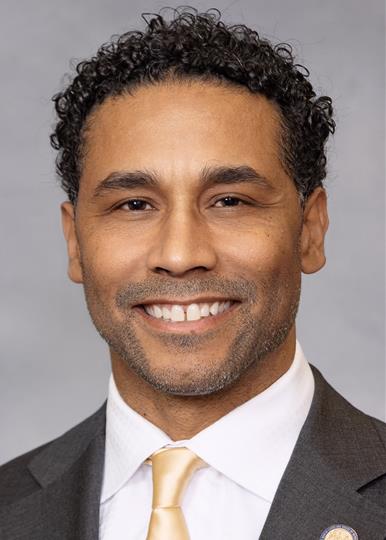
Photo of Brian Echevarria
R North Carolina House · District 82 On the 2026 ballot

Rep. Brian Echevarria

Compare
Total votes
481
all sessions
Attendance
100%
of floor votes
Higher than 91% of chamber peers
With party
100%
of cast votes
Higher than 86% of chamber peers
Bipartisan score
0%
crosses aisle rarely
Lower than 89% of chamber peers
Sponsored
94
bills & resolutions
Near the chamber average
Committees
8
assignments
94 bills and resolutions

Sponsored bills

Total
94
Primary
20
Co-sponsor
74
This page
94
matching current filters
Co-sponsor HB 1032
In committee · North Carolina House · Co-sponsor
Repeal Two Percent Local Grocery Tax.

Maddy summaryThis bill repeals the authority for North Carolina counties to collect a one percent local sales tax on groceries, effectively exempting food from these local taxes. By removing the option for voters to approve this specific tax, the legislation directly affects county governments and consumers who currently pay this surcharge on food purchases. The change applies to sales made on or after October 1, 2026, and does not alter the existing state sales tax rules.

In committee Apr 22, 2026 1 co-sponsor
Co-sponsor HB 13
died · North Carolina House · Co-sponsor
Charges for Credit and Charge Cards.

Maddy summaryHB 13 prohibits North Carolina merchants from charging customers more for credit or debit card payments than what the merchant pays to process those transactions. It directly affects retailers and service providers in the state, requiring them to disclose any card fees clearly in advertisements if they impose them. The law mandates that merchants cannot add a markup to processing costs charged by payment networks (like Visa or Mastercard), and violations could result in civil penalties up to $5,000 per offense. The bill takes effect October 1, 2025, aiming to prevent unfair surcharges on card payments.

died Sep 23, 2025 1 co-sponsor
Co-sponsor HB 118
In committee · North Carolina House · Co-sponsor
Disabled Veterans Tax Relief Bill.

Maddy summaryHB 118 modifies North Carolina's property tax exemption for disabled veterans, replacing a flat $45,000 exclusion with a percentage-based system tied to the veteran's VA disability rating. It directly affects veterans with a 50% or higher service-connected disability rating (or surviving spouses under specific conditions), allowing them to exclude a portion of their home's appraised value from property taxes - equal to their disability percentage. For example, a veteran with a 70% disability rating would exclude 70% of their home's value from taxes. The bill takes effect for taxes due in 2025 and prohibits combining this relief with other property tax exemptions.

In committee Sep 23, 2025 1 co-sponsor
Co-sponsor HB 402
Signed into law · North Carolina House · Co-sponsor
Limit Rules With Substantial Financial Costs.

Maddy summaryHB 402 requires North Carolina state agencies to assess the financial impact of proposed permanent rules. If a rule would cost affected individuals or businesses $20 million or more over five years, it must be approved by the General Assembly before taking effect. For rules with a $1 million or more annual cost impact, agencies must prepare a fiscal note for review by the Office of State Budget and Management. The bill also mandates a two-thirds vote by agency boards to adopt rules exceeding the $1 million cost threshold. This directly affects state agencies creating regulations and the businesses or residents who would bear the costs of those rules.

Signed into law Jul 29, 2025 1 co-sponsor
Co-sponsor HB 318
Signed into law · North Carolina House · Co-sponsor
The Criminal Illegal Alien Enforcement Act.

Maddy summaryHB 318 requires North Carolina county jails and detention facilities to check the immigration status of individuals charged with specific offenses (including certain felonies, misdemeanors, and impaired driving) and to notify U.S. Immigration and Customs Enforcement (ICE) if a detainer is issued. If ICE issues a detainer, facilities must hold the person for up to 48 hours (or until ICE takes custody) and notify ICE 2 hours before the person would otherwise be released. For pretrial defendants facing similar charges, the bill mandates a two-hour hold to allow ICE to issue a detainer; if none is received, the defendant must be released. The law also shields state officials from liability when following these procedures.

Signed into law Jul 29, 2025 1 co-sponsor
Co-sponsor HB 805
Signed into law · North Carolina House · Co-sponsor
Prevent Sexual Exploitation/Women and Minors.

Maddy summaryHB 805 requires North Carolina state agencies and local governments to use biological sex definitions (based on reproductive anatomy at birth) in all policies, replacing gender identity as a legal equivalent. It directly affects state programs, including healthcare, education, and civil rights enforcement, by mandating that "female," "male," and related terms refer solely to biological sex as defined in the bill. The bill also creates a new "Prevent Sexual Exploitation of Women and Minors Act" with definitions for consent and intimate visual depictions, while including provisions on birth certificates, school accommodations for religious objections, and parental access to library materials. These changes take effect January 1, 2026, and are intended to align state law with federal directives referenced in the bill's preamble.

Signed into law Jul 29, 2025 1 co-sponsor
Co-sponsor HB 837
died · North Carolina House · Co-sponsor
Alternative Methods for Highway Funding/Study.

Maddy summaryHB 837 is a study bill requiring North Carolina to examine alternative highway funding methods, primarily to address potential revenue gaps as electric/hybrid vehicle adoption grows. It directs the Legislative Services Officer and Transportation Oversight Committee to hire a consultant to study mileage-based fees (VMT) for electric/hybrid vehicles and a new "Access User Fee" for all non-diesel vehicles (replacing gas taxes). The study must be completed by May 2026, with findings reported to key legislative committees. This bill does not implement new fees but assesses options affecting all vehicle owners, particularly electric/hybrid drivers and non-diesel vehicle registrants. It allocates $125,000 from the Highway Fund for the study, effective July 1, 2025.

died Jul 3, 2025 1 co-sponsor
Co-sponsor HB 537
Signed into law · North Carolina House · Co-sponsor
Alena's Law and Office of Vital Records Changes.

Maddy summaryHB 537 creates a legal presumption of death for individuals missing for at least 90 days during a declared disaster (state or federal), simplifying legal processes for families. It requires the Office of Vital Records to process birth and death certificate amendment requests within 30 days of receiving complete applications. The bill also prohibits Office of Vital Records staff from teleworking unless during a declared emergency, to maintain processing timelines. These changes directly affect families of missing persons in disaster zones and individuals needing vital record corrections.

Signed into law Jul 1, 2025 1 co-sponsor
Co-sponsor HB 612
Signed into law · North Carolina House · Co-sponsor
Fostering Care in NC Act.

Maddy summaryHB 612, the "Fostering Care in NC Act," updates North Carolina's laws governing child abuse, neglect, and dependency cases. It expands the definition of "abused juveniles" to include specific offenses like sexual crimes, human trafficking, and certain violent acts, affecting how cases are classified. The bill requires county social services directors to use either a family-centered assessment or a formal investigation when reviewing reports, and to collect military affiliation details of the juvenile's caregiver. It also clarifies that court jurisdiction over juveniles continues until age 18, emancipation, or death. These changes standardize responses to child welfare reports and improve information gathering for safety decisions.

Signed into law Jun 26, 2025 1 co-sponsor
Co-sponsor HB 59
died · North Carolina House · Co-sponsor
Modify Homestead Exclusions.

Maddy summaryHB 59 would increase the income eligibility limit for North Carolina's elderly or disabled property tax homestead exclusion from $25,000 to $48,000 for taxable years beginning July 1, 2026. This change would directly affect homeowners aged 65 or older, or those who are totally and permanently disabled, who meet other criteria (like being a North Carolina resident and owning their home as a permanent residence). The bill modifies the existing rule that currently limits eligibility to those with incomes under $25,000, raising the threshold to $48,000 while maintaining the exclusion amount as the greater of $25,000 or 50% of the home's appraised value. The change aims to expand access to this property tax relief for qualifying low-to-moderate income homeowners. (Note: The bill was withdrawn in June 2025 and has not become law.)

died Jun 25, 2025 1 co-sponsor
Showing 21 to 30 of 94 bills
Previous 1 2 3 4 10 Next