

Maddy summaryHB 480 creates a new pathway for doctors, physician assistants, and anesthesiologist assistants to obtain North Carolina medical licenses by transferring licenses from other states ("licensure by endorsement"). To qualify, applicants must have held an active license in another U.S. jurisdiction for at least five years (with two years of practice post-residency for doctors), have a verified full-time job offer in North Carolina, maintain good standing with no recent disciplinary actions, and meet practice hour requirements. The bill increases application fees for endorsement (e.g., $825 for physicians vs. $400 for standard licensure) and requires additional documentation within 180 days to keep the license active. This directly affects out-of-state medical professionals seeking to practice in North Carolina without retaking exams.
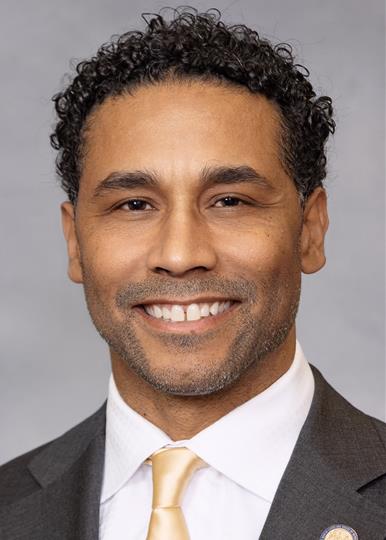
Rep. Brian Echevarria
Sponsored bills
Maddy summaryHB 578, the Jason Flatt Act, requires all North Carolina public K-12 schools to implement suicide prevention education and training for school staff. It mandates that licensed educators complete at least one hour of annual suicide prevention training, while staff working with grades 6-12 must receive guidelines for identifying at-risk students and procedures for referrals. Schools must adopt a mental health plan including these elements, with initial staff training of six hours (within six months of hire) and two hours annually thereafter. The law applies to all public schools, charter schools, regional schools, and lab schools starting the 2025-2026 school year.
Maddy summaryHB 231 establishes North Carolina's participation in the Social Work Interstate Licensure Compact, allowing licensed social workers from participating states to practice across state lines without obtaining separate licenses in each state. The bill directly affects licensed social workers seeking to provide services in multiple states, particularly those serving military families or addressing workforce shortages. Key provisions include mutual recognition of licenses among member states, accountability for social workers practicing where clients are located, and streamlined processes for disciplinary information sharing. This reduces duplicate licensing requirements while maintaining state authority to protect public health and safety through existing licensure systems.
Maddy summaryHB 821, titled "Drivers License Expiration Moratorium," establishes a temporary pause on the expiration of certain Class C driver's licenses. The bill allows these licenses to remain valid for up to two years after their expiration date, aiming to address a backlog of drivers unable to renew in person. This provision does not apply to licenses that are currently canceled, revoked, or suspended, nor to Real ID compliant licenses valid for eight years or more. The act is effective upon becoming law for licenses expiring on or after that date, and it will expire on December 31, 2027.
Maddy summaryHB 271 alters how municipal elections are conducted in several towns and cities in Cabarrus County. The bill changes regular municipal elections in the City of Concord, Town of Harrisburg, City of Kannapolis, Town of Midland, and Town of Mount Pleasant from a nonpartisan to a partisan basis. For the City of Concord, it also specifies that only voters residing in a particular district can vote for that district's City Council member, rather than the entire city voting for all members. These changes will apply to elections held in 2025 and thereafter.
Maddy summaryHouse Bill 560, known as the "Parents Protection Act," makes several changes to laws governing juvenile care and child adoption. The bill specifies that parents, guardians, or caretakers who raise a juvenile consistent with their biological sex, including related mental health or medical decisions, shall not be subject to abuse or neglect petitions or child abuse charges solely based on those actions. Additionally, it prohibits adoption and foster care agencies from denying opportunities or placements to prospective parents based on their refusal to support a child's gender transition. These provisions apply to petitions filed and offenses committed on or after December 1, 2025.
Maddy summaryHouse Bill 214, known as the "Faithful Article V Commissioner Act," creates rules for North Carolina's participation in a convention for proposing amendments to the U.S. Constitution. It outlines how commissioners and alternates are to be selected by the General Assembly, their qualifications, and their ethical obligations. The bill strictly defines the scope of authority for these commissioners, limiting them to the specific issues outlined in their commission and the convention's call. Commissioners must take an oath to abide by these limits, and exceeding their defined authority is deemed a Class I felony.
Maddy summaryThis bill, HB 519, revises laws regarding when minors can consent to medical treatment and parental access to their children's medical records. It restricts the medical services a minor can consent to on their own to primarily pregnancy-related care, removing their ability to consent for venereal diseases, substance abuse, or emotional disturbance treatment. The bill also requires written parental consent for minors to receive vaccines authorized for emergency use but not yet fully FDA approved. Additionally, it grants parents the right to access all their minor child's medical records, including those for care the minor could consent to, with exceptions for suspected abuse or neglect, court orders, or active law enforcement investigations.
Maddy summaryHouse Bill 4, also known as "Sam's Law," aims to improve seizure preparedness and response in North Carolina schools. The bill requires public school units, charter schools, and other educational institutions to develop individualized Seizure Action Plans for students diagnosed with seizure disorders, in collaboration with their parents. It mandates annual seizure education programs for all K-12 school personnel and requires principals, school counselors, and teachers to complete an annual self-study on seizure disorders. Furthermore, the bill ensures at least one employee in each school is trained to administer seizure medication and requires the posting of seizure first aid information in visible areas. Various educational boards are tasked with adopting policies to implement these requirements, with $50,000 appropriated to the Department of Public Instruction for development costs.
Maddy summaryHouse Bill 618, the "Ivermectin Access Act," directs the State Health Director to issue a statewide standing order that allows licensed pharmacists to dispense ivermectin for human use. Under this order, pharmacists would be authorized to provide ivermectin without requiring a written prescription or consultation from a healthcare professional. The bill also grants immunity from civil or criminal liability to the State Health Director for issuing the order and to any pharmacist who dispenses ivermectin in accordance with it. The State Health Director is required to issue this statewide standing order by October 1, 2025.