

Maddy summaryHouse Bill 81 requires insurance institutions and agents to obtain written consent from applicants and policyholders before collecting, receiving, selling, or using vehicle telematics data. The bill mandates that individuals be notified how their telematics data will be used and that they can revoke consent at any time. Insurers must provide a reasonable means for individuals to revoke consent, which must be actioned within 24 hours. A violation of these provisions would be considered an unfair trade practice, with the act becoming effective October 1, 2025.
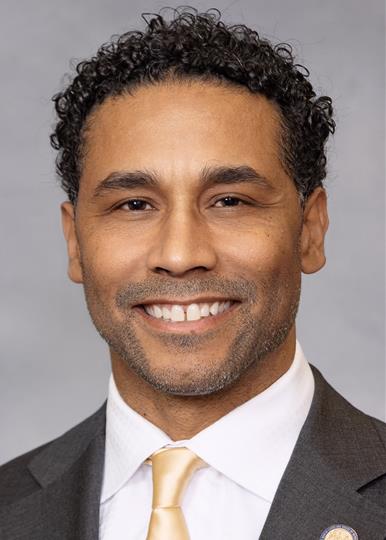
Rep. Brian Echevarria
Sponsored bills
Maddy summaryHB 659, titled "Local Government Spending Transparency," aims to increase public access to financial information from local governments in North Carolina. The bill requires all local government invoices to be itemized, detailing the payee, amount, items purchased, and performance dates. These quarterly invoices must be publicly available via a link on the government's website or as physical copies for municipalities without a website. Additionally, local government websites would need to provide links to the top three bids for projects, services, or goods purchased with tax dollars, with quarterly updates. Both invoices and bids are to be unredacted unless legally required, and these provisions take effect on July 1, 2025.
Maddy summaryHB 24, titled "Restore Down-Zoning Authority," aims to reinstate the power of local governments to initiate "down-zoning." This means local governments would regain the ability to change zoning classifications for properties to allow for less intensive development or use. The bill achieves this by repealing Section 3K.1 of S.L. 2024-57, which had previously restricted this authority. If enacted, it would apply retroactively to December 11, 2024, ensuring that any local ordinances impacted by the repealed section are restored to their status prior to that date.
Maddy summaryHB 97 adds stomach cancer (gastric cancer) to the list of occupationally related cancers that qualify firefighters for "killed in the line of duty" benefits under North Carolina's Public Safety Employees' Death Benefits Act. This means firefighters who die from stomach cancer directly linked to their firefighting duties will automatically be eligible for death benefits, easing the process for families seeking compensation. The bill appropriates $500,000 annually from 2025-2027 to cover these benefits. It takes effect July 1, 2025, applying to qualifying deaths occurring on or after that date.
Maddy summaryHB 92, titled the "NC Digital Assets Investments Act," authorizes the North Carolina State Treasurer to invest various state funds in qualifying digital assets. This includes funds from the General Fund, Highway Fund, and numerous retirement and special funds. The bill specifies that eligible digital assets must be exchange-traded products with an average market capitalization of at least $750 billion over the preceding 12 months. Additionally, investments in digital assets cannot exceed 10% of a fund's balance, and the State Treasurer must use a defined "secure custody solution" if managing these assets internally.
Maddy summaryHB 614, titled "The Michael Mitchke F.I.N.E. Law," mandates that an autopsy be performed in any case where human remains are discovered following a fire incident. This bill modifies current law by adding a new requirement for the Chief Medical Examiner or designated pathologists to conduct an autopsy in these specific circumstances. The change aims to ensure a thorough examination of remains found in fire-related incidents. This law directly affects the duties of medical examiners and applies to cases arising on or after October 1, 2025.
Maddy summaryHouse Bill 38, known as the Second Amendment Financial Privacy Act, prohibits payment card networks from using a specific "firearms code" to identify or track purchases made at firearms merchants in North Carolina. It also forbids these networks from knowingly maintaining records of individuals in the state who own firearms. The bill aims to prevent the separate tracking of lawful firearm and ammunition purchases and protect the financial privacy of individuals exercising their right to bear arms. Payment card networks are also prohibited from discriminating against firearms merchants based on code assignment. Violations can lead to civil penalties assessed by the Attorney General or civil lawsuits from affected merchants or individuals.
Maddy summaryHB 613, titled "The Vehicle Registration Convenience Act," allows vehicle owners in North Carolina to choose their preferred month for annual registration renewal. When initially registering a vehicle, owners can select any month within a 12-month period for their registration to expire. The initial registration fee will be prorated based on the chosen renewal month to cover the period until the elected expiration date. The bill also authorizes the Division of Motor Vehicles to send electronic renewal notices if the owner provides consent. These changes apply to vehicle registrations issued or renewed on or after January 1, 2026.
Maddy summaryHouse Bill 244, titled "Depoliticize Government Property Act," restricts the types of flags that can be flown or displayed on property owned or leased by the State of North Carolina or its local government entities. The bill specifies a limited list of permissible flags, including the U.S. flag, the North Carolina flag, flags of local government agencies, military branch flags, the POW/MIA flag, the Honor and Remember flag, and flags of recognized nations during official visits. It also clarifies that local governments cannot prohibit the display of official governmental flags on private or public property with consent. Any violation of the display restrictions on government property would be classified as a Class 3 misdemeanor.
Maddy summaryHouse Bill 432 aims to provide various forms of property tax relief to North Carolina homeowners. It increases the property tax exclusion amounts for qualifying elderly or disabled homeowners and expands the exclusion for disabled veterans, allowing more of their home's value to be exempt from taxation. The bill also establishes a new "Homeowner Advantage Property Tax Relief Program" designed to cap the annual increase in a permanent residence's taxable value, based on inflation and a cumulative limit. To qualify for this program, homeowners must have occupied their residence for at least two years. Additionally, the bill creates an "Elderly Property Tax Homestead Circuit Breaker Program" and exemptions from the forced sale of a homestead.