

Maddy summaryHB 76, titled "Protect Access to Assisted Reproductive Technology," establishes legal protections for patients and healthcare providers regarding fertility treatments. The bill prohibits North Carolina or its local governments from banning, unreasonably limiting, or interfering with patients' access to assisted reproductive technology (ART) - including in vitro fertilization (IVF) - or healthcare providers' ability to offer evidence-based information or perform ART services. Key provisions define "assisted reproductive technology" broadly and clarify that the law does not override existing health and safety regulations for medical facilities. This directly affects individuals seeking fertility care and healthcare providers offering such services within North Carolina. The bill does not create new funding or services but ensures state-level barriers cannot restrict access to these medical treatments.
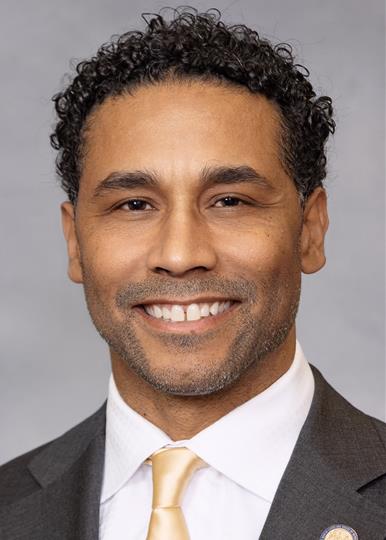
Rep. Brian Echevarria
Sponsored bills
Maddy summaryHB 61 increases penalties for assaulting certain emergency personnel with a firearm in North Carolina. It reclassifies assaults against law enforcement officers, probation/parole officers, National Guard members, detention facility staff, emergency medical technicians, medical responders, firefighters, and law enforcement telecommunicators as a Class B1 felony (instead of Class D) when committed during their duties. The bill specifically targets firearm assaults, making them punishable by more severe prison sentences. This law takes effect December 1, 2025, for offenses occurring on or after that date.
Maddy summaryHB 64 proposes a constitutional amendment that would require the North Carolina General Assembly to approve the governor's clemency grants (including reprieves, commutations, and pardons after conviction). Currently, the governor can grant clemency without legislative input; this bill would mandate a majority vote in both legislative chambers for such grants to take effect. If the governor grants clemency after the legislature has adjourned for over 30 days, the bill requires the governor to reconvene the session for legislative consideration. The amendment must be approved by voters in the November 2026 general election to become part of the state constitution.
Maddy summaryHB 39 excludes motor vehicles owned by veterans with a 100% disability rating certified by the U.S. Department of Veterans Affairs from North Carolina property tax. It amends state tax law to add these vehicles as a designated exempt class under G.S. 105-275. The exclusion applies to vehicles registered on or after January 1, 2026. This policy directly affects eligible disabled veterans who own motor vehicles, reducing their property tax burden. The bill does not change eligibility criteria or tax rates for other vehicle classes.