

Maddy summaryHB 470, "The Second Amendment Protection Act," prohibits North Carolina state officials and employees from enforcing federal firearms laws within the state. It specifically bans state law enforcement, government employees, and political subdivisions from assisting in the enforcement of any federal rules, regulations, or statutes related to firearms, accessories, or ammunition. The bill states that such federal laws exceed constitutional authority under the Tenth Amendment and that North Carolina retains full power to regulate firearms under its own laws. It does not change North Carolina's existing firearm regulations but blocks state resources from being used to implement federal gun control measures. The act applies directly to all state and local government employees who might otherwise assist in federal gun law enforcement.
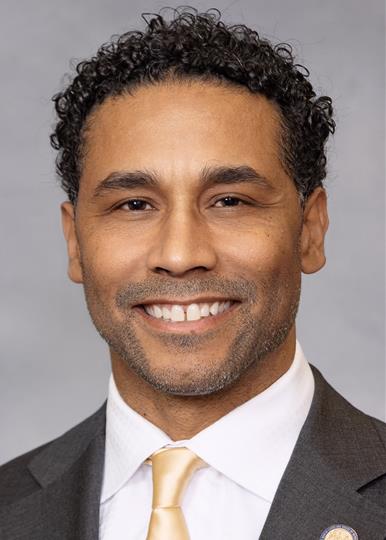
Rep. Brian Echevarria
Sponsored bills
Maddy summaryHB 186, the "Stars and Stripes Commitment Act," requires all North Carolina public schools (including charter, regional, and laboratory schools) to schedule the daily recitation of the Pledge of Allegiance within one hour of the start of the instructional day. It also mandates that schools display U.S. and North Carolina flags in classrooms when available and provide age-appropriate instruction about the flag and pledge’s meaning. The bill applies to all school governing bodies and state education board meetings, requiring the pledge to open each meeting. Crucially, it explicitly states the policy does not compel anyone to stand, salute, or recite the pledge. The law takes effect for the 2025-2026 school year.
Maddy summaryHB 449 increases penalties for computer solicitation of minors, making second offenses or those involving actual meetings Class D felonies (up from Class H). It requires sex offender registration petitions to be filed with courts and placed on criminal dockets for timely review. The bill also creates new offenses: "habitual indecent exposure" (Class F felony for two prior convictions) and "aggravated habitual indecent exposure" (Class E felony), both mandating sex offender registration. These changes directly affect individuals convicted of repeated indecent exposure or online solicitation of minors in North Carolina.
Maddy summaryHB 5, the NC Constitutional Carry Act, allows any U.S. citizen aged 18 or older to carry a concealed handgun without a permit, effective upon enactment. This directly affects most adult residents who are not prohibited from firearm ownership under existing state or federal law. The bill removes the permit requirement for concealed carry (per new Section 14-415.35(a)), while maintaining all existing prohibitions - such as for felons, domestic violence offenders, or those under indictment. It also preserves the ability to obtain permits for reciprocity or other purposes, and continues allowing officials with permits to carry while on duty. The law does not change restrictions for prohibited individuals, who remain barred from concealed carry.
Maddy summaryHB 35 designates November of each year as Military Appreciation Month in North Carolina. The bill creates a symbolic recognition within state law, honoring military service members and veterans during this month. It does not establish new programs, funding, or requirements - it simply formally names November for this purpose. The bill affects the state government's official calendar and public recognition efforts, with no direct impact on individuals or organizations.
Maddy summaryHB 98, titled the "Patriotism Expression Act" (though misleadingly named), primarily modifies North Carolina's fireworks laws to permit the sale, possession, and use of specific consumer fireworks. It allows consumer fireworks (like sparklers, party poppers, and small novelty devices meeting safety standards under G.S. 58-82A-80) for public use, while maintaining an 18+ age restriction for purchase. The bill specifies that these fireworks must comply with defined safety limits (e.g., no more than 16 milligrams in party poppers, 75 grams per tube for sparklers) and prohibits indoor displays. It directly affects consumers, retailers, and fire safety enforcement, but does not change prohibitions on most fireworks or explosives.
Maddy summaryHB 380 would allow North Carolina students to opt out of school vaccination requirements by submitting a written statement citing personal beliefs (a "conscientious objection"), rather than requiring proof of religious affiliation. It amends immunization reporting rules to include "conscientious objection" as a formal exemption category alongside medical and religious exemptions for public schools and colleges. Parents or guardians would need to provide this written statement instead of religious documentation to exempt their child from vaccination mandates. The policy change applies to public schools and colleges starting in the 2026-2027 school year.
Maddy summaryHB 100 expands North Carolina's property tax exemption for religious organizations by allowing them to temporarily exempt newly acquired undeveloped land adjacent to their currently tax-exempt property. The bill permits this exemption for up to five years if the religious organization certifies it will use the land exclusively for religious purposes or develop it for that purpose within that timeframe. The land cannot exceed twice the size of the organization's existing contiguous exempt property. If the certification requirements aren't met within five years, the land loses its exemption and becomes taxable. The law takes effect for taxes due on or after July 1, 2026.
Maddy summaryHB 11 would allow North Carolina taxpayers to deduct overtime pay, up to $2,500 in bonus pay (defined as cash awards for workplace dedication), and reported tips from their taxable income. It applies to individuals and married couples filing jointly, with each spouse eligible for separate deductions. The bill specifically defines "bonus pay" to exclude tips and requires taxpayers to provide documentation to claim the deduction. This policy change would take effect for tax returns filed in 2025.
Maddy summaryHB 2 requires North Carolina public high schools to accept cash for admission to interscholastic athletic events and provide free entry to seniors with a Tar Heel Card (issued by the Department of Health and Human Services). It directly affects students, families, and seniors attending high school sports events by changing payment rules for admission fees. The bill mandates that schools must accept cash at the gate and honor Tar Heel Cards for free admission upon presentation. These requirements apply starting the 2025-2026 school year. The law amends state education rules governing athletic activity fees.