Issue · Criminal Justice

Criminal Justice

Every criminal justice bill, vote, and legislator stance in Maryland, automatically classified by Maddy, our AI policy reader.

Total bills
288
2026 Regular Session
Top supporter
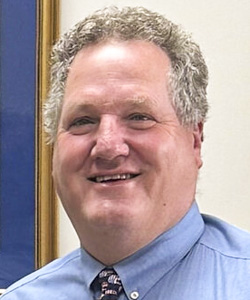
Stuart Schmidt
91% support rate
Top opponent
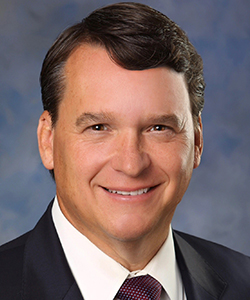
Jim Hinebaugh
41% support rate
Ranked legislators
10
5 support · 5 oppose
Key legislators

Who's moving criminal justice in Maryland

Legislators moving criminal justice in Maryland
Legislator Party Stance Support rate Votes
Stuart Schmidt
Stuart Schmidt House · District 33B
R
Strong +
91% 182
Katie Hester
Katie Hester Senate · District 9
D
Strong +
80% 86
Brian Crosby
Brian Crosby House · District 29B
D
Support
72% 101
Mary-Dulany James
Mary-Dulany James Senate · District 34
D
Support
71% 88
Matthew Schindler
Matthew Schindler House · District 2B
D
Support
67% 191
Jim Hinebaugh
Jim Hinebaugh House · District 1A
R
Mixed −
41% 162
Dalya Attar
Dalya Attar Senate · District 41
D
Mixed −
42% 77
Kevin Anderson
Kevin Anderson House · District 38A
R
Mixed −
42% 119
Steve Hershey
Steve Hershey Senate · District 36
R
Mixed −
43% 108
Mary Beth Carozza
Mary Beth Carozza Senate · District 38
R
Mixed −
43% 110
Showing 81–90 of 288 bills

All criminal justice bills

died · Maryland · House of Delegates Feb 23, 2026

HB 876: Criminal Procedure - Motion to Reduce Duration of Sentence - Repeal of Sentencing Date Limitation

HB 876 repeals a time limit that previously prevented certain individuals from filing a motion to reduce their prison sentence. It applies to people convicted as adults for crimes committed as minors (if sentenced before October 1, 2021) who have served 20+ years, or those convicted between ages 18-24 for non-violent crimes (excluding sex offenders and specific murders) who have served 20+ years. The bill requires courts to hold a hearing on such motions, allowing the individual to present evidence and victims to submit impact statements without cross-examination, with the individual required to attend in person or via video unless waived.
Sub-Topics Corrections Sentencing
in committee · Maryland · House of Delegates Feb 5, 2026

HB 847: Criminal Law - Fraud - Possession of Residential Real Property

HB 847 makes it a misdemeanor to possess or claim rights to residential property you don’t legally own with intent to defraud. Violations carry escalating penalties: up to 90 days in jail or $500 for a first offense, increasing to 1 year/jail or $2,500 for repeat offenses within two years. Property owners can file a sworn affidavit with the sheriff to request law enforcement remove alleged fraudsters, but officers must halt removal if the person presents evidence of lawful possession. The law explicitly states it doesn’t prevent owners from filing standard wrongful detainer lawsuits under existing property law.
in committee · Maryland · House of Delegates Feb 13, 2026

HB 1162: Correctional Services – Medication–Assisted Treatment Funding

HB 1162 requires Maryland correctional facilities in specific counties (starting with Howard, Montgomery, Prince George’s, and St. Mary’s) to provide medication-assisted treatment (MAT) for incarcerated individuals with opioid use disorder. It mandates facilities to conduct assessments, offer FDA-approved MAT options, and provide behavioral health counseling, with special provisions for pregnant individuals. The bill establishes funding mechanisms: the Special Secretary of Overdose Response must annually reimburse counties for MAT costs, and the Opioid Restitution Fund’s authorized uses expand to support this. This applies to local detention centers and the Baltimore Pre-trial Complex by 2023, with implementation schedules for additional counties.
in committee · Maryland · Senate Feb 12, 2026

SB 680: Intercepted Communications - Penalty

SB 680 reclassifies the offense of intercepting, disclosing, or using unauthorized wire, oral, or electronic communications from a felony to a misdemeanor under Maryland law. It directly affects individuals who unlawfully intercept, share, or use private communications obtained through illegal means. The bill changes the penalty from potential felony charges to a maximum of 5 years in prison or a $10,000 fine for violations of Section 10-402(a). This is a straightforward penalty adjustment without altering the prohibited conduct itself. The law takes effect October 1, 2026.
Sub-Topics Corrections
passed · Maryland · House of Delegates Mar 24, 2026

HB 1054: Criminal Law - Ethics Violations, Malfeasance, Misfeasance, and Nonfeasance - Statute of Limitations

HB 1054 extends the statute of limitations for prosecuting certain ethics-related crimes from 2 to 3 years. It directly affects public officials (state, agency, or local government employees) accused of violating Maryland's Public Ethics Law or committing malfeasance, misfeasance, or nonfeasance in office. The bill amends Maryland law to require that prosecutions for these offenses, or conspiracy to commit them, must be filed within 3 years of the alleged crime. This change provides a longer window for prosecutors to bring charges related to public ethics violations. The bill takes effect October 1, 2026.
signed · Maryland · Senate May 26, 2026

SB 715: Washington County - Juveniles - Truancy Reduction Pilot Program

SB 715 authorizes the Circuit Administrative Judge of the Fourth Circuit to establish a Truancy Reduction Pilot Program specifically in Washington County's juvenile court. The bill amends existing Maryland law to add Washington County as a jurisdiction eligible for this pilot program, which aims to address student absenteeism through court-based interventions. The program would operate under the existing framework used in other counties (like Dorchester and Worcester) but is limited to Washington County for a defined period. It directly affects Washington County juvenile courts and students with chronic absenteeism, without creating new funding or changing current truancy enforcement procedures.
in committee · Maryland · House of Delegates Feb 5, 2026

HB 824: Criminal Procedure - Expungement - Conviction of Distribution of Controlled Dangerous Substance

HB 824 would allow individuals convicted of distributing controlled substances (like drugs) to clear those felony convictions from their criminal records through expungement. Currently, such convictions are excluded from expungement eligibility, but this bill would add them to the list of eligible offenses under Maryland law. The change modifies specific sections of Maryland's Criminal Law and Criminal Procedure codes to explicitly include distribution convictions in the expungement process. This directly affects people with past felony drug distribution convictions who seek to remove these records from public access.
Sub-Topics Drug Policy
passed both · Maryland · Senate Apr 10, 2026

SB 514: Criminal Law - Third-Degree Assault

SB 514 redefines third-degree assault in Maryland as a misdemeanor involving intentional non-consensual touch a reasonable person would find offensive, excluding cases involving physical injury, domestic violence, or sexual crimes. It creates a new offense with penalties of up to 90 days in jail or a $500 fine for causing "offensive contact," engaging in conduct that puts someone in fear of such contact, or attempting it. The bill also modifies expungement eligibility for certain convictions and clarifies court procedures for charging third-degree assault cases. It directly affects individuals committing non-injurious, non-domestic, non-sexual assault-like acts under this new standard.
in committee · Maryland · Senate Feb 12, 2026

SB 713: Criminal Procedure - Verdict of Not Criminally Responsible - Eligibility for Evaluation for Discharge

SB 713 changes Maryland law for people found not criminally responsible for murder (first or second degree) who are committed to the Maryland Department of Health. It requires these individuals to remain in state care for at least the full maximum sentence length for the murder charge, rather than being eligible for discharge earlier under previous rules. The bill specifies that discharge eligibility is blocked for this period starting from the commitment date. This applies only to future commitments after October 1, 2026, with no retroactive effect.
signed · Maryland · House of Delegates May 12, 2026

HB 1008: Fiduciary Institutions - Exploitation of Seniors and Vulnerable Adults - Protections and Required Referral (Vulnerable Adult Banking Protection Act)

HB 1008, the "Vulnerable Adult Banking Protection Act," allows banks and credit unions to delay or block payments from accounts of seniors (65+) or vulnerable adults (those who lack capacity to meet daily needs) if they reasonably suspect financial exploitation. The bill requires financial institutions to notify authorized account holders (unless they suspect that person of exploitation) and report the delay to Adult Protective Services or law enforcement within four business days. It also mandates that institutions provide status updates to authorities upon request, creating a formal process to address potential abuse while protecting vulnerable account holders.
Sub-Topics Law Enforcement
Showing 81 to 90 of 288 bills
Previous 1 8 9 10 29 Next