Issue · Criminal Justice

Criminal Justice (Juvenile Justice)

Every criminal justice bill, vote, and legislator stance in Maryland, automatically classified by Maddy, our AI policy reader.

Total bills
21
2026 Regular Session
Top supporter
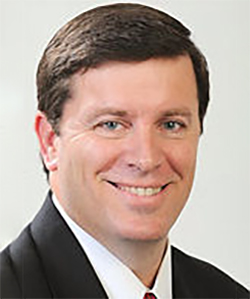
Bryan Simonaire
100% support rate
Top opponent
Dalya Attar
0% support rate
Ranked legislators
10
5 support · 5 oppose
Key legislators

Who's moving juvenile justice in Maryland

Legislators moving juvenile justice in Maryland
Legislator Party Stance Support rate Votes
Bryan Simonaire
Bryan Simonaire Senate · District 31
R
Strong +
100% 6
Chao Wu
Chao Wu House · District 9A
D
Strong +
100% 4
Jackie Addison
Jackie Addison House · District 45
D
Strong +
100% 4
Jessica Feldmark
Jessica Feldmark House · District 12A
D
Strong +
100% 4
Marlon Amprey
Marlon Amprey House · District 40
D
Strong +
100% 4
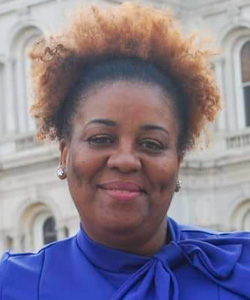
Dalya Attar
Dalya Attar Senate · District 41
D
Strong −
0% 4
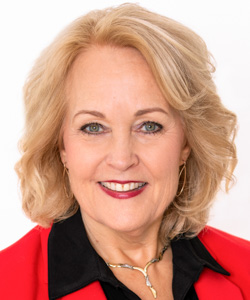
Kathy Szeliga
Kathy Szeliga House · District 7A
R
Strong −
0% 4
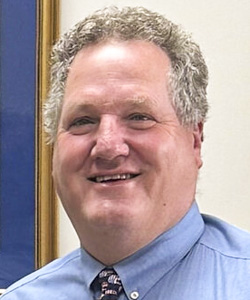
Kevin Anderson
Kevin Anderson House · District 38A
R
Strong −
0% 4
Teresa Reilly
Teresa Reilly House · District 35A
R
Strong −
14% 7
Alonzo Washington
Alonzo Washington Senate · District 22
D
Strong −
17% 6
Showing 1–10 of 21 bills

All criminal justice bills

died · Maryland · Senate Mar 9, 2026

SB 737: Juvenile Law - Probation and Treatment Services - Required Disposition (Parental Accountability Act)

SB 737, the "Parental Accountability Act," requires Maryland juvenile courts to place children on probation (instead of out-of-home placement) if they’ve repeatedly committed specific offenses: violent acts (like crimes of violence or firearm use) or been adjudicated as habitually truant more than once. The probation must include a court-approved treatment service plan and mandate participation from the child’s parents, guardians, or custodians in rehabilitation services. This bill directly affects youth with repeat offenses in these categories and their families, shifting focus from confinement to structured support. It amends Maryland’s juvenile code to prioritize treatment plans over secure detention for qualifying cases, excluding minor offenses like first-time cannabis possession or technical violations.
in committee · Maryland · House of Delegates Feb 20, 2026

HB 1340: State Government - Prison Education Delivery Reform Commission - Establishment

HB 1340 establishes the Prison Education Delivery Reform Commission as an independent state body to improve education access for people in Maryland's criminal and juvenile justice systems. The commission, composed of 11 appointed members including state agency heads, legislators, and external experts, must develop a statewide education framework using data to reduce recidivism and increase public safety. Key tasks include researching best practices for education programs, evaluating current workforce training, forming an advisory group with justice reform organizations, and seeking technical assistance from national experts. This commission directly affects incarcerated individuals and justice system stakeholders by focusing on education as a strategy to improve outcomes. The bill creates a structured process for policy recommendations but does not change existing education programs.
passed · Maryland · House of Delegates Mar 25, 2026

HB 921: Juvenile Law - Confinement and Restrictive Housing - Limitations

HB 921 limits when minors in Maryland juvenile facilities can be placed in restrictive housing (isolation or special confinement). It prohibits using restrictive housing for discipline, punishment, or staff convenience, and requires facilities to use it only for immediate safety risks (like harm to self/others or facility security) for the shortest time possible (max 6 hours). Minors can request restrictive housing or withdraw that request at any time, and facilities must provide mental health screenings within 1 hour of placement. The bill also mandates that minors in restrictive housing receive the same access to phone calls, visits, medical care, education, and recreation as other minors, unless safety is at risk.
signed · Maryland · Senate May 26, 2026

SB 524: Juvenile Records - Access by Baltimore City Mayor's Office

SB 524 allows Baltimore City's Mayor's Offices of Neighborhood Safety and Engagement, Children and Family Success, and African American Male Engagement to access confidential juvenile police and court records under specific circumstances. The bill modifies Maryland law to permit these offices to view records *only* when providing services to a child whose record is involved, for developing treatment plans or delivering programs. It explicitly states that this access does not violate confidentiality rules, but the offices would be liable for unauthorized releases of such records. The law directly affects Baltimore City's targeted offices and the children receiving services from them, while maintaining existing protections for juvenile records elsewhere.
in committee · Maryland · Senate Feb 5, 2026

SB 537: Youth Delinquency Prevention Fund - Establishment

SB 537 establishes Maryland's Youth Delinquency Prevention Fund to provide grants to community programs focused on preventing youth delinquency, suicide, substance abuse, and supporting youth development. The fund, administered by the Office, receives state budget appropriations and interest earnings, and is designated as a non-lapsing special fund (meaning it doesn't expire or revert to the General Fund). It requires annual reports detailing grant distribution, recipient demographics (by age, race, geography, and ethnicity), services provided, and unspent funds. The fund specifically supports community-based programs like youth service bureaus and aims to supplement, not replace, existing youth funding.
signed · Maryland · House of Delegates May 26, 2026

HB 776: Juvenile Law - Child in Need of Supervision - Mandatory Petition (NyKayla Strawder Memorial Act)

HB 776, the NyKayla Strawder Memorial Act, requires Maryland intake officers to automatically file a petition declaring a child under 13 a "child in need of supervision" if the child is alleged to have caused a death through a criminal act (e.g., homicide or manslaughter). This applies specifically to cases where the child's actions would be a felony if committed by an adult. The bill removes the intake officer's discretion to handle such cases informally or dismiss them, mandating formal juvenile court processing. Law enforcement must also forward these complaints directly to the Department of Juvenile Services.
signed · Maryland · Senate May 26, 2026

SB 715: Washington County - Juveniles - Truancy Reduction Pilot Program

SB 715 authorizes the Circuit Administrative Judge of the Fourth Circuit to establish a Truancy Reduction Pilot Program specifically in Washington County's juvenile court. The bill amends existing Maryland law to add Washington County as a jurisdiction eligible for this pilot program, which aims to address student absenteeism through court-based interventions. The program would operate under the existing framework used in other counties (like Dorchester and Worcester) but is limited to Washington County for a defined period. It directly affects Washington County juvenile courts and students with chronic absenteeism, without creating new funding or changing current truancy enforcement procedures.
passed · Maryland · House of Delegates Mar 19, 2026

HB 1058: Youth Delinquency Prevention Fund - Establishment

HB 1058 establishes Maryland's Youth Delinquency Prevention Fund to provide grants to community-based programs, including youth service bureaus, that offer preventive services like delinquency prevention, youth suicide prevention, substance use prevention, and youth development. The fund, administered by the state office, is funded through state budget appropriations and interest earnings, and it must be used exclusively for these preventive services without replacing existing funding. The bill requires annual reports detailing grant distribution, the number of children served (disaggregated by age, region, race, and ethnicity), and whether served youth later interacted with justice systems. The fund is non-lapsing, meaning money remains available year-to-year and cannot revert to the General Fund.
signed · Maryland · House of Delegates May 26, 2026

HB 1457: Washington County - Juveniles - Truancy Reduction Pilot Program

HB 1457 authorizes the Circuit Administrative Judge of Maryland's Fourth Circuit to establish a Truancy Reduction Pilot Program specifically in Washington County's juvenile court. The bill directly affects Washington County juveniles who are truant and the juvenile court system there, aiming to address school absenteeism through court-led interventions rather than punitive measures. Key provisions amend existing law to explicitly include Washington County in the list of jurisdictions where such pilot programs may operate, alongside other counties already covered. The program would operate using state budget funds and requires consultation with other circuit administrative judges before implementation, effective October 1, 2026.
in committee · Maryland · Senate Jan 22, 2026

SB 296: Juveniles - Detention and Confinement - Limitations on Juvenile Contact With Incarcerated Adults

This bill prohibits detaining juveniles (under 18) in any facility where they could see, hear, or otherwise have contact with incarcerated adults. It applies to all juveniles awaiting trial, convicted, or held in custody for offenses tried in adult court. The law requires juveniles to be held in secure juvenile facilities unless temporarily held for up to 6 hours in an adult facility - while separated by sight/sound - pending transfer to a juvenile facility. Exceptions for capacity issues or safety risks remain but must be documented by the court.
Showing 1 to 10 of 21 bills
1 2 3 Next