Issue · Criminal Justice

Criminal Justice (Drug Policy)

Every criminal justice bill, vote, and legislator stance in Maryland, automatically classified by Maddy, our AI policy reader.

Total bills
26
2026 Regular Session
Top supporter
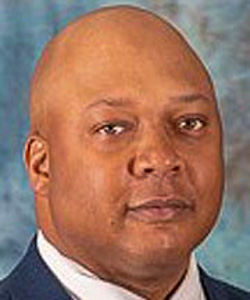
Andre Johnson
100% support rate
Top opponent
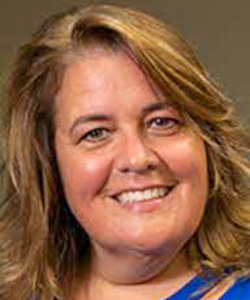
Courtney Watson
25% support rate
Ranked legislators
10
5 support · 5 oppose
Key legislators

Who's moving drug policy in Maryland

Legislators moving drug policy in Maryland
Legislator Party Stance Support rate Votes
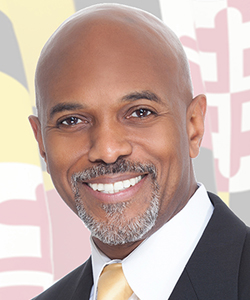
Andre Johnson
Andre Johnson House · District 34A
D
Strong +
100% 3
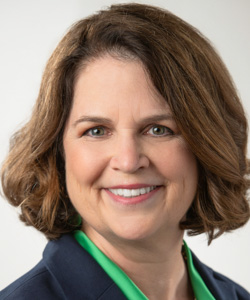
April Miller
April Miller House · District 4
R
Support
67% 3
April Rose
April Rose House · District 5
R
Support
67% 3
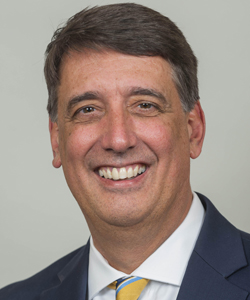
Barrie Ciliberti
Barrie Ciliberti House · District 4
R
Support
67% 3
Barry Beauchamp
Barry Beauchamp House · District 38B
R
Support
67% 3
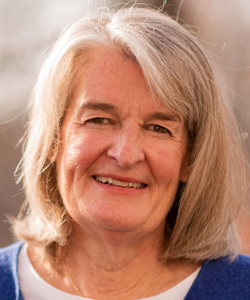
Courtney Watson
Courtney Watson House · District 9B
D
Oppose
25% 4
Guy Guzzone
Guy Guzzone Senate · District 13
D
Oppose
25% 4
Pam Guzzone
Pam Guzzone House · District 13
D
Oppose
25% 4
Ron Watson
Ron Watson Senate · District 23
D
Oppose
25% 4
Stephanie Smith
Stephanie Smith House · District 45
D
Oppose
25% 4
Showing 1–10 of 26 bills

All criminal justice bills

in committee · Maryland · Senate Feb 16, 2026

SB 906: Criminal Law - Distribution of Heroin or Fentanyl Causing Death or Serious Bodily Injury (Victoria, Scottie, Ashleigh, and Yader's Law)

This bill creates a new criminal offense in Maryland for distributing heroin, fentanyl, or their chemical analogues when such distribution results in death or serious bodily injury to another person. It applies to anyone convicted of distributing these substances that cause harm, regardless of whether the victim used the drugs alone or mixed with other substances, and whether the distribution was direct or involved multiple transfers. The law establishes this as a separate felony carrying up to 20 years of consecutive prison time in addition to any other penalties, and allows prosecutions in either the county where the distribution occurred or where the death or injury happened.
died · Maryland · Senate Mar 9, 2026

SB 737: Juvenile Law - Probation and Treatment Services - Required Disposition (Parental Accountability Act)

SB 737, the "Parental Accountability Act," requires Maryland juvenile courts to place children on probation (instead of out-of-home placement) if they’ve repeatedly committed specific offenses: violent acts (like crimes of violence or firearm use) or been adjudicated as habitually truant more than once. The probation must include a court-approved treatment service plan and mandate participation from the child’s parents, guardians, or custodians in rehabilitation services. This bill directly affects youth with repeat offenses in these categories and their families, shifting focus from confinement to structured support. It amends Maryland’s juvenile code to prioritize treatment plans over secure detention for qualifying cases, excluding minor offenses like first-time cannabis possession or technical violations.
passed · Maryland · House of Delegates Mar 23, 2026

HB 765: Criminal Law - Counterfeiting and Possession of Counterfeit Lease of Real Property - Penalty

HB 765 amends Maryland's criminal code to explicitly prohibit counterfeiting or possessing counterfeit leases and rental agreements with intent to defraud. It adds "lease" (subsection a(7)) and "rental agreement" (a(13)) to the list of items protected under counterfeiting laws, which previously covered items like bonds and checks. Creating or aiding in creating such counterfeits becomes a felony punishable by up to 10 years in prison or a $1,000 fine, while knowingly possessing them is a misdemeanor punishable by up to 3 years in prison or a $1,000 fine. The bill directly affects individuals who fraudulently create or use fake rental documents, such as those attempting to evade rent or commit property fraud.
in committee · Maryland · Senate Feb 12, 2026

SB 736: Criminal Law - Obscene Matter - Visual Representation of Child

SB 736 updates Maryland's criminal law regarding visual representations of children. It raises the age limit from 16 to 18 for material depicting children in sexual contexts or abuse, making possession or viewing such material illegal for children under 18. Penalties increase significantly, with first offenses carrying up to 10 years in prison or $25,000 in fines, and repeat offenses becoming felonies with up to 20 years in prison or $50,000 fines. The bill also allows individuals depicted in such material to file civil lawsuits for damages (including up to $250,000 in punitive damages) without needing a prior criminal conviction, and requires the Attorney General to submit annual reports on enforcement and technology changes.
in committee · Maryland · Senate Feb 11, 2026

SB 732: Cannabis - Community Reinvestment and Repair Fund - Distribution and Use of Funds for Baltimore City

SB 732 requires Maryland's Comptroller to direct funds from the Community Reinvestment and Repair Fund (funded by cannabis tax revenue and business fees) specifically to Baltimore City's Comptroller. The Baltimore City Comptroller must then establish a special fund to distribute these resources to community programs in areas disproportionately impacted by historical cannabis enforcement. Funds can support services like behavioral health care, job training, housing assistance, and after-school programs - but cannot fund law enforcement or replace existing city programs. The bill mandates these funds remain separate from general city revenue and are subject to audit, ensuring they directly benefit Baltimore communities most affected by past cannabis policies.
in committee · Maryland · House of Delegates Feb 5, 2026

HB 847: Criminal Law - Fraud - Possession of Residential Real Property

HB 847 makes it a misdemeanor to possess or claim rights to residential property you don’t legally own with intent to defraud. Violations carry escalating penalties: up to 90 days in jail or $500 for a first offense, increasing to 1 year/jail or $2,500 for repeat offenses within two years. Property owners can file a sworn affidavit with the sheriff to request law enforcement remove alleged fraudsters, but officers must halt removal if the person presents evidence of lawful possession. The law explicitly states it doesn’t prevent owners from filing standard wrongful detainer lawsuits under existing property law.
in committee · Maryland · House of Delegates Feb 13, 2026

HB 1162: Correctional Services – Medication–Assisted Treatment Funding

HB 1162 requires Maryland correctional facilities in specific counties (starting with Howard, Montgomery, Prince George’s, and St. Mary’s) to provide medication-assisted treatment (MAT) for incarcerated individuals with opioid use disorder. It mandates facilities to conduct assessments, offer FDA-approved MAT options, and provide behavioral health counseling, with special provisions for pregnant individuals. The bill establishes funding mechanisms: the Special Secretary of Overdose Response must annually reimburse counties for MAT costs, and the Opioid Restitution Fund’s authorized uses expand to support this. This applies to local detention centers and the Baltimore Pre-trial Complex by 2023, with implementation schedules for additional counties.
in committee · Maryland · House of Delegates Feb 5, 2026

HB 824: Criminal Procedure - Expungement - Conviction of Distribution of Controlled Dangerous Substance

HB 824 would allow individuals convicted of distributing controlled substances (like drugs) to clear those felony convictions from their criminal records through expungement. Currently, such convictions are excluded from expungement eligibility, but this bill would add them to the list of eligible offenses under Maryland law. The change modifies specific sections of Maryland's Criminal Law and Criminal Procedure codes to explicitly include distribution convictions in the expungement process. This directly affects people with past felony drug distribution convictions who seek to remove these records from public access.
Sub-Topics Drug Policy
in committee · Maryland · House of Delegates Feb 16, 2026

HB 1386: Criminal Law - Distribution of Heroin or Fentanyl Causing Death or Serious Bodily Injury (Victoria, Scottie, Ashleigh, and Yader's Law)

HB 1386, "Victoria, Scottie, Ashleigh, and Yader’s Law," makes it a felony for repeat drug distributors to provide heroin, fentanyl, or similar drugs when that distribution causes death or serious injury to another person. It applies only to individuals with prior convictions for distributing controlled substances under Maryland law. The law holds every person who transferred the drugs before the harm occurred liable, mandates a maximum 20-year prison sentence (served consecutively to other sentences), and clarifies that the law covers cases where drugs were mixed with other substances or distributed directly to the victim. This bill directly affects repeat drug distributors whose actions result in fatal or severe injuries, not general users or first-time offenders.
in committee · Maryland · House of Delegates Feb 16, 2026

HB 1361: Criminal Law - Controlled Dangerous Substances and Criminal Organizations

HB 1361 modifies Maryland’s criminal law regarding controlled substances and criminal organizations. It specifies that conspiring to violate controlled substance laws (including cannabis distribution) carries the same penalty as the underlying crime, and expands venue rules for prosecutions. Specifically, cases involving controlled substances or criminal organizations can now be tried in any county where acts occurred, operations were based, proceeds were held, or the defendant resides. This primarily affects prosecutors, defendants, and conspirators in drug-related and organized crime cases by clarifying where trials can be held. The bill does not change substance prohibitions but adjusts penalties and jurisdiction for related offenses.
Sub-Topics Drug Policy
Showing 1 to 10 of 26 bills
1 2 3 Next