Issue · Criminal Justice

Criminal Justice (Policing)

Every criminal justice bill, vote, and legislator stance in Maryland, automatically classified by Maddy, our AI policy reader.

Total bills
46
2026 Regular Session
Top supporter
Stuart Schmidt
100% support rate
Top opponent
Frank Conaway
0% support rate
Ranked legislators
10
5 support · 5 oppose
Key legislators

Who's moving policing in Maryland

Legislators moving policing in Maryland
Legislator Party Stance Support rate Votes
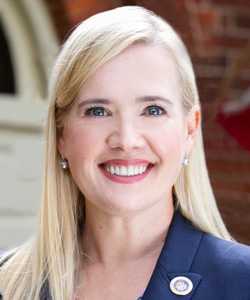
Stuart Schmidt
Stuart Schmidt House · District 33B
R
Strong +
100% 4
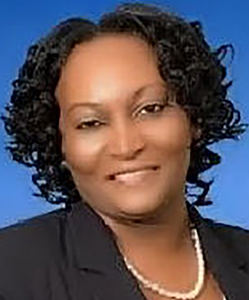
Dana Jones
Dana Jones House · District 30A
D
Strong +
100% 3
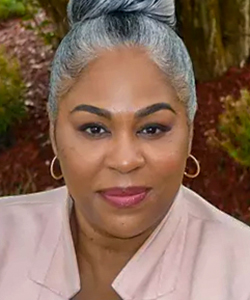
Diana Fennell
Diana Fennell House · District 47A
D
Strong +
100% 3
Gary Simmons
Gary Simmons House · District 12B
D
Strong +
100% 3
Aletheia McCaskill
Aletheia McCaskill House · District 44B
D
Support
75% 4
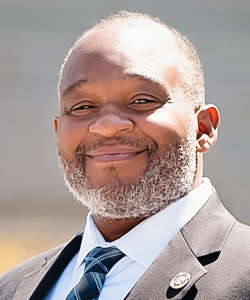
Frank Conaway
Frank Conaway House · District 40
D
Strong −
0% 6
C.T. Wilson
C.T. Wilson House · District 28
D
Strong −
0% 3
William Wivell
William Wivell House · District 2A
R
Strong −
0% 3
Caylin Young
Caylin Young House · District 45
D
Oppose
25% 4
Chris West
Chris West Senate · District 42
R
Oppose
25% 4
Showing 1–10 of 46 bills

All criminal justice bills

signed · Maryland · House of Delegates May 12, 2026

HB 904: Law Enforcement - Protective Body Armor - Requirements and Reporting

This Maryland bill requires law enforcement agencies to issue protective body armor to officers before assigning them to any duties other than administrative work. The armor must meet current National Institute of Justice ballistic standards and have not passed its manufacturer-suggested replacement date. Agencies must replace expired armor within 31 days and notify the Maryland Police Training and Standards Commission if they fail to do so. The Governor's Office of Crime Prevention and Policy will withhold grant funds from agencies that do not comply with these replacement and reporting requirements. The law takes effect on October 1, 2026.
in committee · Maryland · Senate Feb 12, 2026

SB 716: Courts and Judicial Proceedings - Charging Documents - Law Enforcement Officers

SB 716 amends Maryland law to expand the definition of "law enforcement officer" to include special police officers for the Maryland Judiciary. It requires the State's Attorney to investigate and recommend to a court before a statement of charges can be filed against law enforcement officers, emergency services personnel, or child welfare workers for crimes committed while performing their duties. The bill mandates that such applications must be immediately forwarded to the State's Attorney, who must then investigate and provide a recommendation to the District Court Commissioner before charges proceed. This change applies to cases filed on or after October 1, 2026, and does not affect the State's Attorney's authority to file formal charges or convene a grand jury.
signed · Maryland · House of Delegates May 26, 2026

HB 852: Higher Education - Scholarships for Correctional Officers

HB 852 expands Maryland's existing scholarship program to include correctional officers. It amends the Maryland Police Officers and Probation Agents Scholarship Program (now titled "Maryland Police Officers, Probation Agents, AND CORRECTIONAL OFFICERS Scholarship Program") to allow current or future correctional officers to qualify. Eligible recipients must be Maryland residents or graduates of Maryland high schools, enrolled at an eligible institution (public university or community college), and agree to work as correctional officers for at least 5 years within 8 years of graduation. The bill does not create a new program but updates the eligibility criteria of an existing scholarship.
in committee · Maryland · House of Delegates Feb 5, 2026

HB 794: Public Safety - Maryland Police Training and Standards Commission - Prohibition Against Certain Affiliation or Support by Police Officers

HB 794 prohibits Maryland police officers from affiliating with, supporting, or advocating for groups promoting white supremacy, racial bigotry, or violence against Black, Indigenous, and people of color. The bill requires the Maryland Police Training and Standards Commission to enforce this rule, specifically banning officers from participating in or promoting FBI-designated extremist groups that encourage illegal violence. It directly affects all sworn police officers in Maryland by establishing clear conduct standards for their off-duty associations. The law amends existing state code to define "white supremacist groups" and mandates the Commission to enforce these restrictions starting October 1, 2026.
Sub-Topics Policing
in committee · Maryland · House of Delegates Feb 5, 2026

HB 741: Firearms Dealers and Employees - Required Training and Exam

HB 741 requires all Maryland firearms dealers and their employees to complete annual training and pass a written exam on firearm laws, safety, theft prevention, and recognizing illegal activities like straw purchases. Starting January 1, 2027, new applicants must complete the training before applying, current dealers must renew annually, and new hires must complete it within 20 days of starting work. The Secretary of State Police must approve a training course by October 1, 2026, and administer the exam, with a passing score of 70%. Dealers must maintain records of all passed exams, and violations carry a $1,000 civil penalty.
Sub-Topics Firearms Policing
in committee · Maryland · House of Delegates Feb 16, 2026

HB 1392: Public Safety - Law Enforcement - Quotas (Community-Oriented Policing Act)

HB 1392, the Community-Oriented Policing Act, prohibits Maryland law enforcement agencies from setting or requiring officers to meet arrest or citation targets (quotas) and bans using such targets for evaluations, pay, discipline, or promotions. The bill allows agencies to use quantitative data for legitimate management or compliance checks but explicitly forbids quotas as a performance metric. Officers can report suspected quota violations to the Attorney General’s Office via an online form, which must investigate within one year and order agencies to stop if violations are confirmed. This law directly affects all Maryland law enforcement agencies and their officers, aiming to prevent pressure to meet arbitrary arrest numbers.
in committee · Maryland · House of Delegates Mar 11, 2026

HB 1505: Higher Education - Loan Repayment and Scholarships for Correctional Officers

HB 1505 expands Maryland’s existing loan repayment and scholarship programs to include correctional officers. It amends two programs: the "Maryland Loan Assistance Repayment Program for Police Officers, Probation Agents, and Correctional Officers" (for repaying education loans) and the "Maryland Police Officers, Probation Agents, and Correctional Officers Scholarship Program" (for tuition assistance). Correctional officers who work in state correctional facilities for at least 2 years (for loan repayment) or commit to 5 years of service (for scholarships) become eligible. The bill directly affects current and future correctional officers pursuing or completing degrees in Maryland. It does not create new funding but extends existing benefits to this workforce.
signed · Maryland · Senate May 26, 2026

SB 524: Juvenile Records - Access by Baltimore City Mayor's Office

SB 524 allows Baltimore City's Mayor's Offices of Neighborhood Safety and Engagement, Children and Family Success, and African American Male Engagement to access confidential juvenile police and court records under specific circumstances. The bill modifies Maryland law to permit these offices to view records *only* when providing services to a child whose record is involved, for developing treatment plans or delivering programs. It explicitly states that this access does not violate confidentiality rules, but the offices would be liable for unauthorized releases of such records. The law directly affects Baltimore City's targeted offices and the children receiving services from them, while maintaining existing protections for juvenile records elsewhere.
signed · Maryland · Senate May 12, 2026

SB 544: Courtroom Security - Minimum Adequate Security Standard

SB 544 establishes minimum security staffing requirements for all Maryland courthouses. It requires courthouse security providers to have specific numbers of qualified officers present during proceedings: one officer per courtroom for most cases (starting July 2027), two officers for cases involving incarcerated individuals or potential custody changes, and one additional officer for every four or fewer courtrooms per floor. Security officers must meet the qualifications for a special police officer under Maryland law. The standards phase in over time, with full implementation by July 1, 2029, and take effect October 1, 2026. This directly affects all Maryland courthouses and the security entities responsible for staffing them.
Sub-Topics Policing
died · Maryland · Senate Feb 23, 2026

SB 591: National Public Safety Alliance for Individuals With Disabilities - Maryland Chapter - Establishment

SB 591 establishes the Maryland Chapter of the National Public Safety Alliance for Individuals with Disabilities within the Department of State Police. It creates a secure, voluntary online system allowing individuals with disabilities to share personal information (like contact details, physical descriptions, and disability-related needs) with law enforcement for emergency response. The bill requires the Department of State Police and Department of Disabilities to develop mandatory training and guidelines for law enforcement agencies, and it creates a commission to study protocols and public engagement strategies. This directly affects individuals with disabilities who choose to participate and all local law enforcement agencies required to implement the new protocols.
Showing 1 to 10 of 46 bills
1 2 3 5 Next