Issue · Criminal Justice

Criminal Justice

Every criminal justice bill, vote, and legislator stance in Maryland, automatically classified by Maddy, our AI policy reader.

Total bills
288
2026 Regular Session
Top supporter
Stuart Schmidt
91% support rate
Top opponent
Jim Hinebaugh
41% support rate
Ranked legislators
10
5 support · 5 oppose
Key legislators

Who's moving criminal justice in Maryland

Legislators moving criminal justice in Maryland
Legislator Party Stance Support rate Votes
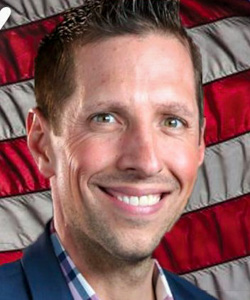
Stuart Schmidt
Stuart Schmidt House · District 33B
R
Strong +
91% 182
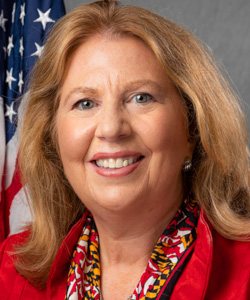
Katie Hester
Katie Hester Senate · District 9
D
Strong +
80% 86
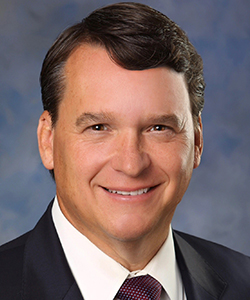
Brian Crosby
Brian Crosby House · District 29B
D
Support
72% 101
Mary-Dulany James
Mary-Dulany James Senate · District 34
D
Support
71% 88
Matthew Schindler
Matthew Schindler House · District 2B
D
Support
67% 191
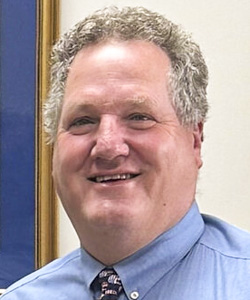
Jim Hinebaugh
Jim Hinebaugh House · District 1A
R
Mixed −
41% 162
Dalya Attar
Dalya Attar Senate · District 41
D
Mixed −
42% 77
Kevin Anderson
Kevin Anderson House · District 38A
R
Mixed −
42% 119
Steve Hershey
Steve Hershey Senate · District 36
R
Mixed −
43% 108
Mary Beth Carozza
Mary Beth Carozza Senate · District 38
R
Mixed −
43% 110
Showing 71–80 of 288 bills

All criminal justice bills

in committee · Maryland · House of Delegates Feb 16, 2026

HB 1347: Task Force to Study Postrelease Services and Requirements (Bri's Law)

HB 1347 (Bri’s Law) creates a 7-member task force to study Maryland’s post-incarceration support systems. The task force, including state legislators, corrections officials, and prosecutors, will examine all release types from prison and current programs designed to prevent reoffending. It must submit recommendations to the Governor and legislature by July 2027, after which the task force automatically expires on June 30, 2028. This bill does not change existing services but mandates a review of current postrelease requirements.
Sub-Topics Corrections
in committee · Maryland · House of Delegates Feb 16, 2026

HB 1154: Correctional Services - Restrictive Housing

HB 1154 limits restrictive housing for pregnant incarcerated individuals in Maryland correctional facilities. It prohibits placing them in restrictive housing (defined as 20+ hours locked in a cell daily) except in specific emergencies involving immediate safety risks or disease control, requiring facility staff to document why less restrictive options weren’t possible. The bill mandates medical assessments every 8 hours, access to recreation and programming for pregnant individuals in infirmary care, and requires facilities to submit detailed reports to officials within 30 days of any placement. It also prohibits placing other vulnerable populations in restrictive housing and mandates the Correctional Ombudsman to review implementation annually.
Sub-Topics Corrections
in committee · Maryland · House of Delegates Feb 5, 2026

HB 873: Manslaughter by Vehicle or Vessel - Increased Penalties (Jamari's Law)

HB 873 increases prison sentences for drivers who cause death through extreme carelessness while operating a vehicle or vessel. For a first offense, the maximum sentence rises from 10 to 20 years; for repeat offenses, it increases from 15 to 30 years. The bill does not change fines, which remain up to $5,000 for first offenses and $10,000 for repeat offenses. This law affects a very limited number of cases, as only about 30 people were incarcerated for this specific offense in Maryland during fiscal 2025, making its overall impact minimal.
Sub-Topics Corrections
passed · Maryland · Senate Mar 23, 2026

SB 520: Property Tax - Charter Counties - Application of County Tax Limitation on Public Safety Budget

SB 520 allows charter counties in Maryland to set property tax rates above their charter limits - via simple majority vote - to fund public safety budgets (like police and fire services). It requires that any excess tax revenue collected beyond the charter limit must be allocated solely to public safety, not other county programs. The bill applies only to charter counties (e.g., Baltimore County) and mandates annual reporting to the Governor and legislature on tax rates and revenue usage. This changes existing tax rules by creating a specific exemption for public safety funding while maintaining other budget constraints.
Sub-Topics Property Tax Revenue Policing Tags Public Safety
died · Maryland · House of Delegates Mar 16, 2026

HB 1036: Office of the Attorney General - Independent Investigations Division - Federal Law Enforcement or Immigration Enforcement

HB 1036 requires Maryland’s Attorney General’s Independent Investigations Division to investigate deaths or serious injuries occurring during interactions with federal law enforcement or immigration officers. The bill mandates that the Division submit investigation findings to the Governor and legislature within a specified timeframe. If the Attorney General determines sufficient evidence exists, they must prosecute federal officers for potential crimes. This law directly affects Maryland’s state investigations office, federal officers, and individuals involved in such incidents. It creates a concrete state-level process for reviewing federal enforcement actions that result in death or serious harm.
Sub-Topics Law Enforcement
in committee · Maryland · House of Delegates Feb 5, 2026

HB 787: Criminal Law - Theft - Mail and Packages (Porch Piracy Act of 2026)

HB 787, the "Porch Piracy Act of 2026," makes stealing mail or packages delivered by USPS or commercial carriers a felony. It directly affects individuals who take another person’s mail/package without permission (e.g., porch pirates) and courts handling such cases. Key provisions require offenders to return stolen items or pay restitution, with third or subsequent offenses carrying up to 3 years in prison, $1,500 fines, or both. For repeat offenders, courts may also mandate substance use disorder evaluation and treatment as part of sentencing. The law takes effect October 1, 2026.
in committee · Maryland · House of Delegates Feb 16, 2026

HB 1415: Public Safety - Law Enforcement Officers - Identification

HB 1415 requires all Maryland law enforcement officers to visibly wear identification (including agency, last name, and badge number) on their outermost clothing during duty, with specific standards for size, placement, and visibility. It mandates that the Maryland Police Training and Standards Commission develop a model policy covering these requirements, including how identification must be displayed on uniforms, outerwear, and plainclothes, plus training for officers. Law enforcement agencies must adopt policies matching this model, and officers violating the rule face misdemeanor penalties (up to 2 years in jail or $2,000 fine) and loss of civil immunity. The law excludes active undercover officers and takes effect October 1, 2026.
signed · Maryland · Senate Apr 28, 2026

SB 707: Mental Health Law - Danger to the Life or Safety of the Individual or of Others - Definition (Right to Treatment)

SB 707 amends Maryland's Mental Health Law to clarify the definition of "danger to the life or safety of the individual or of others" for involuntary admission and emergency evaluations. It specifies that this danger includes four key scenarios: causing bodily harm, engaging in conduct likely to result in criminal justice involvement, inability to meet basic needs (food, shelter, medical care) creating serious risk, or substantial deterioration in judgment preventing informed treatment decisions. The bill directly affects individuals with mental disorders who may be assessed for involuntary care, as well as healthcare providers making those determinations under the law. This definition replaces the current standard in Maryland Code, Section 10-601, and takes effect October 1, 2026.
Sub-Topics Mental Health
signed · Maryland · House of Delegates May 26, 2026

HB 776: Juvenile Law - Child in Need of Supervision - Mandatory Petition (NyKayla Strawder Memorial Act)

HB 776, the NyKayla Strawder Memorial Act, requires Maryland intake officers to automatically file a petition declaring a child under 13 a "child in need of supervision" if the child is alleged to have caused a death through a criminal act (e.g., homicide or manslaughter). This applies specifically to cases where the child's actions would be a felony if committed by an adult. The bill removes the intake officer's discretion to handle such cases informally or dismiss them, mandating formal juvenile court processing. Law enforcement must also forward these complaints directly to the Department of Juvenile Services.
signed · Maryland · House of Delegates May 12, 2026

HB 1030: Office of the State Prosecutor - Investigation of Threats - Judges

HB 1030 expands Maryland's existing threat laws to specifically protect judges and judge-elects. The bill amends Section 3-708 of the Criminal Law to explicitly include "a judge or judge-elect" in the list of protected individuals (alongside state/local officials and prosecutors). It also adds a new subsection (VII) to Section 14-107 of the Criminal Procedure law, authorizing the State Prosecutor to investigate threats against judges or judge-elects. This change ensures judges receive the same legal protections against threats as other designated officials under current law. The bill takes effect October 1, 2026.
Sub-Topics Judges
Showing 71 to 80 of 288 bills
Previous 1 7 8 9 29 Next