

Existing law, the Cigarette and Tobacco Products Licensing Act of 2003, requires the California Department of Tax and Fee Administration to issue a license to a retailer to engage in the sale of cigarettes or tobacco products upon receipt of a completed application and payment of certain fees unless any of certain exceptions apply. Existing law subjects licenses issued by the act to suspension or revocation for specified violations. Existing law prohibits a person from dispensing or distributing nitrous oxide to a person if the distributor knows or should know that the person is going to use the nitrous oxide for certain unlawful purposes and that person proximately causes great bodily injury or death to that person or another person. Existing law also requires a person who dispenses or distributes nitrous oxide to record each transaction involving the dispensing or distribution of nitrous oxide in a written or electronic document, as specified. Existing law makes a violation of either of these provisions a misdemeanor. This bill would require a court to order the suspension, for up to one year, of the business license of a person who knowingly violates either of those provisions after having been previously convicted of a violation of the respective provision, except as specified. This bill would specify violations subjecting licenses to suspension or revocation include, among others, the crimes above, as specified. The bill would exempt from the license issuance requirement the issuance of a license to a retailer who has been convicted of specified crimes relating to the distribution of nitrous oxide, including the misdemeanors described above.
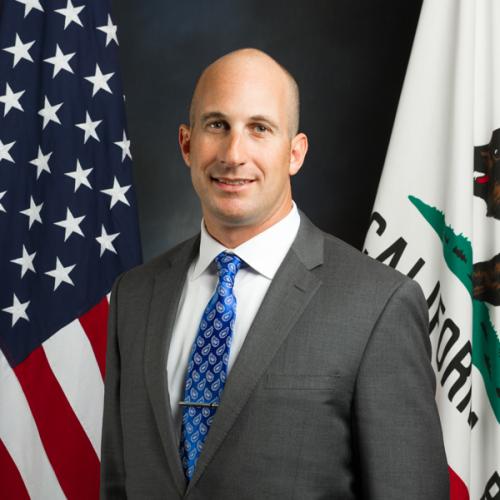
Asm. Heath Flora
Sponsored bills
Existing law, the Nursing Practice Act, establishes the Board of Registered Nursing to license and regulate the practice of nursing. The act prohibits a person from engaging in the practice of nursing without an active license but authorizes a student to render nursing services incidental to the student's course of study, as specified. This bill would additionally authorize a student to render nursing services if the student is a resident of the state and enrolled in a prelicensure distance education nursing program based at an out-of-state private postsecondary educational institution, as defined, for the purpose of gaining clinical experience in a clinical setting that meets certain criteria, including that the program is accredited by a programmatic accreditation entity recognized by the United States Department of Education and that the program maintains minimum faculty to student ratios required of board-approved programs for inperson clinical experiences. The bill would require the student to be supervised in person by a registered nurse licensed by the board while rendering nursing services. The bill would prohibit a clinical agency or facility from offering clinical experience placements to an out-of-state private postsecondary educational institution if the placements are needed to fulfill the clinical experience requirements of in-state students enrolled in a board-approved nursing program.
Existing law establishes the California State Library, which includes the California Research Bureau, under the control of an executive known as the "State Librarian." Existing law authorizes the California State Library to serve as the central reference and research library for the departments of state government and to, among other things, maintain adequate legislative reference and research library services for the Legislature. Existing law declares as legislative policy that all of the territory of the state shall be included within a community college district, except that territory located within a county where the county residents accounted for fewer than 350 units of average daily attendance in the state's community colleges during the preceding fiscal year, and that territory located within such a county may be included within a community college district pursuant to prescribed procedures. This bill instead would declare as legislative policy that all of the territory of the state shall be included within a community college district or otherwise provided with equivalent opportunities for residents to participate in both in-person and online community college programs and courses. This bill would require the California Research Bureau to conduct a study and prepare a report evaluating the provision of community college services and opportunities to residents of the underserved Counties of Amador, Alpine, Mariposa, Modoc, and Sierra that are not fully included within the territory of a community college district, and would require the report to include policy recommendations regarding how the state can ensure that residents of those 5 counties have opportunities to participate in both in-person and online community college programs and courses equivalent to those of similarly sized communities that are fully included within the territory of a community college district, as provided. To assist with and inform the development of the report and recommendations, the bill would require the California Research bureau to convene and consult a working group that includes specified voluntary representatives, and would authorize the bureau to request and receive information from specified entities. The bill would require the California Research bureau to submit the report and recommendations to the Assembly Committee on Higher Education, the Senate Committee on Education, and the Governor on or before December 31, 2027. The bill would repeal these provisions as of January 1, 2032. This bill would make legislative findings and declarations as to the necessity of a special statute for the Counties of Amador, Alpine, Mariposa, Modoc, and Sierra.
Existing law makes it a crime to possess, cultivate, and administer specified controlled substances, including psilocybin and psilocyn. Existing law makes it a crime for a person to rent, lease, or make available for use any building or room for the purpose of storing or distributing any controlled substance. This bill would, until January 1, 2031, request the University of California to establish local pilots in up to 5 counties to allow for the research and development of psilocybin services for veterans and former first responders as part of the Veterans and Former First Responders Research Pilot Program ("Pilot Program") . The bill would require these university partners, overseeing each Pilot Program to be responsible for protocol design, institutional review board approvals, training of psilocybin facilitators, data collection, and reporting. The bill would require each local pilot to partner with licensed health care and licensed community-based providers that provide services and care to the target population. The bill would require psilocybin to be provided by or under the supervision of a practitioner who has experience in providing or overseeing psilocybin or other psychedelic therapy services. The bill would require that each person being considered for the Pilot Program meet specified criteria, including that they are 21 years of age or older and have been given specified assessments. This bill would request the University of California to report specified information about the Pilot Program to the Legislature, the Secretary of California Health and Human Services, and the Governor by January 15, 2030. The bill would establish the Veterans and Former First Responders Research Pilot Special Fund and would continuously appropriate the fund to the University of California for the purposes of these provisions. The bill would request the University of California to apply for and accept grants, donations, and federal funding for the purposes of the Pilot Program, and would require those moneys to be deposited in the fund.
Existing law requires a pupil to complete designated coursework while in grades 9 to 12, inclusive, in order to receive a diploma of graduation from high school. The coursework requirements include, among others, the completion of one course in visual or performing arts, foreign language, or career technical education. Existing law eliminates the authorization for career technical education to count toward that graduation requirement on July 1, 2027, or upon the occurrence of a specified event relating to career technical education requirements of the University of California and the California State University, whichever occurs earlier, as specified. This bill, subject to an appropriation by the Legislature for this purpose, would delete the above-described authorization and instead would indefinitely require, commencing with pupils graduating in the 2031–32 school year, the completion of a separate, stand-alone one-semester course in career technical education, that is prohibited from being combined with any other course, as a high school graduation requirement. The bill, subject to an appropriation by the Legislature for this purpose, would require school districts, county offices of education, and charter schools with pupil in grades 9 to 12, inclusive, to, commencing with the 2028–29 school year, offer a separate, stand-alone one-semester course in career technical education, that is prohibited from being combined with any other course. To the extent that the bill imposes new duties on school districts, county offices of education, and charter schools, the bill would impose a state-mandated local program. The California Constitution requires the state to reimburse local agencies and school districts for certain costs mandated by the state. Statutory provisions establish procedures for making that reimbursement. This bill would provide that, if the Commission on State Mandates determines that the bill contains costs mandated by the state, reimbursement for those costs shall be made pursuant to the statutory provisions noted above.
Existing law requires various types of notices to be provided in a "newspaper of general circulation," as that term is defined, in accordance with certain prescribed publication periods and legal requirements. Existing law requires a newspaper of general circulation to meet certain criteria, including publication, a bona fide subscription list of paying subscribers, and printing and publishing at regular intervals in the state, county, or city where publication is to be given. This bill would require any public notice that is legally required to be published in a newspaper of general circulation to be published in the newspaper's print publication, on the newspaper's internet website or electronic newspaper available on the internet, and on the statewide internet website maintained as a repository for notices by a majority of California newspapers of general circulation, as specified. This bill would include related legislative findings and declarations.
Maddy summarySCR 103 designates the week of July 20-26, 2025, as "Probation Services Week" in California. This concurrent resolution recognizes the work of probation services professionals across the state. It is a symbolic observance with no new laws, regulations, or direct impact on individuals or policies. The bill does not alter existing statutes or create obligations for any entity.
Existing law provides that in order for the state to recruit skilled firefighters for the Department of Forestry and Fire Protection, it is the policy of the state to consider prevailing salaries and benefits prior to making salary recommendations. Existing law requires the Department of Human Resources, in order to provide comparability in pay, to take into consideration the salary and benefits of other jurisdictions employing 75 or more full-time firefighters who work in California. This bill would require the state to pay firefighters who are rank-and-file members of State Bargaining Unit 8, employed by the Department of Forestry and Fire Protection, within 15% of the average salary for corresponding ranks in 20 listed California fire departments. The bill would require the state and the exclusive representative for State Bargaining Unit 8 to jointly survey annually and calculate the estimated average salaries for those fire departments. The bill would also require the Department of Human Resources, on or before January 1, 2027, to conduct and report to the Department of Forestry and Fire Protection a cursory survey on the salaries and benefits for the prior year of each of the fire chiefs for 5 listed California fire departments. The bill would provide that when determining compensation for uniformed classifications of the Department of Forestry and Fire Protection, it is the policy of the state to consider the salary of corresponding ranks within the comparable jurisdictions listed, as well as other factors, including internal comparisons. The bill would require any salary increase for firefighters under these provisions to be implemented through a memorandum of understanding, in accordance with specified procedures governing collective bargaining agreements. The bill would include legislative findings and declarations related to its provisions.
Maddy summaryThis bill establishes January as National Human Trafficking Awareness Month in California to raise public awareness about human trafficking. The resolution recognizes the severity of human trafficking as a felony crime and highlights statistics showing its prevalence across the country and specific challenges with identifying male victims and labor trafficking cases. It aims to educate the public and encourage reporting and support for victims during this designated month.
Existing law, commencing January 1, 2019, made various changes to the law governing ignition interlock devices (IID) , including, among other things, requiring a person who has been convicted of driving a motor vehicle under the influence of an alcoholic beverage, as specified, to install for a specified period of time as ordered by the court, an IID on the vehicle they operate, provided however that installation of an IID is discretionary for a first offender, as specified; authorizing a person convicted of driving a motor vehicle under the influence, if all other requirements are satisfied, including the installation of an IID, to apply for a restricted driver's license without completing a period of license suspension or revocation; and requiring ignition interlock device manufacturers to be in compliance with specified provisions relating to payment for the costs of an ignition interlock device. Existing law makes these changes operative until January 1, 2026. On January 1, 2026, existing law, as it relates to these provisions, is generally reinstated to read as it read prior to January 1, 2019. Existing law makes it a crime to violate certain provisions relating to IIDs and motor vehicles equipped with IIDs. This bill would extend the operation of these provisions until January 1, 2033, and would instead reinstate the law to how it read prior to January 1, 2019, on January 1, 2033. By extending the application of a crime, the bill would impose a state-mandated local program. The California Constitution requires the state to reimburse local agencies and school districts for certain costs mandated by the state. Statutory provisions establish procedures for making that reimbursement. This bill would provide that no reimbursement is required by this act for a specified reason.