

Existing law provides for the Medi-Cal program, administered by the State Department of Health Care Services and under which health care services are provided to low-income individuals pursuant to a schedule of benefits. The Medi-Cal program is, in part, governed and funded by federal Medicaid program provisions. Under existing law, pharmacist services are a benefit under the Medi-Cal program, subject to federal approval, and the rate of reimbursement for pharmacist services is 85% of the fee schedule for physician services, except for medication therapy management (MTM) pharmacist services. Existing law requires the department to implement an MTM reimbursement methodology relating to the dispensing of qualified specialty drugs by an eligible contracting pharmacy, which would be intended to supplement Medi-Cal payments to eligible pharmacies for MTM pharmacist services provided in conjunction with certain specialty drug therapy categories. This bill would additionally require the rate of reimbursement for advanced practice pharmacist services to be the same as the fee schedule for physician services, including MTM pharmacist services. The bill would require the department to implement an MTM reimbursement methodology relating to the use of drugs to ensure that Medi-Cal payments are only made to eligible advanced practice pharmacists or pharmacies for MTM pharmacist services provided in conjunction with certain specialty drug therapy categories. Existing law, the Knox-Keene Health Care Service Plan Act of 1975, provides for the licensure and regulation of health care service plans by the Department of Managed Health Care, and makes a willful violation of the act a crime. Existing law provides for the regulation of health insurers by the Department of Insurance. Existing law requires a health care service plan or disability insurer that offers coverage for pharmacist services to pay or reimburse the cost of the service performed by a pharmacist at an in-network pharmacy or a pharmacist at an out-of-network pharmacy if the insurer has an out-of-network pharmacy benefit. Existing law authorizes this payment or reimbursement when specified conditions are met, including that the coverage otherwise provides reimbursement for identical services performed by other licensed health care providers. This bill would additionally require those health care service plans and disability insurers to pay or reimburse the cost of the service performed by an advanced practice pharmacist enrolled as a provider with the plan or insurer. The bill would authorize payment or reimbursement if the coverage otherwise provides reimbursement for similar services performed by other licensed health care providers, among other requirements. Because a willful violation of the bill's requirements relative to health care service plans would be a crime, the bill would impose a state-mandated local program. The California Constitution requires the state to reimburse local agencies and school districts for certain costs mandated by the state. Statutory provisions establish procedures for making that reimbursement. This bill would provide that no reimbursement is required by this act for a specified reason.
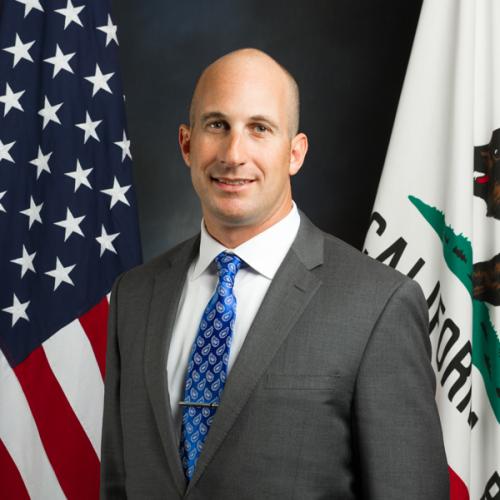
Asm. Heath Flora
Sponsored bills
Existing law authorizes the State Air Resources Board to designate public fire protection agencies or other equivalent agencies to issue permits, subject to the rules and regulations of the state board, for agricultural burning, which includes wildland vegetation management burning, as specified. This bill would revise those provisions to also require the state board to designate those agencies to oversee agricultural burning activities and to adopt rules and regulations to ensure those activities are conducted safely and effectively. The bill would exempt wildland vegetation management burning from the above-described permit requirement if that activity is conducted by, or under the supervision of, the applicable agency designated by the state board. The bill would require the state board to develop guidelines and best practices for wildland vegetation management burning to ensure public safety and environmental protection. By expanding the duties of local agencies, the bill would impose a state-mandated local program. The California Constitution requires the state to reimburse local agencies and school districts for certain costs mandated by the state. Statutory provisions establish procedures for making that reimbursement. This bill would provide that, if the Commission on State Mandates determines that the bill contains costs mandated by the state, reimbursement for those costs shall be made pursuant to the statutory provisions noted above.
Existing law, the Alarm Company Act, establishes the Bureau of Security and Investigative Services within the Department of Consumer Affairs and sets forth its powers and duties over the licensure, registration, and regulation of alarm company operators. Existing law prohibits a person from engaging in the activities of an alarm company operator unless the person holds a valid alarm company operator's license. Existing law makes a violation of these provisions a crime. Existing law defines the term "alarm system" for purposes of the act to mean an assembly of equipment and devices arranged to detect a hazard or signal the presence of an off-normal situation, and excludes a fire protection system, as specified. This bill would specify that "alarm system" for these purposes includes a video system in which an analog or digital video signal travels from the camera to video monitoring stations. To the extent that the bill would expand the scope of an existing crime, this bill would impose a state-mandated local program. The California Constitution requires the state to reimburse local agencies and school districts for certain costs mandated by the state. Statutory provisions establish procedures for making that reimbursement. This bill would provide that no reimbursement is required by this act for a specified reason.
Existing law, the Medical Practice Act, establishes the Medical Board of California within the Department of Consumer Affairs and charges it with administrative and enforcement duties related to the provision of medical services under the act. The act makes unprofessional conduct subject to discipline by the board the regular practice of medicine in a specified hospital having 5 or more physicians and surgeons on the medical staff without required provisions governing the operation of the hospital relating to records and to the organization, membership, and self-governance of the medical staff. The act makes unprofessional conduct subject to discipline by the board the regular practice of medicine in a specified hospital having less than 5 physicians and surgeons on the medical staff without required provisions governing the operation of the hospital relating to records and to the membership of the medical staff. The act includes in the organization provisions licensed physicians and surgeons, as specified, and in the membership provisions physicians and surgeons, and other licensed practitioners, as specified. A violation of the act, unless otherwise expressly provided, is a crime. This bill would expand the required provisions related to organization to additionally include dentists, podiatrists, clinical psychologists, nurse practitioners, nurse anesthetists, nurse midwives, and other health care professionals, as specified. The bill would expand the required provisions related to membership of medical staff to additionally include dentists, podiatrists, clinical psychologists, nurse practitioners, nurse anesthetists, and nurse midwives, as specified. By expanding the required provisions, the lack thereof constituting unprofessional conduct, this bill would expand the scope of a crime, and would thereby impose a state-mandated local program. The California Constitution requires the state to reimburse local agencies and school districts for certain costs mandated by the state. Statutory provisions establish procedures for making that reimbursement. This bill would provide that no reimbursement is required by this act for a specified reason.
Existing law authorizes a party about to be injured to lawfully resist the commission of a public offense and to use sufficient resistance to prevent the offense. Existing case law provides that, in order to justify an act of self-defense, an individual must have a reasonable belief that the threat is imminent, and limits the right of self-defense to the use of that force that is reasonable under the circumstances. This bill, the Preemptive Self Defense Act of 2025, would clarify that a party who reasonably perceives an imminent threat of bodily harm may make lawful resistance to the commission of a public offense and that the resistance authorized is required to be proportional to the reasonably perceived threat and to cease when the threat is no longer present. The bill would prohibit a party's background, training, and professional fighting skills from being taken into account when determining whether a party has taken reasonable defensive action. Existing law authorizes necessary force to be used to protect from wrongful injury the person or property of oneself, or of a spouse, child, parent, or other relative, or member of one's family, or of a ward, servant, master, or guest. This bill would also specify that there shall not be any civil liability on the part of, and no cause of action shall accrue against, a person who lawfully resists a public offense, as described above.
(1) Existing federal law provides for the federal Supplemental Nutrition Assistance Program, known in California as CalFresh, under which supplemental nutrition assistance benefits allocated to the state by the federal government are distributed to eligible individuals by each county. This bill would require, beginning January 1, 2027, a county welfare department, for each person receiving CalFresh benefits, to determine whether that person is eligible for specified refundable tax credits. The bill would require the county welfare department to serve as the primary agency responsible for calculating and distributing the value of those credits to recipients in the form of a Fresh Start Grants, as provided, and would require the county welfare department, where a recipient is overpaid due to administrative error, to notify the individual and deduct the overpaid amount from future grants. The bill would also require county welfare departments to evaluate recipients of other specified programs for eligibility for Fresh Start Grants without duplicative documentation. The bill would establish the continuously appropriated Fresh Start Grants Fund in the State Treasury to provide these increased benefits. The bill would require the Franchise Tax Board, no later than June 30, 2026, and annually thereafter, to estimate the amount of credits to be issued pursuant to specified law for the subsequent taxable year, and request that the Controller transfer that amount from the Tax Relief and Refund Account to the Fresh Start Grants Fund, for allocation to county welfare departments to administer the Fresh Start Grants. By creating a new continuously appropriated fund, this bill would make an appropriation. By expanding the duties of county welfare departments, this bill would impose a state-mandated local program. This bill would require the State Department of Social Services to provide relevant information relating to the issuance of Fresh Start Grants to the Franchise Tax Board and county welfare departments, including the value of grants issued and the data necessary to ensure accurate distribution and tracking, as provided. The bill would also require the Franchise Tax Board to share any information with the State Department of Social Services and county welfare departments necessary to calculate the specified tax credits. The bill would make information shared by the Franchise Tax Board subject to specified law limiting the sharing and use of taxpayer information, the violation of which is a crime. By expanding the operation of a crime, this bill would impose a state-mandated local program. This bill would require the State Department of Social Services to commission an independent study of the Fresh Start Grants Program in collaboration with the Franchise Tax Board and county welfare departments, as provided. (2) Existing law, the California Consumer Privacy Act of 2018 (CCPA) , grants a consumer various rights with respect to personal information that is collected or sold by a business. The CCPA defines various terms for these purposes. The California Privacy Rights Act of 2020 (CPRA) , approved by the voters as Proposition 24 at the November 3, 2020, statewide general election, amended, added to, and reenacted the CCPA and establishes the California Privacy Protection Agency (agency) and vests the agency with full administrative power, authority, and jurisdiction to enforce the CCPA. This bill would require the State Department of Social Services, county welfare departments, and all entities administering the Fresh Start Grants Program to implement data safeguards, as specified, and would require the California Privacy Protection Agency to monitor compliance with data security protocols, as specified. (3) The Personal Income Tax Law allows various credits against the taxes imposed by that law, including, in modified conformity with federal income tax law, an earned income tax credit, and authorizes a payment from the Tax Relief and Refund Account, a continuously appropriated fund, for allowable credits in excess of tax liability to an eligible individual that is equal to that portion of the earned income tax credit allowed by federal law, as determined by the earned income tax credit adjustment factor, as specified. The Personal Income Tax Law also allows a refundable young child tax credit against the taxes imposed under that law for each taxable year beginning on or after January 1, 2019, and a refundable foster youth tax credit for taxable years beginning on or after January 1, 2022, to a qualified taxpayer in a specified amount multiplied by the earned income tax credit adjustment factor, as provided. This bill, for taxable years beginning on or after January 1, 2027, would reduce the amount allowed as an earned income tax credit, a young child tax credit, or a foster youth tax credit by the amount received as a Fresh Start Grant. (4) This bill would include a change in state statute that would result in a taxpayer paying a higher tax within the meaning of Section 3 of Article XIIIA of the California Constitution, and thus would require for passage the approval of 23 of the membership of each house of the Legislature. (5) The California Constitution requires the state to reimburse local agencies and school districts for certain costs mandated by the state. Statutory provisions establish procedures for making that reimbursement. This bill would provide that with regard to certain mandates no reimbursement is required by this act for a specified reason. With regard to any other mandates, this bill would provide that, if the Commission on State Mandates determines that the bill contains costs so mandated by the state, reimbursement for those costs shall be made pursuant to the statutory provisions noted above.
Existing law generally regulates the rules governing insurance and insurance contracts. Existing law prohibits a person from engaging in any trade practices that are defined as unfair methods of competition or unfair or deceptive acts or practices in the business of insurance, including publicly making or dissimilating in a publication or advertising device, among others, a statement containing an untrue, deceptive, or misleading statement regarding the business of insurance, and makes a person who engages in those practices liable to the state for a civil penalty not to exceed $5,000 or $10,000, as specified. This bill would authorize a court to increase a civil penalty by up to $2,500 for a commercial disaster communication, as defined, that otherwise constitutes a violation of the above-described provisions. The bill would authorize the increase for a commercial disaster communication made on or after the date of a proclamation of a state of emergency or catastrophic disaster, as defined, until 60 calendar days after the termination of the state of emergency or catastrophic disaster, but prohibits the increase for applying more than 180 calendar days for any one state of emergency or catastrophic disaster. The bill would make related findings and declarations.
The Personal Income Tax Law allows various credits against the taxes imposed by that law. This bill would allow a credit against those taxes for each taxable year beginning on or after January 1, 2025, and before January 1, 2030, to a qualified taxpayer, as defined, in an amount equal to 40% of the taxpayer's qualified expenses, as defined, not to exceed $400 per taxable year, or $2,000 cumulatively. Existing law requires any bill authorizing a new tax credit to contain, among other things, specific goals, purposes, and objectives that the tax credit will achieve, detailed performance indicators, and data collection requirements. The bill would also include additional information required for any bill authorizing a new tax expenditure. This bill would take effect immediately as a tax levy.
Existing law establishes, under the Medi-Cal program, certain time and distance standards for specified Medi-Cal managed care covered services, consistent with federal regulations relating to network adequacy standards, to ensure that those services, including certain specialty care, are available and accessible to enrollees of Medi-Cal managed care plans in a timely manner. Existing law sets forth other timely access requirements for health care service plans and health insurers, including with regard to referrals to a specialist. Existing law establishes various health professions development programs, within the Department of Health Care Access and Information, for the promotion of education, training, and recruitment of health professionals to address workforce shortage and distribution needs. Existing law sets forth various provisions for the authorized use of telehealth in the delivery of health care services. This bill would, subject to an appropriation, require the California Health and Human Services Agency, in collaboration with the Department of Health Care Access and Information and the State Department of Health Care Services, to establish a demonstration project for a grant program. Under the bill, the grant program would be aimed at facilitating a telehealth and other virtual services specialty care network or networks that are designed to serve patients of safety-net providers consisting of qualifying providers, as defined. Under the bill, the purpose of the demonstration project would be to improve access to specialty care for Medi-Cal beneficiaries through development of a financially sustainable specialty care network or networks that are focused on serving the needs of the health care safety net. The bill would authorize the focus of the project to include increasing access to behavioral and maternal health services and additional specialties prioritized by the agency. The bill would state the intent of the Legislature that implementation of the demonstration project would facilitate compliance with any applicable network adequacy standards. The bill would require the agency to administer the grant program to award grant funds to one or more grantees based on an application process and by meeting specified conditions. The bill would require a grantee to use the funds to develop a network or networks by, among other things, providing health information technology and technical assistance to support both the specialists and any primary care provider care coordination, referral, or electronic consultations. The bill would require the agency to arrange an independent evaluation of the demonstration project. The bill would require the evaluation to examine the extent to which the project was successful in achieving certain objectives, including, among others, reducing structural barriers to access experienced by patients. The bill would require a grantee to report data and information to allow for monitoring and evaluation of the project. The bill would require the agency to ensure that lessons learned, recommendations, and best practices from the project are publicly disseminated to inform the development of a telehealth and specialty care network or networks to serve the needs of the health care safety net.
Existing law establishes the California State University and the University of California as 2 of the segments of public postsecondary education in this state. Existing law requires the California State University, and requests the University of California, to publicly provide labor market outcome information relating to the graduates of their undergraduate programs. This bill would require the California State University, and would request the University of California, to include in admission notifications (1) a hyperlink to the university's internet website that contains the labor market outcome information described above, and (2) information on student loans, as specified.